

We’ve been to see how Wickham Beet Harvesters is getting on with the latest incarnation of the triple-axle Rexor 6300.
KEEPING IT BRIEF
- Grimme’s first self-propelled sugar beet harvester was the Maxtron 620 in (six-row/20t bunker) in 2003
- The Maxtron was phased out for the Rexor in 2013-2014
- Today there are around 20 Rexors in the UK, two-thirds are four-wheeled 6200s (30m³), the rest are triple-axle 6300s
- The Stage V 15.6l MTU motor in both Rexor models kicks out 653hp
- 1,200ha (3,000 acres) is the magic number for a 6300 per season
- The 6300 costs in the region of £800,000-£900,000
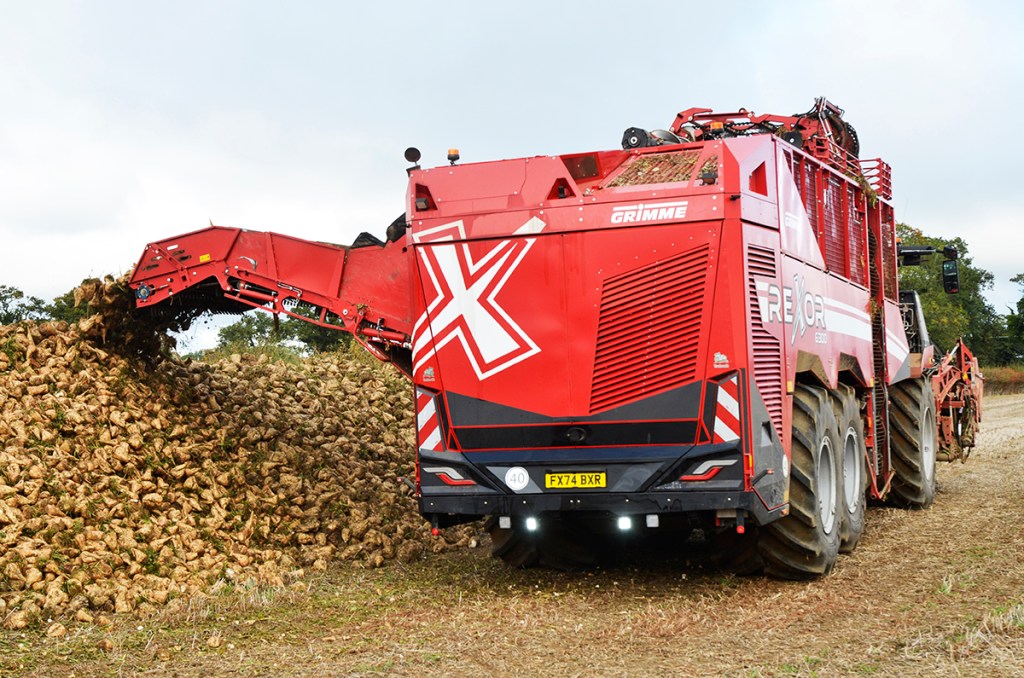
In autumn 2024, Grimme launched its fourth generation Rexor, close to the factory in Rieste, Germany where the 32.5-tonne, six-wheeler is made. Wickham Beet’s machine was one of the first to arrive in the UK, and the contractor’s third Grimme harvester was delivered mid-way through the 2024-2025 campaign.
Lifting crop for seven growers and 19 different farms around Wickham Market in Suffolk, this is the seventh season for operator Mark Brown. Having worked nights for two seasons on a six-wheel, six-row Holmer Terra Dos T440 in 2018 and 2019, he took over the day shift in 2020 when the first of the trio of Grimme Rexors 6300 arrived.
What’s new
Bunker capacity on the latest fledgling is unchanged at 45m³ but the numerous changes to the rest of the harvester include the revised cooling package for a better air flow around the 653hp, 15.6-litre, MTU Stage V motor. There are also larger panels which open wider for maintenance, giving easier access to the sides and rear of the engine bay.
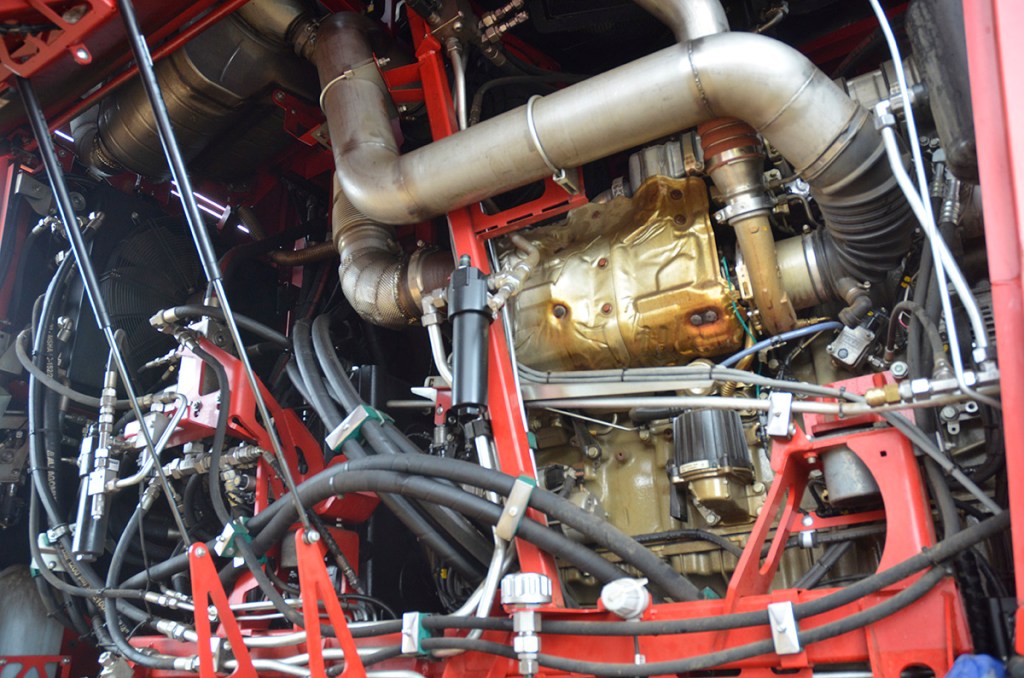
It might not sound important, but the redesigned engine compartment has shortened the total length of the harvester by 50cm to just below 15m. This, plus the larger steering angles (front axle 10°, rear axles 25°) and articulated joint (35°), provide the harvester with an inner turning radius of 7.5m.

Maneuvering the harvester is improved by heated and electronically adjustable rear-view mirrors and electrically adjustable and heated side mirrors. These are part of the new Claas X11 cab, and at the launch the Rexor was the first self-propelled Grimme harvester to use it. With new footrests, extra storage options, a mobile phone holder and drinks cooler, the revamped spec also includes USB charging ports, twin sun blinds and dual-zone climate control.

Mark cannot comment on the new option of the twin joysticks, controls and 7.8” display on the left armrest for the bunker unloading elevator because his machine does not have it, but he is impressed with the camera system, which includes two additional cameras at the left and right rear.
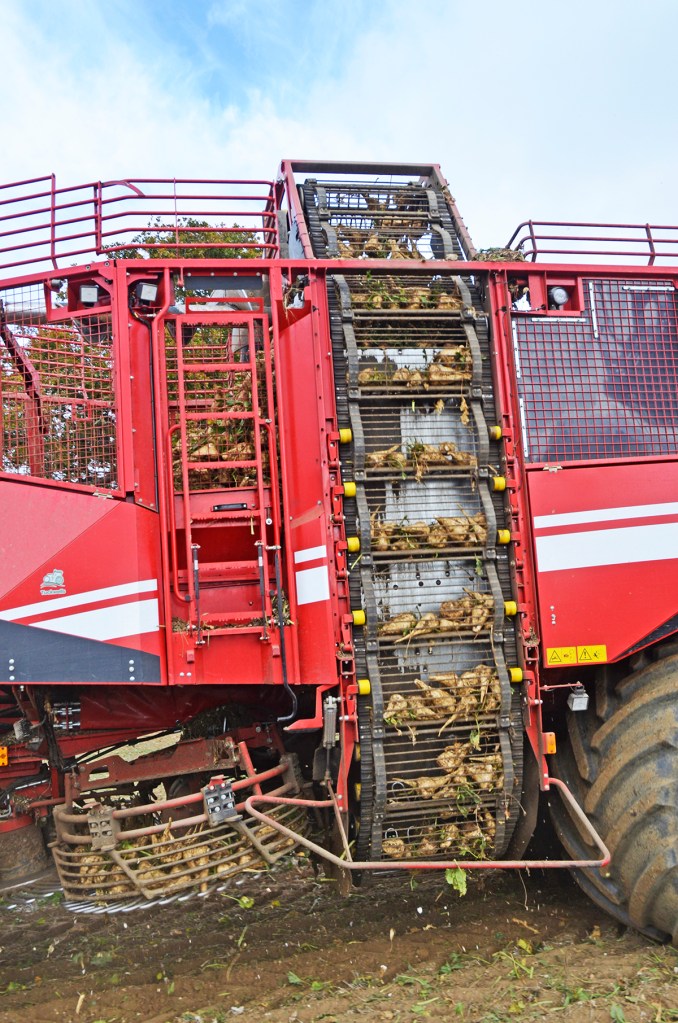
Fully integrated into the SmartView video system, images from all cameras are simultaneously displayed on the 12” touchscreen. Possibilities include being able to slow-down the video playback. There is also a zoom function, and all camera views can be followed remotely.
The Speedtronic-Cruise assistance system is also worth a mention. This automatically increases or decreases the speed of the harvester depending on crop throughput. Having a system to take the strain off the driver sounds like a good thing, but somewhat surprisingly Mark does not use it.
“I tried it on the first Rexor but didn’t like the way it changed speeds automatically,” says the operator. “I prefer to control it manually.”
He does like the new digging unit, though, which he reckons provides more powerful and intensive cleaning and the harvester’s newly designed frame provides good visibility of the seven helix cleaning rollers.
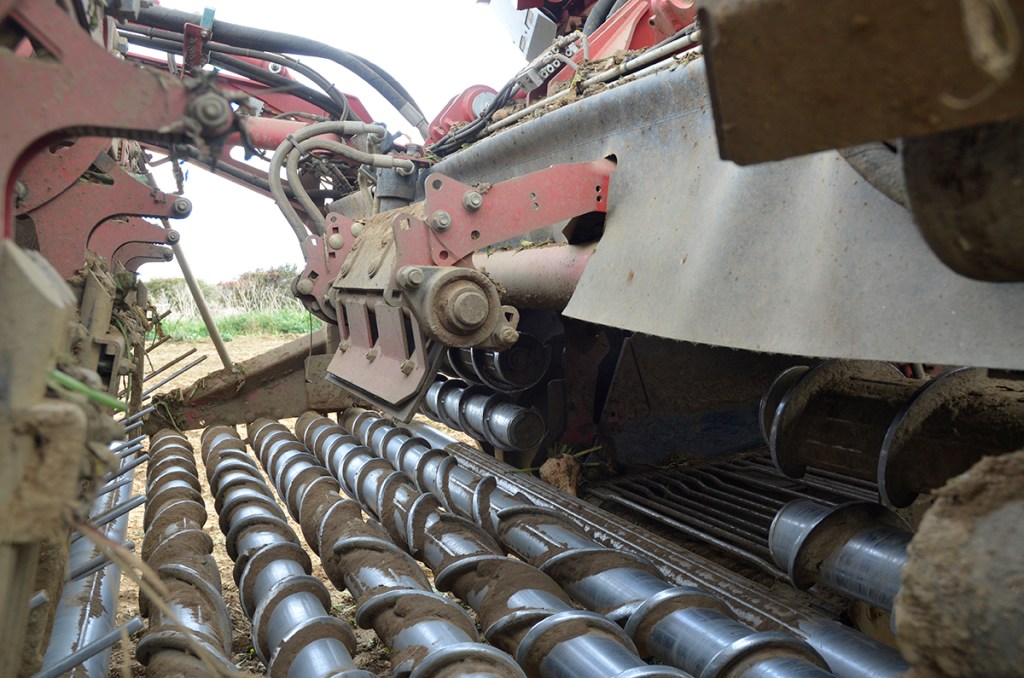
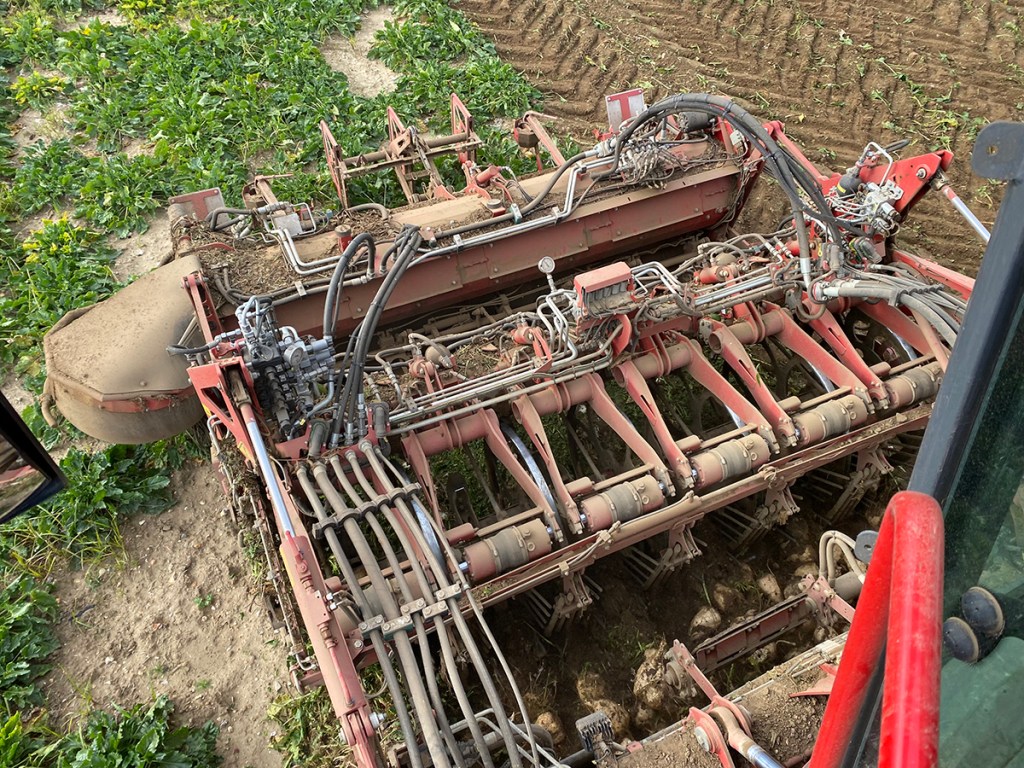
Both Oppel wheel and digging unit are equipped with a lighter and maintenance-free scalper, and the redesigned unit can be guided precisely along the row and at the optimum height, improving the auto pilot’s steering behaviour when cornering.
Good results in all soils
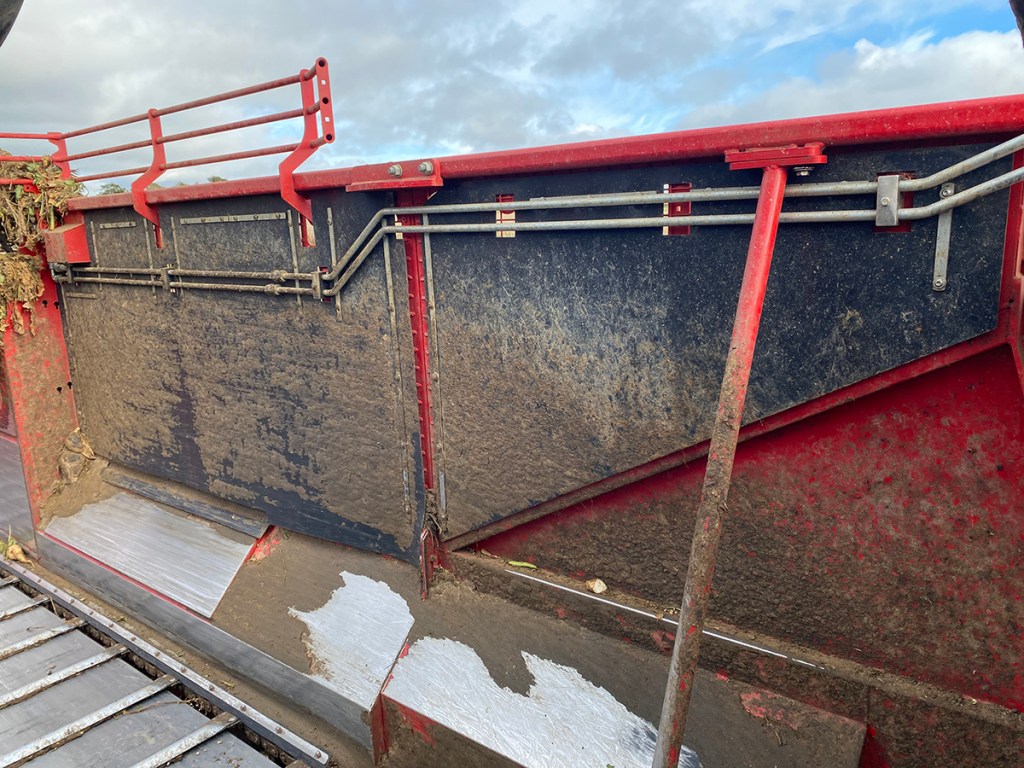
The six-row lifting unit on the Rexor is based on a rigid frame and Mark misses the EasyLift system from the Terra-Dos. This automatically alters the depth of the scalpers and lifting shares for all individual rows. “The EasyLift picks beet and not soil. We struggle to keep dirt out of the Rexor’s bunker in difficult heavy and wet soils.”
That said, Mark enjoys driving the Grimme harvester, which he says provides good results in a wide range of soils from sandy loam to heavy clay. “It will go anywhere and in all conditions.”
Lifting beet in a triangle that extends north to the coast at Sizewell, south to Felixstowe and west to Otley, 30ha is a big field, but the Rexor also works in 1-2ha fields. “In a good field I can lift 1.5ha/hr,” confirms Mark, who usually opens a seven or eight bout headland, but sometimes adds an extra one if he knows that the haulage company’s Holmer Maus is coming to load beet.
He leaves his house in Snape at 5.30am and on most days arrives at the harvester at 6:00am. It depends on the weather, but the day usually ends at around 6:00pm. Working six days a week, he has Sunday off and a week at Christmas and a few days at New Year.
This season started on October 1st, and was wrapped up in February. when Mark will return to Velcourt for a lengthy stint preparing vegetable land on a Case IH Puma 150 CVX and Grimme de-stoner.

More than the machine
This is Wickham Beet’s fifth season with Grimme and John Taylor, who has headed Wickham Beet for the past 10 years, is really pleased with the Rexor. “We want to get 100% of the beet to the factory. The Rexor does this for us and works well in both small and large beet.”
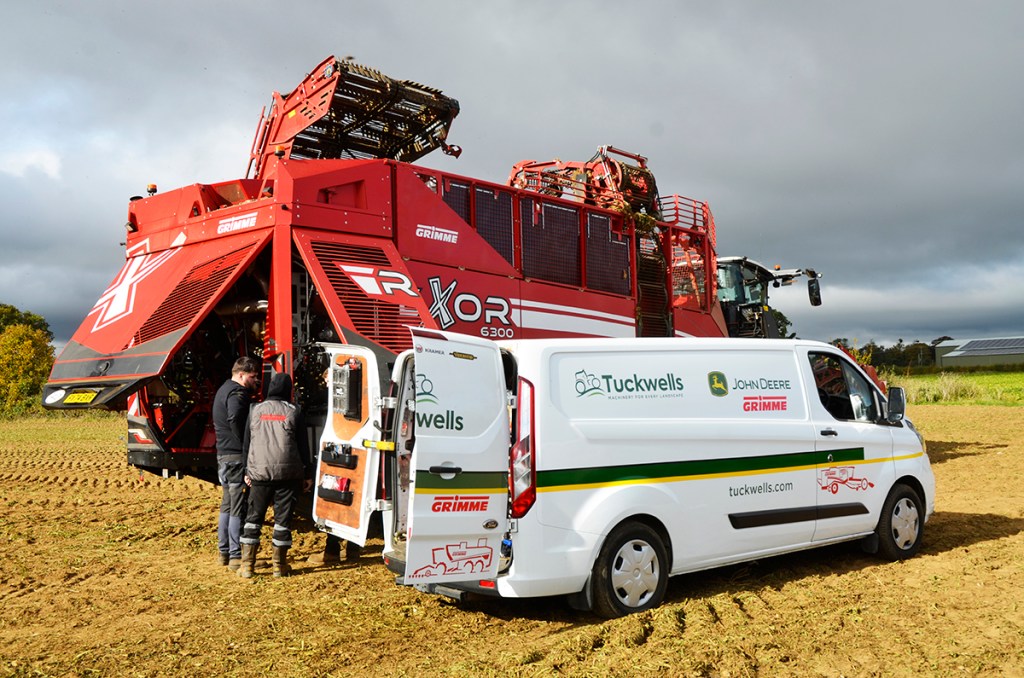
There is another reason why the group opted for a Grimme harvester – the dealer. “It is key for us to have a good local dealer and Tuckwells is just that. After sales is crucial for us and they are fantastic.”
Some contractors would like to run a Rexor but are put off by the £800,000-£900,000 price tag. With this in mind, Grimme launched its ‘Rexor for You’ scheme a couple of years back to provide a more affordable option.
This includes fixed running, warranty and service costs for five years based on a minimum area of 1,000ha a season. It is also possible to specify a five-year parts package.
Working around the clock, Wickham Beet’s two previous Rexors lifted 1,200-1,300ha a year. The company used to buy a machine outright but given the declining area (930ha last season and 800ha this campaign) decided it made better financial sense to lease the third machine from Grimme for two years.
“We do not have the area to warrant buying a machine and should it continue to fall next season we would have a big problem if we owned a harvester,” comments Mr Taylor. “We now know our labour, fuel and harvester costs per hour and charge growers a fixed price/ha.”
That the beet job is not as profitable as it reflected in the current area. 800ha is already on the low side for the hectare-eating Rexor and if the area falls even again for the 2026-2027 season it remains to be seen if Grimme will be willing to extend the rental contract and if so at what cost. Wickham Beet will no doubt also be doing the math’s to see how the new Rexor contract stacks up against using a local contractor.
John would like to continue with a Rexor and is keen to add a couple of farms and take the area back up to 1,200ha (3,000 acres), which he says is the magic number for a beet harvester.
The declining area has also subdued demand for new self-propelled beet harvesters which are believed to be down by a third on the dozen units in a normal year. “The total UK beet harvester market for all brands is currently not even in the low teens,” says Grimme marketing manager, Adam Johnson.
Steven Vale
For more up-to-date farming news click here and subscribe now to profi and save.