

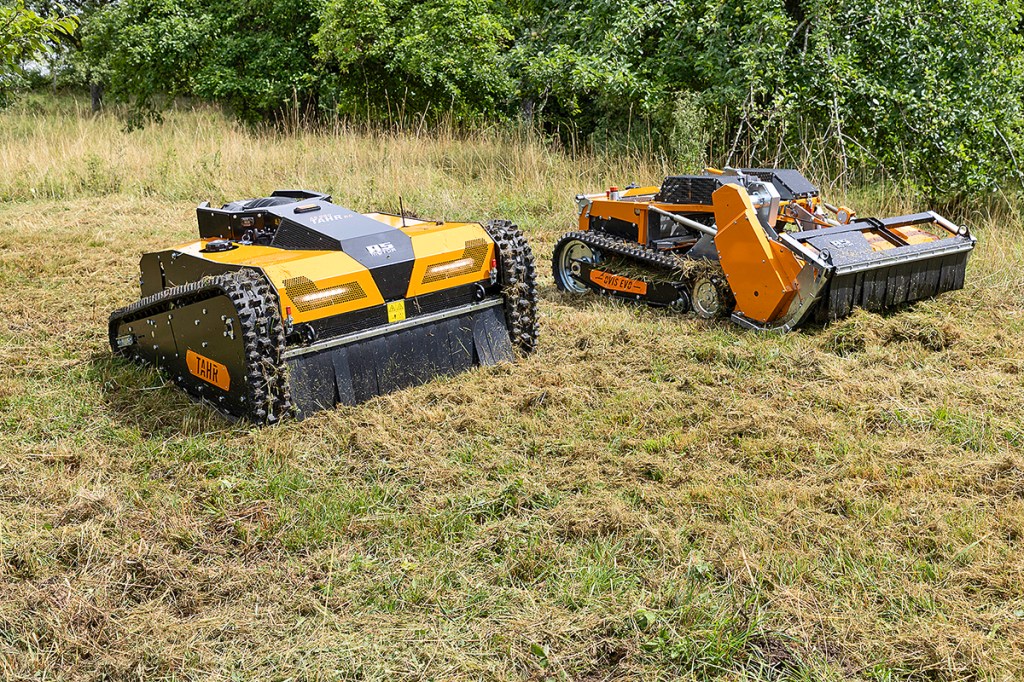
Last summer the AS-Motor AS 990 Tahr RC tracked remote control, 0.90m wide rotary mower was launched to complement the existing 1.0m AS 1000 Ovis RC flail mower. Here we outline how the two compare.
KEEPING IT BRIEF
- A tracked undercarriage enables the Tahr to mow steep banks.
- Rotary mower deck cuts in both directions, saving time in turns.
- Remote control is straightforward and easy use.
Native to the Himalayans, Tahr mountain goats are renowned for their sure-footedness in steep terrain. As the Tahr mower we look at here was developed in Germany by AS-Motor to work on slopes and embankments, we wanted to see if it matched its namesake for hill ability. As it is worked by remote control, the mower can go where a ride-on would be at risk, with the bonus of also protecting the operator from noise and dust.
Rotary deck works in forward and reverse
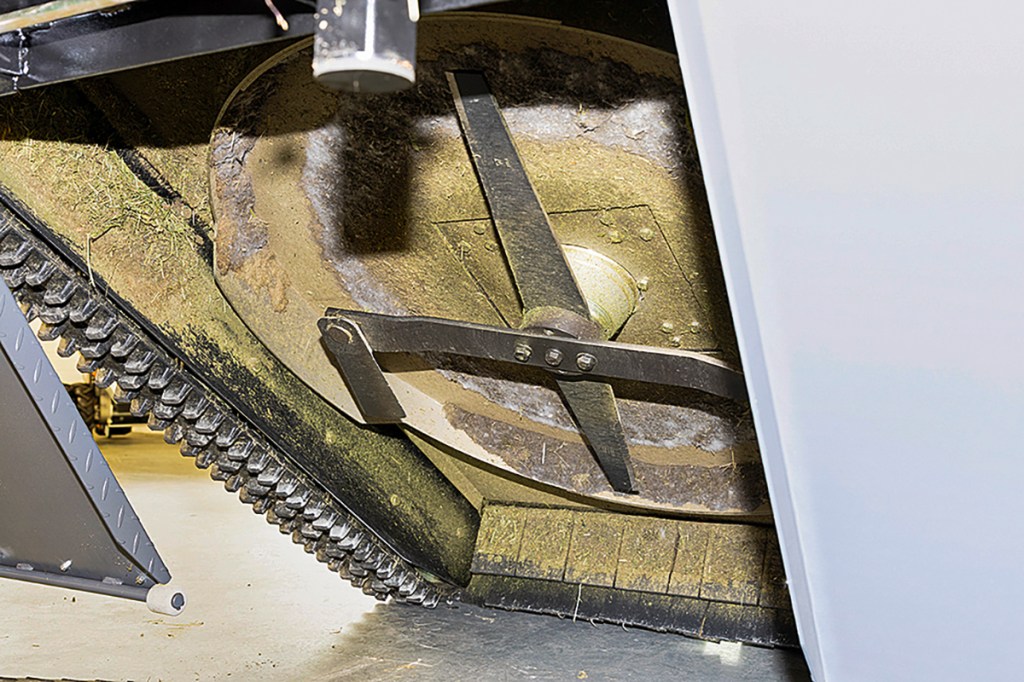
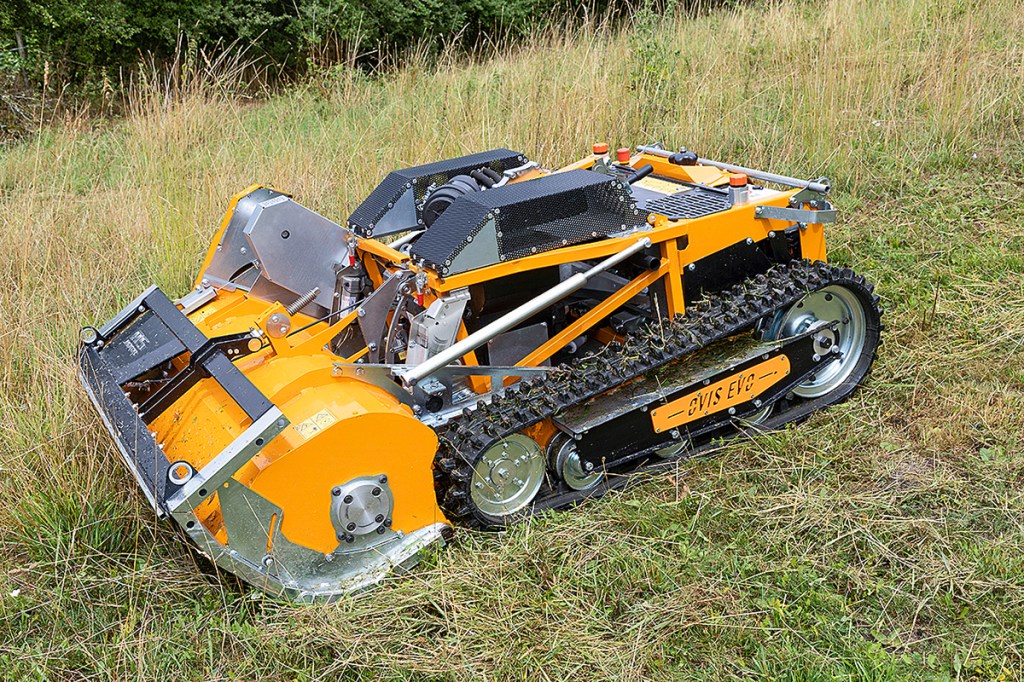
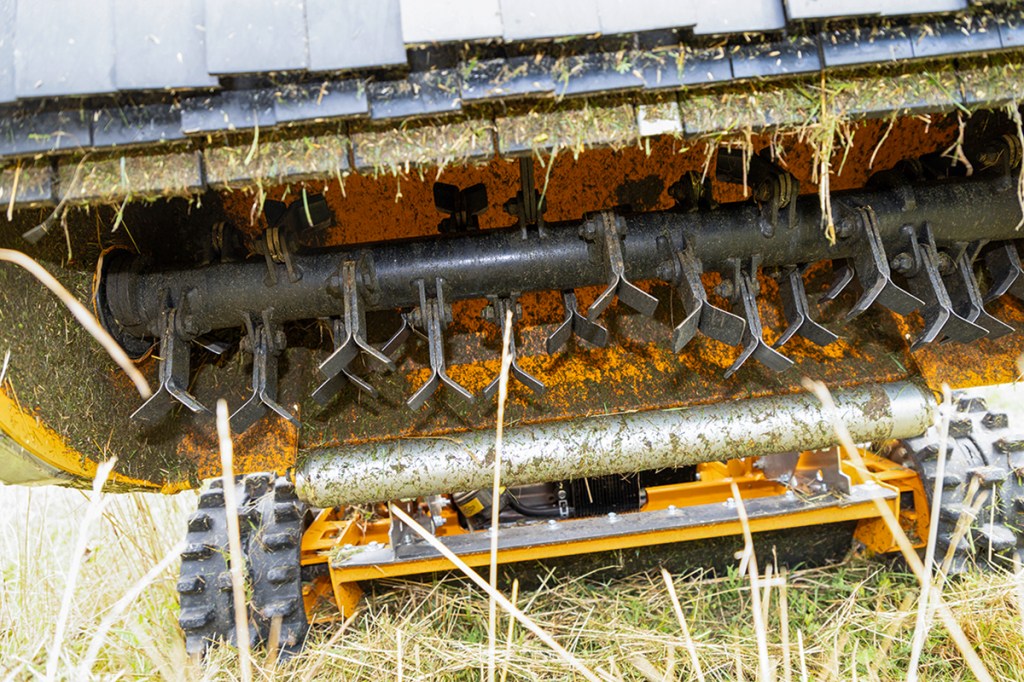
One unique selling point of the Tahr is its rotary deck. This features a fixed upper and swing tip lower blade system, with the deck open at each end to allow bidirectional mowing. This eliminates the need for time-consuming and on slopes often hazardous turns at the end of each mowing pass. This can save a significant amount of time, particularly on short runs.
The 0.90m deck is based on the design employed by the company on its AS 940 Sherpa ride-on mower, the upper blade complimenting the lower swing tip unit by further chopping and cutting vegetation to a mulch to aid its spread across the mown width. A stainless-steel mulch plate further enhances the chopping effect, flexible flaps and a double curtain at the open ends of the deck retaining stones and debris within the machine.
As to the material the unit is designed to cut, the makers say it will tackle year-old growth at a height of up to 1.50m. It is less suitable for cutting dense older scrub although the cut height can be adjusted in five steps from 50 to 140mm for more dense material.
Power is courtesy of a Series 8 twin-cylinder Briggs & Straton 724cc petrol engine with pressurised lubrication to allow operation at more extreme angles.
Hydrostatic drive
AS-Motor claim the design of the hydrostatically driven Delta tracks has a drive wheel sprocket and deep track lugs to prevent the tracks coming adrift. This is a potential problem when working at extreme lateral angles. An indicator provides a visual guide to track tension with a ratchet adjustment system enabling them to be tightened as necessary.
The tracks and deck are arranged to help prevent the mower from grounding on crests when working in uneven conditions, with AS-Motor claiming the machine can scale slopes of up to 500. This limpet like ability is enhanced by the 505kg machine having a low centre of gravity, the Tahr measuring between 730mm to 800mm tall depending on cutting height. The mower has approval to work across a slope of up to 56 degrees. That is steep going. Ground clearance varies with cutting height and will be between 50mm to 140mm.
Intuitive operation
The Tahr remote control range is up to 300m, the operator terminal having a clutter free design with AS-Motor concentrating on the essentials. There are separate levers for driving and steering, with a rotary control to set both travel speed and the degree to which the machine automatically steers uphill to maintain a straight track across a slope. That is essentially all you need to operate the mower. An integrated LED display shows the cutting height, which can be adjusted via a button, with an inclinometer showing the slope angle in 50 steps.
Tahr versus Ovis
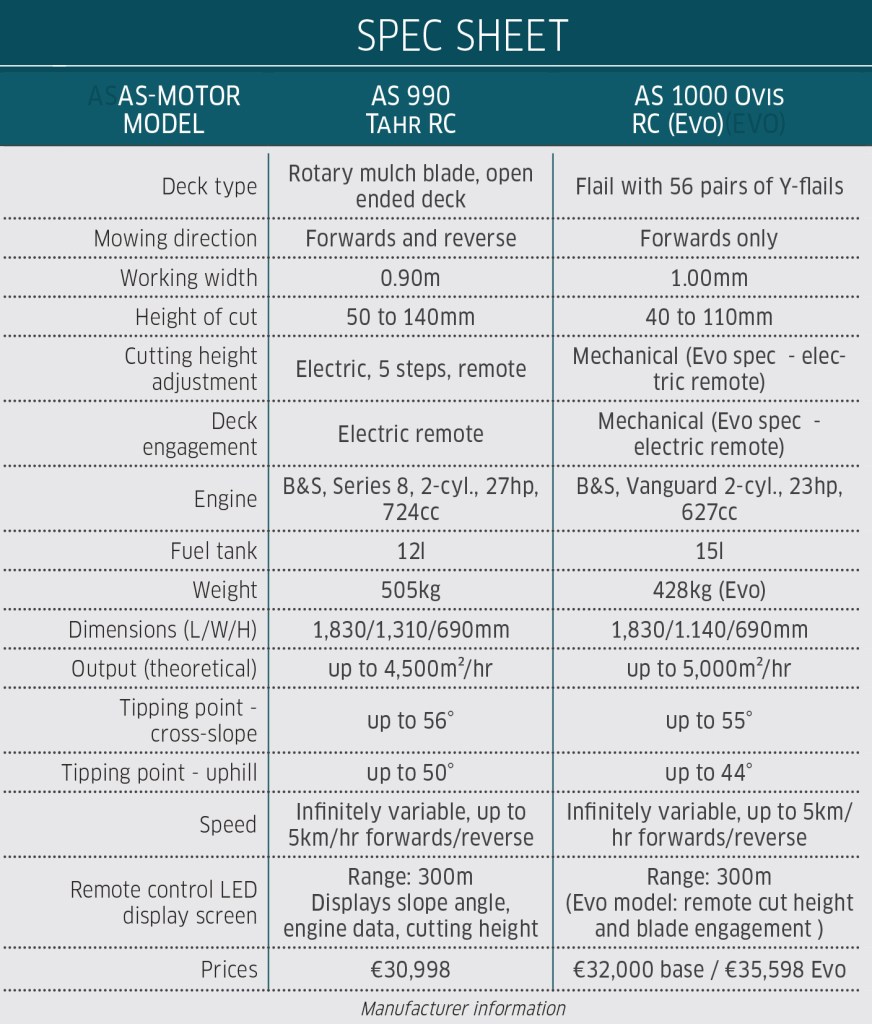
We had the chance to compare the Tahr RC with the AS 1000 Ovis RC flail lunched in 2022. The key initial differences are the mowing systems, with the Tahr fitted with a 0.90m mulching rotary deck, the Ovis a 1.0m flail running 56 pairs of 5mm reversible Y-flails. These are claimed to be able to tackle two-year-old vegetation with the same design shared with the AS-Motor Yak series.
The Ovis has a cut height that can be set to run at between 40mm to 110mm with the benefit of generous up and down float. A trailing roller ensures a ground clearance of at least 40mm, with the claim this can reduce sward damage in difficult going and allow the mower to ride over raised edges. The variable sliding frame height control should also ensure a specified minimum cutting height can be maintained, a point to consider if mowing needs to meet ecological demands.
As the flail head of the Ovis will only cut in the forward direction, the machine must be turned between bouts. In side-by-side working, the bi-directional Tahr had a real productivity advantage, as it could be on its return run before the Ovis had completed a turn.
Another important detail is that the entry-level Ovis model we tried had its blades engaged mechanically via a cable. If the machine hits a foreign object, there is no quick way for the operator to intervene. The Ovis also uses a hand crank to set the cut height, this also being used to raise the machine out of work for transport or lifting it to maintain the flail head.
A top-spec Ovis Evo is available for an extra €3,600, this featuring electric height of cut adjustment and flail drive engagement via the remote control.
Ovis 1000: drive and engine
The Ovis RC also uses Briggs & Stratton power, but in this case a 627cc 23hp Vanguard twin. Mounted horizontally for a low centre of gravity, it to has a lubrication system designed to work on steep slopes.
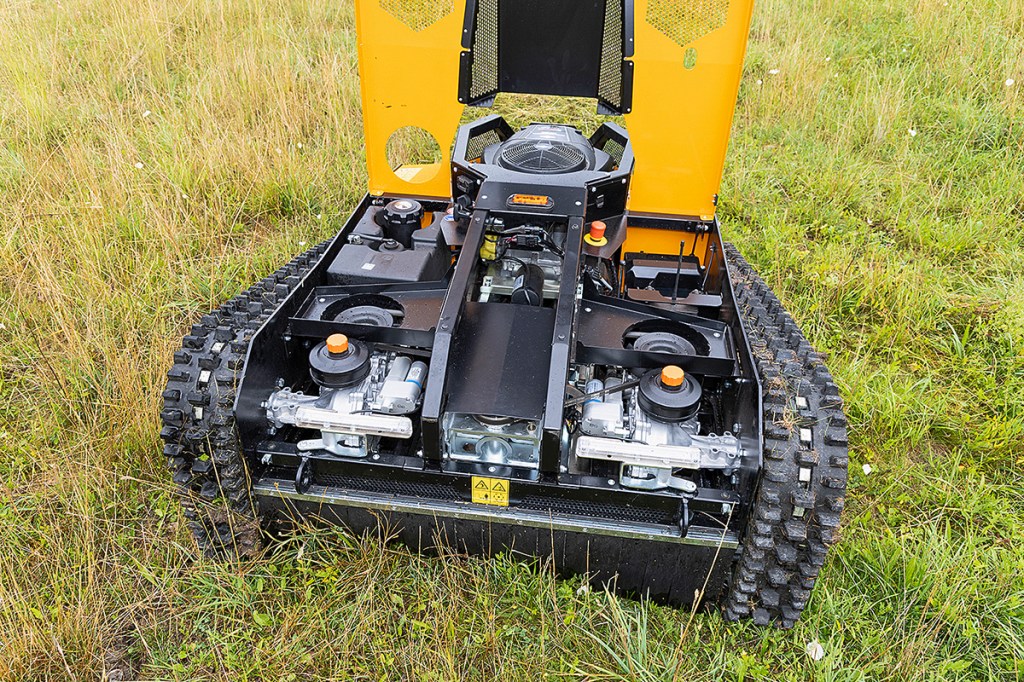
Power transmission from the engine to the flail head is by belt, a simple solution that offers benefits should the flails hit a foreign object. As with the Tahr, hydrostatic transmission is used to drive the tracks, with a separate electric steering actuator for each track.
Dimensions and weights
The Ovis is 1.14m wide, so narrower than the 1.31m Tahr. Working along a wall or fence, the Ovis left an un-cut strip of 70mm, against a noticeably wider 150mm band for the Tahr. The Ovis, in base spec, weighs in at 418kg, around 15% less than the 505kg Tahr.
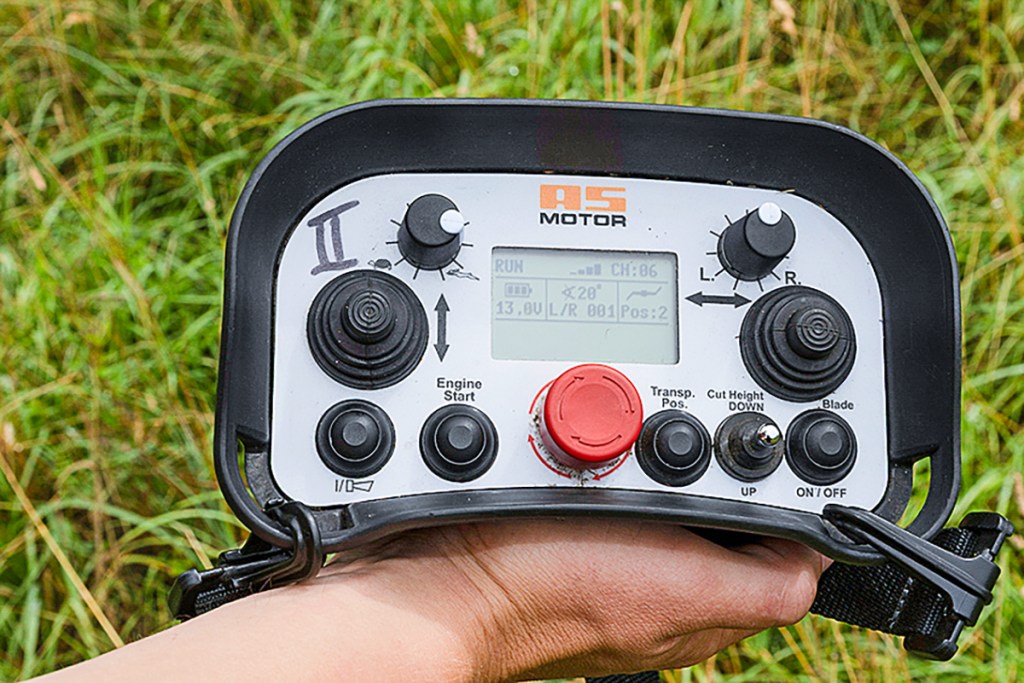
Both machines are approved for work on extremely steep slopes. AS-Motor list the Ovis as being able to work across a slope at up to 55°, up and down at up to 44°, the Tahr at 56° and 50° respectively. AS-Motor determines these its figures using its own in-house tip tests. The operator can see how steeply the Tahr is currently working via the remote-control display. The Ovis does not feature a slope angle indicator.
Putting the machines to work
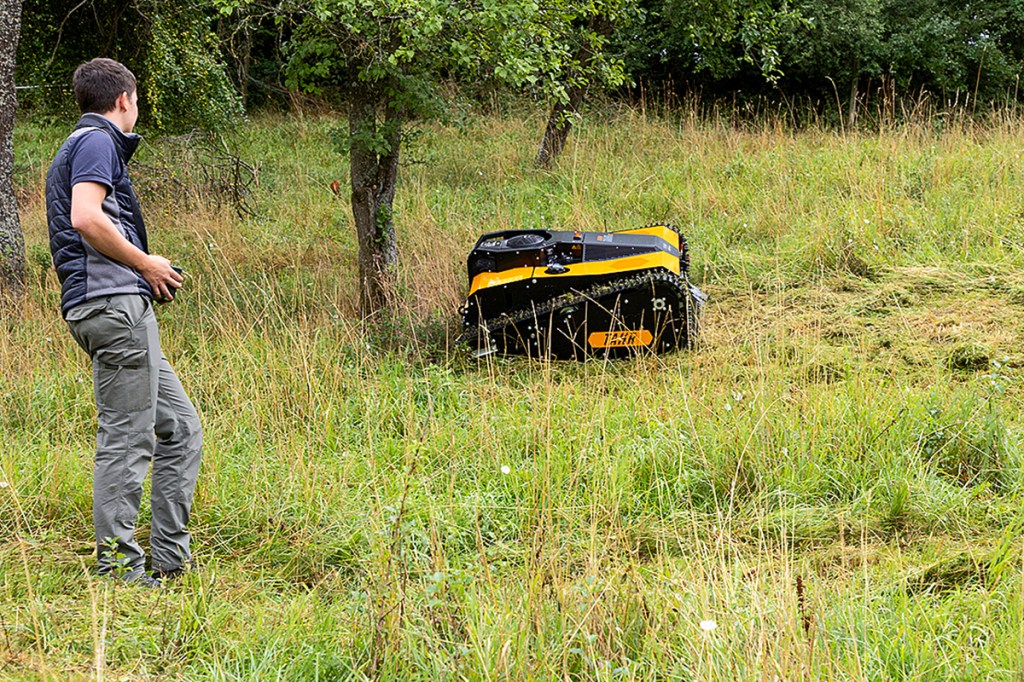
We put both mowers to the test on a sloping orchard meadow in July last year, with the test following a period of light rain. While much of the test area could have been safely cut with a ride-on mower, the remote-controlled tracked machines really came into their own in over steeper ground and, as plus we had not initially thought about, when mowing under low-hanging branches. In conditions like this, AS-Motor suggest a remote-controlled tracked mower can achieve up to 30% greater output than a ride-on. We had no reason to doubt this claim.
Although the grass was still wet at the start, both machines worked quickly and without the rotary deck or flail head clogging. The grass was well suited to mowing with the Tahr 990 RC cross blade deck, the machine working well at speeds of between 4km/hr to 5km/hr. From the off, we appreciated not having to turn the Tahr between runs. All it took when starting a return run is a jiggle on a couple of levers on the remote control to reverse the drive and the Tahr was back mowing at the same speed as the previous pass. We found this easier and faster than the tracked Ovis, this machine having to spin through 180° after every pass. This would have been more of a problem if there is little room for shunting around, such as under solar panels.
Not a clear cut decision
Although the Tahr has its productivity plus points, the Ovis 1000 RC can be used to cut light woody scrub, and it will mow closer to obstacles. It is also 100mm, some 10%, wider. If mowing long runs, time lost in a turn is made up by the Ovis cutting more per pass.
To put this into figures, the Ovis has a potential mowing output of up to 5,000m²/hr at 5km/hr. The narrower Tahr would, without turns, achieve 4,500m²/hr at the same speed. In practice, AS-Motor suggest both machines will cover around 3,500m²/hr in typical mixed mowing
Prices and applications
Both the Tahr and Ovis tracked remote control mowers target professionals tasked with mowing steep banks or hard to access areas. The Tahr is a versatile tool, and one that could be well suited to mowing the spaces between solar panels thanks to its ability to cut in both directions. As it is a flail mower, the Ovis can more easily handle brush and bramble.
List prices for the rotary deck AS-Motor AS 990 Tahr RC is €32,500, the flail head AS 1000 Ovis RC retailing for €34,000. The Ovis Evo, with electronic height and head engagement, sells for €35,900. Expect UK retail prices to be similar in pounds.
Summary
The AS-Motor AS 990 Tahr RC is ideally suited to long mowing passes and working steep slopes. Able to cut grass up to 1.50m tall, the mower’s standout feature is its ability to work in both directions of travel, making a turn at the end of the pass unnecessary.
That makes the Tahr a good choice for mowing around obstacles, cutting embankments or working among solar panels. The easy-to-use remote control of course means the operator can watch the machine work in difficult terrain from a safe distance.
The flail head AS 1000 Ovis RC is more of an all-round cutting system as its 56 pairs of Y-flails should be tough enough to cope with thicker, woody growth.
Martin Zäh
For more up-to-date farming news click here and subscribe now to profi and save.