
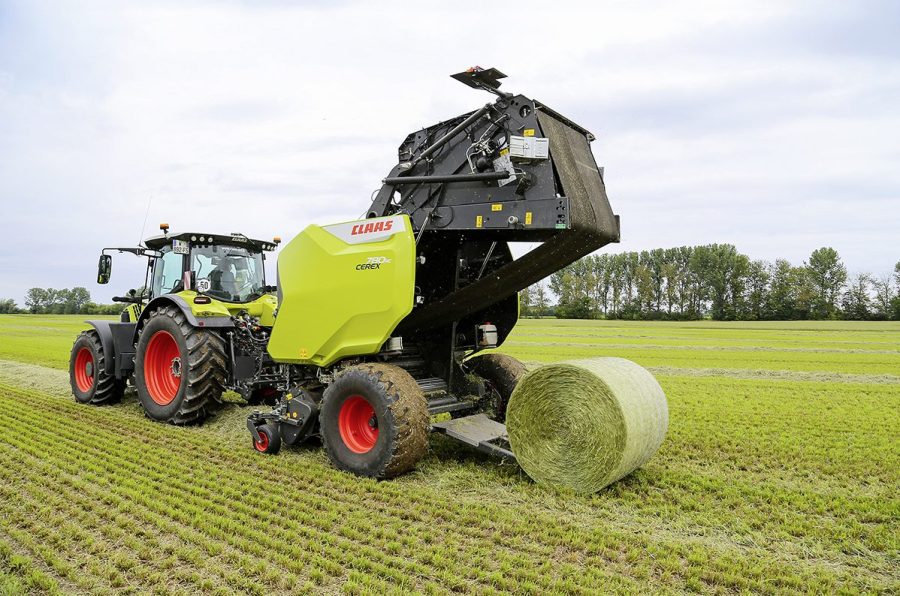
More throughput, higher bale density, improved chopping system and suitable for silage is the Claas sales pitch for the Cerex variable-chamber baler. We take a closer look.
KEEPING IT BRIEF
- The chassis has been redesigned to withstand the higher loads.
- Several tyre options are now available, with 650/50 R22.5 being the biggest.
- With the Cerex, Claas can now offer a high-output round baler.
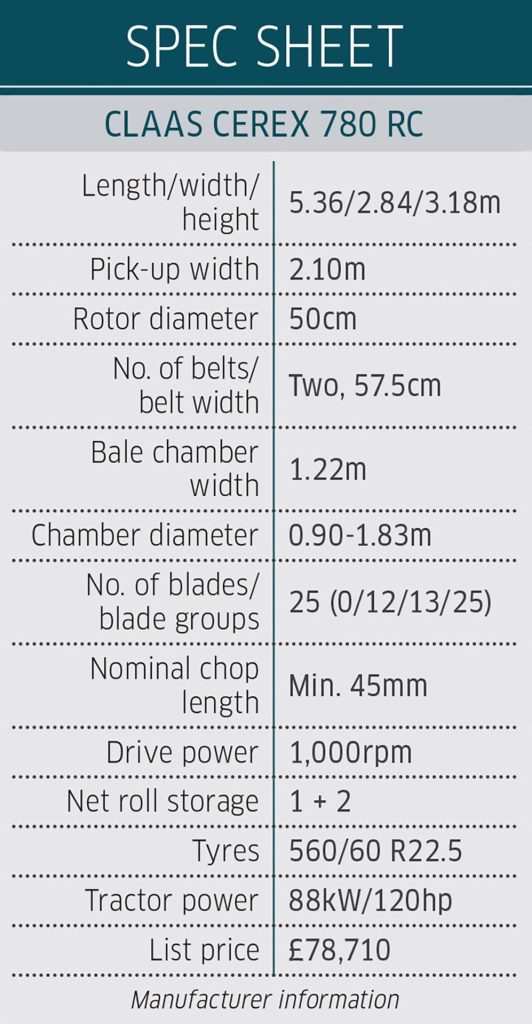
There are two models within the new variable-chamber Cerex range: the 760 (0.90 to 1.60m diameter bales) and the 780 (up to 1.83m). Positioned above the Variant 500 balers, which will remain on offer, the new models give Claas a competitor to the likes of Kuhn’s VB7100, Krone VariPack and McHale 8900-II.
All-new design
The engineering team were tasked with increasing throughput with less horsepower, upping the bale density and also ensuring it could reliably handle silage. To achieve these goals, the team at the Claas baler plant in Metz, France, have come up with several innovations.
First off, they lengthened the drawbar to allow tighter turns when using tractors with bigger tyres. A pair of turnbuckles makes setting the hitch height a simpler affair, too. The Cerex is attached to a clevis hitch as standard with the extra-cost option of a K80 spoon.
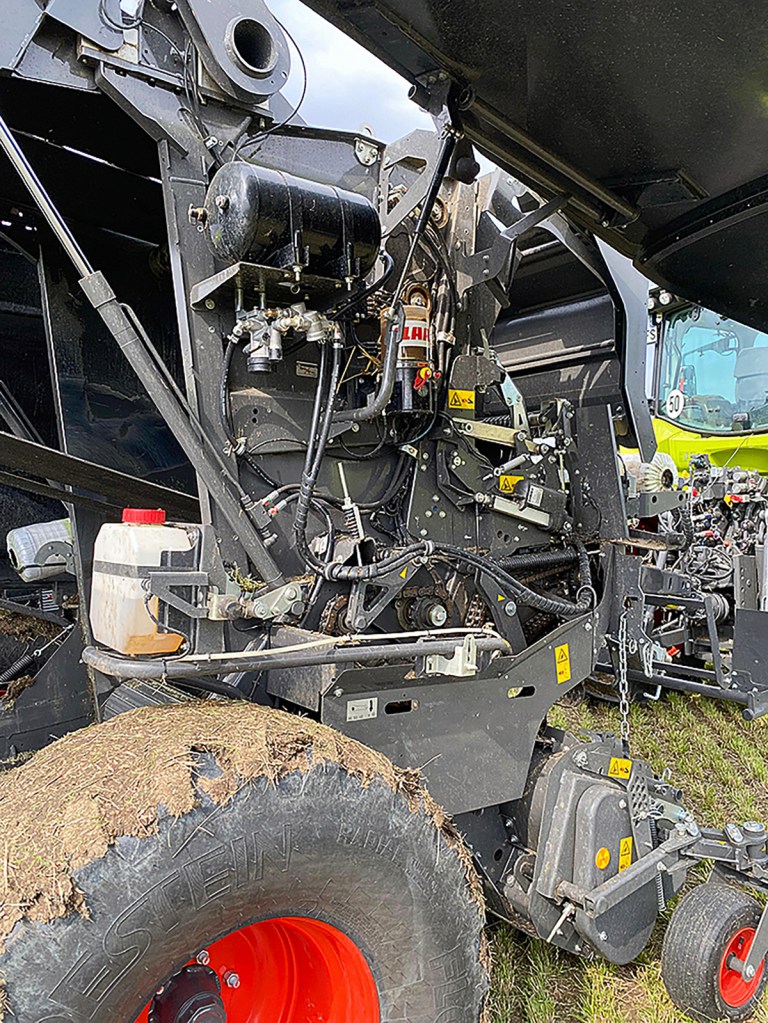
The wide-angle pto shaft is sourced from Bondioli and Pavesi. It connects to a T-gearbox that splits the power to the sides: the rotor is driven on the right; while, on the left, power is sent to one of the three starter rollers and the double belt drive. The other two rollers are driven by a chain on the right-hand side.
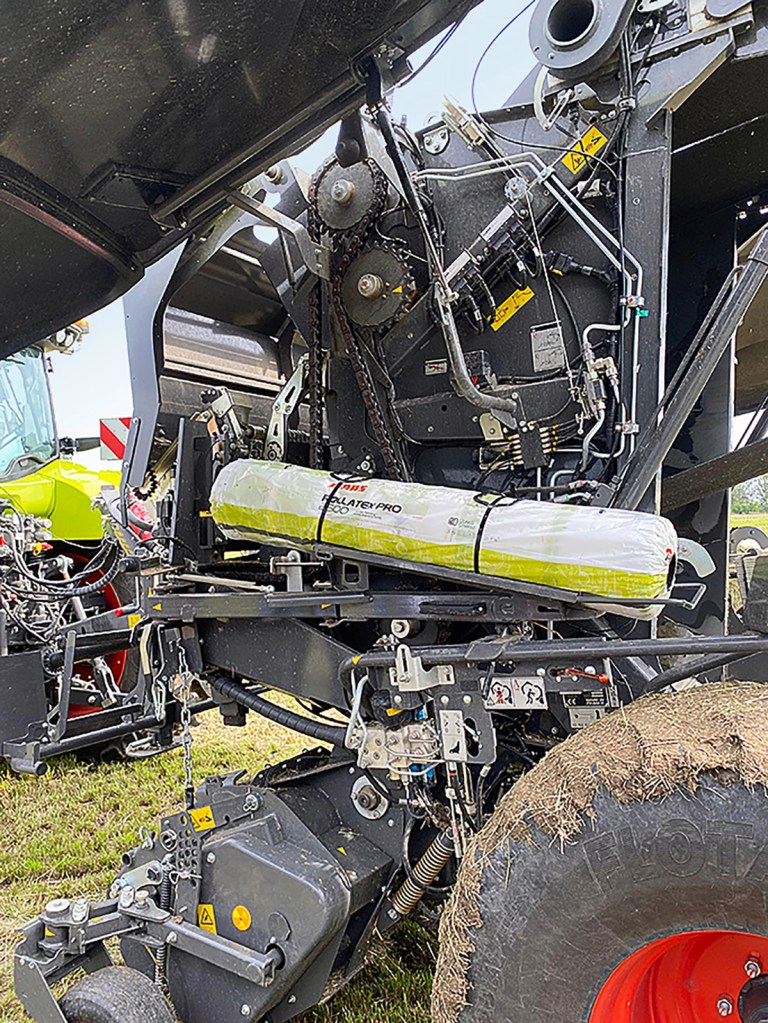
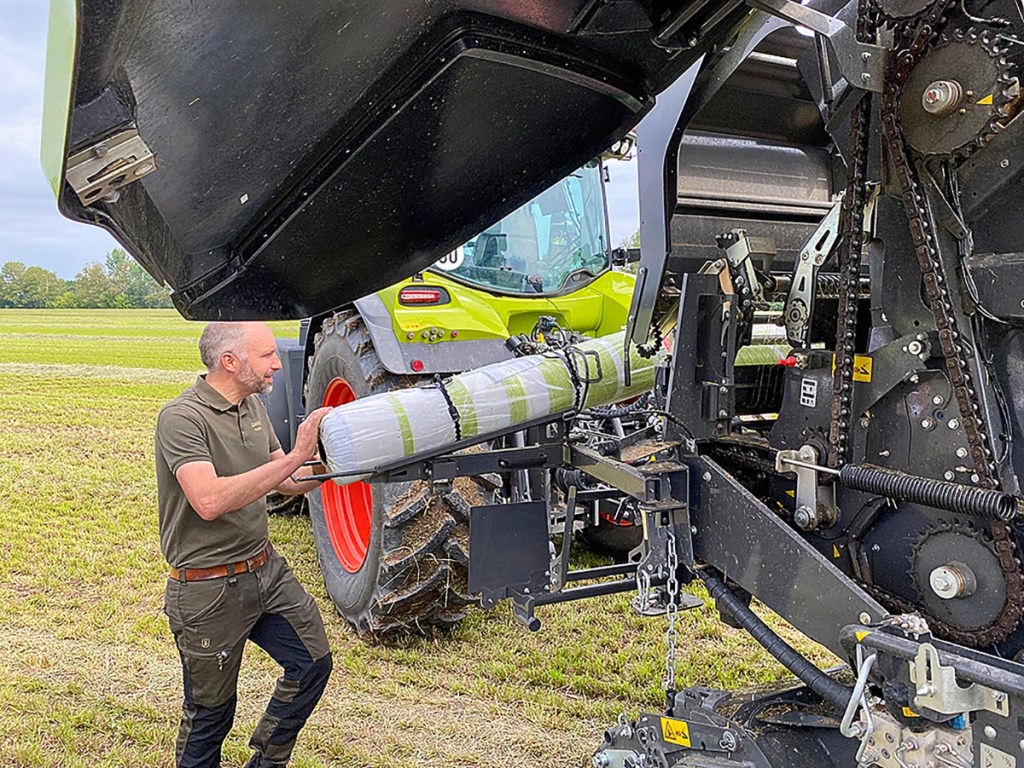
For the Cerex, Claas has gone for for two heavy-duty endless baling belts, which it says should improve bale shape and reduce losses compared with a single belt.
More per hour
To lay the foundation for higher throughput, the Cerex uses the MultiFlow HD pick-up with five rows of controlled tines and plastic stripper bands.
The rotor has a diameter of 500mm, spins over 35% faster than Variant 500’s and is driven by a duplex chain. This and the other chains are automatically lubricated from a central 7.2-litre reservoir.
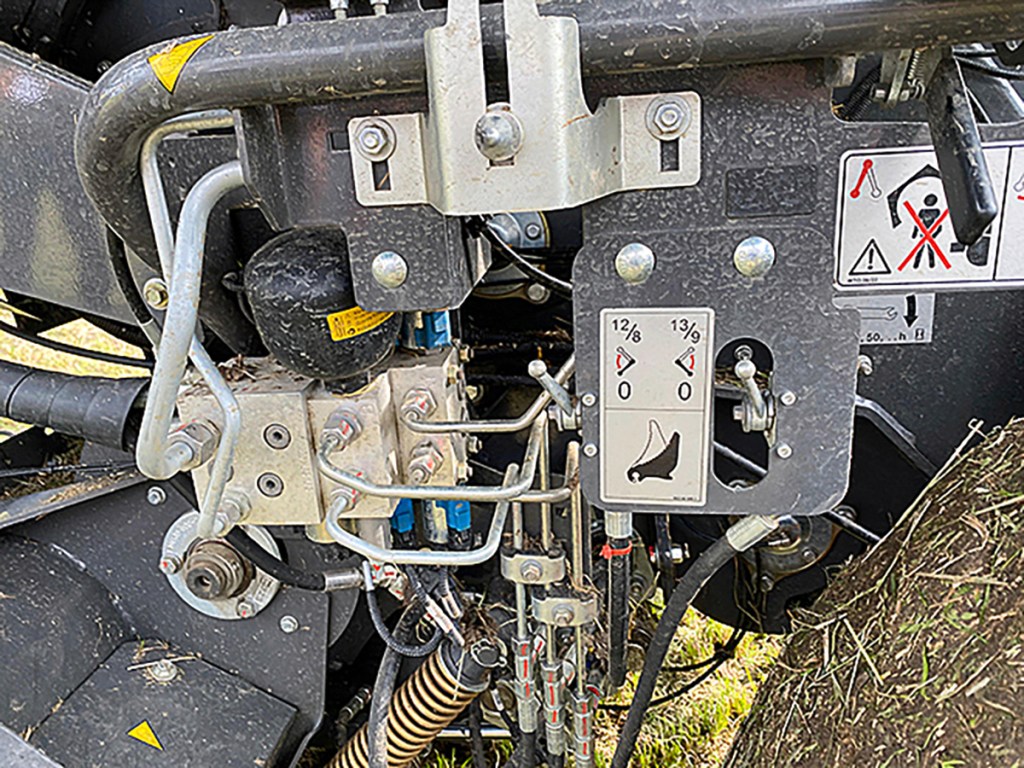
The Cerex comes with the option of RotoFeed and the RotoCut chopping system. The rotor pushes the crop through a 25-knife RC 25 (0, 12, 13, 25) knife bank.
Blade group selection is hydraulic, with individual mechanical overload protection for each blade. Claas specifies a minimum theoretical chop length of 45mm when all of the knives are engaged on the RC 25.
The ‘Pro’ drop floor below the rotor opens automatically if there is a baler overload, triggering an alarm on the cab terminal — these balers are ISObus-compatible.
Unlike the Variant, the belts on the new baler rotate counterclockwise. This means the rotor doesn’t engage with the bale; instead, the three starter rollers ensure the crop starts rotating from the outset.
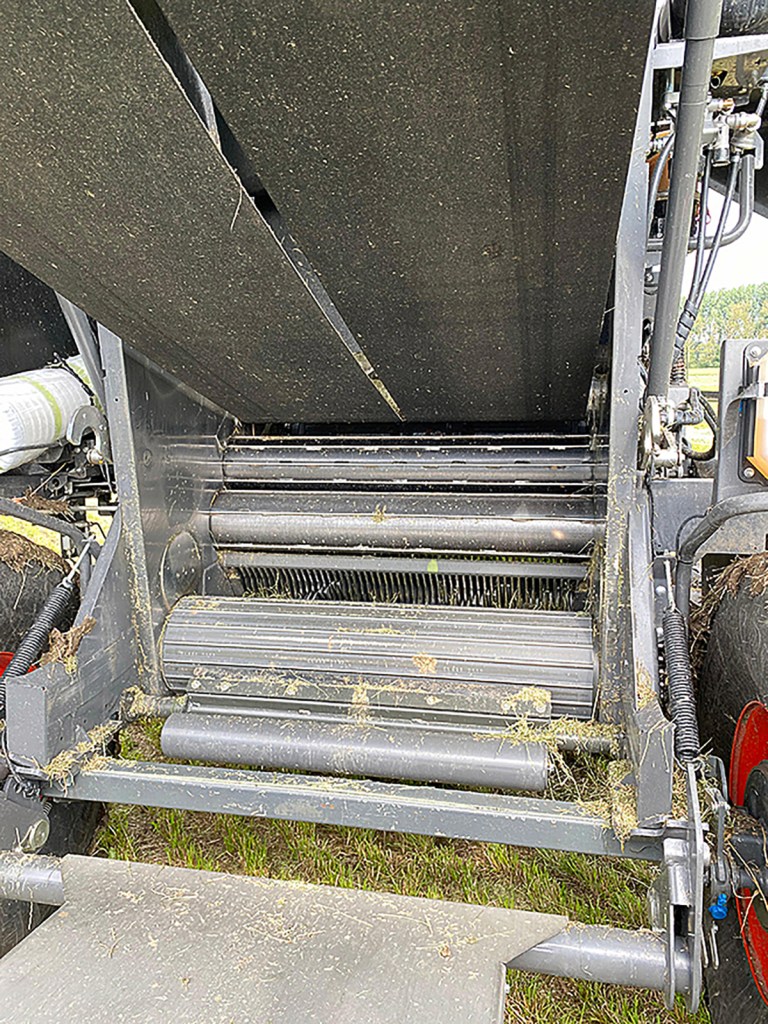
The bale density can be divided into three adjustable zones, and there are three pre-sets for straw, hay and silage. According to Claas, this, combined with the improved crop flow and the new chamber, results in up to 25% higher density compared to the Variant 500.
Net wrapping system
To handle the increased density, Claas has reworked the net binding system and fitted a hydraulic net brake that the operator can adjust via the terminal. The company is also working on new nets that are said to be tough enough to cope with the higher forces at full compression.
Operation
The layout on the ISObus-connected display appears relatively simple to fathom with a straightforward menu structure. Operation requires one single-acting spool (pick-up) and one double-acting spool (rear door, blades, drop floor), with the function pre-selected on the screen.
We should be getting our hands on one of the new balers this season for a more in-depth practical test. Keep an eye out for that in a future issue.
Christian Brüse
For more up-to-date farming news click here and subscribe now to profi and save.