

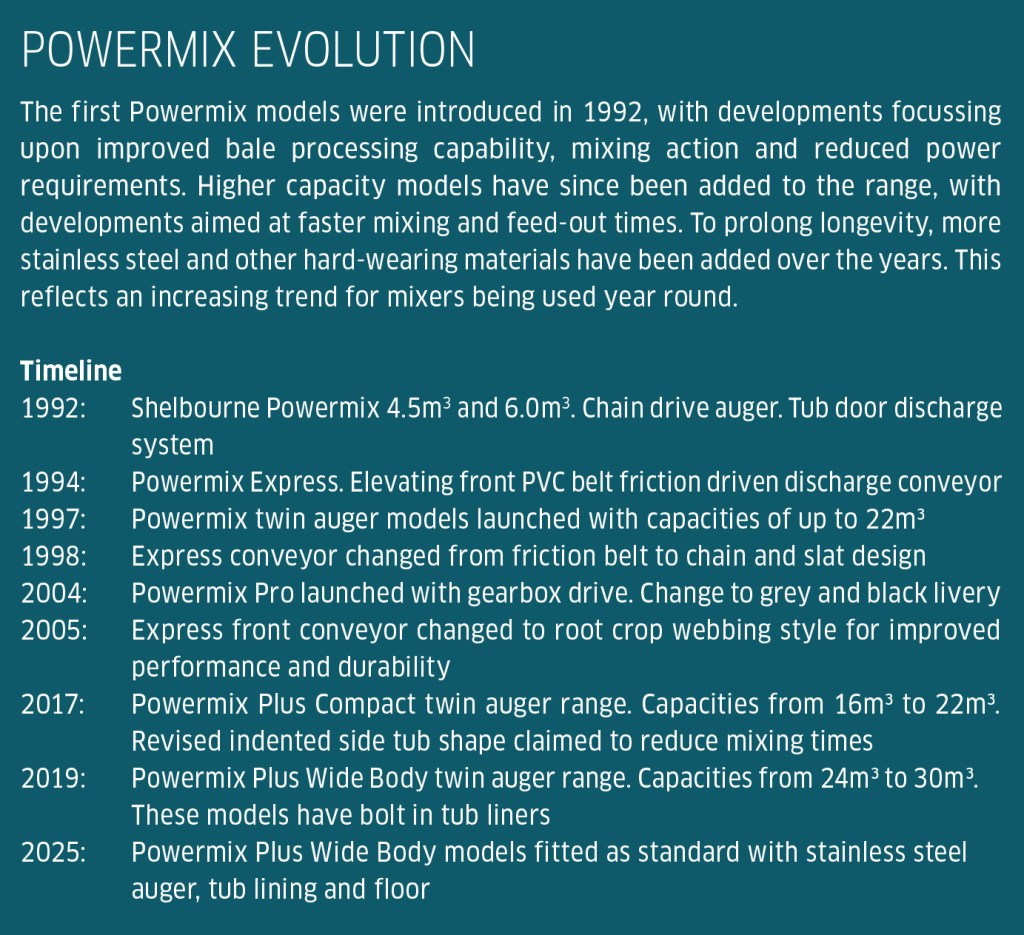
Shelbourne Reynolds Powermix vertical auger diet feeders were introduced in 1992, a Powermix 100/50 10m3 capacity model we tried in 1998 seeming a relatively large bit of kit at the time. It also needed all the 88hp we had on hand to power it. A small reminder of how things have moved on. A huge amount has changed since then. If you do find a used Shelbourne Powermix, you need to look beyond its capacity to secure a good buy.
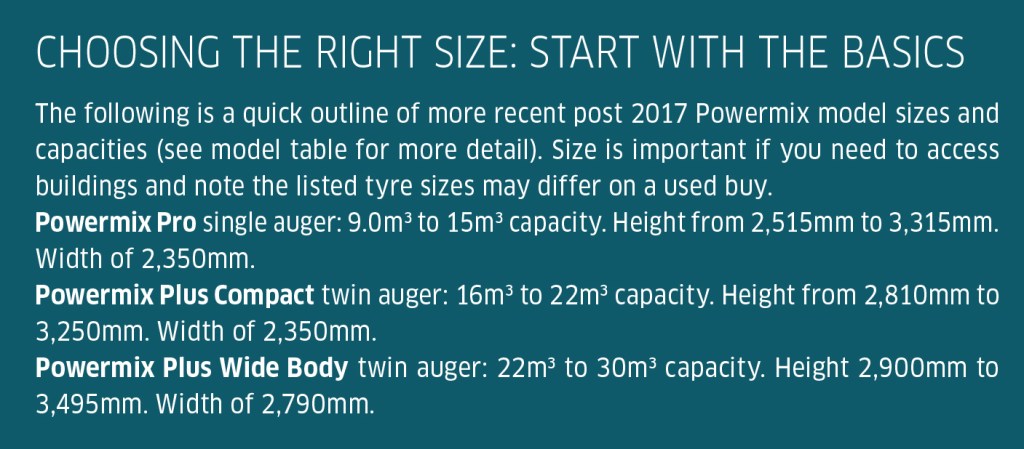
Vertical auger diet feeders come in a wide range of capacities, but all essentially follow a similar method of chopping and blending rations. This can make it easy to assume one make and model will be pretty much the same as any other. In practice the numerous design developments made to these diet feeders over the years should not be overlooked. As to used buys, most of the Shelbourne models we consider here will still be effective at coping with high density bales, deliver a consistent mix and feed it out all in a timely fashion. The key is to match the machine’s wear and capacity to its future usage.
Machine durability and resistance to wear is another consideration as this has been markedly improved over the years. Later models may also have improved ability to handle increasing horsepower to cope with bigger feed volumes day after day without a breakdown. As a sweeping generalisation, Shelbourne Reynolds Powermix models made since they went from yellow to a grey finish in 2006 are now the ones to consider at the entry level end, with later variants from 2017 more likely to suit those seeking a mixer for more intensive operation – see the developments panel for more on this.
Be realistic
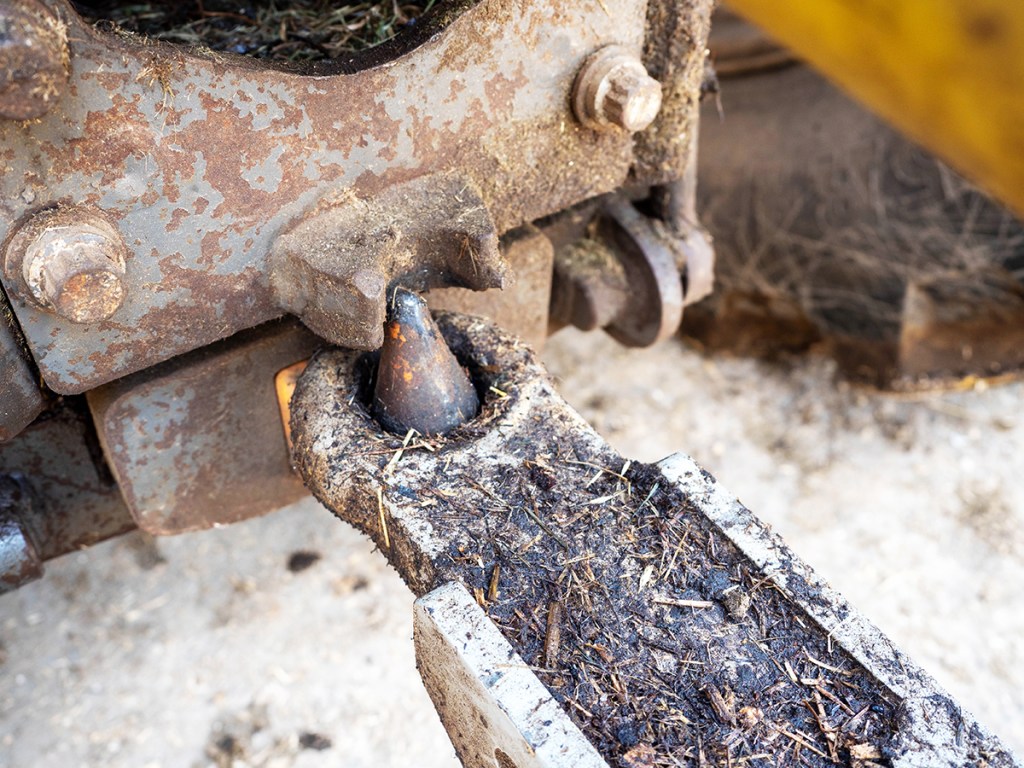
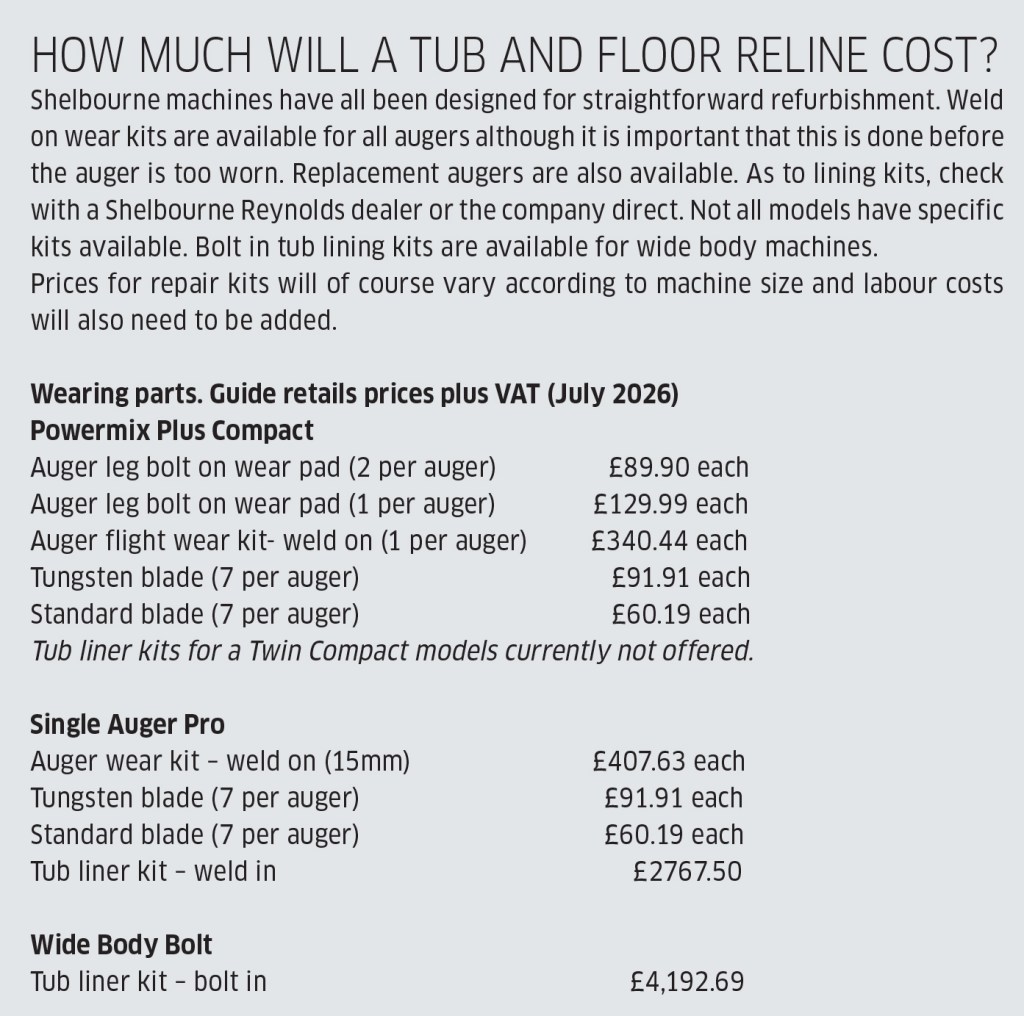
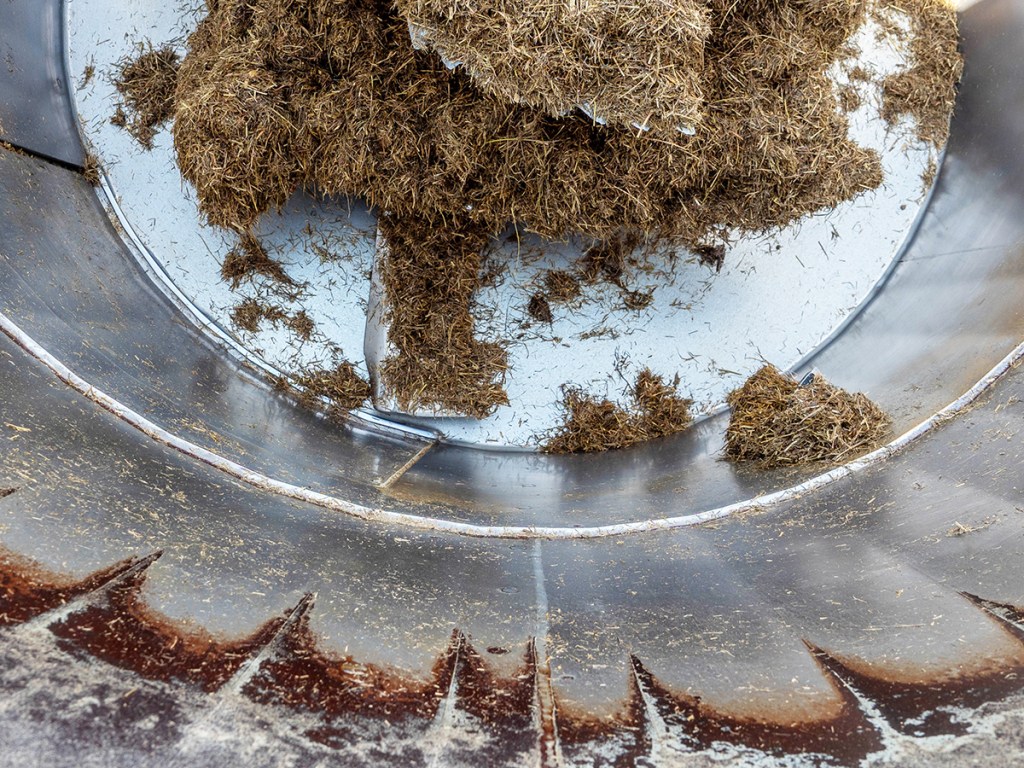
With reference to longevity, diet feeder wear in the tub sides, floor and auger flights will determine if a used buy is worth considering. Engineers at Shelbourne Reynolds can use an ultrasound tool to determine tub and floor thickness but dealers are unlikely to be able to offer this service. This typically means a dealer will only sell on a model that they know is sound. If buying privately, you need to be careful as a well-worn tub and floor is difficult to pick up, the more so if the auger flights and the rest of the machine present are in good order. If tub wear reaches a certain point, relining will not be possible.
NOTE: Wide Body models have bolt in liners. This makes refurbishment considerably faster and easier.
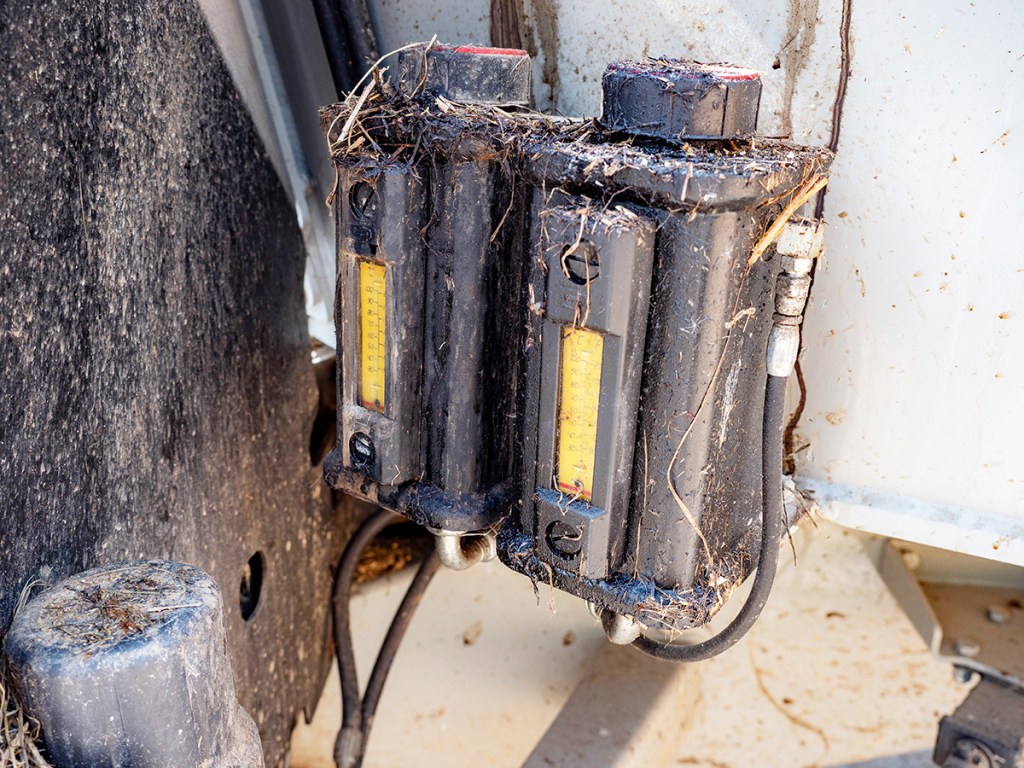
Although machine age can be a guide to how worn a machine is, there are no hard and fast rules when it comes to saying that after certain amount of time the machine will need attention. An intensively used feeder can easily clock up 2,000 hours of use a year (there are no hour meters on these mixers) but how worn it will be five years down the line is difficult to predict as a great deal will depend upon what it has been used to mix. A tidy looking machine that has been well looked after can hide its wear well too, so be careful and do not be afraid to seek advice.
Discharge systems
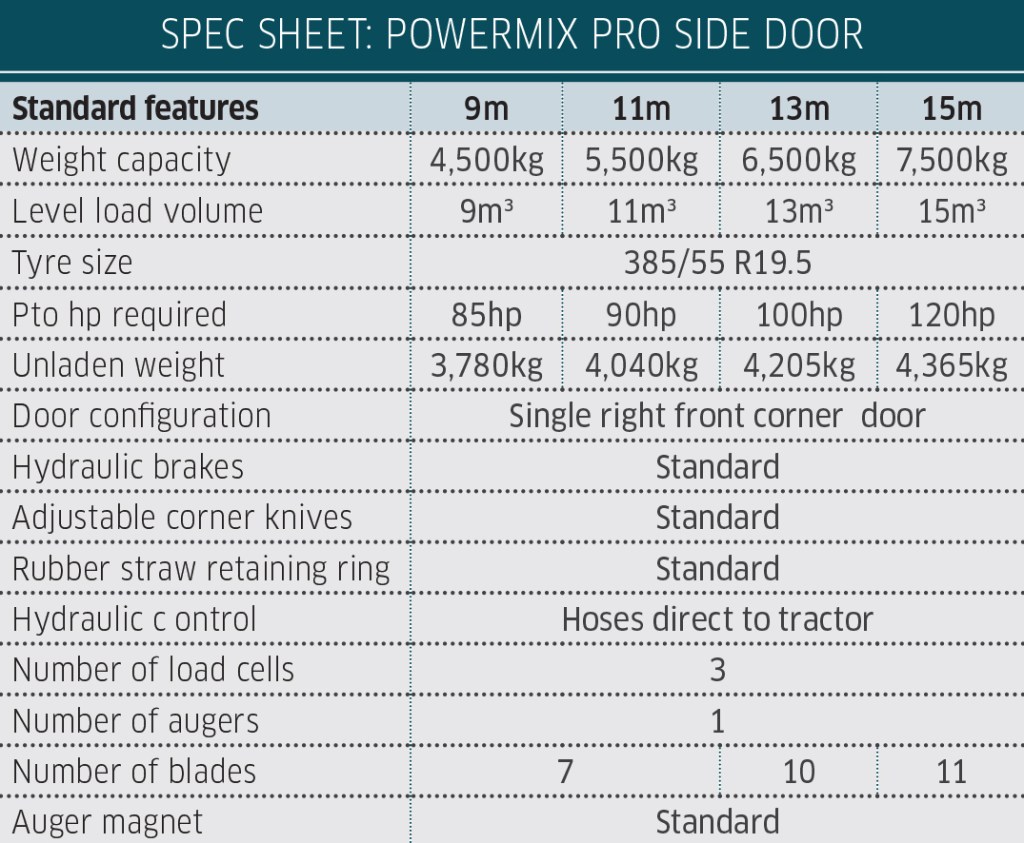
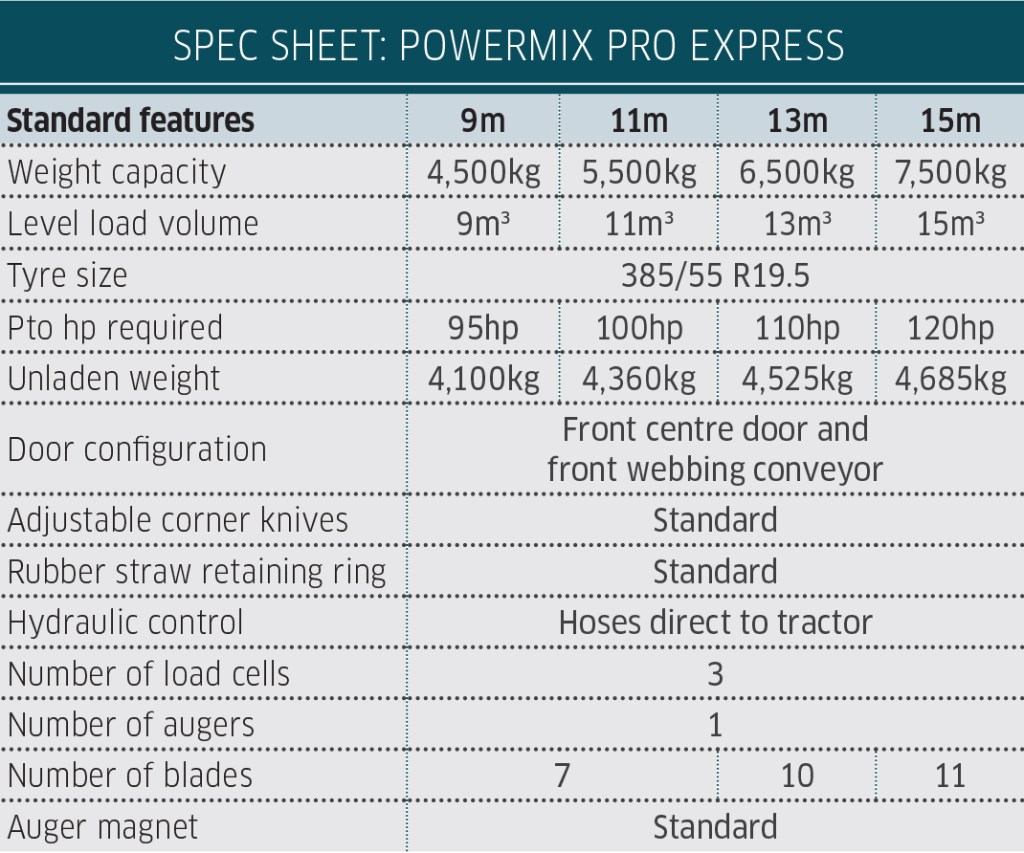
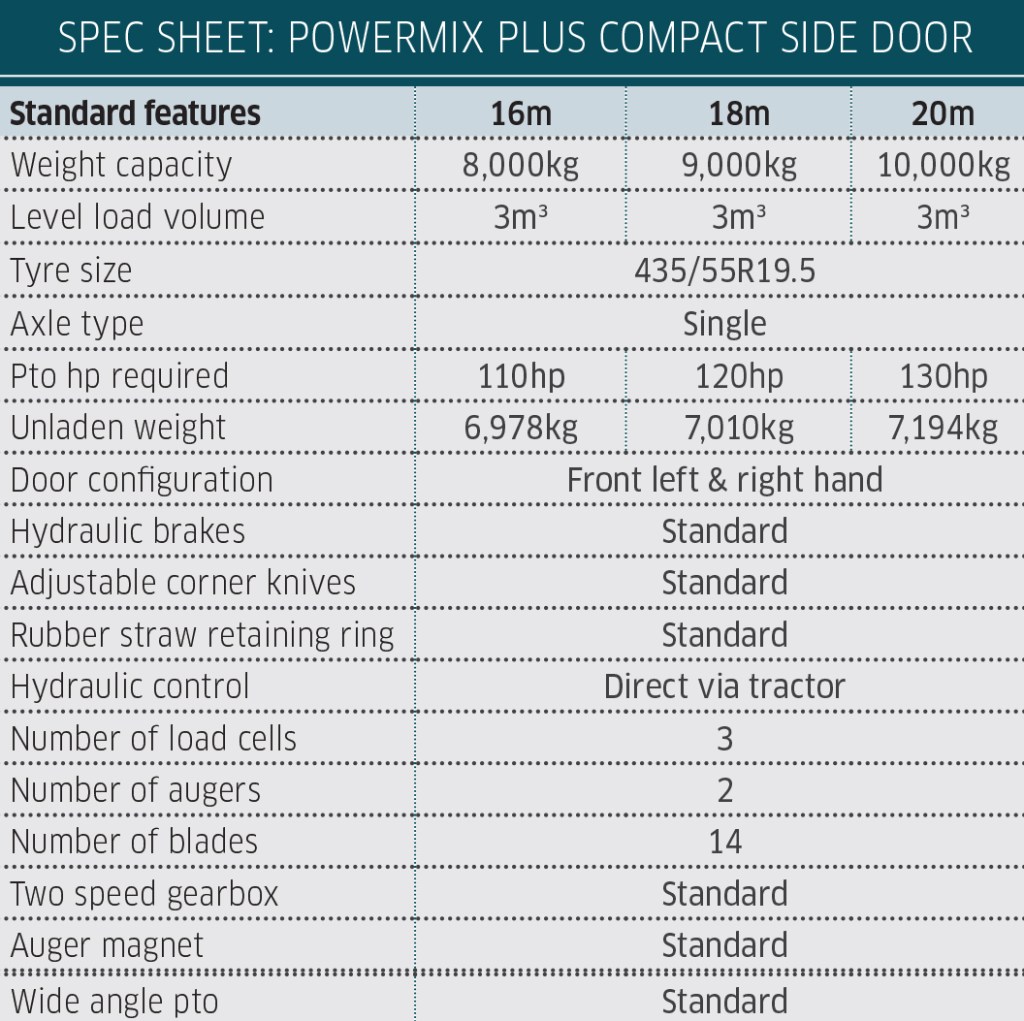
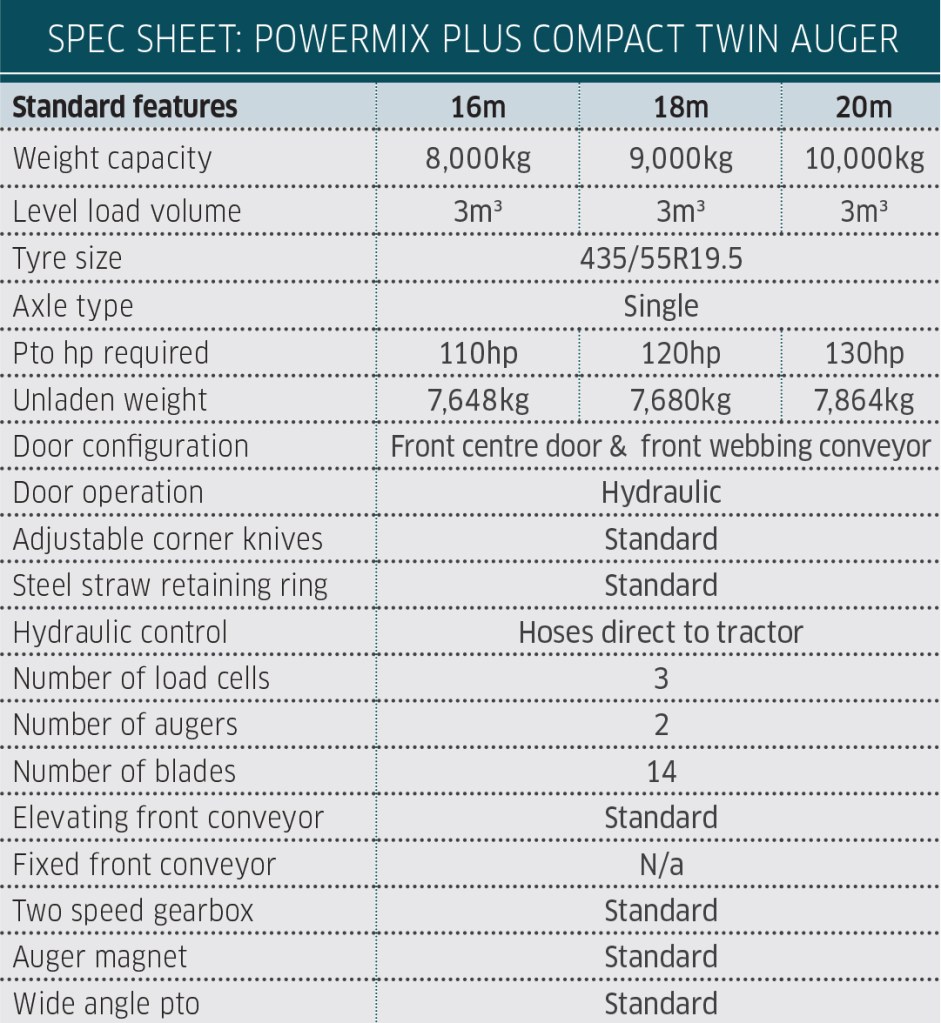
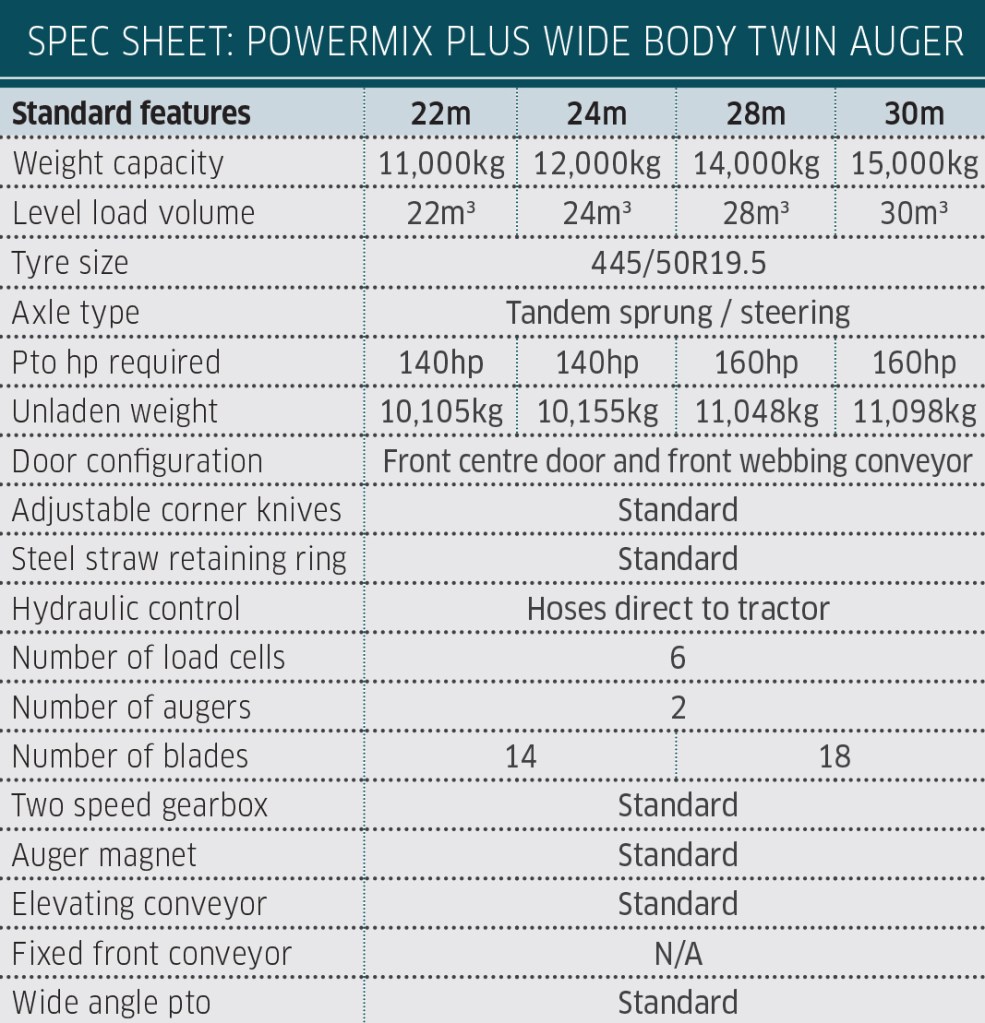
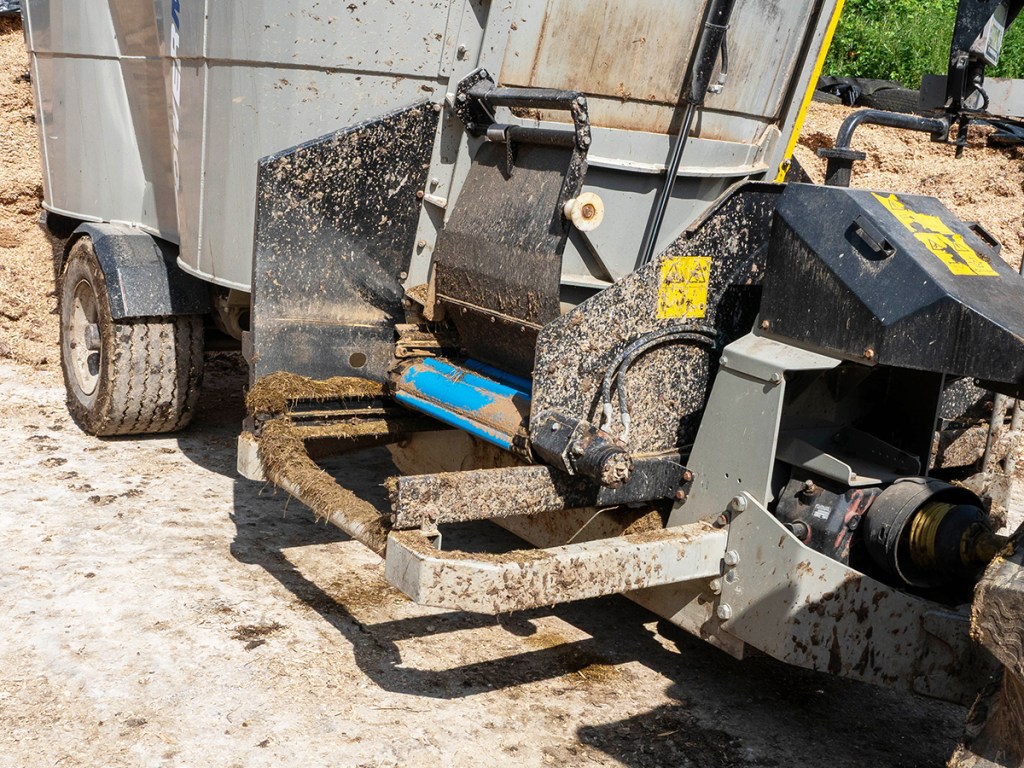
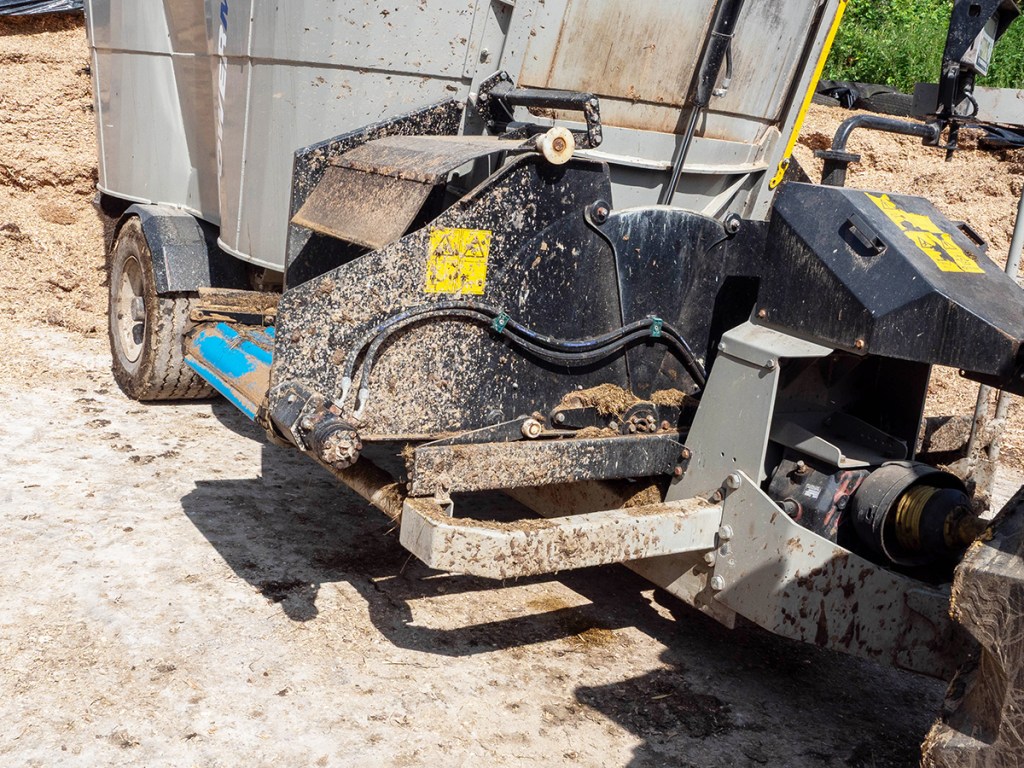
A ‘basic’ side door Powermix Pro will discharge direct from the right side of the tub via an opening door to ground level. Most outlets discharge to the right side of the wagon, with an outlet to the left an option. Express variants feature a front conveyor that will unload to the left or right of the machine, with an elevating front conveyor to increase the discharge height a common option. There is also a centre rear tub discharge door available. How these diet feeders are configured can vary so it is worth checking before assuming all will follow the typical build outlined in the spec tables.
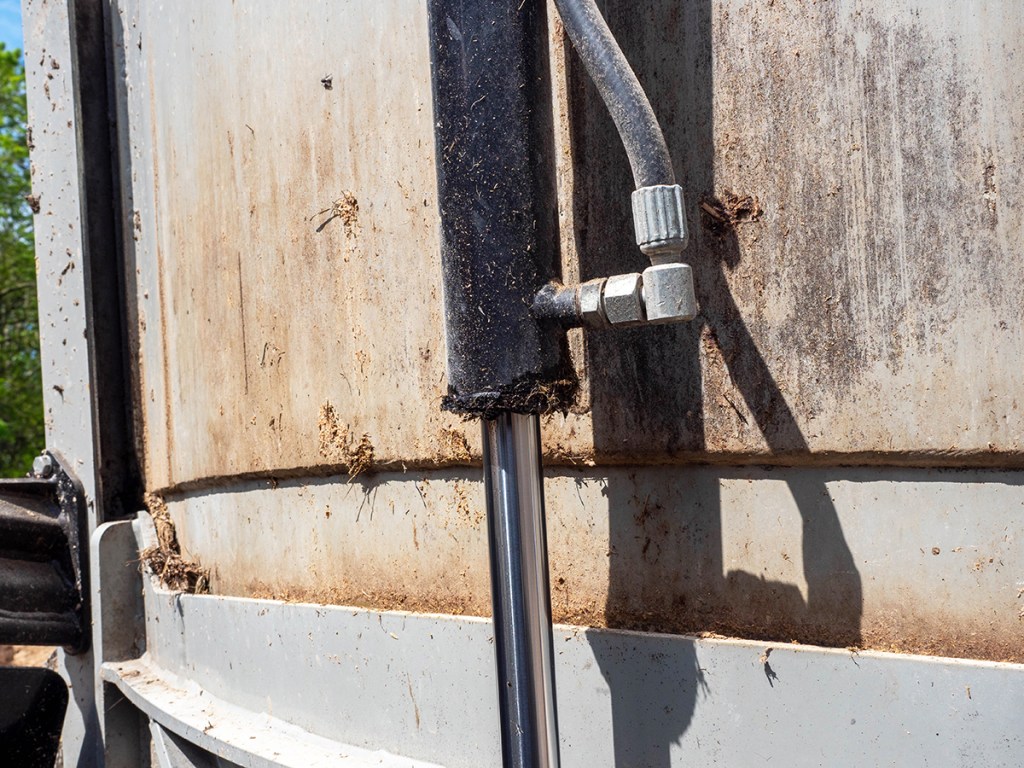
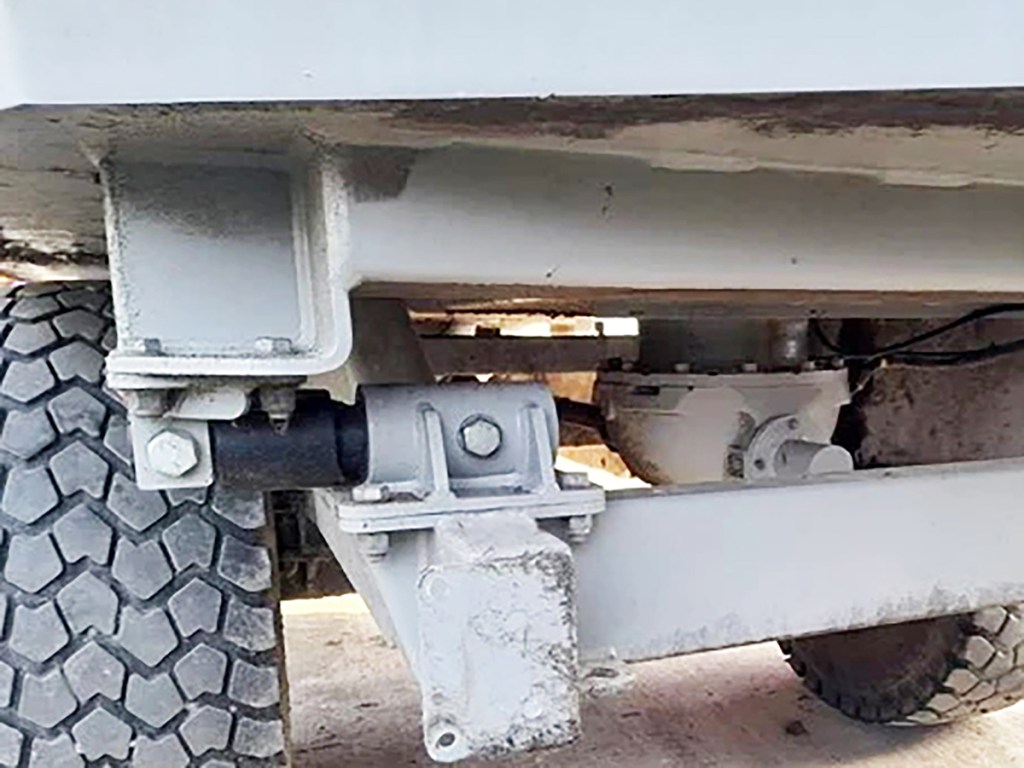
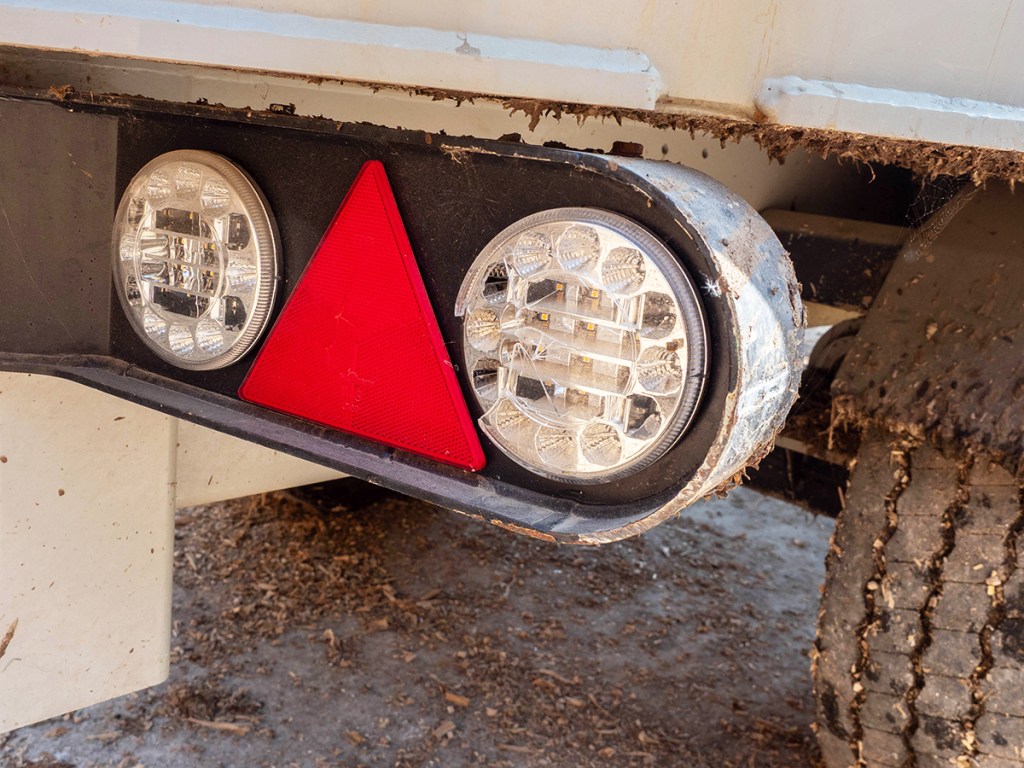
As to the running gear, a single un-sprung axle is fitted to single auger models, with a choice of a single axle or tandem axle on twin auger mixers. Wide Body twin auger models are fitted as standard with a tandem parabolic sprung axle, later models also with steering. All models made from 2016 are fitted with LED lighting.
Power to operate these diet feeders will obviously relate to size and capacity, a Wide Body Powermix having a recommended power input rating of 160hp at the top end, a nine cube, single auger machine at the lower capacity end suiting tractors of 85hp, just like the early variant we tried back in 1998.
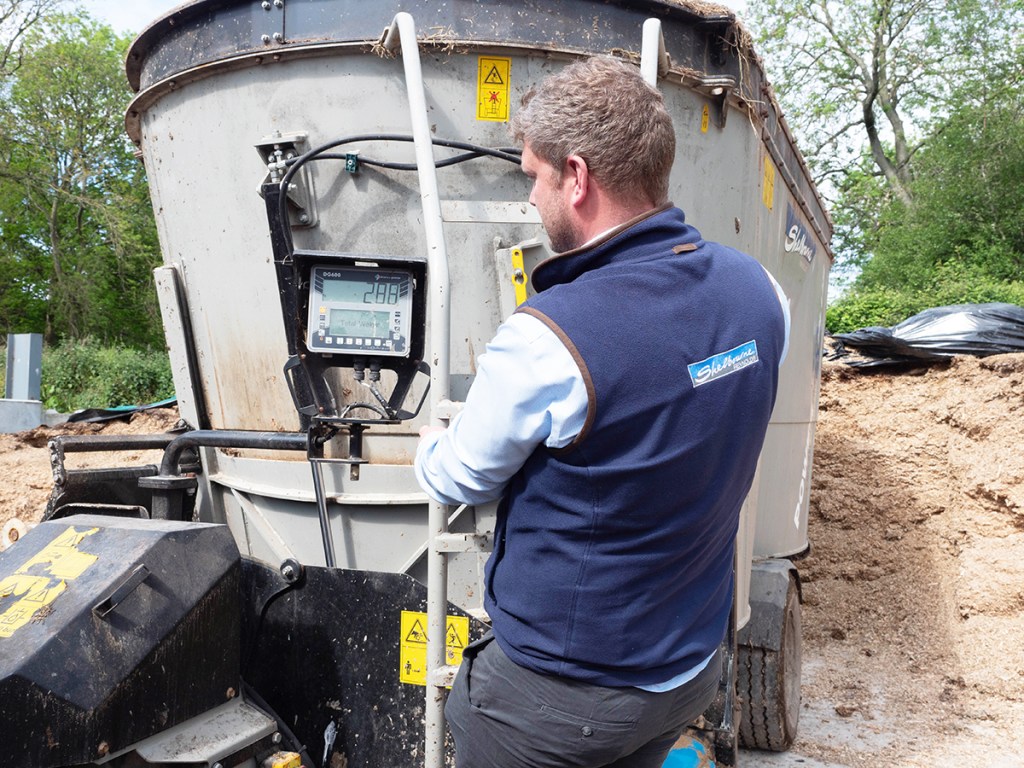
Older versus more recent units
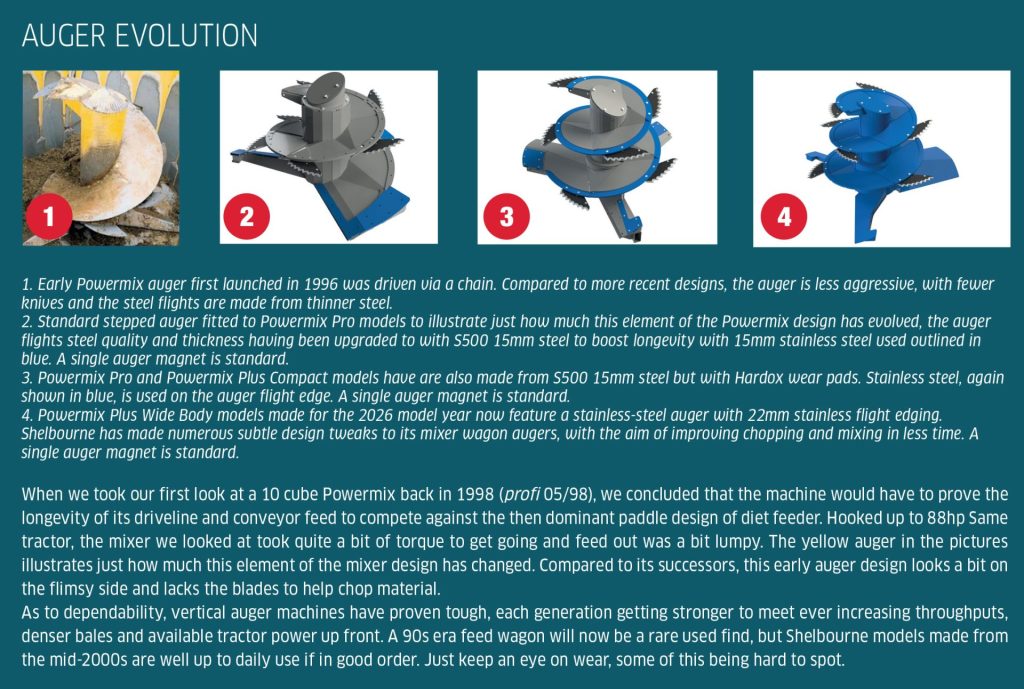
Because so much will hinge upon the wear of a used buy, it is perhaps tempting to suggest a really sound 20-year-old model will do the same job as a much younger machine in the same condition. What you may need to think about is what you are putting into the mix, the time in which you want your ration to be completed and how fast it is discharged. Compare the auger designs of a 20-year-old Powermix and a current model and there are subtle differences, both to strength and improved wear characteristics of later designs, and also to how effectively the auger and blades mix and chop the ration.
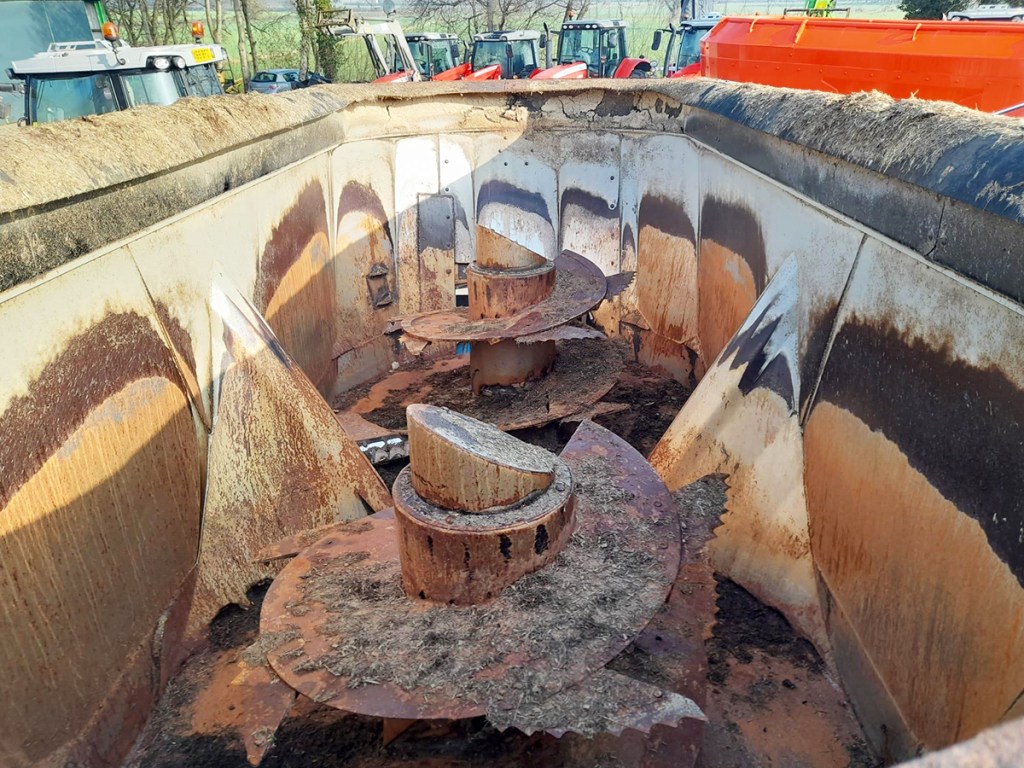
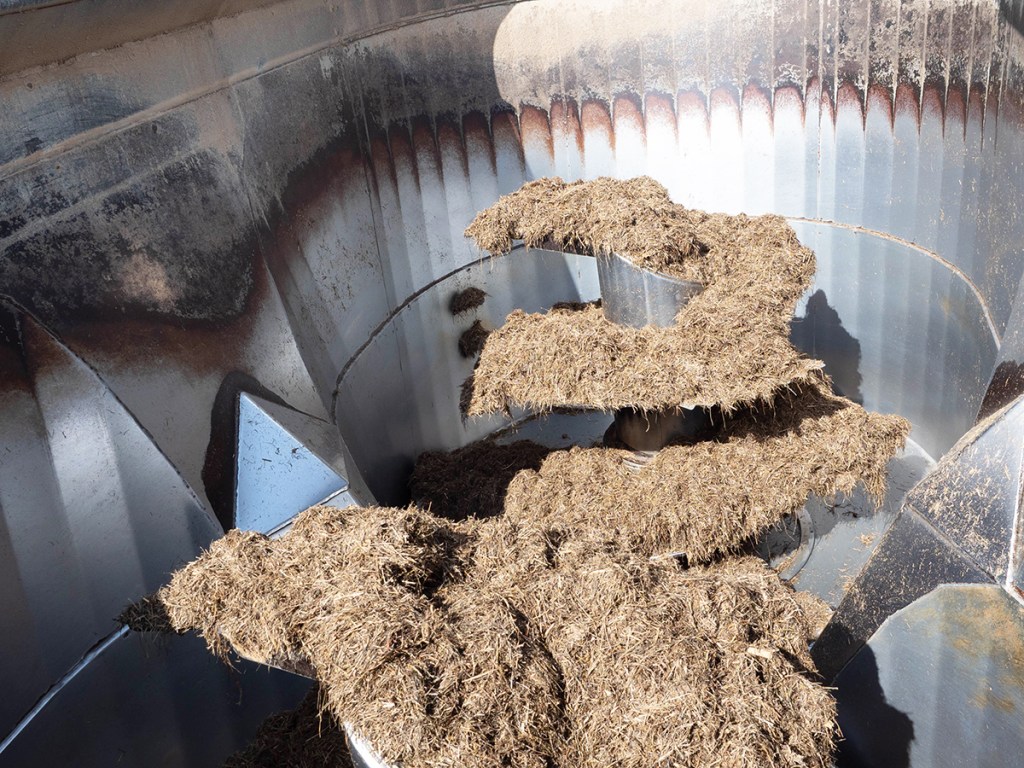
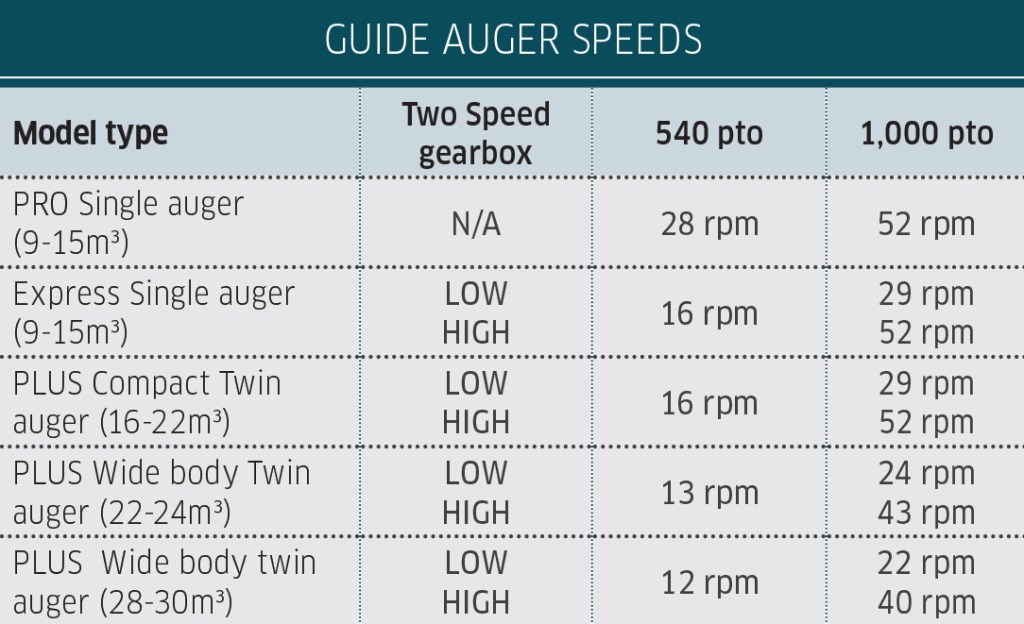
Shelbourne Reynolds now offer three main auger types to match the output of its Pro, Plus Compact and Plus Wide Body models (see Auger Evolution panel).
As to the body of these machines, tub steel thickness and material quality has changed as outlined in ‘model development’ on the next page. The tub design on twin auger models has also evolved, models prior to 2007 having flat sides, later variants a stepped indent that lines up with the division between the front and rear augers.
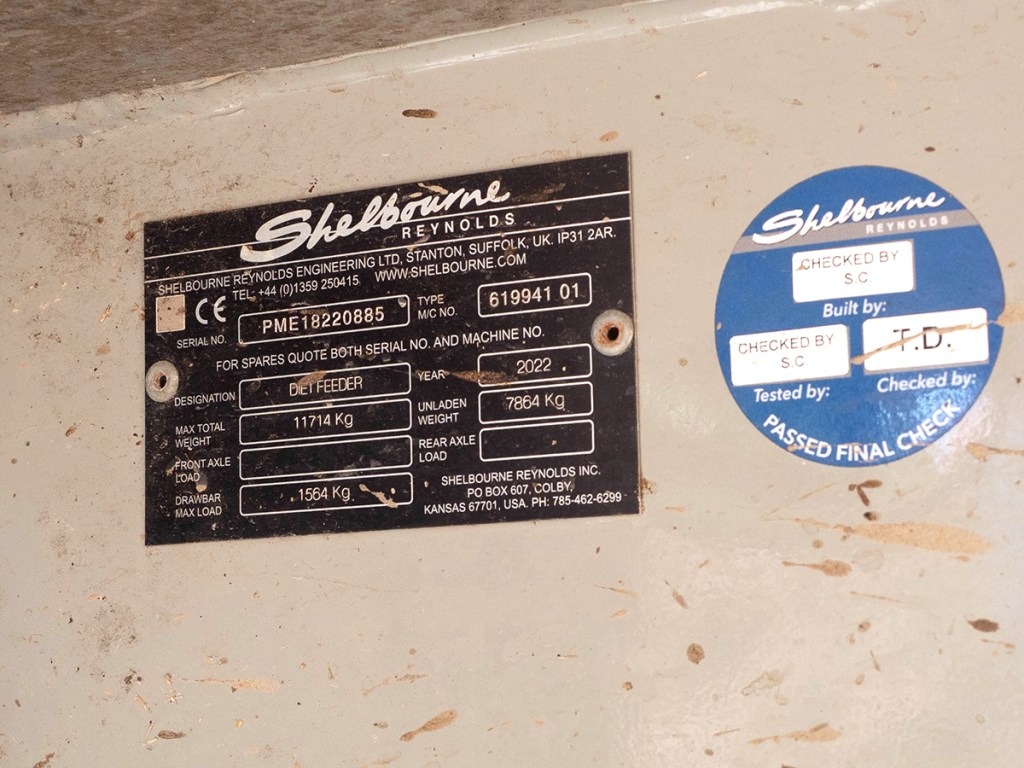
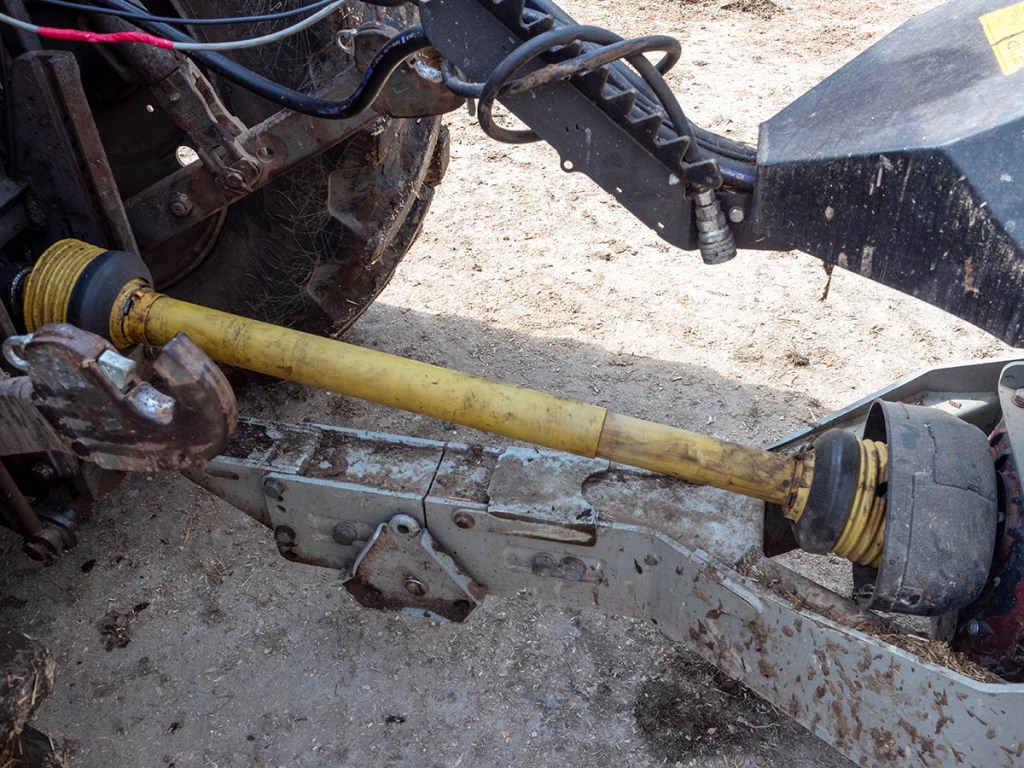
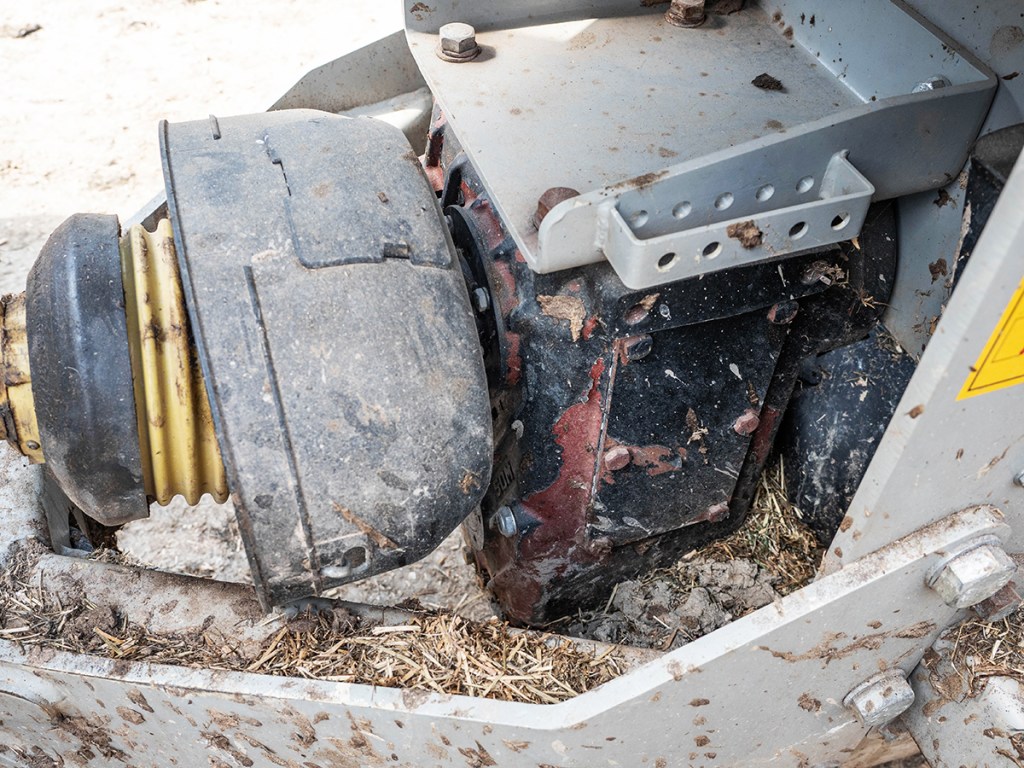
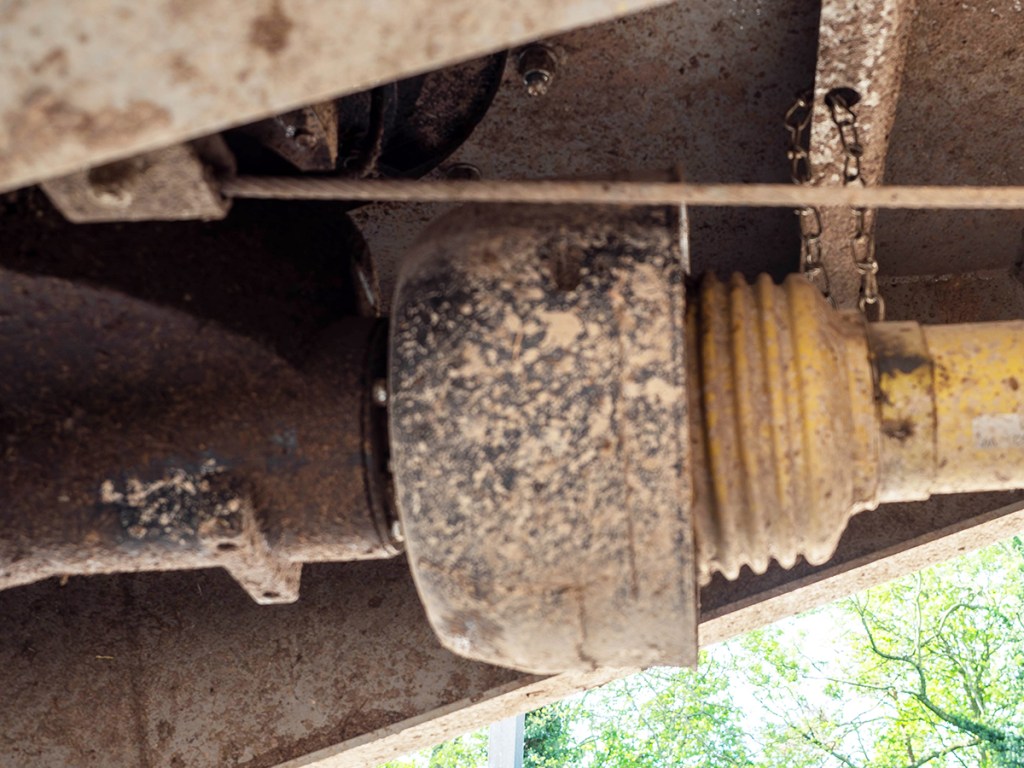
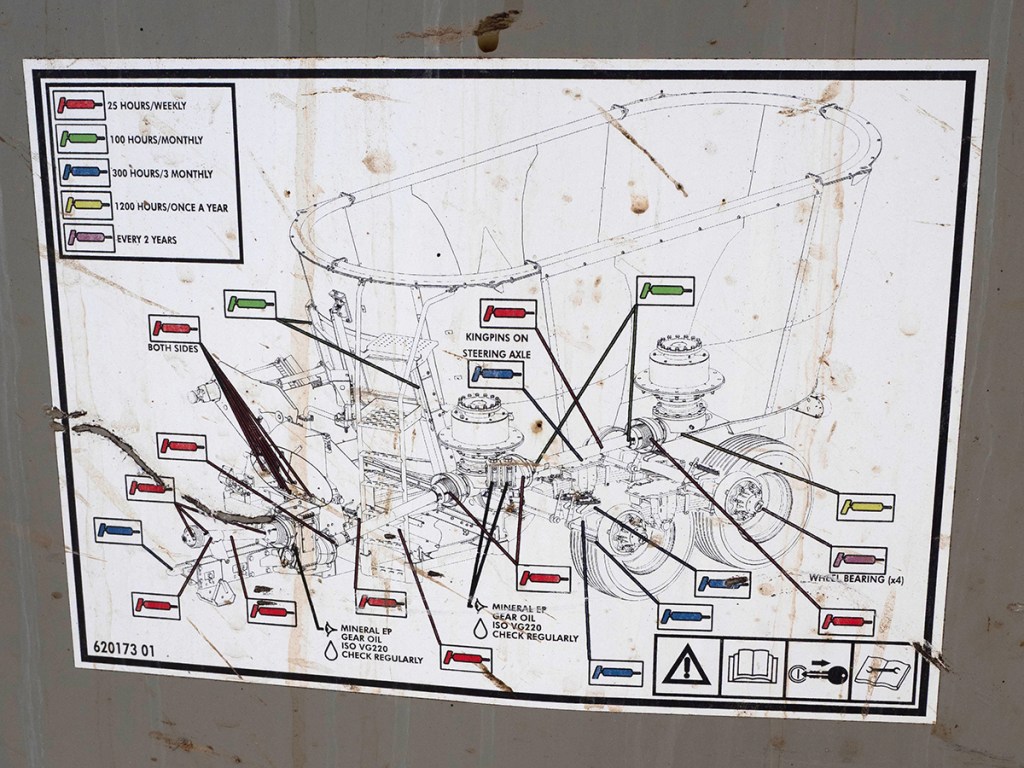
Other changes have been made to the driveline, with heavier duty input gearbox and auger drives introduced as outlined in the development panel. This is more to allow for increased tractor power rather than as a weakness of older units. Changes also reflect the need for modern feeding systems to be able to handle heavier and more dense bales.
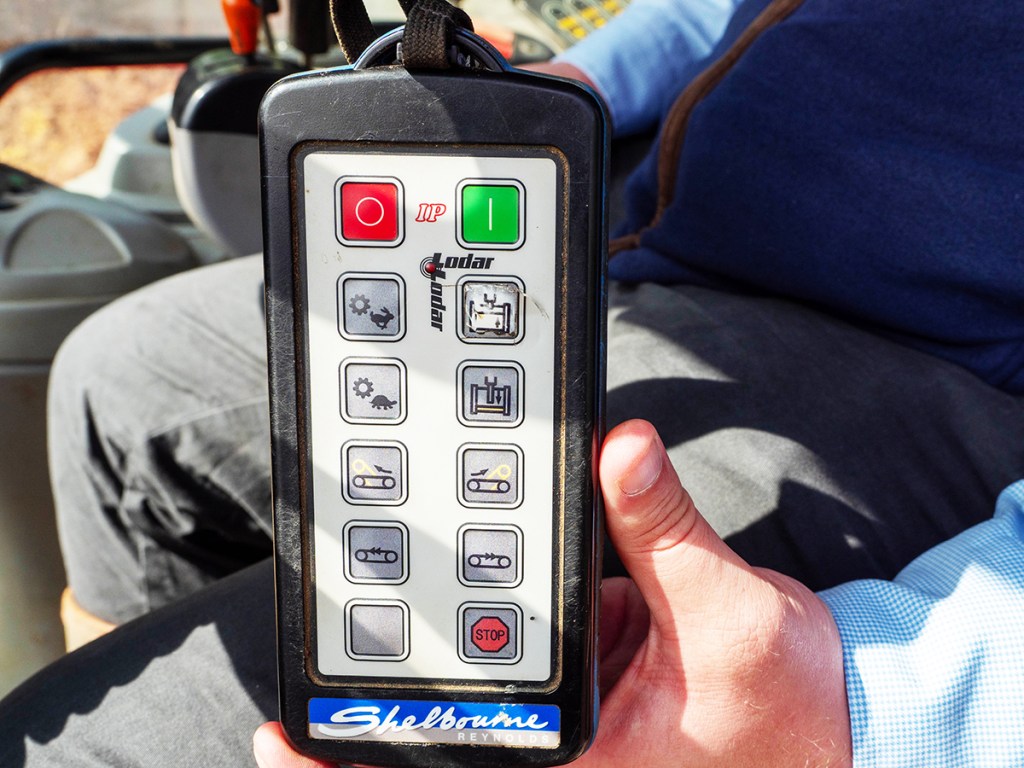
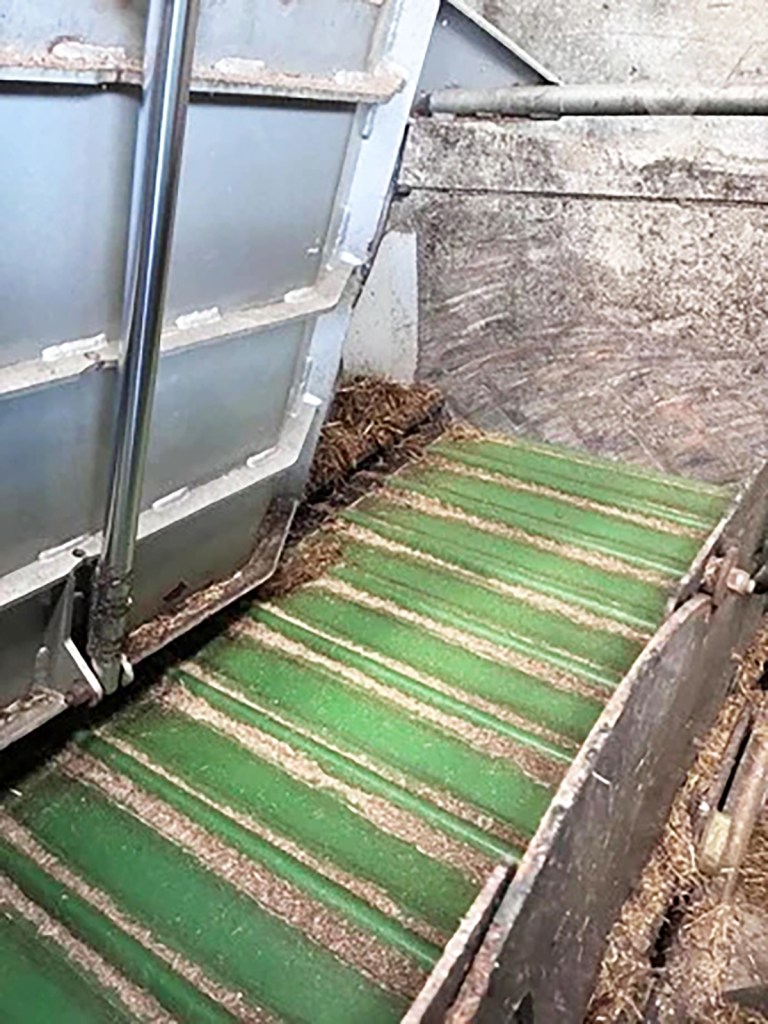
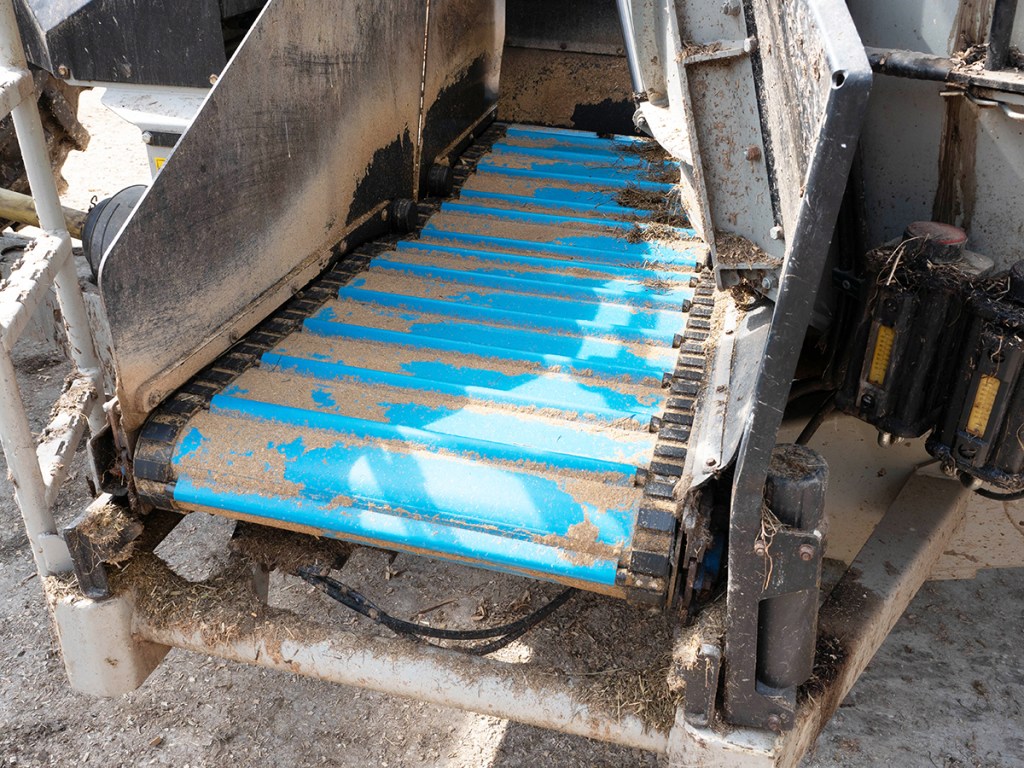
The conveyor fitted to Express single and non-side door twin auger models was originally a green design with a joiner. To improve durability, the belt was changed to an endless design. Some of these were initially finished in green, with a move to blue finish. If the conveyor is blue, it is endless, but if it is green, it is more likely to have a joiner but not all so check. The blue design tends to be more robust but taking more time and effort to change. Other points to look for are the top ring, which has been beefed up from 2017 and the use of LED lights from 2016.
As to prices, everything will clearly hinge upon age and condition. Shelbourne Compact twin auger models benefit from 12mm thick sidewalls and stainless wear edge on the augers as standard. This can mean sound three-year-old examples can sell for between £20,000-£25,000. For other models, prices range from an entry level £7,500 for a single auger PRO in working but worn order, twin auger COMPACT machines seldom dipping below £10,000 unless worn beyond economic repair.

Summary
If you are looking for a used diet feeder, a Shelbourne Reynolds Powermix can make a solid choice. Parts support, including refurbishment kits, should be readily available through the company’s dealers and direct from its factory in Stanton, near Bury St Edmunds. The key is to ensure the used buy you are after is of the correct capacity and size and not worn to a point where a body reline or auger refurb is no longer viable. These units are designed to be refurbished but this can only be done if wear is caught in time.
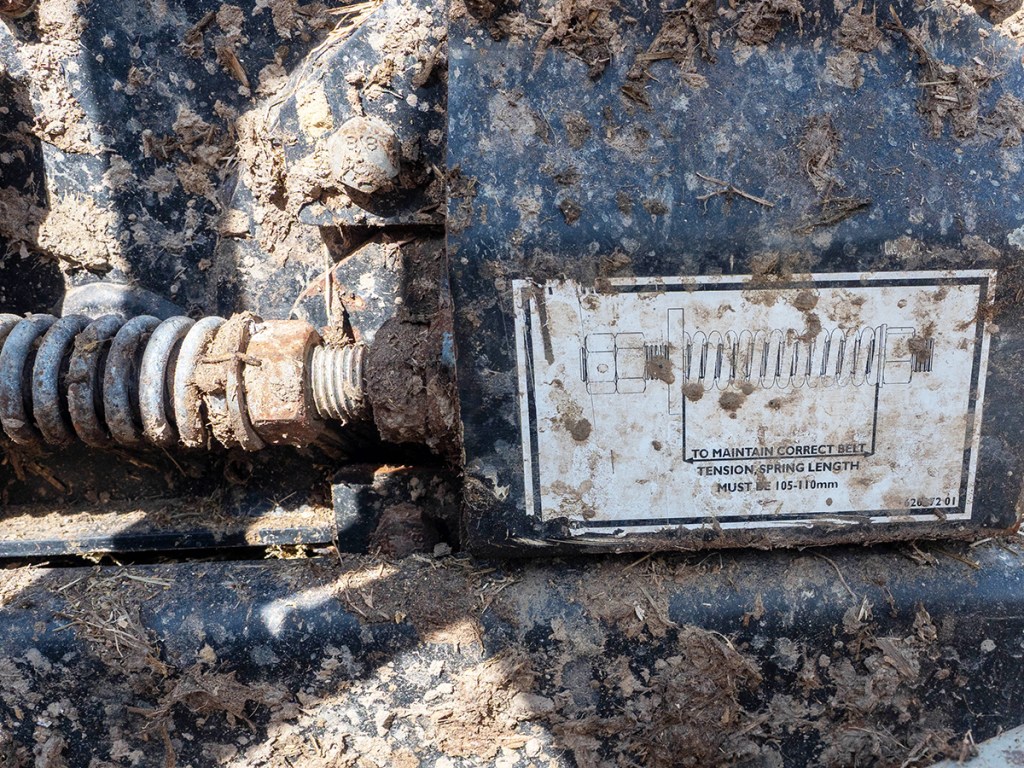
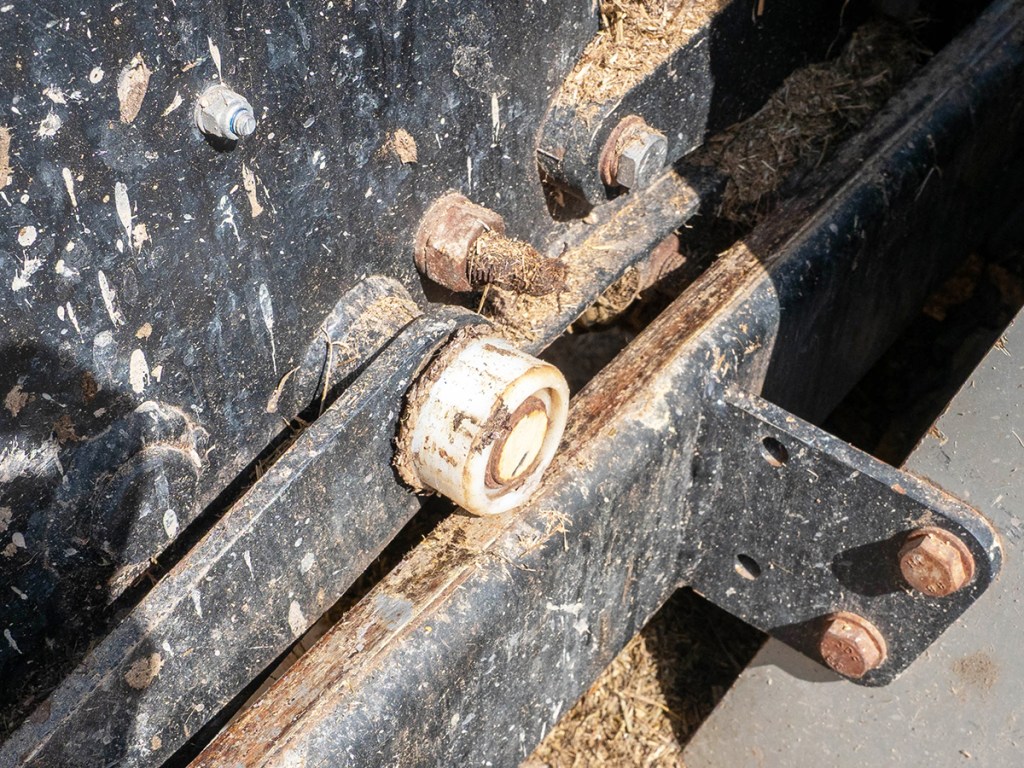
As to availability, dealer supported used finds are thin on the ground. This is largely down to how the mixers are used, many only being replaced when worn out. Those machines that do become available are more likely to come from users looking to change to a machine of larger capacity. A worn but sound machine can make a sound used buy, the more so if you have the time and resources to refurbish it before it becomes uneconomic to repair.
With thanks to: Guy Lewis, Mile End Farm, Calne, Wiltshire, Andrew Symons Ltd, Holsworthy, Devon, Robert Davies Machinery, Shrewsbury, Shropshire, Tallis Amos Group, Narberth, Pembrokeshire and Alex Hodgetts and Neil Smith, Shelbourne Reynolds.
James de Havilland
For more up-to-date farming news click here and subscribe now to profi and save.