
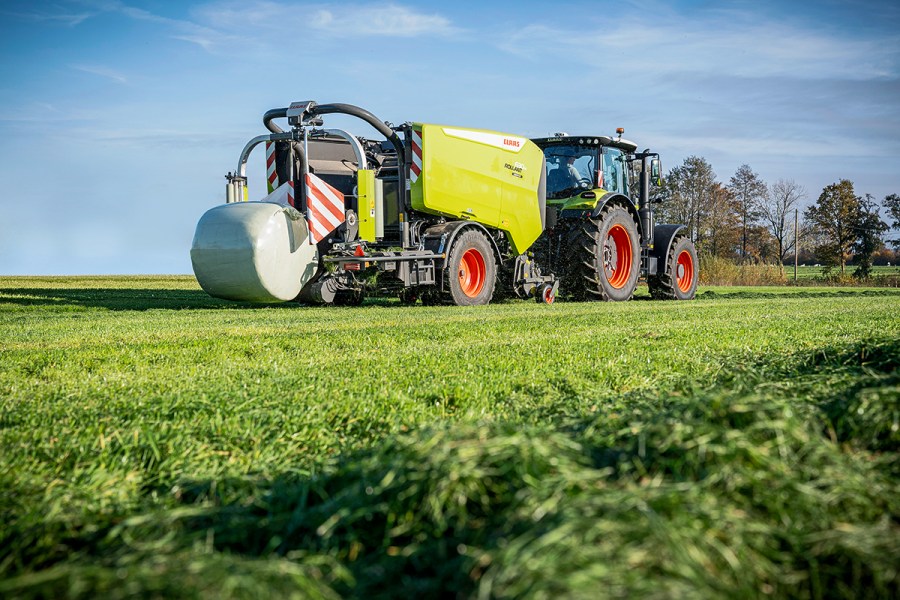
Fresh in the field last season, we have been testing the new generation Rollant Uniwrap combi baler to find out if previous criticisms have been addressed.
KEEPING IT BRIEF
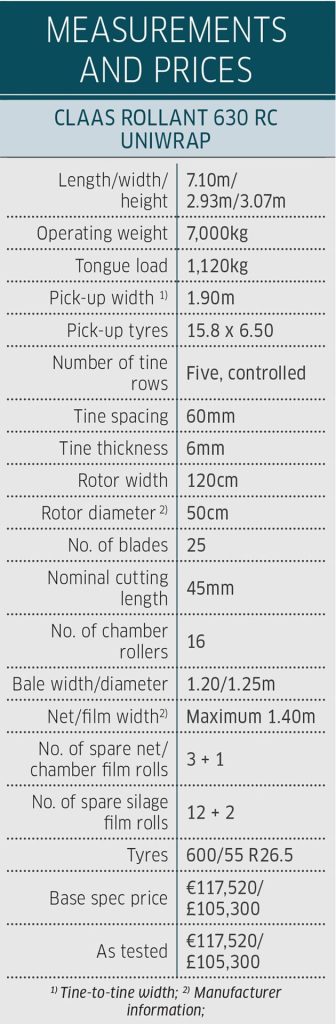
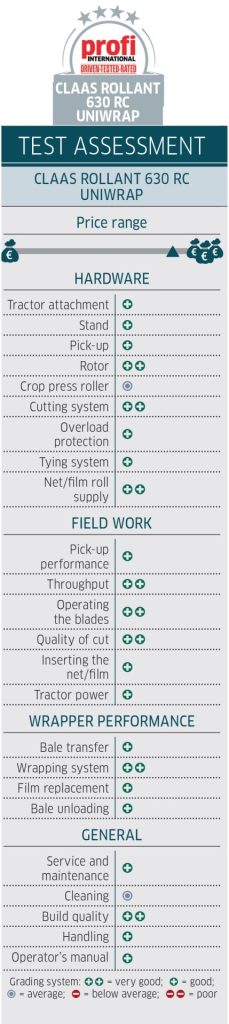
- The 630 RC Uniwrap was first shown in mid-2024 as a replacement for the 455, addressing many of the 455’s criticisms.
- If you want to make the most of the potential output and density you will need north of 150hp.
- When it comes to pricing, Claas is near the top end of the scale.
- Claas has been in the combi-baler game now for 25 years, with the first Rollant Uniwrap models hitting the market way back in 2001. The latest machine is the 630 RC with several notable improvements … like the 25-knife chopping system, which is the standard fit.
More room, fewer chains
The drawbar is 15cm longer, and there are more notches to help set the hitch height more accurately. As well as the three hoses for the load-sensing system, there is one more pipe controlled by a single-acting spool that looks after the pick-up. All the couplers have colour-coded Kennfixx handles.
The wide-angle Bondioli & Pavesi pto shaft directs the tractor power to the left where you find the driveline for the pick-up, rotor and bale chamber.
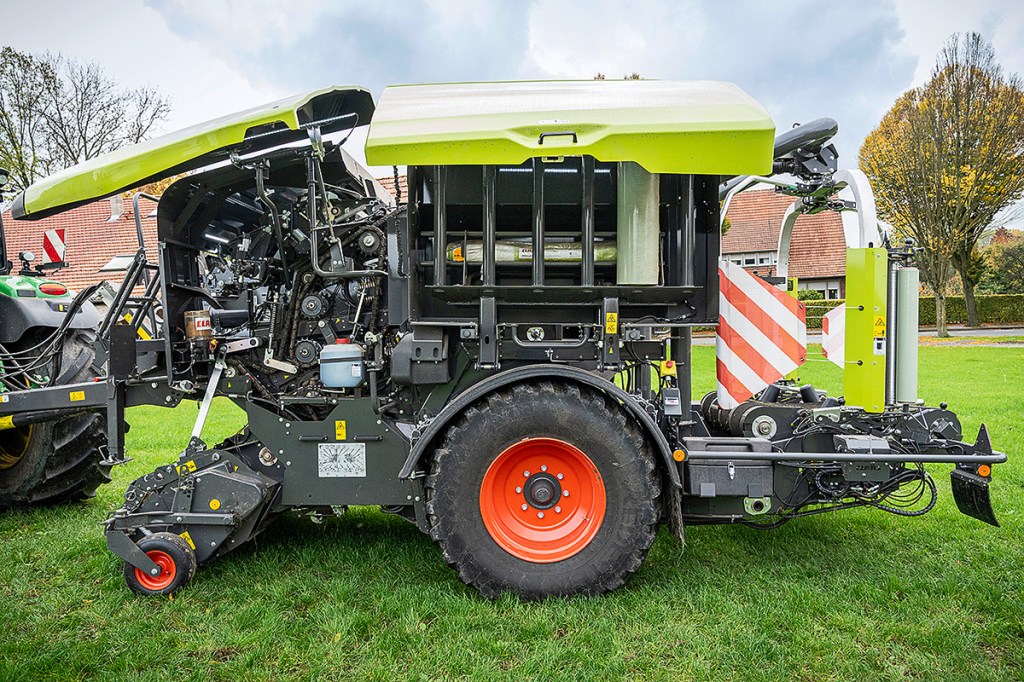
Claas has reduced the total number of drive chains from four to three — by altering the driveline layout, the drive chain that used to power the top rollers was eliminated. All the remaining chains, sprockets and chain tensioners have been beefed up and fitted with practical adjuster aids.
To help match the firm’s promised increase in output and crop density, Claas has also strengthened the bearing stubs on the main load-carrying rollers. To keep things ticking along nicely, there is a new auto-lube system for the chains with wider brushes to apply oil across the full width of the links and a larger, 7.2-litre reservoir.
Multiflow now standard
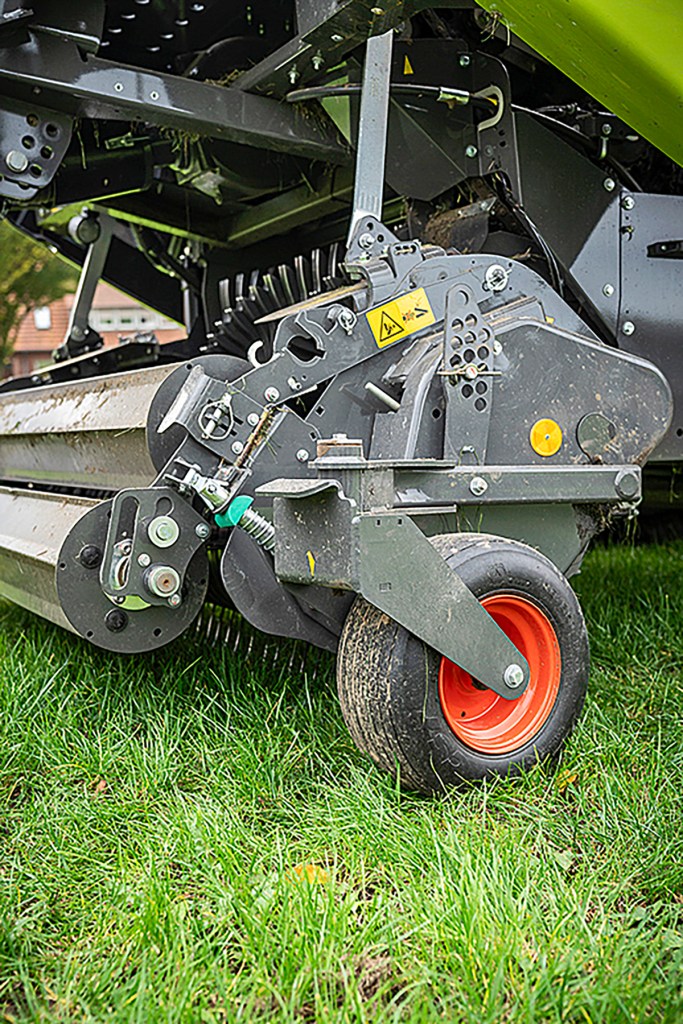
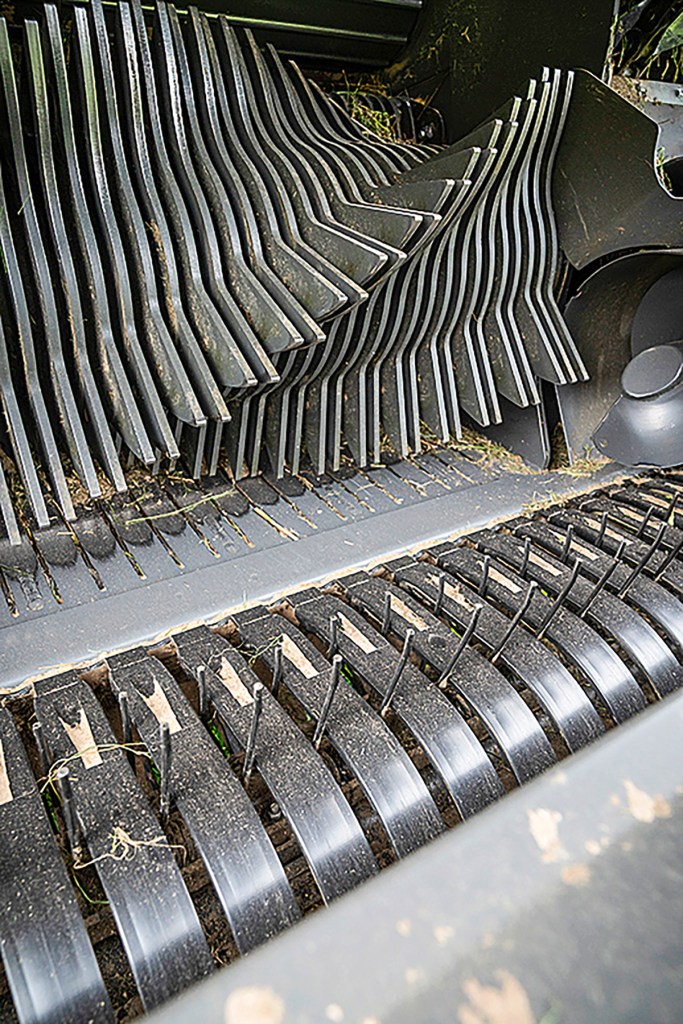
In the UK and Ireland, we only get the higher spec Multiflow HD pick-up with five rows of cam-controlled tines and a cam-operated clutch as fitted to our test machine. With the 630, Claas has modified the profile of the cam track to help extend tine and bearing life and do its part in boosting throughput.
Our machine also had the double crop press roller and guide comb. Several height and angle settings are possible for the different crops and swath shapes. In general, we got on well with crop intake throughout the season right up to the last cuts. The five-row pick-up didn’t have any real problems with gathering up material cleanly. The plastic scrapers can be easily removed without much effort — just push down a tab with a screwdriver to release them. As for the tine carriers, they run in a wear-resistant bushing, a design Claas already uses on its forage harvester pick-ups.
The comb (in behind the crop roller) has a limited amount of travel so came in for some criticism: late season cuts with damp-ish crops and less than perfect swaths, would occasionally lead to blockages. Good swath formation reduces the problem; otherwise, temporarily removing the comb helps, which is fortunately an easy job.
No changes to the feeding system
Claas uses its RotoCut rotor, hence RC in the model name. This rotor has 8mm thick tines, arranged in a helix formation with its four points. It feeds the crop through the 25-knife bank (groups of 0, 12, 13, 25), cutting the crop to a nominal length of 45mm. Our test machine had the standard spec knives, but heavy-duty knives are available as an option (€805 in Ireland, £710 UK).
The number of knives engaged is selected on the terminal, as is lowering/raising the knife bank. Blades have individual overload-protection using a coil spring. A new feature is the capability to easily unlock the spring assembly and swing it back, making cleaning much easier.
The ‘Pro-Knife’ drop floor with its early-warning system is also part of the standard 630 spec. It can be lowered hydraulically from the cab to overcome a blockage. The early warning system is able to detect if the floor is starting to move, giving an audible alert that you need to slow your forward speed. If you heed this warning, then you can avoid a potential blockage.
If a crop blockage does occur, then drop the knives and the floor before re-engaging the pto to take in the lump. The floor and knives are raised automatically once pto speed exceeds 300rpm. There is no separate rotor disengage on the Claas baler.
Proven baler chamber
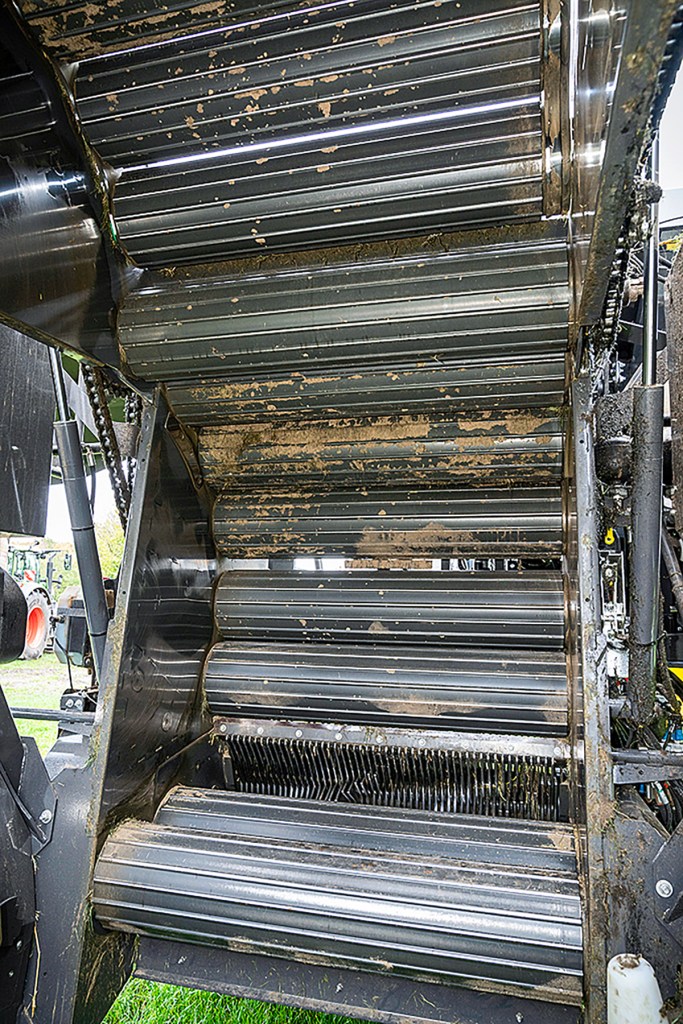
16 rollers compress the crop into firm 1.25m bales. For 1.35m diameter bales, operators can select the appropriate opening angle from the ISObus terminal.
The latest updates to the chamber are not immediately apparent: some rollers now have a 3mm wall, while others remain 4mm thick, but with higher-grade steel. The slight change to the roller profile is reckoned to improve the grip on the bale.
The established MPS (Maximum Pressure System, about €5,670/£4,980 option) is also available for the Rollant 630 RC Uniwrap. Three rollers swing into the chamber when starting a new bale, reducing the chamber size. This gets the bale turning earlier and achieves a more compact core.
According to the company’s own trials, MPS increases density by 15% under otherwise identical conditions.
Film and net for tying
The optional film-on-film binding system (just under €9,070/£7,965 extra) is easy to access from the platform and is logically laid out and can also handle net. A new feature is the hydraulic film brake. Compared with previous solutions, it is not only much more reliable but can apply more pre-stretch to the film. This keeps the bales noticeably more stable, and Claas also promises film savings of up to 15%. In our experience, the binding system works reliably with both net and film. Claas has also improved the reset mechanism for the net and film knife.
The only downside we had is the noticeable amount of fragmented leaf/stem material that would be deposited under the baler when the film/net was being applied in the bale chamber. To overcome this spoiling the sward, we found it was best to reverse a little and mop up this spilled forage.
Improved bale transfer
Claas has taken a closer look at the bale transfer: the tipping tray was reinforced and more bolted joints added.
The engineers also altered the geometry of the hydraulic rams to reduce the mechanical stress. In addition, Claas improved sensor-based bale detection by positioning the sensor flaps in a much lower position. All this adds up to much faster bale transfer; and the hydraulic cylinders have end-of-stroke cushioning.
Unfortunately, the fragmented crop losses also made an unwelcome appearance here: the bits of leaf and short forage trapped on the tailgate fall onto the now netted bale and then get trapped in the layers of wrap. This can be anything from a handful to half a wheelbarrow full of material. Not great. Claas is aware of the problem and is looking for a solution.
Few changes to the wrapper
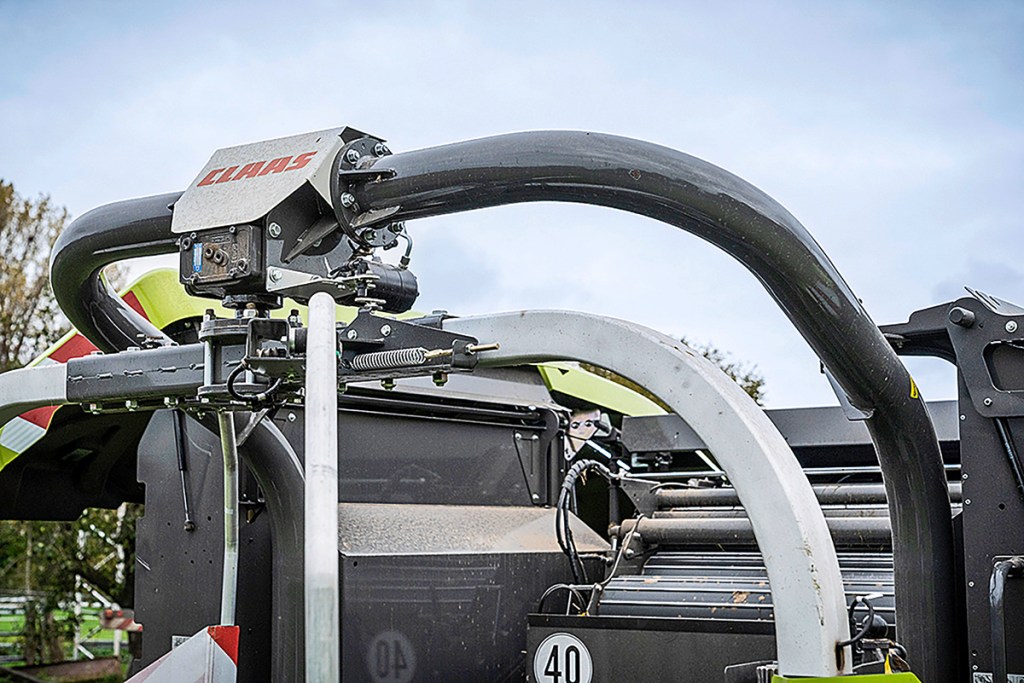
The most important new spec feature on the wrapping side of things is the new hydraulic brake, which reduces the maximum speed of 36rpm as the bale nears completion. The orbiting dispensers rotate quickly, taking less than a minute to wrap a bale even with eight layers. A high-resolution camera with a crystal-clear screen allows you to keep an eye on the wrapping table and is part of the standard spec.
Like others, the bale can be automatically or manually tipped off. Claas now offers a hydraulic bale tipper for a cost of around €5,135/£4,510. A trailing rubber mat costs just over €1,275/£1,120.
Operator comfort and ergonomics
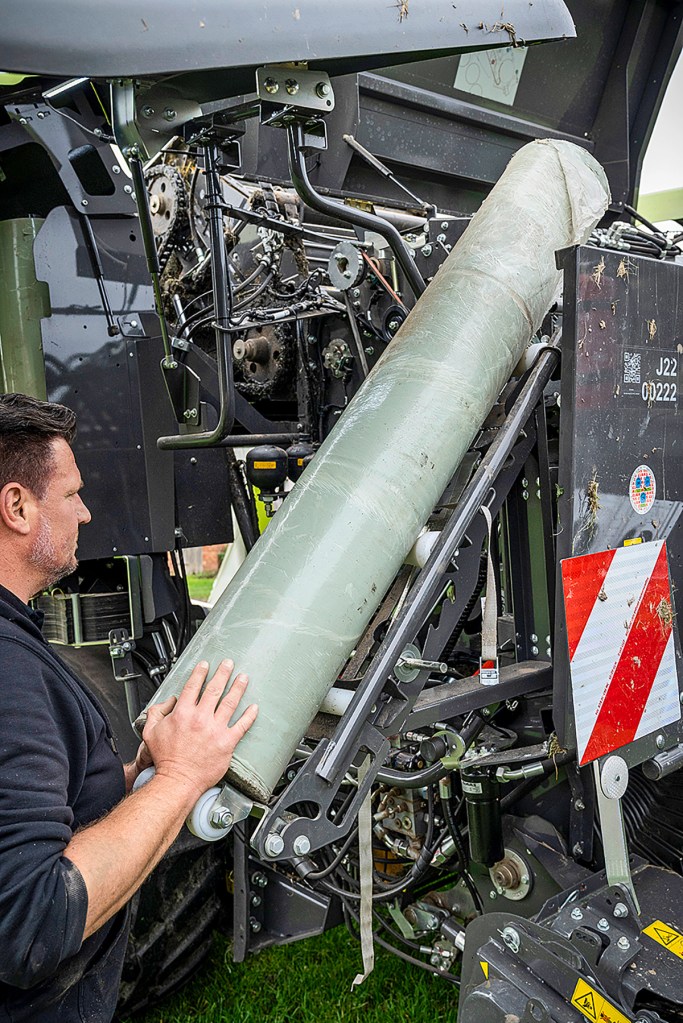
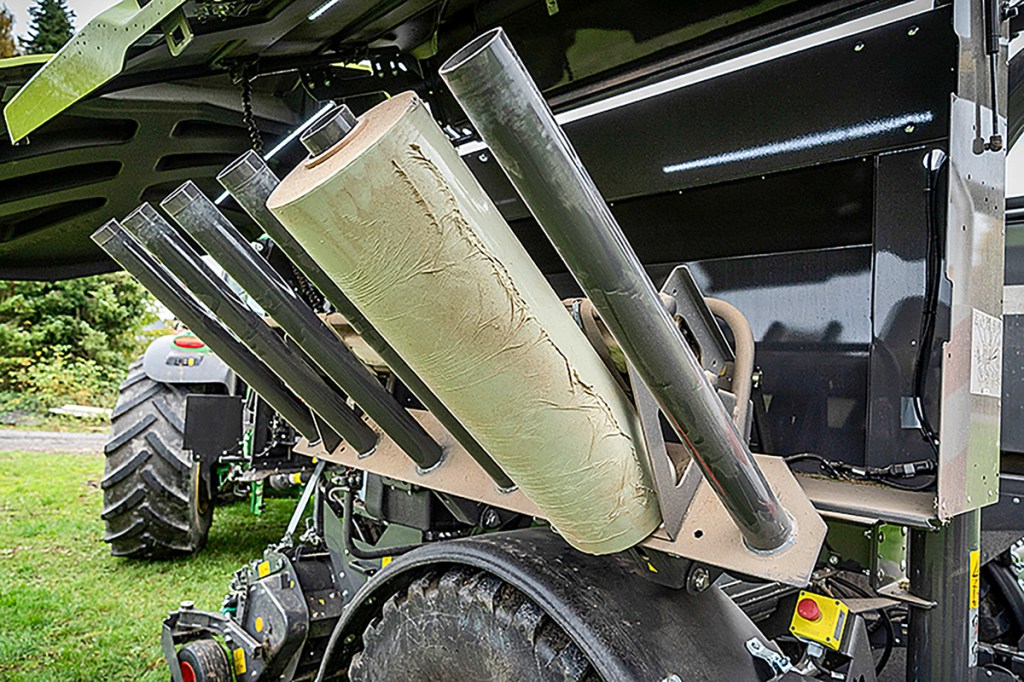
Uniwrap’s hydraulic film roll holders and the swing-down cradle for the spare film/net roll on the right-hand side of the machine are excellent. Standard fit on the left-hand side of the machine is a remote-control panel that allows you to manually operate various hydraulic functions while out of the cab.
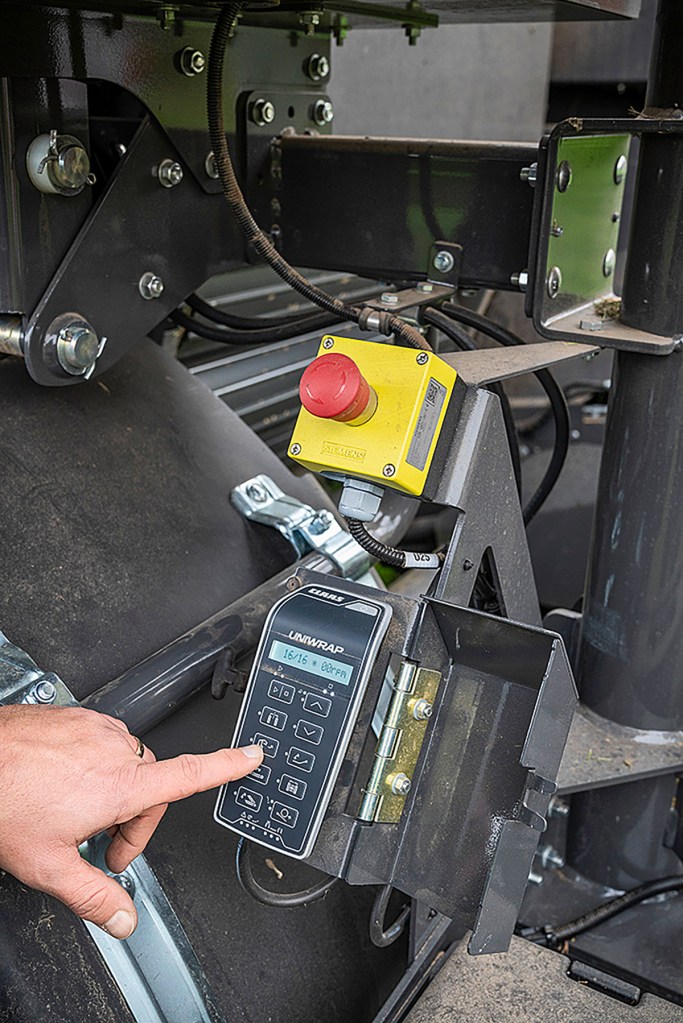
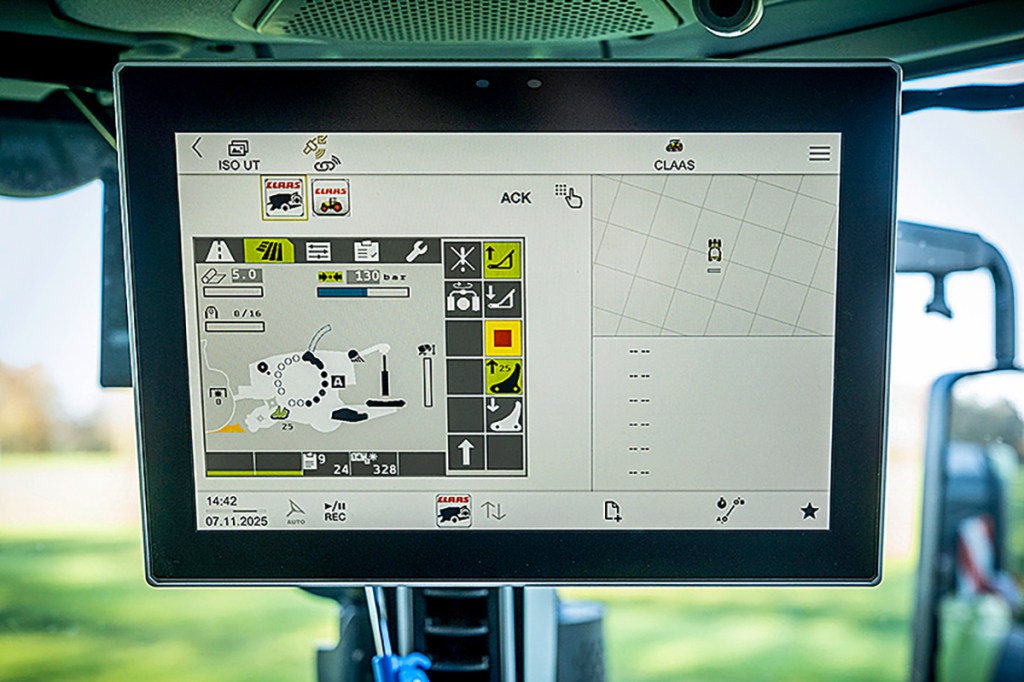
The machine comes with a standard Cemis 700 terminal. ISObus-compatible tractors will need an ISObus cable (€530/£448). All the main important parameters are shown on the main screen and are easy to see at a quick glance. The menu structure is a lot cleaner and easier to understand than on the old model.
In brief
- We mostly used a John Deere 6155R on the baler wrapper. Tractor power was fine, but we wouldn’t want anything smaller.
- SKF (formerly Masterlub) now supplies the ‘Plus’ central lube system (which also looks after the wrapper). It costs €2,150/£1,850 extra.
- Material collects on the sloping surfaces of the film roll holders.
Summary
With the Rollant 630 RC Uniwrap, Claas has cured many of the weaker points on its predecessor. We mainly used the 630 for baling silage in our season-long test, and our main point of criticism revolves around the fragmented leaf and stem loss while film/net binding is taking place. The other niggle point was the comb on the pick-up in late- season grass.
We were very happy with the machine’s throughput, producing well-formed bales. We also liked the trouble-free bale transfer and the fast wrapper.
That leaves the price: Claas quotes a base price of just under €117,520/£105,300. Our test machine had a number of useful extras, but these bumped the list price to just over €141,500/£125,000 — a serious amount of money for a baler wrapper.
Christian Brüse
For more up-to-date farming news click here and subscribe now to profi and save.