
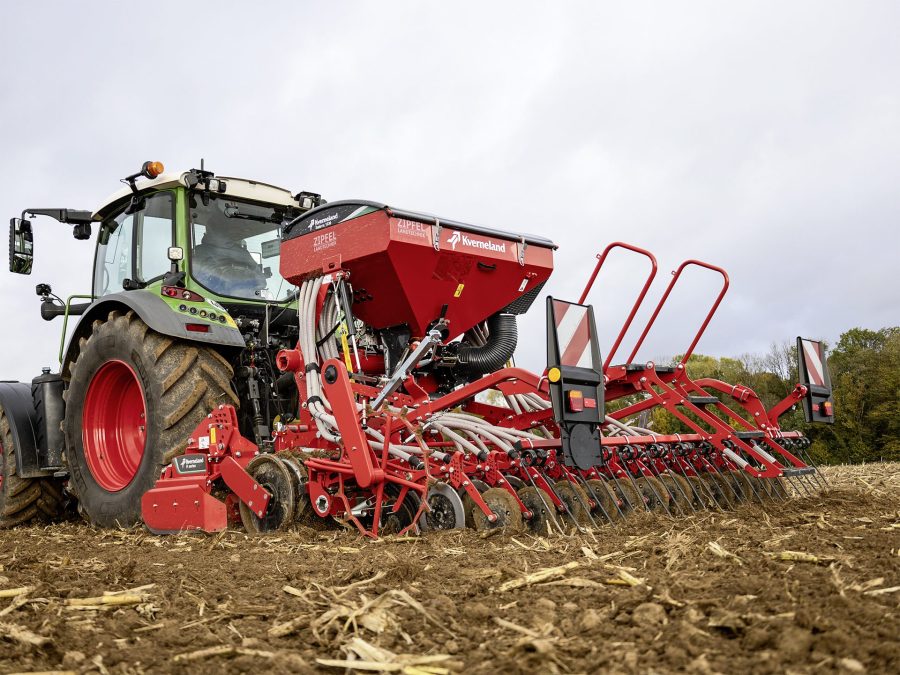
In an age of electronics, it is nice to see simple machines also enjoying a spruce-up.
We find out what Kverneland has done to its uncomplicated seed drill, the new Saturia.
KEEPING IT BRIEF
- The Saturia is the successor to the DA.
- Is mechanically biased, with minimal electronics
- In the field, we were happy with its performance.
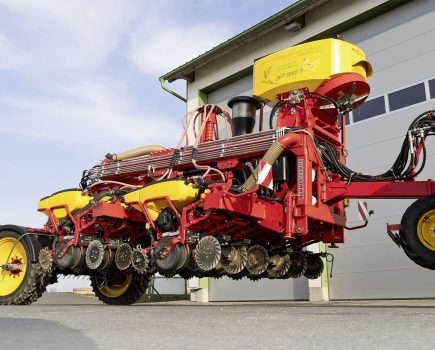
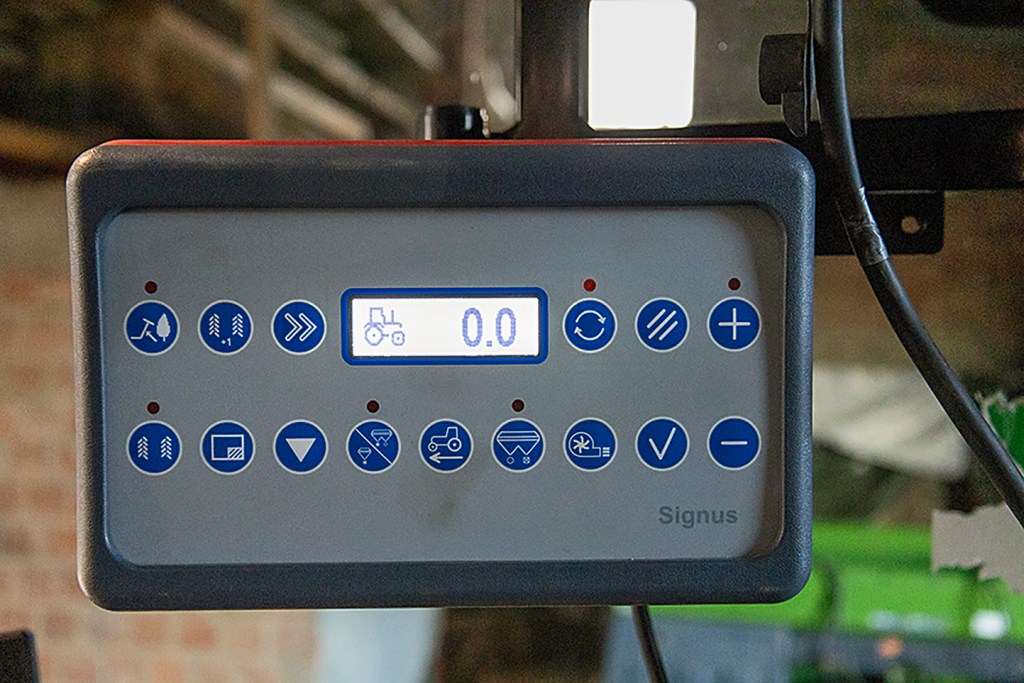
Soil worked down by a power harrow, followed by a drill with single-disc coulters — up to this point, the Saturia is almost no different to any other combi drill. However, take a close look and you will see there is no elaborate electronic tech or amp-powered drives. With the notable exception of the tramline controller, nothing else is electrically operated; the drill’s seed metering unit and the fan are both driven mechanically.
The Saturia follows in the footsteps of its predecessor, the Kverneland DA, which it replaced at the tail end of 2024. During the makeover, the firm’s engineering team made several other refinements:
- The frame was significantly beefed up.
- The DA was only available with a 750-litre seed hopper; the Saturia can be extended to 1,000 litres.
- Saturia comes with the CX II single-disc coulters. There is no Suffolk option.
- Has been given a useful calibration flap.
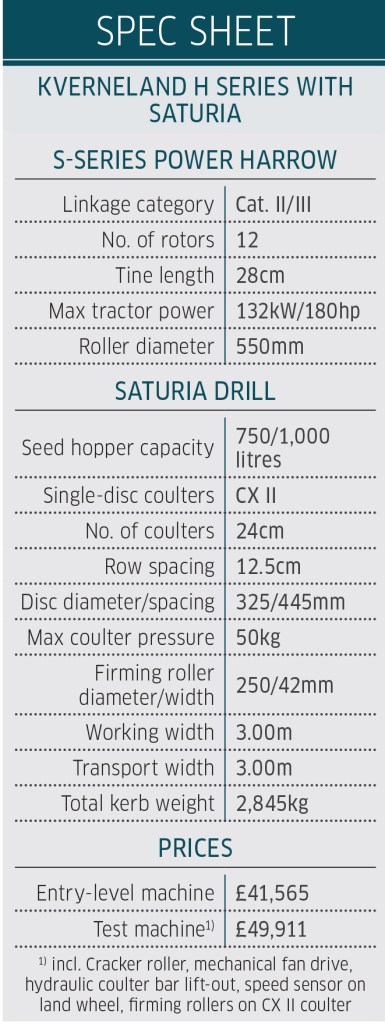
- With an empty weight of about 1,100kg (plus 1,745kg for the power harrow with Actipack packer), it ranks as a lightweight machine in this market.
Proven power harrow
Our combi had the H-series power harrow for carrying out the tillage element of the operation. This is Kverneland’s mid-range harrow for up to 180hp. Kverneland uses four rotors per metre on its harrows, our 3.0m outfit having 12 rotors complete with quick-fit couplers that allow you to simply swap the tines from a trailed to a vertical position and vice-a-versa depending on what you are drilling into.
The updated harrow also gains a gearbox from German supplier Rögelberg. KV says this runs more smoothly and can handle an increase in power. The design of the lifetime -lubricated, self-supporting trough with its sandwich design is similar to on the larger Rotago F model.
Depth is set using a pin-and-hole pattern on the left and right. The height of the levelling bar is adjusted by a spindle on either side, which works fine, though we reckon a scale would be beneficial.
Likewise, a hydraulically operated levelling bar would also be a welcome addition to the options list, but then that is probably getting away from the ‘keeping things simple’ ethos of the combi.
The test KV machine was supplied with a multi-ring cracker roller from Kerner. This collaboration has since come to an end, and Kverneland now provides its own 560mm Actipack roller with a 10cm larger diameter, but it’s otherwise similar to the Cracker Packer.
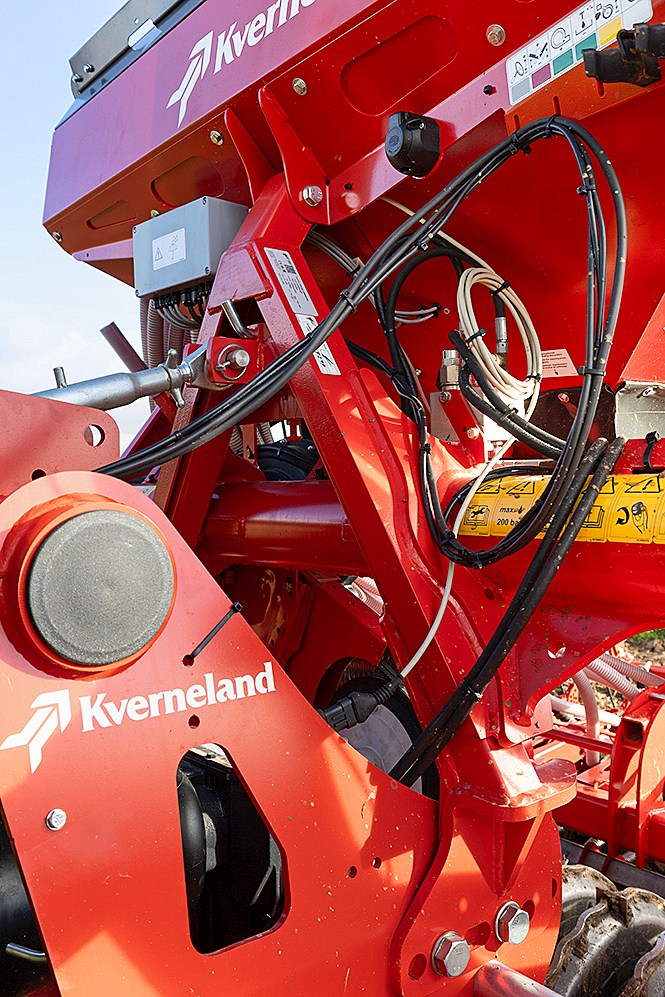
The power harrow and seed drill are linked via a quick-coupling A-frame. Its mounting is bolted directly to the power harrow’s headstock, allowing the Saturia to be easily removed in just a few steps.
Straightforward design
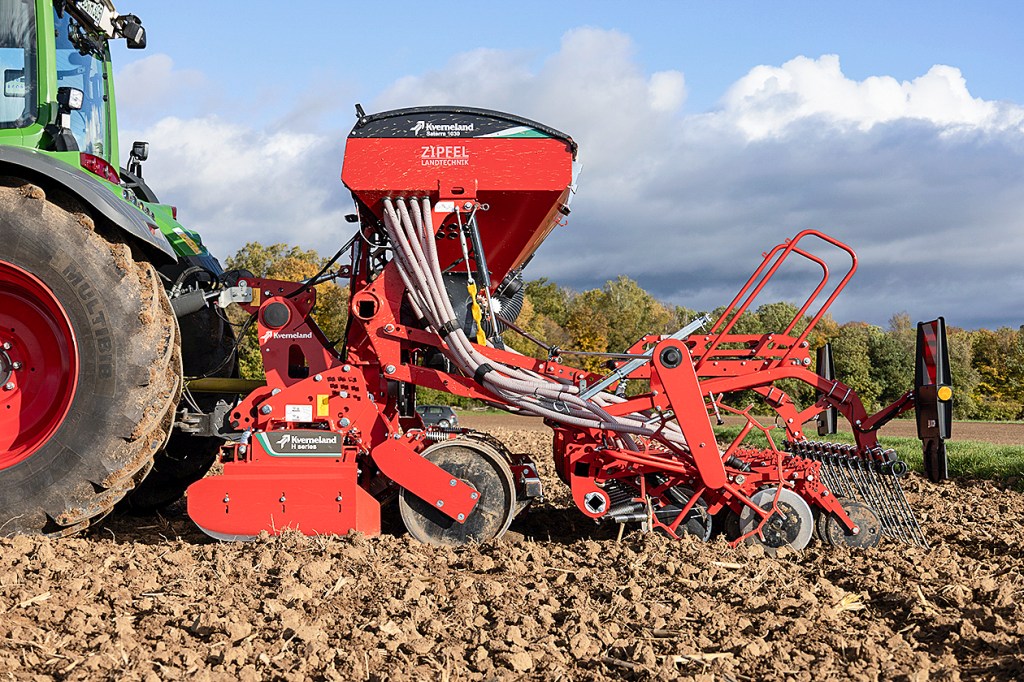
The hopper sits close to the tractor, which is beneficial for the centre of gravity. The same applies to the distributor head located inside the hopper, where it is well protected from dust/rain with the flipside that it’s less accessible. The relatively long corrugated seed hoses should have a positive effect on airflow and cross-distribution.
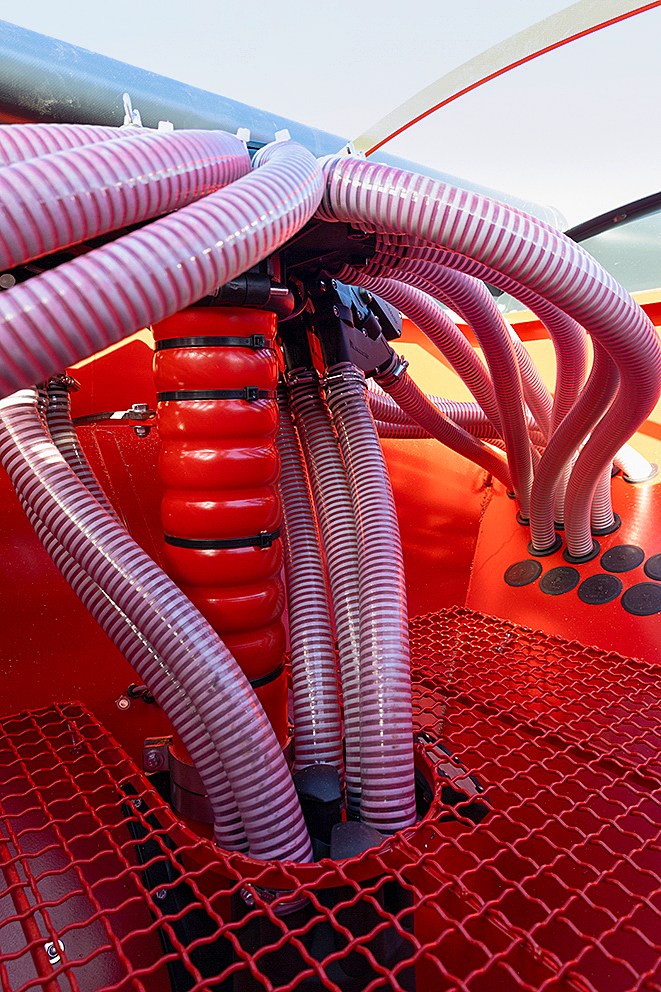
The distributor head offers two types of flaps for tramline control: the traditional flap simply shuts off specific rows. This does not alter the seed flow, so that the same amount of seeds continues to flow through to fewer coulters, which can lead to over-applying. Alternatively, Kverneland can offer its so-called combination valve, which redirects the seed from the shut-off rows back into the hopper ensuring every coulter receives the same amount of seed. At £31/valve it is not ludicrous and should quickly pay for itself with saved seed.
There’s no filling level sensor, but there is a height-adjustable level indicator. We liked the large flap for removing leftover seed.
If it ain’t broke
For metering, Kverneland relies on the ‘old’ Accord-developed unit. The seed rate is still set using a spindle, and the actual metering wheel is driven mechanically by the land wheel, a design that’s been proven for many decades and can also be found on other makes. However, there is a new calibration flap, Kverneland addressing criticism often voiced on the DA: you no longer need to remove the hose to carry out a calibration. That also means you can’t forget to reattach it. The new flap closes automatically as soon as the fan starts.
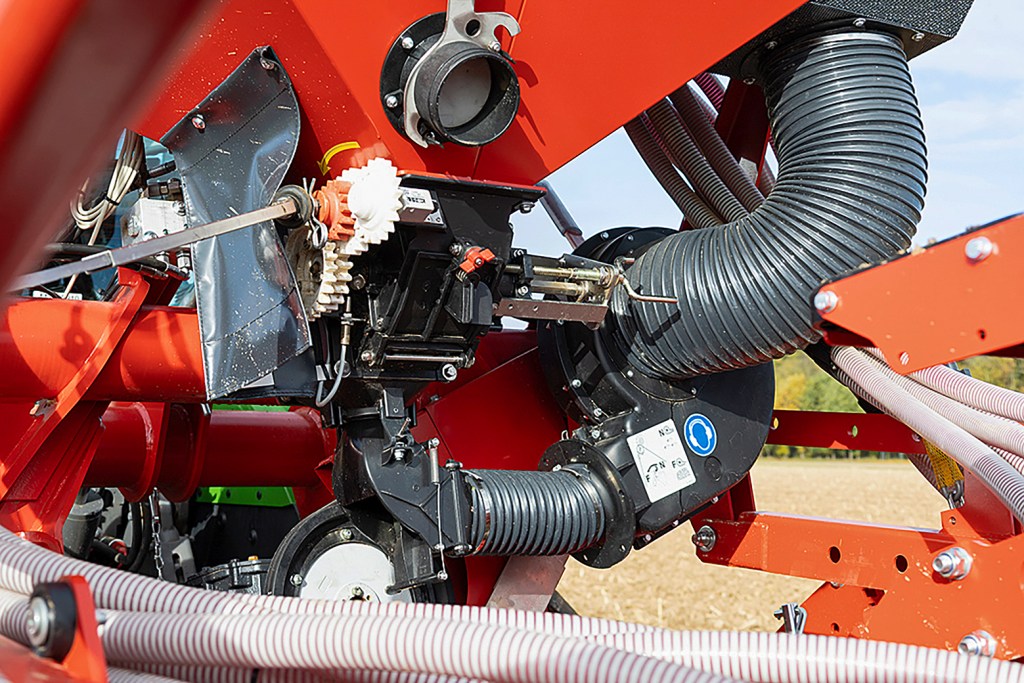
As standard, the fan is driven hydraulically. For purists, like the owner of the featured machine, Kverneland offers a mechanical drive for an additional £193. As on the DA, a V-belt connects the power harrow gearbox to the fan. You can select a range of different gear ratios depending on the harrow’s input speed. The owner was very happy to pay the extra money as it eliminates the need for another spool valve. On the subject of hydraulics, our machine needed just the one double-acting spool valve which is used for raising the coulters.
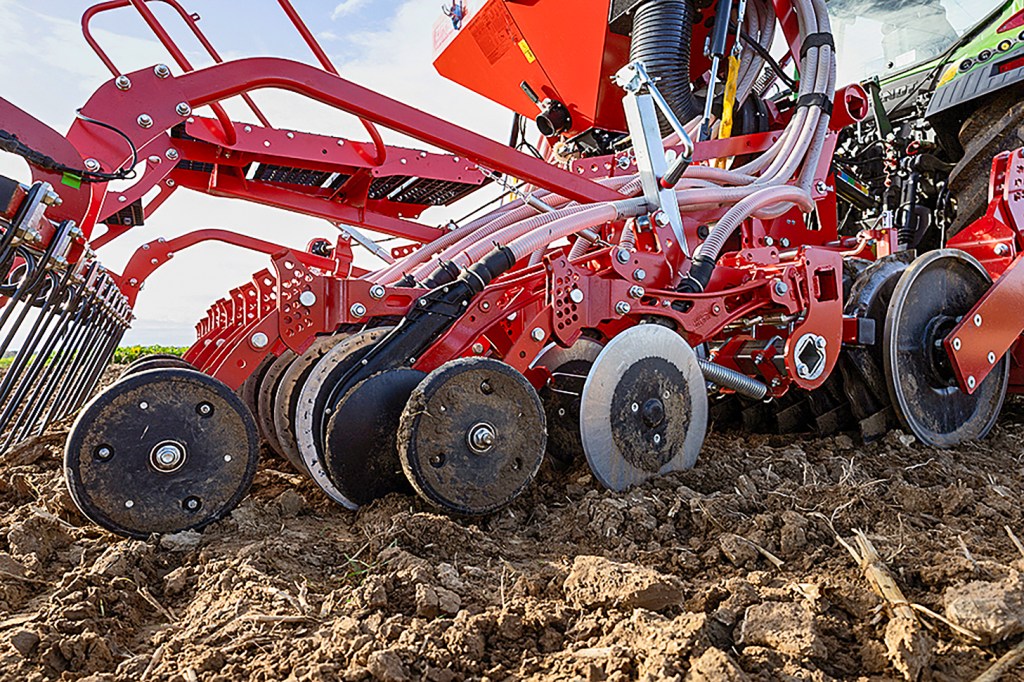
Sturdy coulter
The seed travels a relatively short distance from the seed metering unit through the distributor head to the coulters. Compared with the DA, one of the improvements here has been the introduction of Kverneland’s CX-II single-disc coulter. Compared to the old CX, it benefits from cast iron components making it a lot more robust. The inter-row coulter spacing of 44.5cm is also noticeably larger.
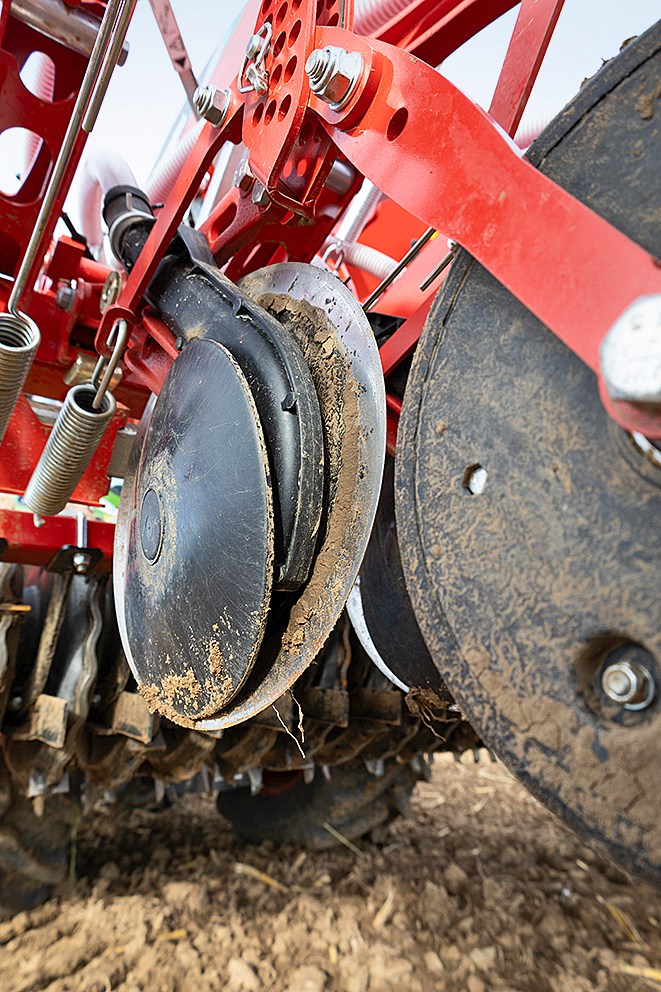
Other makes have a more compact layout, but Kverneland counters this by pointing to the lower risk of blocking. Maximum coulter pressure has been increased from 35kg to 50kg. Thanks to the coulter’s very narrow 5° angle this is usually more than enough to achieve the target depth.
The CX-II coulter can be ordered with or without press wheels. Without them, the 325mm diameter steel discs have a more convex shape to handle the increased load-bearing capacity. Although this saves weight and money, our preference is to still opt for the press wheels because you can set the placement depth on a pin-and-hole pattern. If you don’t have press wheels, then you are relying on the coulter pressure to control the depth. And don’t worry if things turn wet: you can still take the press wheels out of work and park them in their uppermost position.
The coulter arms are clamped to the toolbar rather than welded, which simplifies repairs. Factory-fitted row spacings are 12.5cm or 25cm.

In the field
We used the Saturia to drill mustard as a cover crop into grain maize stubble which had already been given a single pass with a cultivator after the combine. Recent rain had saturated the soil, but seed placement was still excellent. The self-cleaning on the coulters and press wheels was doing its job, and there were no blockage issues. The Fendt 516 Vario up front wasn’t under any strain with the 3.0m combi.
Summary
With the Saturia power harrow drill combi, Kverneland is focusing on the essentials: preparing the optimum seedbed, placing the seed, consolidating soil, keeping electronics to a minimum level and making the most of existing mechanical know-how. Our main impression was the Saturia is on a par with other combination makes, scoring marks for straightforward operation and reliability.
The price is attractive too, listing at £49,911 for our test power harrow drill combination. Given this keen pricing, you just have to decide if you can you live without the likes of ISObus, variable rate seeding and other higher tech features.
Andreas Holzhammer
For more up-to-date farming news click here and subscribe now to profi and save.