
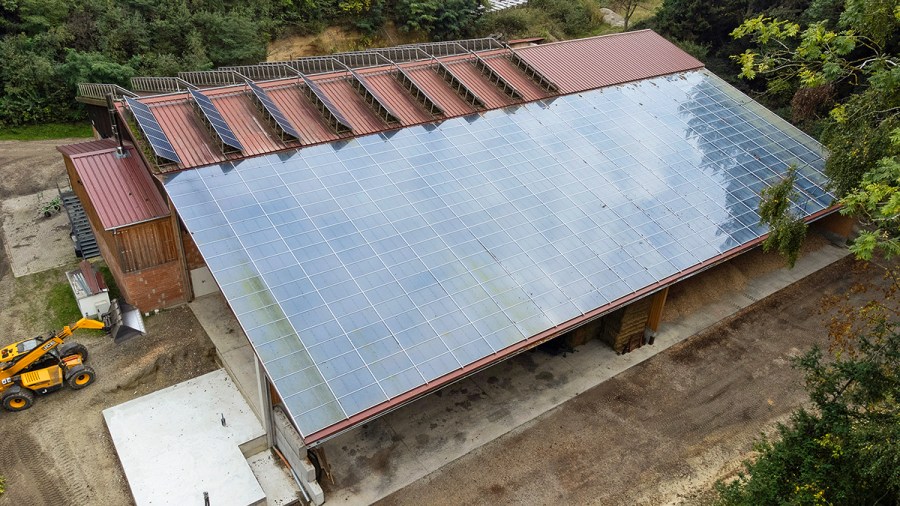
Ulrich Resele has been drying wood, grain and hay for the past two years using a system from Cona Solar. Here are the details and a look at his set-up.
KEEPING IT BRIEF
- Cona Solar’s collectors can deliver up to 750kWh of heat per square metre of roof area each year.
- Low power consumption results in efficient drying.
- Is a good alternative to surplus heat from a biogas plant.
Rather unexpectedly, as soon as the sunlight hits the Cona Solar collectors the air underneath the coated glass panels becomes noticeably warmer. Even on a relatively mild autumn day with temperatures of just 18°C, the system’s control box showed a heat output of around 130kW — enough energy from the shed roof to dry soya beans and woodchip.
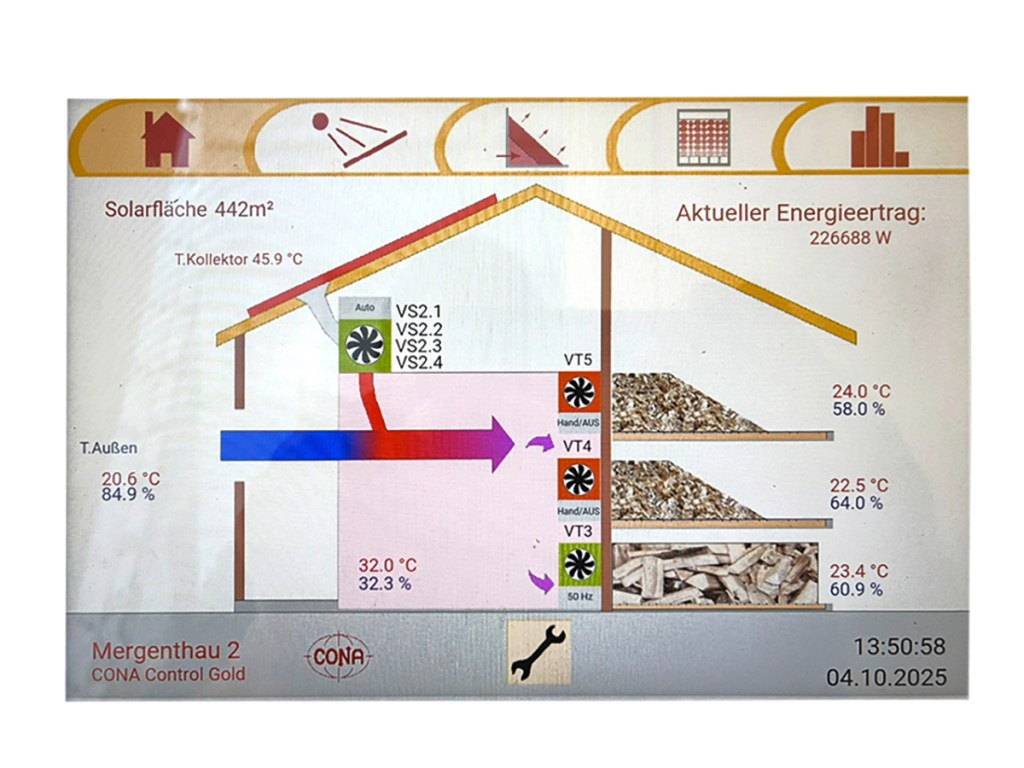
Another key feature of the system is its low electricity use, coupled with a clever control set-up. Big bale hay, grain, woodchip and even maize silage for cattle bedding can all be dried economically in this way.
How the system works
Cona Solar’s set-up uses air collectors with an annual output figure of 400-750kWhr/m², depending upon their orientation, location and actual operating time. The 2.0m² glass modules replace the usual roof cladding, mounted directly onto the purlins.
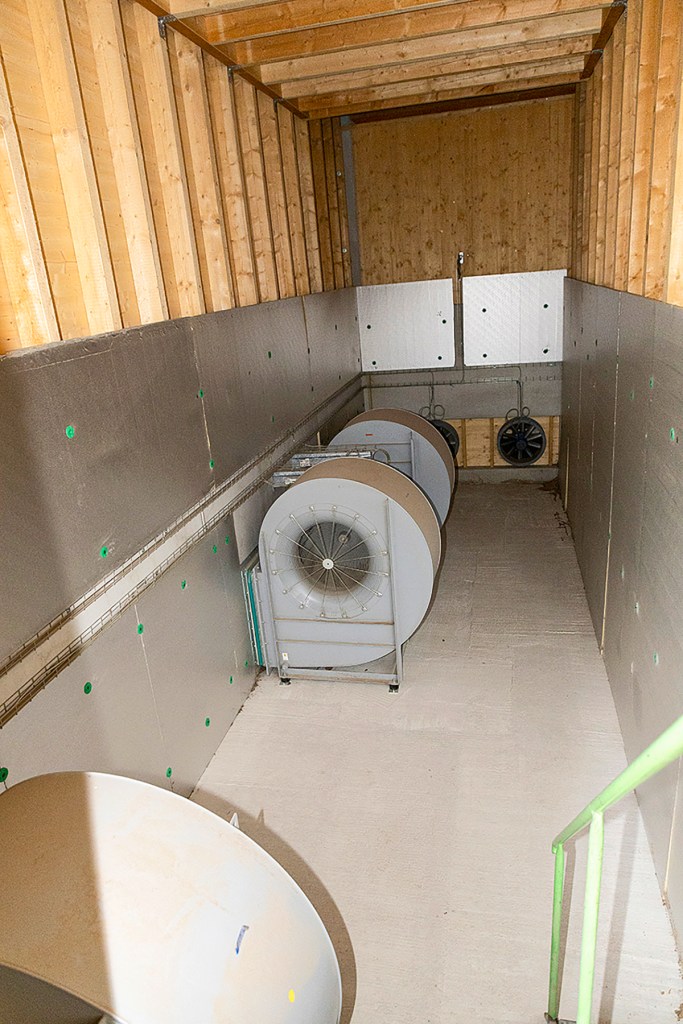
Beneath the anti-reflective coated glass sheet sits an aluminium heat exchanger unit through which fresh air flows. Axial fans create the required vacuum effect so that the warmed air is then mixed with fresh air and pushed by a second set of fans into the air ducts beneath the drying chambers.
The solar energy is absorbed in the Cona Solar collector aluminium heat exchanger, which is mounted on a triple-layer wooden board. The metal sheet is folded multiple times, increasing the surface area five-fold. On sunny days, this raises the temperature within the collector, which was designed for developing countries, though in cold weather the increase is often just a few degrees. But when combined with the high airflow of sometimes several thousand cubic metres per hour this is enough for drying crops. As the pre-conditioned air never reaches really high temperatures and can even be capped by the control system, the plant is perfect for gently drying grain destined for seed.
Automatic and night operation
The solar plant starts up automatically when there is a big enough temperature difference between the collector and the outside air to create a drying effect. Whether extra heat is added — for example, from a woodchip boiler — is up to the user and depends on the crop and urgency. Extra heat at night can be useful, especially when drying maize. At the same time, the control system is designed so the farmer can select the energy input to suit the circumstances.
There is also a night interval mode. When drying woodchip, for example, the material is blown with air at set intervals during the first few days. These ventilated intervals alternate with longer pauses during which excess heat is blown out. Fast drying is not the main aim here. Instead, the aim is to keep the material cool through evaporation and prevent biological breakdown processes.
After a certain period, the woodchips have dried enough so self-heating is no longer a risk — simply through interval ventilation. The really interesting part about this is that woodchips that were dried with this method deliver on average about 400kWh more energy per loose cubic metre than chips that are not actively dried.
Fan technology
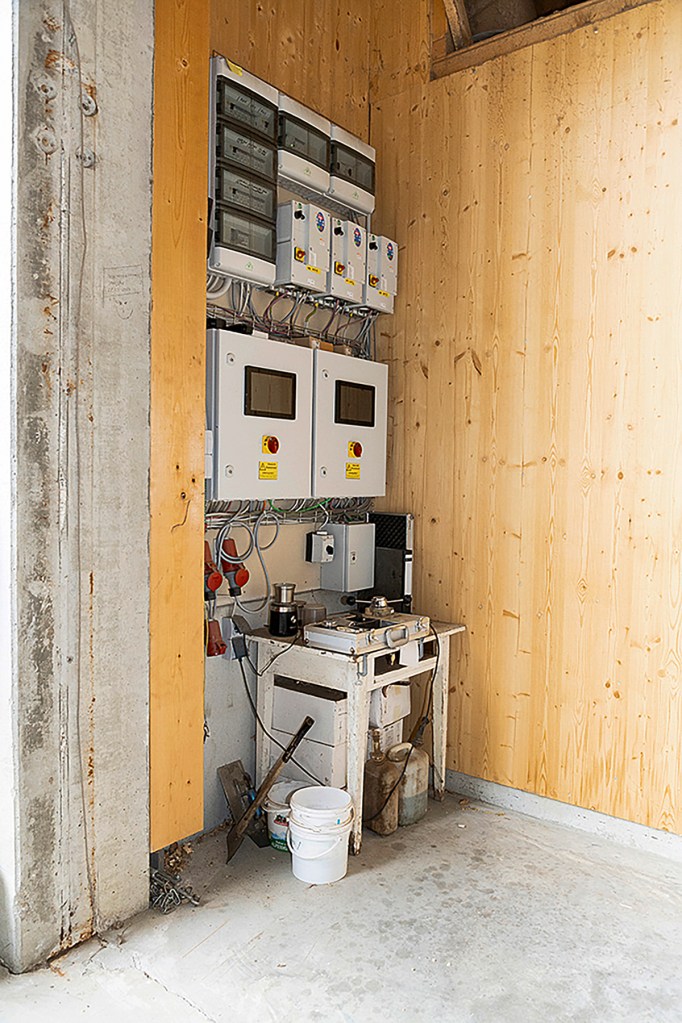
Cona Solar differentiates between the solar electrics and the drying electrics. The collectors require only 0.55kW or so of electrical input for feeding the solar-heated air into the mixing chamber. The drying fan — which is usually a frequency-controlled radial fan — in this particular installation requires 5.5kW. The uncontrolled axial fans for the sloped-floor boxes consume just 1.1kW. The size of these pressure fans is not always the same and depends mainly on airflow and pressure: high filling levels, wet grain maize or hay bales require a greater pressure reserve than loose heaps of wood chip or loose hay on a sloping floor.
A regular woodchip box can often be catered for with a 1.5kW fan. To leave plenty in reserve for more demanding crops, the fans are specified to a higher input power than most jobs really require. Variable speed control then allows their overall output to be reduced when not all of the airflow is needed.
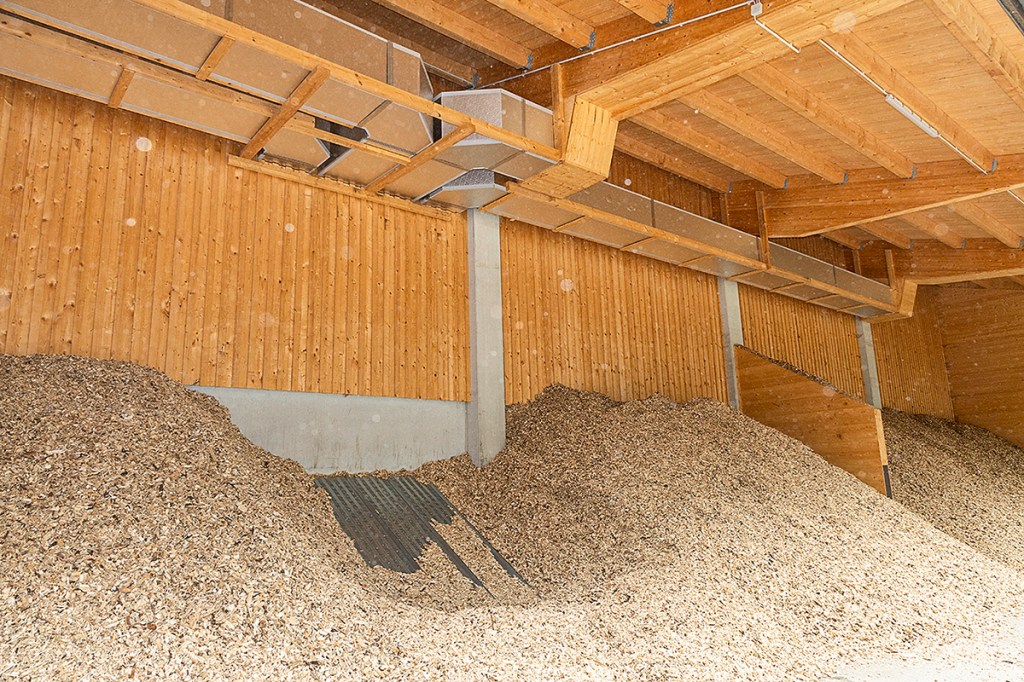
For woodchip drying, energy consumption is about 1.5-4.0kWhr per year per loose cubic metre. Based on current electricity prices, this translates into drying costs of about €0.30-€0.50 per cubic metre, says Cona Solar.
An exception is farms who run a large solar system for generating their own energy. During periods of surplus solar electricity during the day, the fans deliberately run harder than strictly necessary in order to make best use of home-produced electricity.
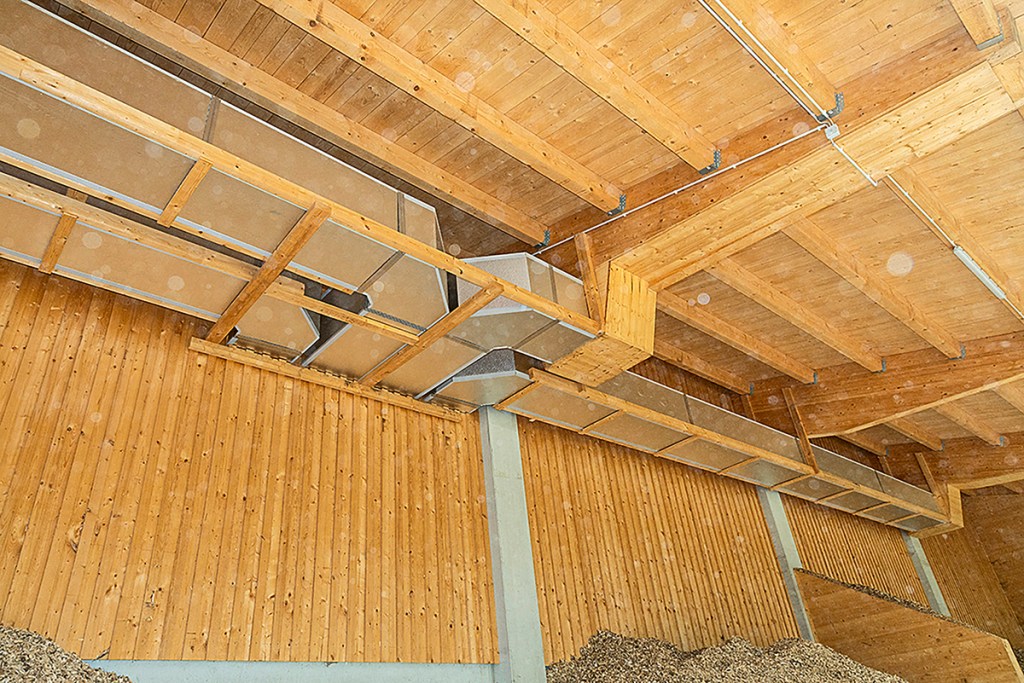
Efficient roof extraction
In recent years in Germany, farmers have been building their own roof-mounted hay drying systems. These DIY solutions are inexpensive and work well on hot days, but their annual output falls short of collector-based systems, especially in weather with wind and rain where their performance drops off sharply. According to Fraunhofer measurements, the Cona Solar collectors do maintain their output levels even in less-than-ideal conditions.
In addition, roof extraction systems without glass top sheets achieve only one-third of the max output of DIN EN ISO 9806-certified Cona Solar collectors, according to working measurements by AEE Gleisdorf.
In comparison, DIY systems usually achieve around 10% of the annual efficiency of a Cona Solar installation. In other words, a DIY roof extraction set-up would need roughly ten times the roof area of a Cona Solar collector system.
In practice
To get a proper impression of the technology, we examined the system operated by Ulrich Resele in the Bavarian village of Kissing in greater detail. Together with his family and four employees, he farms around 300ha of woodland. The hallmark of his Mergenthau estate is the supply of carefully selected timber to a range of companies, sawmills and carpenters. On top of that, the business markets 2,000m³ of firewood and 4,500m³ of woodchip.
Before the war started in the Ukraine, he had his logs and woodchip dried by a biogas plant in his own containers. When demand for all firewood skyrocketed in 2022, the demand for drying capacity increased, too. Hence, the biogas plant’s containers were constantly occupied by other customers. Ulrich was mindful of the rising transport costs for the 9km journey which climbed to €25,000 per year.
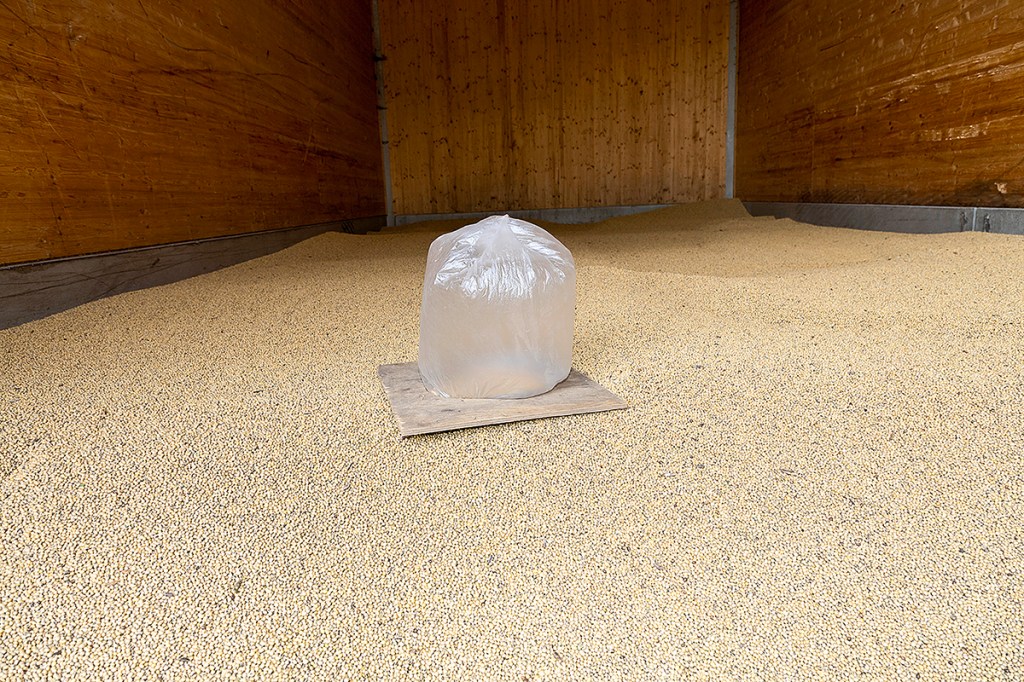
Rapid construction
Back In February 2023, Ulrich submitted a planning application to extend his storage shed with eight collector banks covering a total of 880m². Just six months later, the extension with the integrated drying plant, which was built by himself and local firms, was up and running.
Two years later, he says he is happy with his decision. Yielding 450,000kWh annually, which is the equivalent of about 45,000 litres of heating oil, the system exceeded the manufacturer’s forecast of 400,000kWh by more than 10%.
That also ties in with the drying performance. Ulrich was pleasantly surprised by a steadily growing community of customers who use his drying facility on a contracting basis — among them are a number of farms growing their own seed.
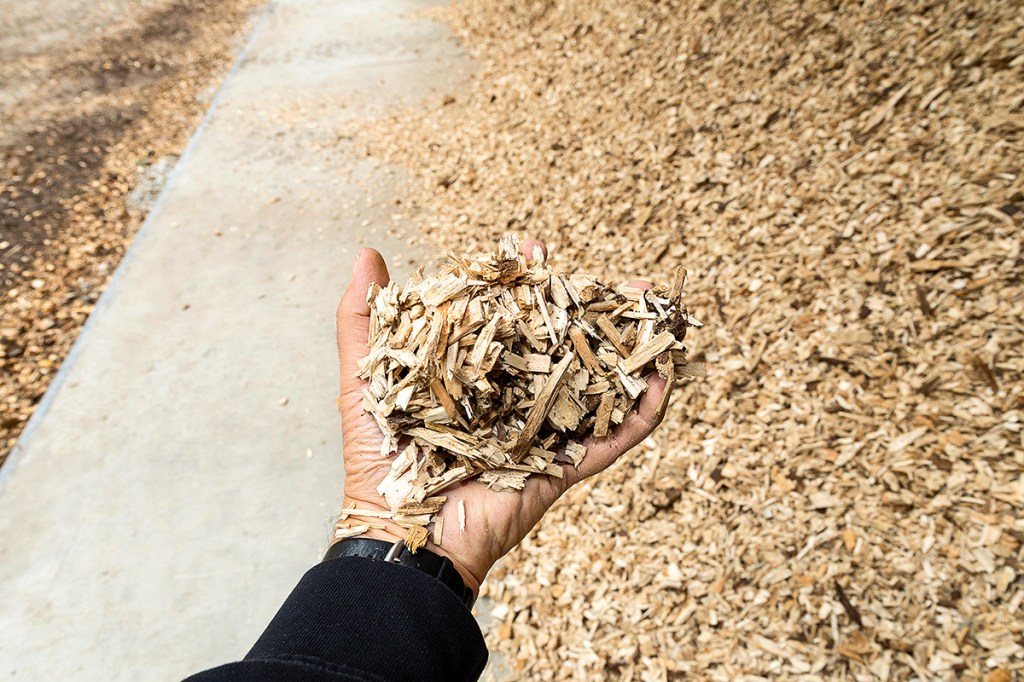
Five drying bays
Ulrich installed eight 110m² collector banks on the new south-facing roof; they are used instead of cladding. The collectors sit on 12cm counter battens so that air can flow in. Eight 0.55kW fans draw the air from the outside through the collectors. Through collecting ducts, the warm air is fanned into a mixing chamber by three radial fans and two axial fans.
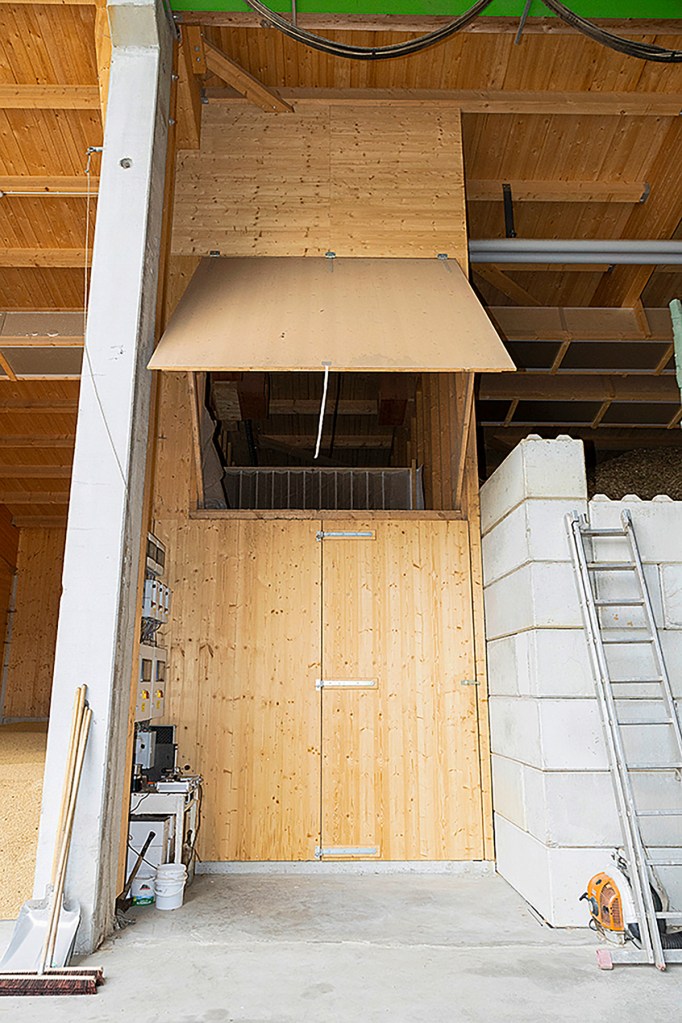
The three radial fans supply the three 12m by 5.80m drive-in drying bays with flat floors at the front. The two axial fans blow the air into the wedge-shaped sloped floor at the rear of the building.
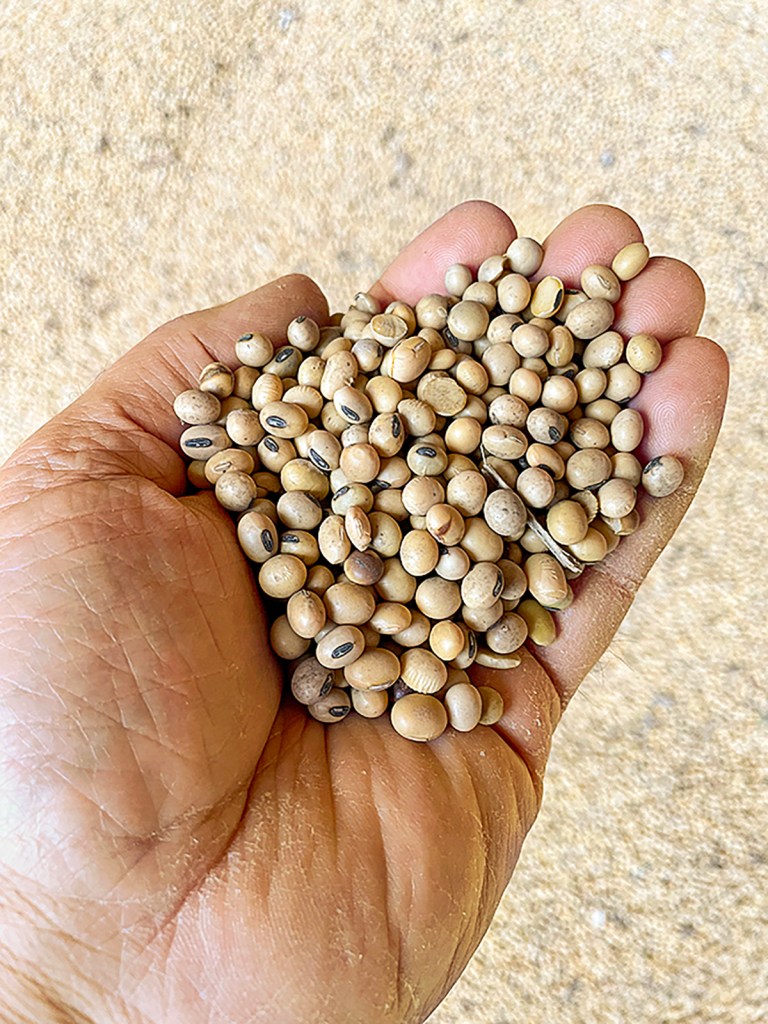
In peak season, Ulrich uses the drive-in bays for high-margin contract jobs such as drying soya beans, grain or hay. For the rest of the year it is used for woodchip and logs.
To further boost its utilisation, Ulrich also invested in a woodchip heating system. When drying wet maize, this supplies the extra heat needed for fast drying around the clock, including in rainy weather.
The costs
Cona Solar quotes €430,000 for all of the hardware used in Ulrich’s impressive set-up. This includes the 880m² collector area, all eight fans, three radial fans, two drying fans, grates for the level and sloped floor areas, all the air ducts, mounting material for the collectors, assorted small parts and the control system including the energy-saving variable speed control.
During roughly two weeks, they put in about 300 hours. The works can be carried out by local tradesmen under the guidance of one of the manufacturer’s lead fitters. 55% of these solar energy costs are funded by German grants.
“After deducting the grant, the drying plant without the building cost me about as much as I would otherwise have paid over the next ten years just for hauling woodchip and firewood back and forth to the biogas plant,” says Ulrich, neatly summing up his figures.
The timber for the 24m by 50m shed with overhang was largely collected from the farm’s own woodland; the farm also did the groundworks themselves.
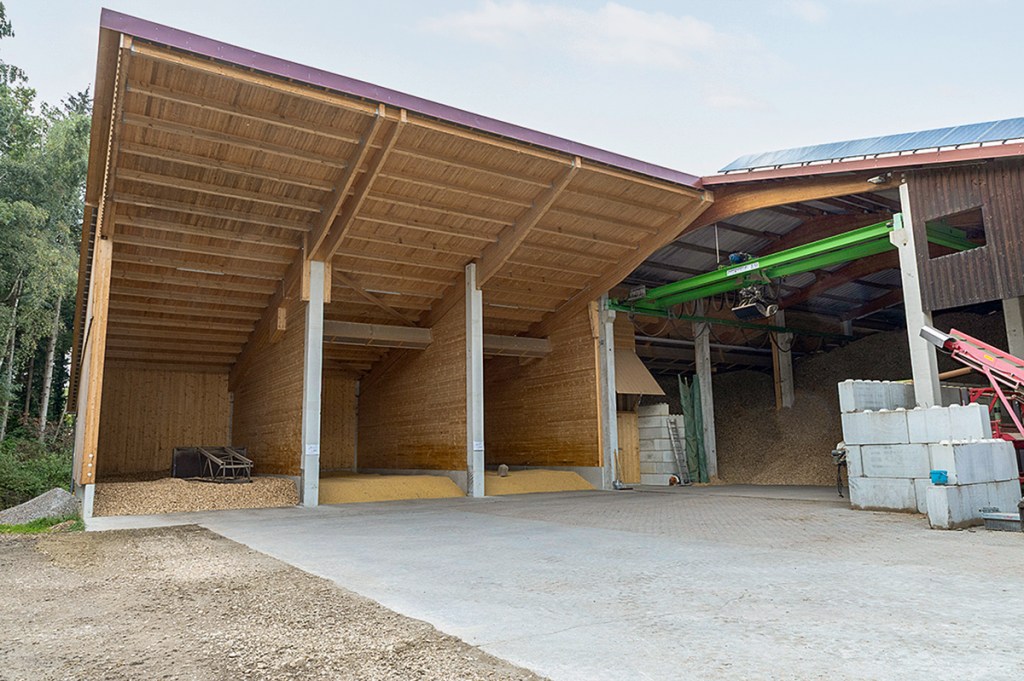
“With the significantly increasing demand for contract drying in the second year alone, the shed will pay for itself over the next ten years.” Ulrich is convinced.
Summary
The Cona Solar collector allows farm produce to be dried all year round. The drying effect is based on high flow rates at moderate air and drying temperatures.
In summer, Ulrich uses the system to dry sensitive crops such as soya beans, grain and hay. In the winter, it removes moisture reliably and effectively from firewood and woodchip. For him, the low electric input is the key factor for its profitability.
EXPLAINED: THE LOW-TEMPERATURE CONCEPT
Except for wet grain maize, the three factors for drying crops are temperature, air flow and relative humidity — all nicely matched to each other. Low temperatures save heating and electricity costs, but they also protect germination, protein quality and flavour.
For this reason, Cona Solar mixes the air that is warmed by the collectors with fresh air. The effect: relative humidity drops and the air absorbs more vapour. Even moderately warm air removes large amounts of water per kilowatt of heat. Higher temperatures may remove more water per hour, but the energy balance is less efficient. Higher temperatures are useful, though, when large volumes of water need removing quickly or where the crop has only a short storage life. With less critical crops, moderate warming and high air flows deliver a better balance of energy input and moisture removal.
Martin Zäh
For more up-to-date farming news click here and subscribe now to profi and save.