
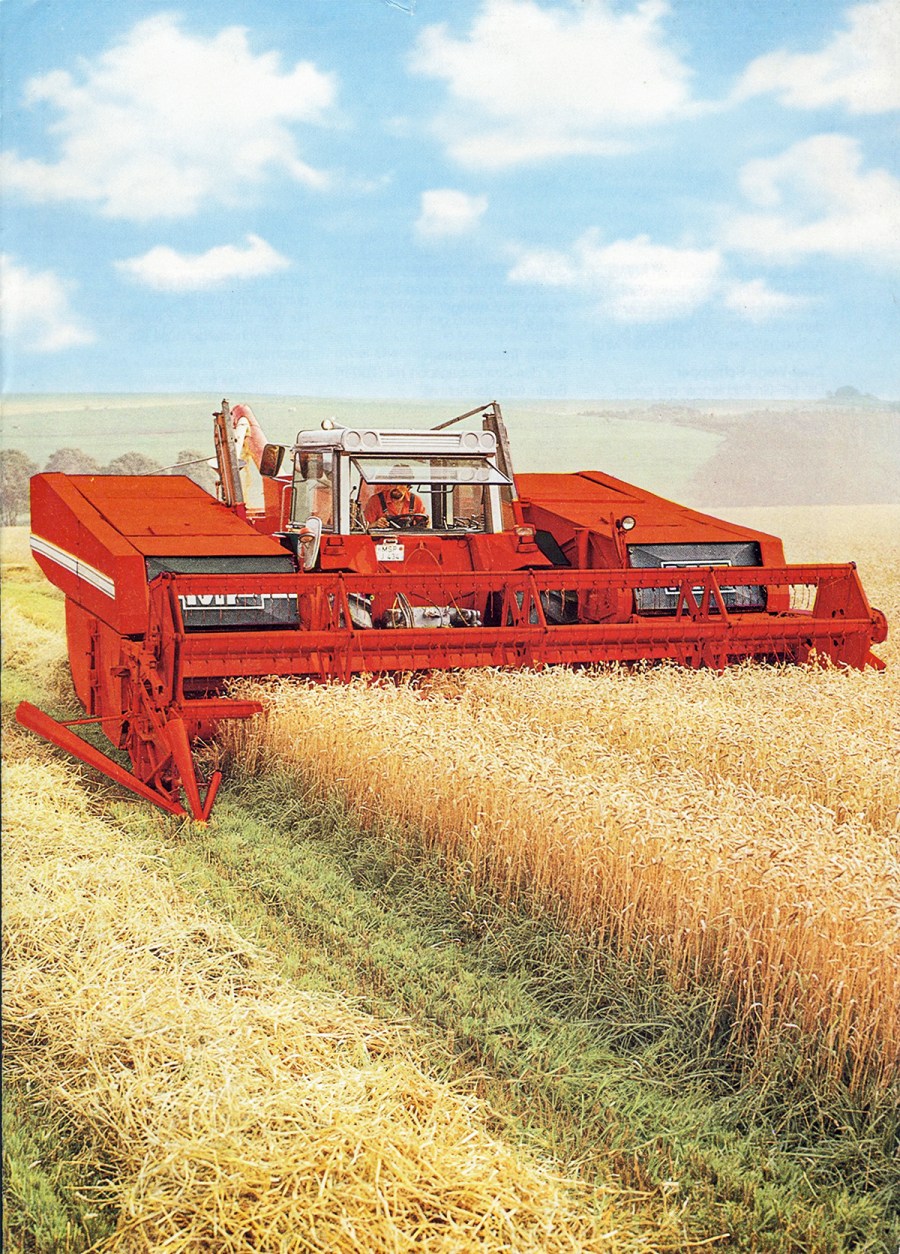
There are a lot of self-propelled machines that sit idle for most of the year. Massey Ferguson’s mounted combine, which could be quickly attached to the tractor, was pitched at farms wanting to make efficient use of their horsepower.
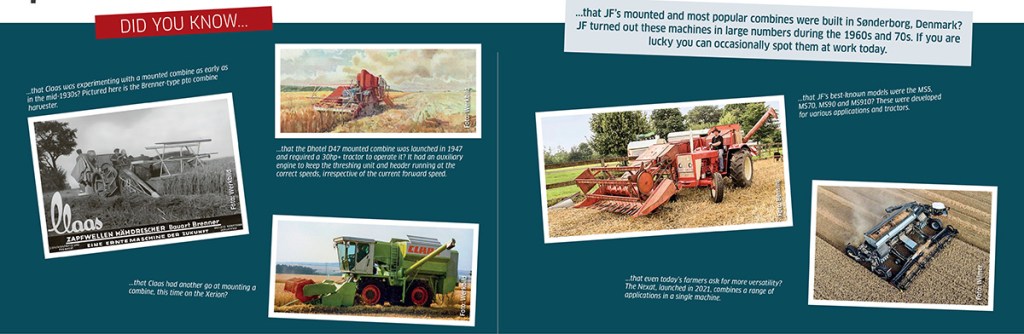
The idea of marrying up a combine harvester with a tractor is probably almost as old as the two machines themselves. There has been plenty of tinkering, designing and experimenting. Several tractor-mounted combines put in an appearance in the mid-1930s.
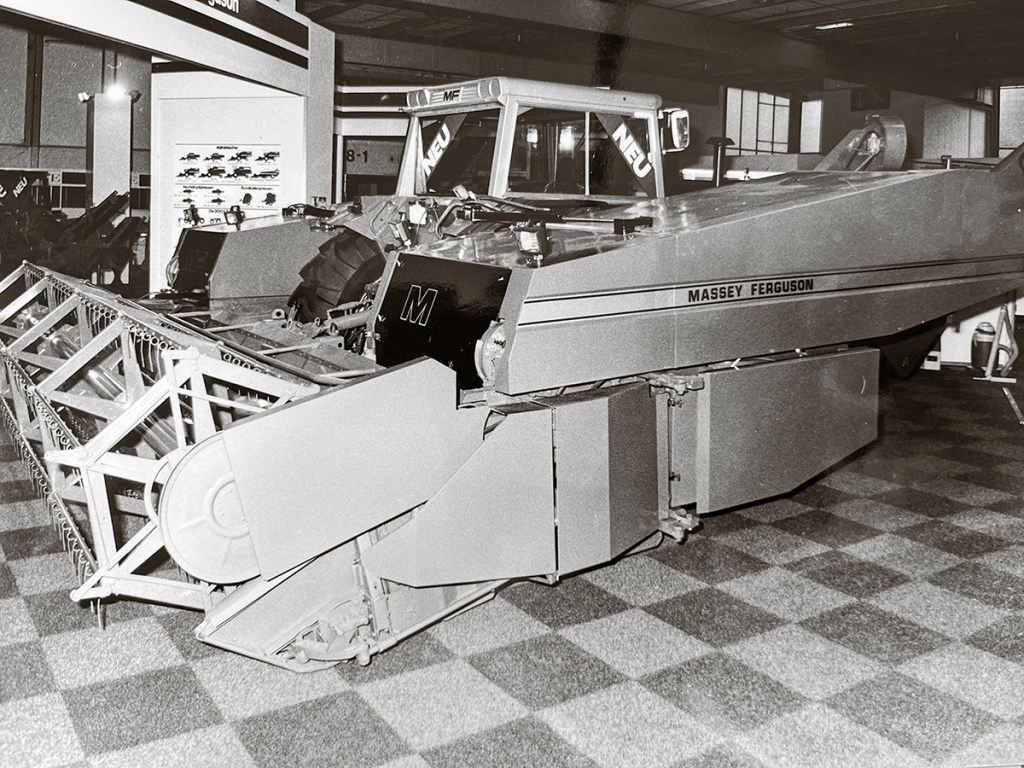
Even in the early 1980s the idea had not gone away, with Massey Ferguson showing its promising looking mounted combine at the DLG show. The idea behind the concept was certainly sound, but sadly not much of it survived. We take a look back.
Who and what
In 1982, Massey Ferguson officially unveiled its quick-coupling mounted combine design at the DLG show in Munich. However, it is understood that five years earlier, the first prototype was being trialled in northern Germany. The concept was developed in Eschwege, a small town in central Germany, where MF had been developing and building combines for decades.
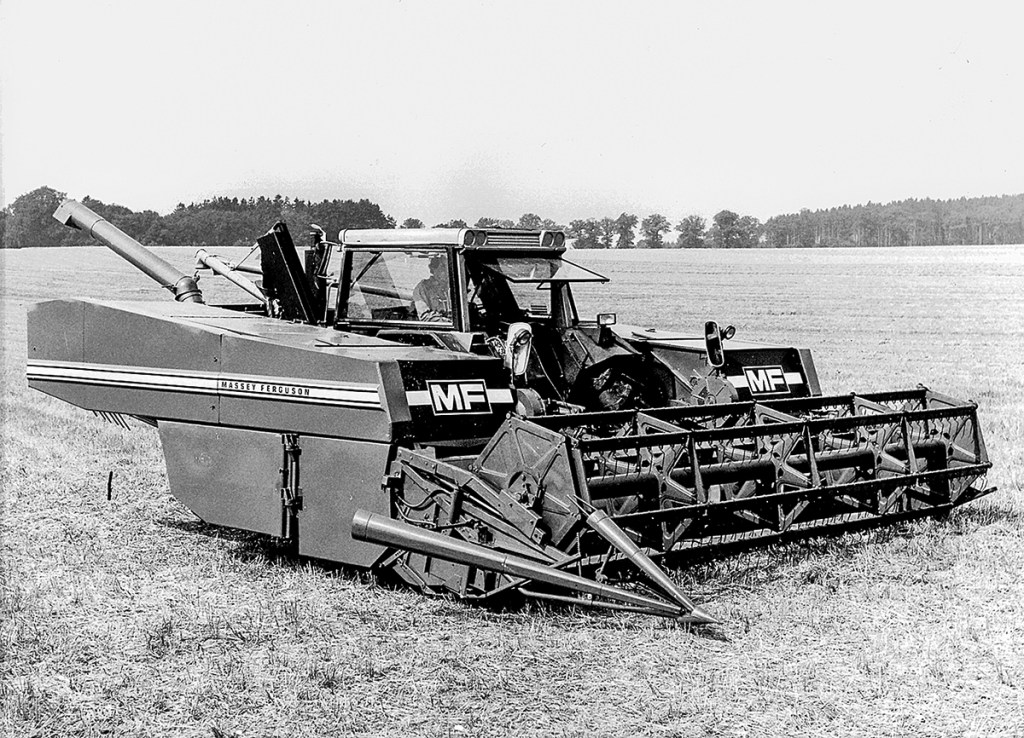
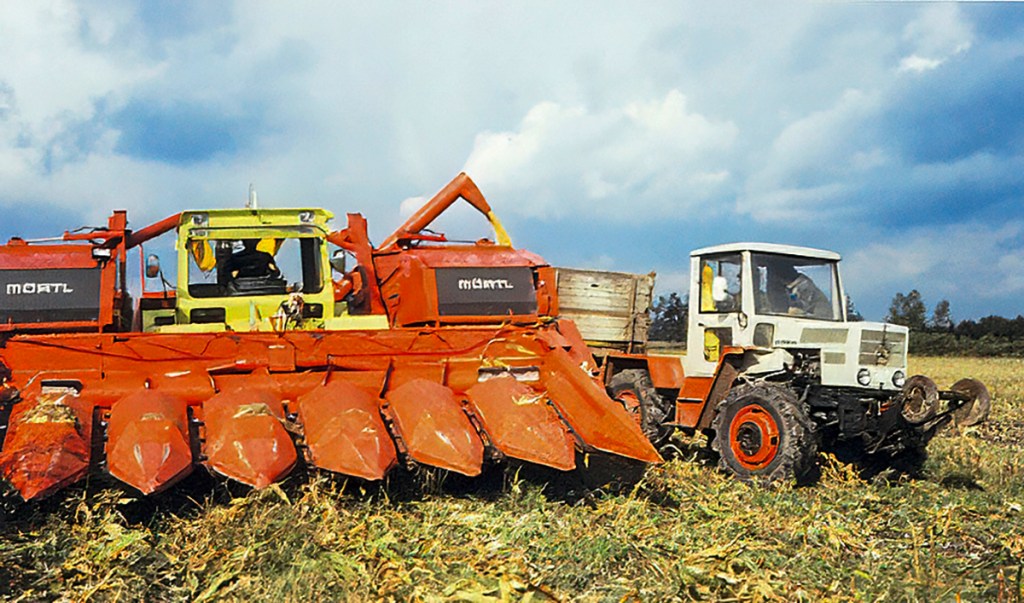
However, in 1983, Massey Ferguson then decided to hand over production and sales, along with all rights, to Mörtl. Reportedly, Mörtl continued to source the threshing components from MF but switched to Claas for the headers. Indeed, five prototypes are purported to have left the Mörtl plant in Gemünden on the river Main in northern Bavaria. Unfortunately, the project never took off, and Mörtl pulled the plug on the mounted combine only one year later in 1984.
Two straw walkers combined
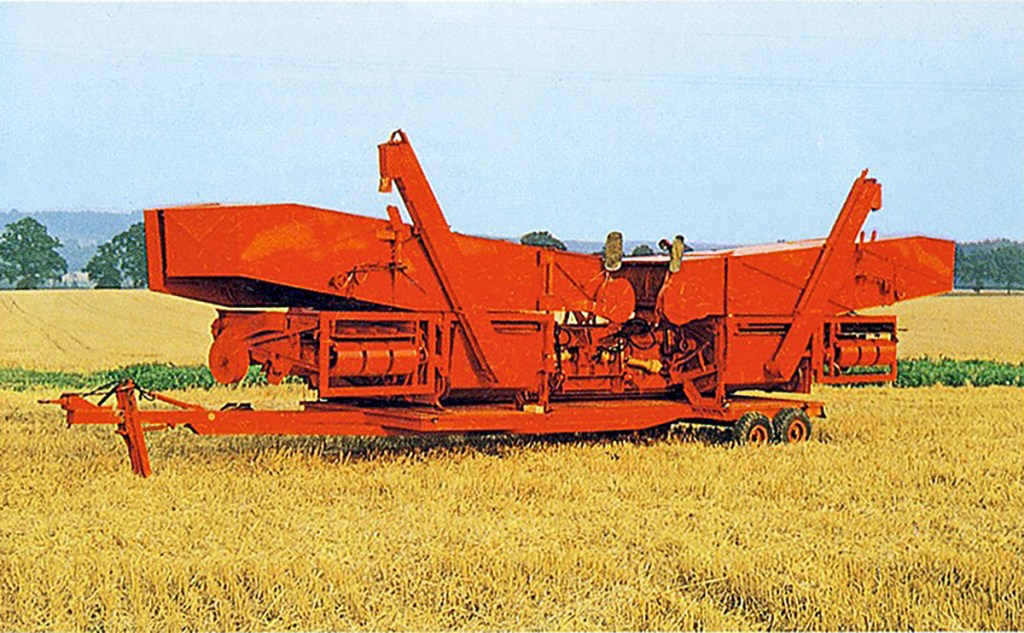
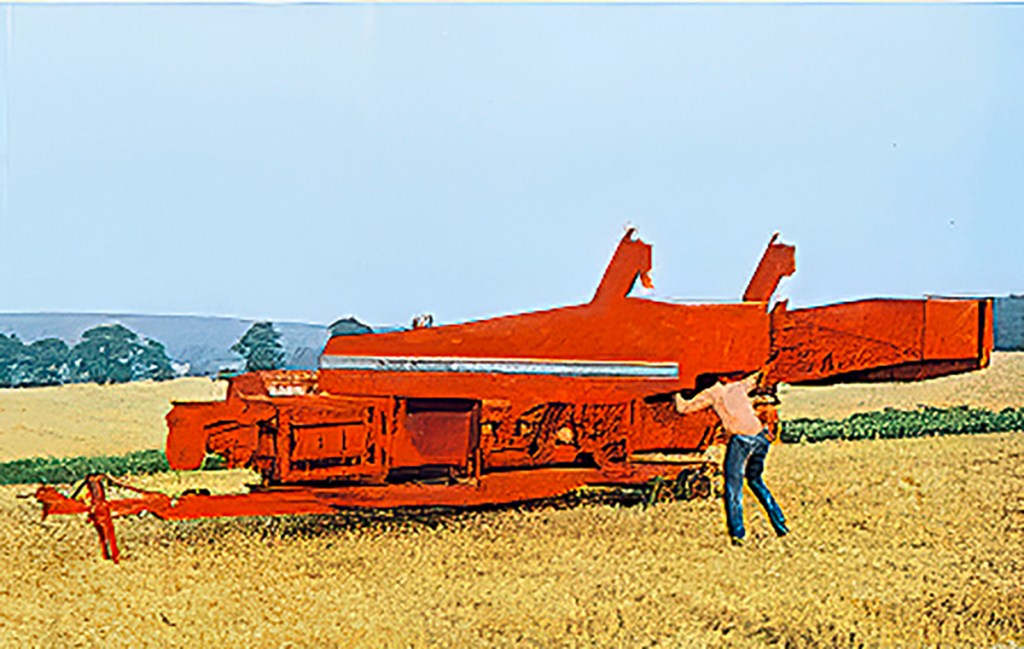
The mounted combine was kitted out with the threshing and cleaning units of two combine harvesters. A reverse-drive tractor manoeuvred in from behind the harvester, between the two threshing bodies units and hitched up to the combine’s mounting frame. After that, the operator then swung the threshing bodies into their working position alongside the tractor.
Unlike some earlier solutions, the mounted combine from Massey Ferguson/Mörtl was attached to the tractor solely via the quick couplers on the three-point linkage. There were no other attachment points (apart from the grain tank) and no jockey wheels. The combine was designed in such a way that its centre of gravity was right at the mounting points.
Massey Ferguson marketing material stated: “It is possible to remove the combine from the tractor in the field, just as you can with a plough or any other three-point implement. It takes just five to ten minutes to change between implements.
“The tractor is therefore not tied up during the entire harvest season. For example, you can utilise the tractor for ploughing in the morning and for combining in the afternoon. This increases the versatility and efficiency of modern, powerful tractors such as the Massey Ferguson 2000 models.”
Models
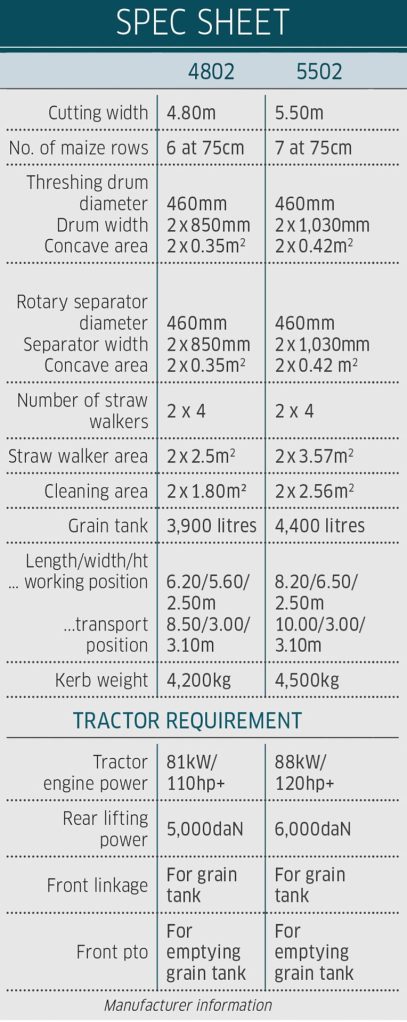
According to the brochure, there were two models with two different threshing box widths (see spec sheet): the 4802, with a 4.80m cutting width; and the 5502, with 5.50m. The header divides the crop flow and feeds it to the two threshing units on either side of the tractor. Total separation area — comprising the threshing drum concaves, rotary separator concaves and the straw walkers — totalled 6.40m² on the 4802 and 8.82m² on the 5502. At the rear, the straw was placed in a single swath.
Grain tank capacity was 3,900l or 4,400l. The tank was mounted on the tractor’s front linkage and filled by an auger that fed the grain from each threshing box. The unloading auger was powered by the front pto and swung out hydraulically.
Used in OSR and maize
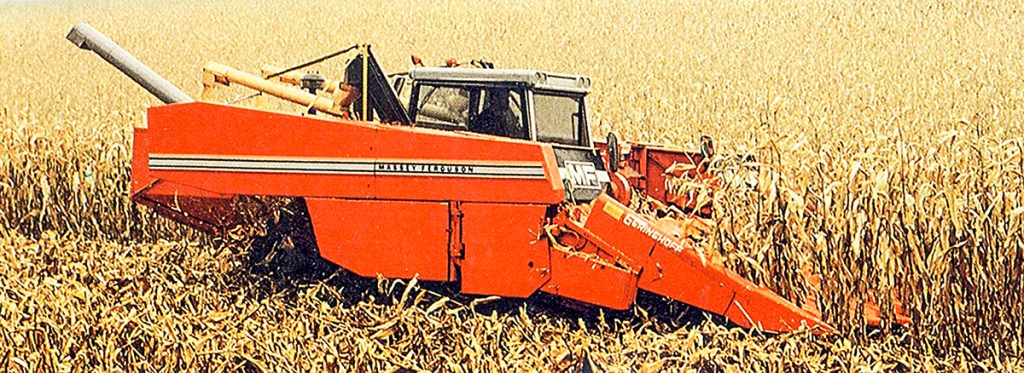
The combine could also harvest oilseed rape crops. Buyers could opt for a 240mm table extension along with vertical side knives.
Maize growers could choose a six- or seven-row maize header made by Geringhoff and would fit different bottom sieves for maize.
Thanks to four-wheel-drive tractors with differential locks on both front and rear axles, the combine should have been capable of working even in wet conditions.
Transport
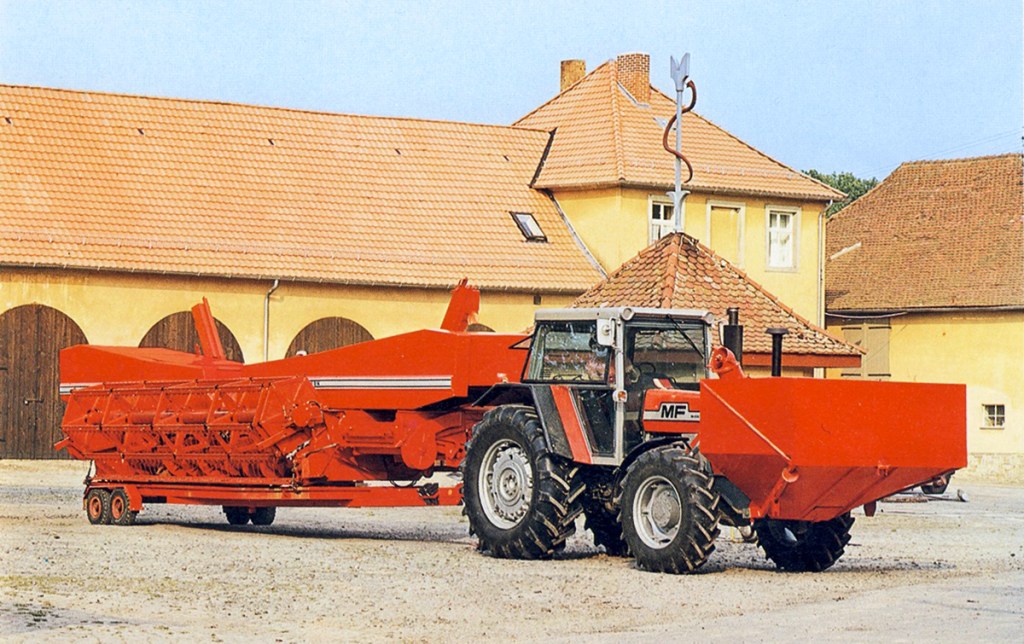
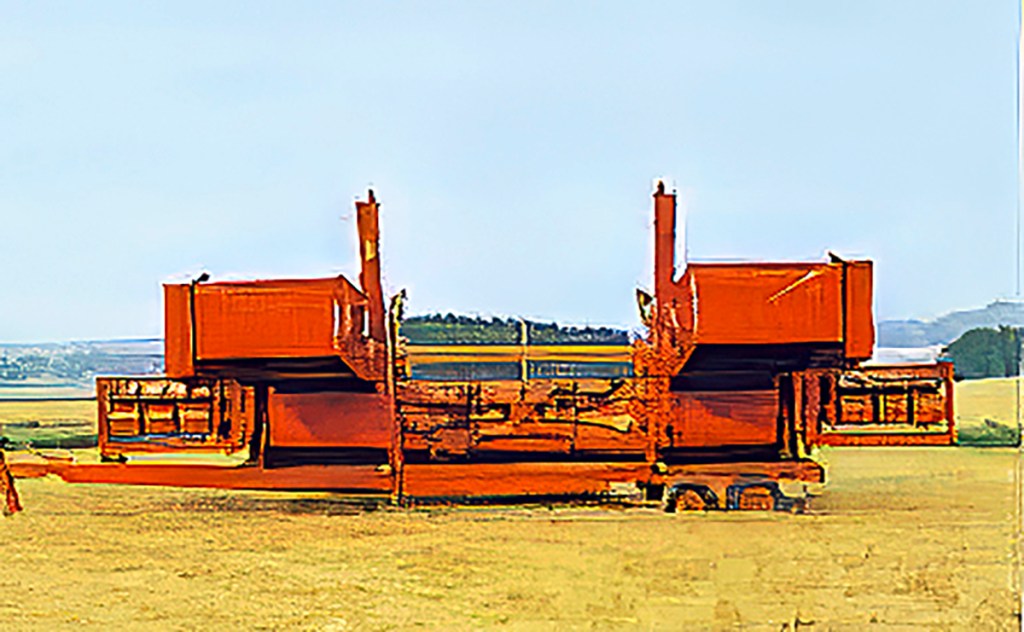
For road transport at a width of 3.0m, the mounted combine was placed on to a low trailer with the threshing boxes swivelled round by 90°. The trailer was purpose-built for the combine and would be parked up at the field edge while the harvesting rig was working.
For road travel, the low trailer was hitched to the clevis. Depending on the combine model, the trailer was 8.50m or 10m long. The grain tank would remain on the tractor’s front linkage when moving between fields. According to Massey, the low trailer could also be used for hauling bales and other farm produce.
Tough requirements
The tractor that was to operate the mounted combine had to tick a few extra boxes. The brochure cover shows a 120hp MF 2680 as the powerhouse. These 2000 series tractors reached the market in 1980 and included the 2640, 2680 and 2720 models. Built in France, these were real heavyweights for their time, boasting a lift capacity of 4,500kg at the front and 7,320kg at the rear and kerb weights of 5.4t to 6.1t.
Well-spaced and robust reverse gears were essential for pushing the mounted combine along. Reverse drive was also an obvious must-have, with Riegger from Riedhausen in southern Germany supplying Massey with the conversion kit.
The unknown giant
What became of the prototypes remains a mystery. Some may have been scrapped, while others could be lying in a Sleeping Beauty-style slumber in a barn. But tried-and-tested designs do sometimes make a comeback. Maybe now that the striking silver cab once again graces the models of the new MF S-series — just as it did the 2000-series back in the day — there might be a mounted combine to go with it.
Should you have any information on the whereabouts of these machines, we’d love to hear from you.
Maria Henkemeier
For more up-to-date farming news click here and subscribe now to profi and save.