

The last time we visited Kent grower Guy Eckley, he was focussed on adopting controlled traffic farming and direct drilling strategies. Nearly 11 years later, we caught up with this forward-thinking grower to see what progress has been made.
KEEPING IT BRIEF
- Mechanical weeding more beneficial than herbicides
- Stacking cover crops
- Solsteer connectivity delivers Greenstar integration
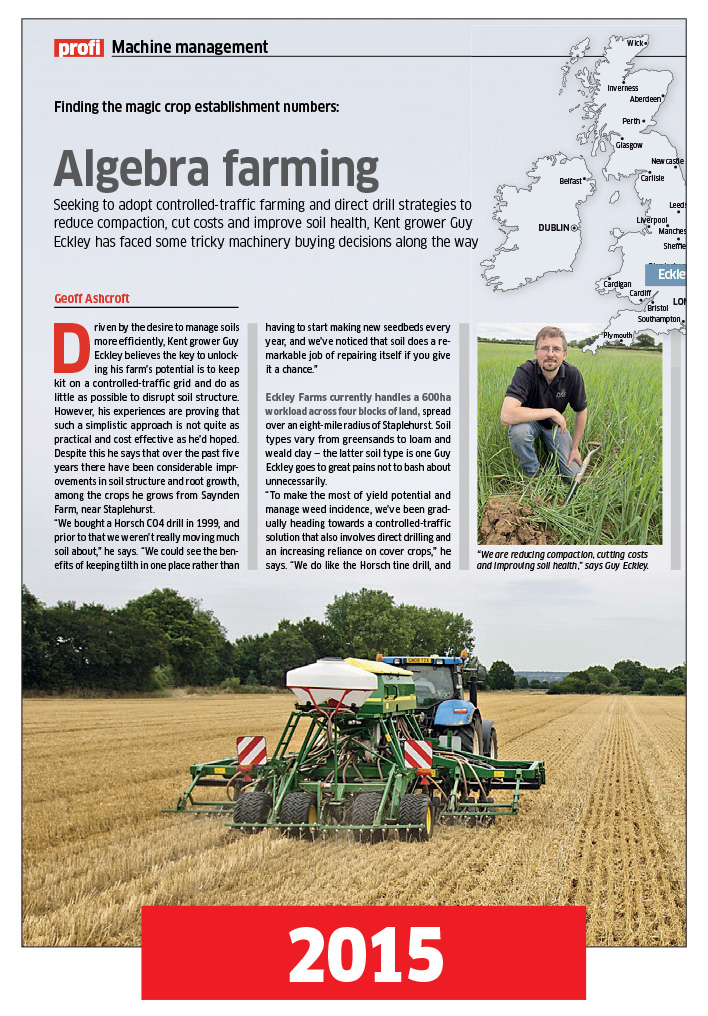
When profi last visited Guy Eckley, he was heading towards a controlled traffic regime to help manage compaction, while integrating direct drilling techniques and cover crops into the farm’s rotation. (see issue 10/2015).
At the time, CTF was something of a shining light, identified as a process of keeping wheelings all in the same place to manage in-field traffic. The concept of using multiples of working widths that all matched a grid based on the widest machine seemed a logical step to this grower. Except they didn’t always match up.
It may be recalled that Guy took the tape measure to many items of kit, and the real working widths simply didn’t live up to expectations.
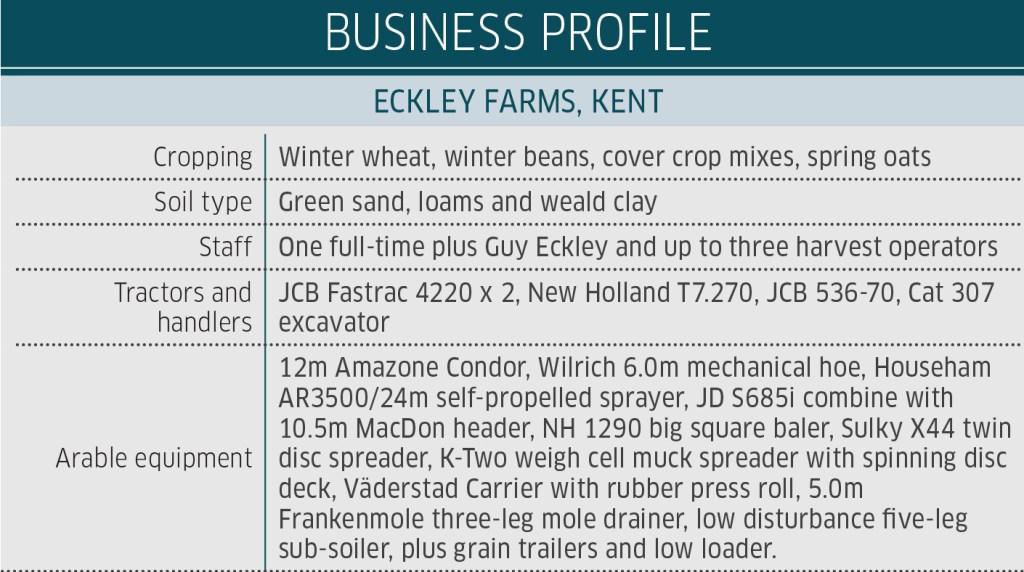
“Back then, we settled on two 4.4m drills, a 9.15m combine header but choosing to cut at 8.8m, and everything sat on 26.4m tramlines which suited our Househam AR3000’s 27m boom,” explains Guy, who continues to farm 600ha from Saynden Farm near Staplehurst, Kent. “Cover crops have remained in place, and have been far more beneficial to our soils from green cover, than chopped and incorporated straw could ever provide.”
He puts this down to over 15 years of cover crop experience, which has effectively taken the pressure off ground pressure.
“That’s not to say managing compaction isn’t important – it really is,” points out the enthusiastic farmer. “But what we’ve achieved, along with a focus of buying decent tyres and using low operating pressures, is not so reliant on strict CTF practices. And I’m nowhere near as concerned about CTF as I once was. CTF can be a cost-prohibitive process to adopt, and our soils now have far more organic matter than they’ve ever had, which makes them much more capable of supporting machinery.”
Mechanical weeding
A visit to Groundswell in 2016 both confirmed and validated what he was doing, and the regenerative process has continued to gather pace.
New on the kit list is a camera guided hoe, after the technique of mechanical weeding was first introduced at Saynden Farm in 2018.
“We were using a Horsch Sprinter ST, with crops sown at 25cm spacings,” explains Guy. “A horticultural agronomist I know spotted the gaps in our rows and threw in a grenade about mechanical weeding.”
“We drill using RTK and had guidance lines, so could mechanical weeding really be that simple?” he says.
What followed was a tentative step into weed disruption, with row crop wheels fitted to one of the farm’s two JCB Fastrac 4220s, along with a modified cultivator.
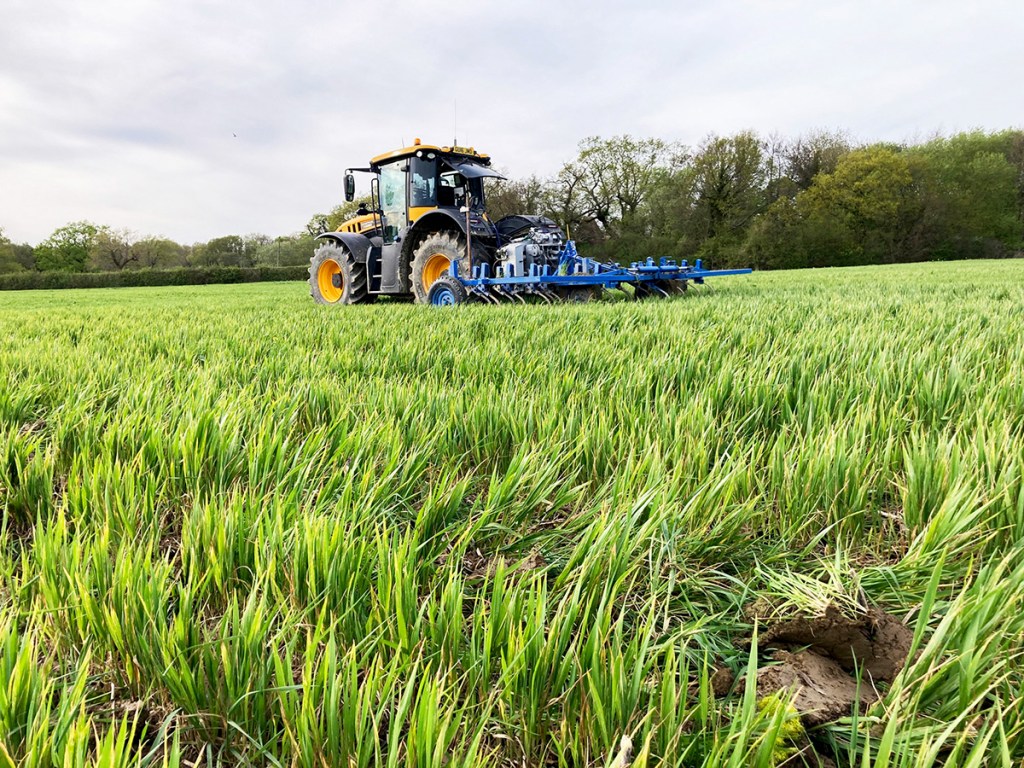
“I bought a secondhand 4.5m Wilrich folding cultivator and repositioned the cultivator’s wide sweep tines to sit between our rows,” he says. “It was a very basic approach to mechanical weeding, using only the tractor’s steering guidance from RTK. I drove with one hand on the lift button in case things went wrong and was really surprised by how effective it proved to be. Though it needed to be much more productive.”
Still seeking efficiency and compatibility, the farm super-sized its drill in 2023.
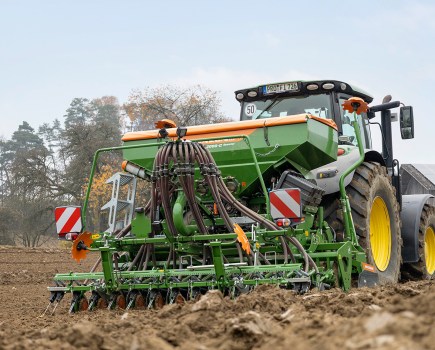
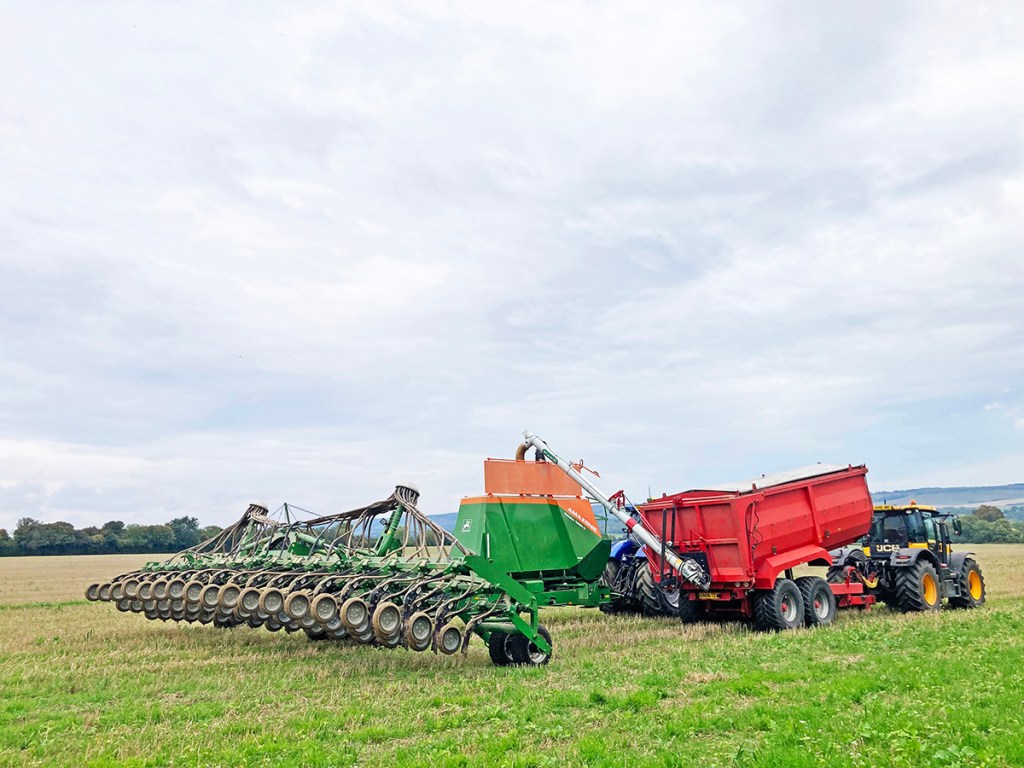
“The Deere 750A was doing less and less work, as late season drilling held the key to managing black grass incidence,” he says. “Late drilling with a 750A just didn’t work on our soils. So, the decision was made to replace both drills with an ex-demo 12m Amazone Condor.
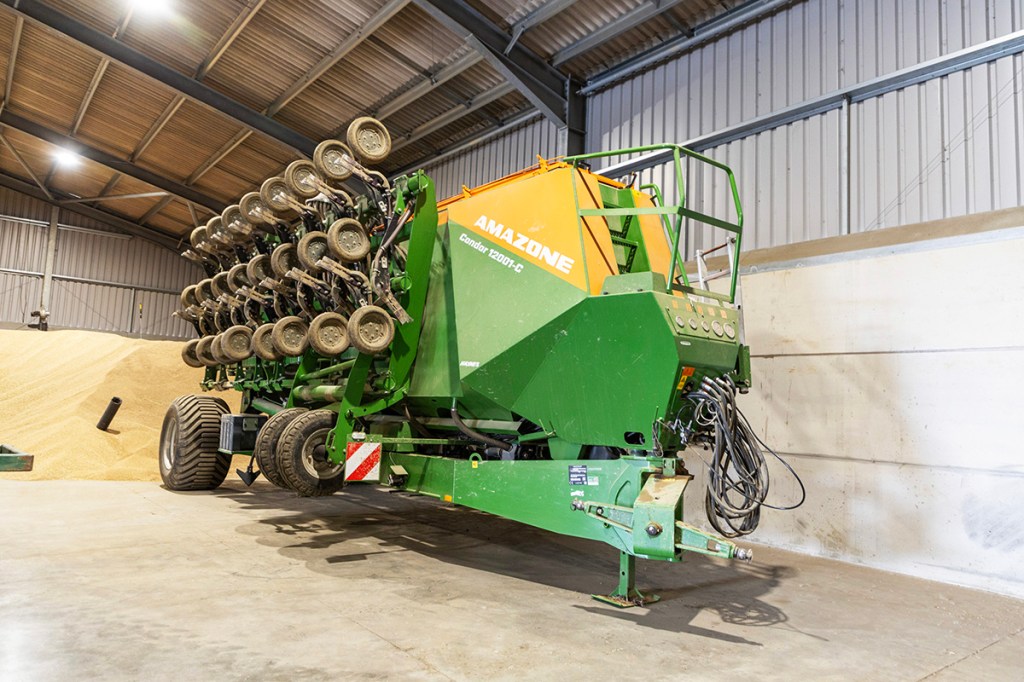
“With almost three times the working width, this drill has given us some serious output and reduced headland turns by almost one third, compared to our previous 4.4m drill format,” points out Guy. “The Condor has low disturbance points and three hoppers, so it can be used for companion crops and cover crops, in addition to our combinable crops.”
Cut-and-shut boom
The change of drill instigated a change in tramline spacing, cutting back from 26.4m to 24m. And the Househam sprayer’s 27m boom needed some cut-and-shut treatment by a local engineer, to comply with the revised tramline intervals.
That revised width made it easy to upgrade the 4.5m hoe, and version 2 arrived in the guise of a 6.0m Wilrich cultivator, that had its leg spacings tweaked to suit.
“I bought a secondhand LaForge headstock with side-shift, along with some computer vision guidance from Tillet & Hague that could operate the side-shift function,” explains Guy. “And just like that, our mechanical hoeing productivity went from a forward speed of 4.0km/hr with 4.5m, up to 14km/hr with 6.0m. I could drive down the field with my eyes closed – it really is that good.”
He says that the farm is still fathoming out when to hoe, as every season is different when it comes to soil moisture and growth stages.
“Timing is everything, though we could make one pass, two passes or none at all – and the latter is currently true of our headlands,” he says. “The big benefit of weeding is that the hoe doesn’t need to rip out every blade of black grass, because just laying them over is enough to stop them in their tracks. They’re so damaged that they don’t produce seed until the following year, and that creates more opportunities for eradication.”
He adds that hoeing has created an additional benefit from aerating and moving soil under the crop.
“Hoeing is far cheaper than reaching for a herbicide, and it introduces oxygen to the roots, so the crop is able to fill out and smother weeds so much better.”
He says that the next challenge is to find a solution that can enable mechanical weeding on headlands.
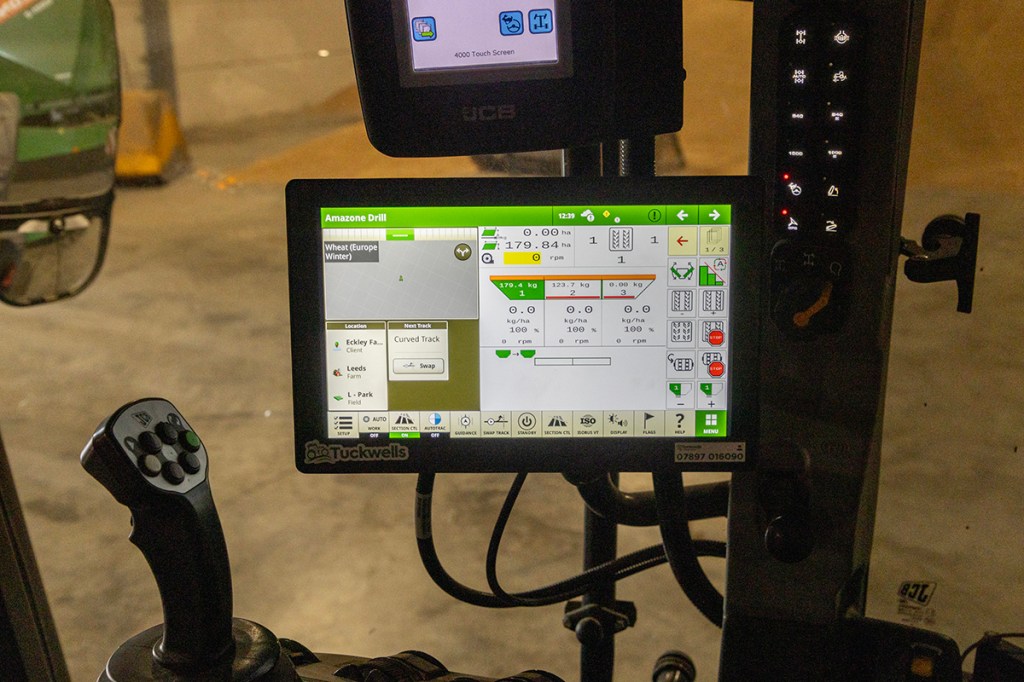
“A mounted hoe and a trailed drill are not fully in-sync on a curved headland, but we are trialling with a GPS receiver on both the drill and the hoe, to see if this improves machine positioning,” he says. “So, we’ve a bit to work out yet. Maybe straightening our headlands against a margin will be more beneficial than not weeding them at all.”
Fine-tuning practices and techniques has delivered operational efficiency across the business. That includes eliminating fields that are less than three hectares in size from the rotation, and putting them into wild bird seed mixes.
“The time you waste chasing small fields is really not worth including them in the main rotation. So, it may be no big deal if we straighten headlands to accommodate mechanical weeding. We’ll probably gain more than we will lose.”
Guy’s aim is to one day have a 12m hoe to match the drill.
“It would mean half as many wheelings, and twice the output, and it would give us better timeliness over a larger area,” he says. “But purchase price is a key consideration, and my preference if I’m going to experiment, is for used equipment at a sensible price.”
Half-width shut-off is a feature of the drill, and having amassed a significant history of yield maps from the farm’s John Deere combine, this has eased the farm into variable rate seeding too.
“We’ll increase seed rates in poorer patches and lower them in the better yield-producing areas,” he adds. “It’s a good way to manage inputs and generate a consistent yield.”
The 6.0m/12m format however doesn’t fully conform to a functioning CTF grid, as the JD S685i’s 9.15m combine header remains the odd one out, and a combine swap is cost-prohibitive.
“Changing the combine is not an option,” he says. “It’s more than enough for our acreage, but we have opted for a secondhand MacDon header to boost output, without breaking the bank.”
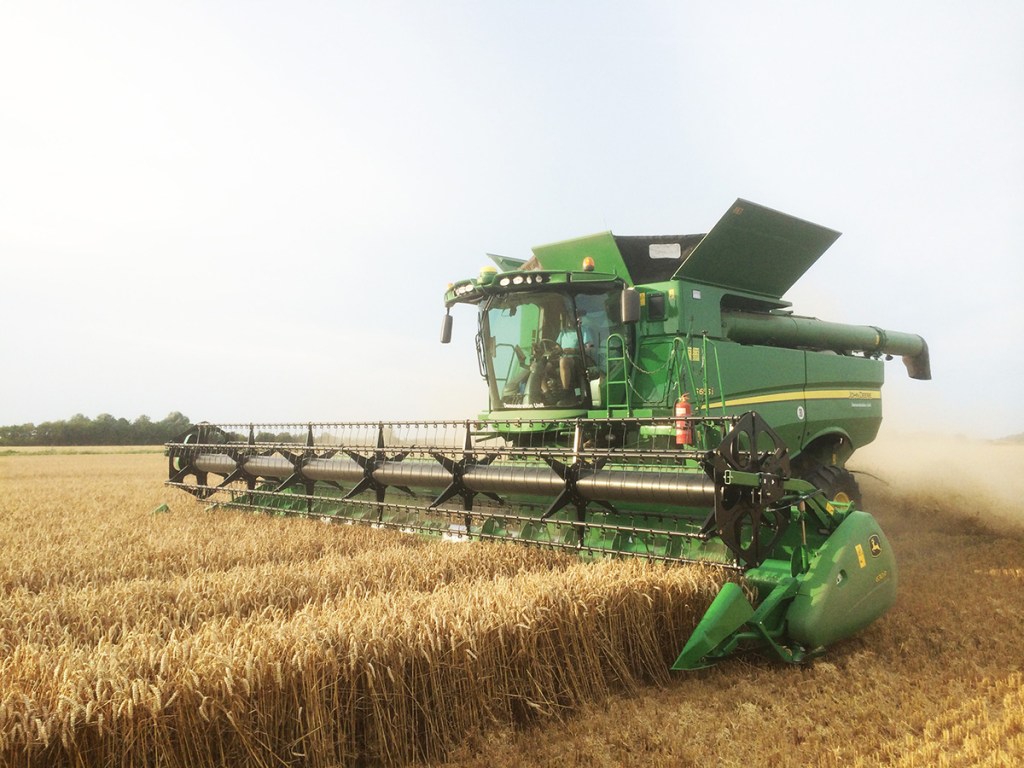
“At 10.5m, we’ve gained width, so we’ll continue to manage wheelings and keep trailers on tramlines where possible. Knowing how our soils have continually improved, having a non-conforming header is not a deal breaker from a CTF viewpoint.”
With more combine performance, the time that soils are left without a living crop will be minimised.
“Our rotation is based on winter wheat, winter beans, winter wheat and a triple cover crop mix,” he says. “That means three cover crops in succession, starting post-harvest and runs through winter, then the next is planted in spring, and again in summer, then back to wheat. Each cover crop is sprayed off and can be mown with a 5.0m Razorback if necessary, before the next crop is planted.”
He says that a focus on plant sap analysis and tissue tests have led the farm to look at areas where the business can get crops looking better.
“This has led us to a better focus on nutrition,” he says. “We’ve swapped a growth regulator for silicon and that creates a strong, tall plant with plenty of straw. We also make use of different biologies too – be it from chicken muck, cow manure, horse manure, cover crops or compost. Though I do question whether it is actually needed every year.”
With taller plants and a penchant for incorporating mulched green cover rather than chopped straw, Guy has bought a secondhand big square baler to help remove and sell some straw during the 2026 harvest, providing an additional revenue stream.
Mostly yellow tractor fleet
Having slipped into a JCB Fastrac 3230 during our last visit, Mr Eckley’s appreciation of all-round suspension hasn’t waned. And this newfound taste of comfort has led the farm into ownership of a brace of 4000-series Fastracs, ousting his previous pair of New Holland T7000-series tractors.
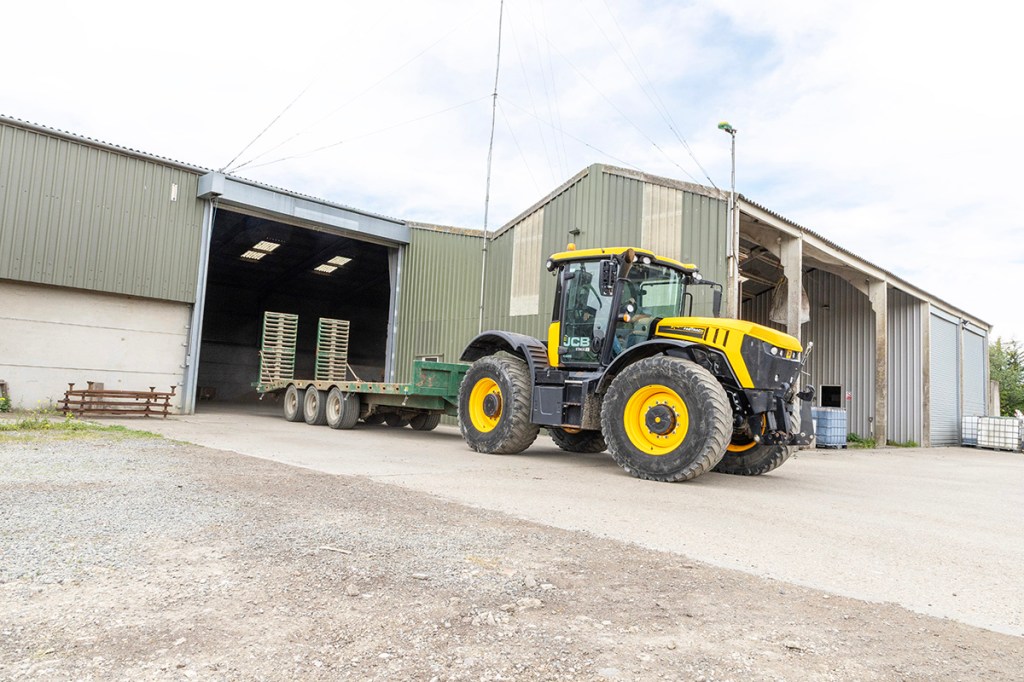
“There’s safety in numbers, and the Fastracs are mostly for trailer work,” says Guy. “We’ve run with a pair of Fastracs for a few years now, and the latest model to arrive this year is a 71-plate with 4,500 hours that needs a new set of tyres. This has replaced an earlier 17-plate Fastrac.”
“We’re now on heavier duty axles with this latest model, having endured some failures along the way,” he says. “Hub oils are now changed as a matter of course, as part of annual servicing.”
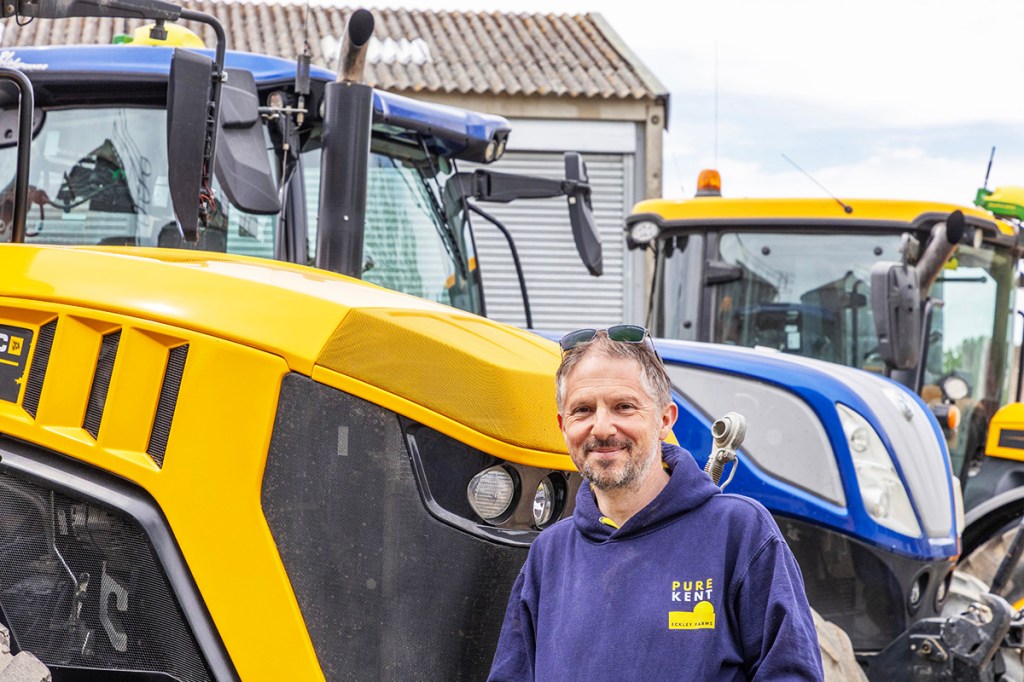
The second Fastrac 4220 is on a 16-plate and arrived as an ex-demo tractor with 600 hours under its belt and has now covered 6,500 hours.
“We do like the Fastracs, and by comparison, our frontline tractor is a New Holland T7.270 Auto Command, which was far less comfortable until we put a Superglide cab suspension system on it.”
While a new set of tyres on the latest Fastrac may help it pick up the slack with the drill, that mantle is left to the T7, which sits on 710/70s to keep ground pressure low.
It also gets to operate with a low disturbance sub-soiler and Eckley Farms’ Frankenmole.
“The Frankenmole started life as a five-leg, 5.0m Keeble subsoiler, but is now a three-leg mole drainer with a packer roller,” he says. “The packer roller has raised eyebrows, but I’m convinced of its merit in leaving a level finish for the no-till drill to work with.
“We don’t mole deep, simply because of the shallow depth of drains across the Weald clays, but it’s proved a hugely effective tool that makes it easier for our soils to breathe, simply through temperature change pushing and pulling air through the mole channel. And that mole channel can stay in place for up to three years on our heavy soils.”
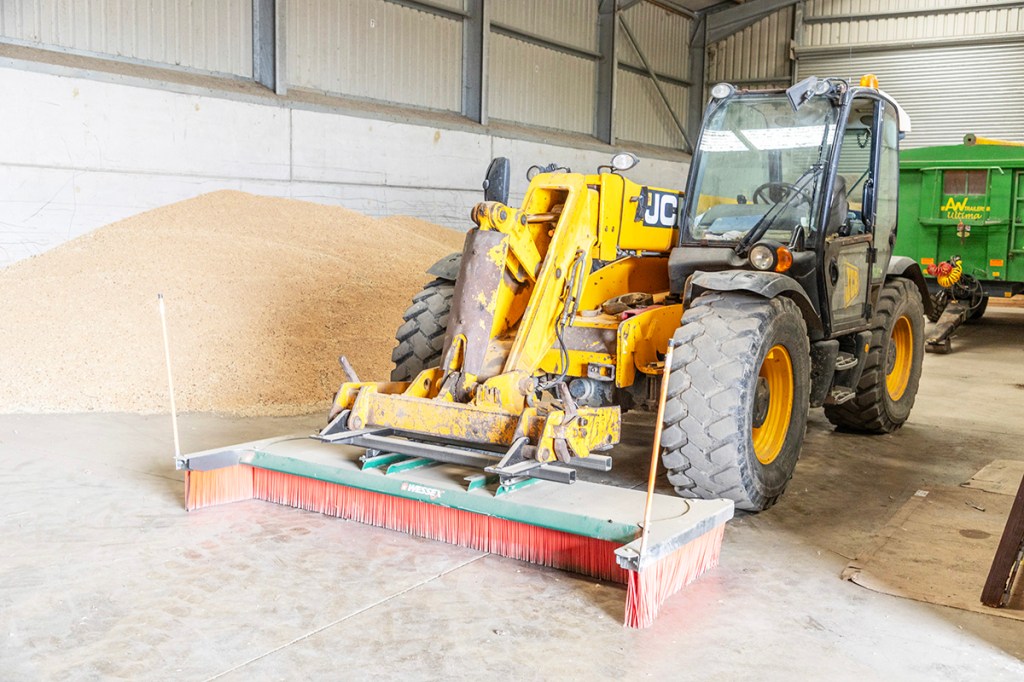
Materials handling tasks fall at the feet of a 10-plate JCB 536-70 that has racked up an impressive 9,000 hours, with a smaller 1992-model Loadall on standby.
“We may add a third Fastrac 4220 with a loader, simply to provide easier in-field logistics with bale carting,” he says. “Then the tractor can load and haul, and the telehandler can stay at the farm ready to unload.”
Fast-filling
Buying into a high-capacity trailed drill has put bulk seed bags and drill filling firmly under the spotlight.
“Filling with big bags is slow and brings an element of risk to the job,” he says. “We bought a 10-inch folding auger and fitted it to the back of our old Macauley 16t grain trailer. Until now, it’s never towed well because the axles are at the back, but with the auger now adding some balance over the rear, we’ve finally made an old trailer ride well.”
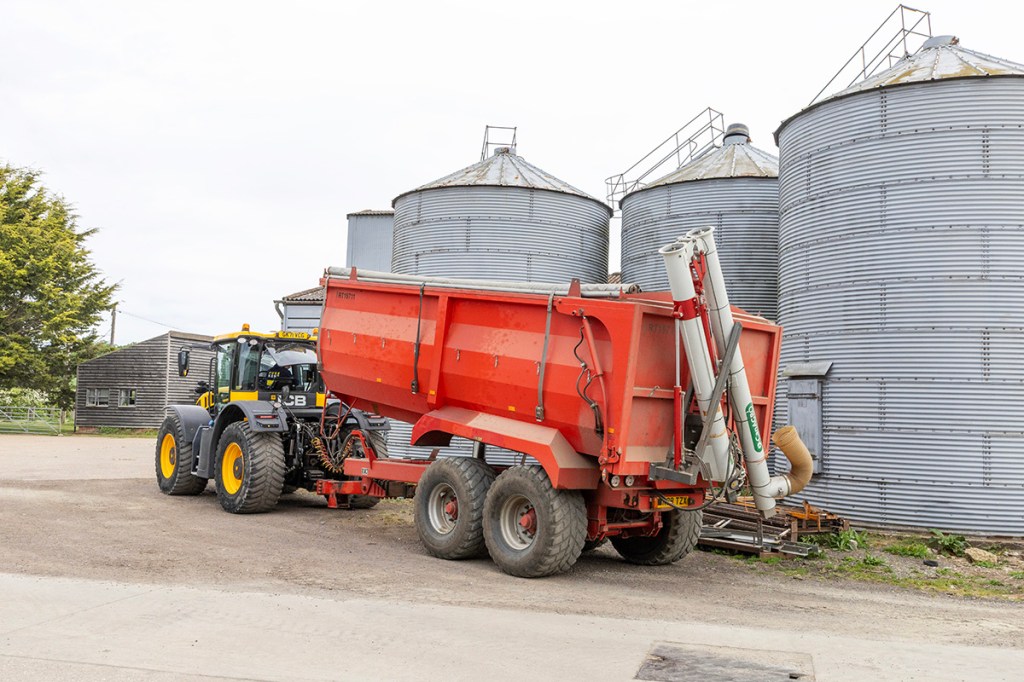
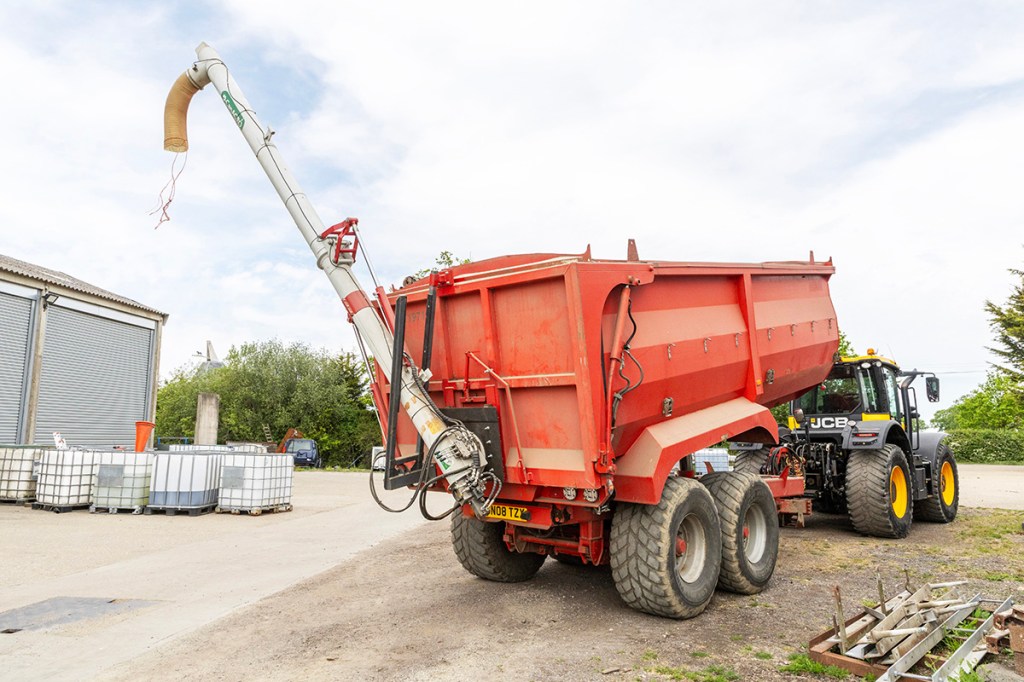
The hydraulically driven auger folds across the back of the trailer for transport, and has the performance to fill the drill in just six minutes.
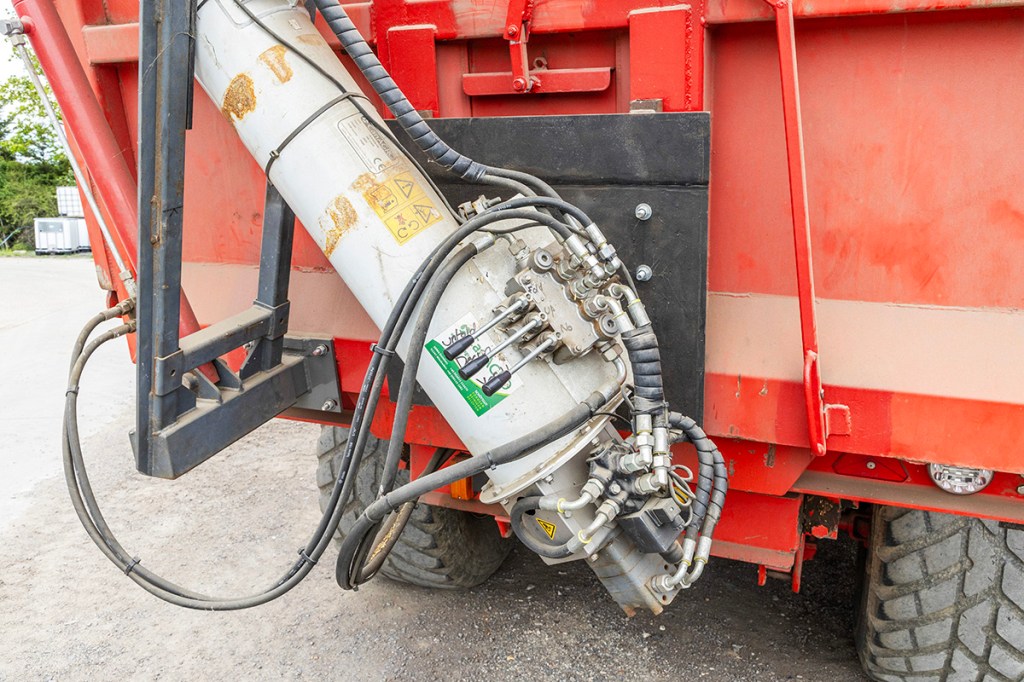
“Constant pumping sends oil to the back of the trailer, and the levers at the back let you control its height and auger on/off. There is also an electric switch on top of the auger so the drill operator has remote switching when filling. And with a couple of pieces of string on our outlet pipe, it’s easy to direct flow into and around the Condor’s seed hoppers, and fold the flexible spout for transport.”
Stale seedbeds have become redundant at Saynden Farm, with Guy preferring to keep soil biology alive on a year-round basis.
“We’ve created a level of productivity and efficiency that has been a long time in the making,” says Guy. “There’s no quick fix, but our approach is one that is reflected in our gross margin.”
“Based on a wheat yield of 10t/ha, the biological and nutritional approach we have developed is delivering a £100/ha higher return over traditional practices, and with SFI, you can add an extra £200 on every hectare cropped in subsidy payments.”
“While you might expect there to be a two-tonne yield deficit as a result, I’m pleased to say we’re only seeing a half-tonne yield reduction,” he adds. “And I’m confident that with the right agronomic choices, we’ll get that back. We must be doing something right.”
Summary
Mindful of the ever-increasing cost of kit, Eckley Farms’ carefully considered secondhand machinery choices continue to break the mould when it comes to relieving time pressures and boosting efficiency. That it can be done without excessive horsepower continues to prove that sometimes it’s good to be disruptive with decision making.
Geoff Ashcroft
For more up-to-date farming news click here and subscribe now to profi and save.