
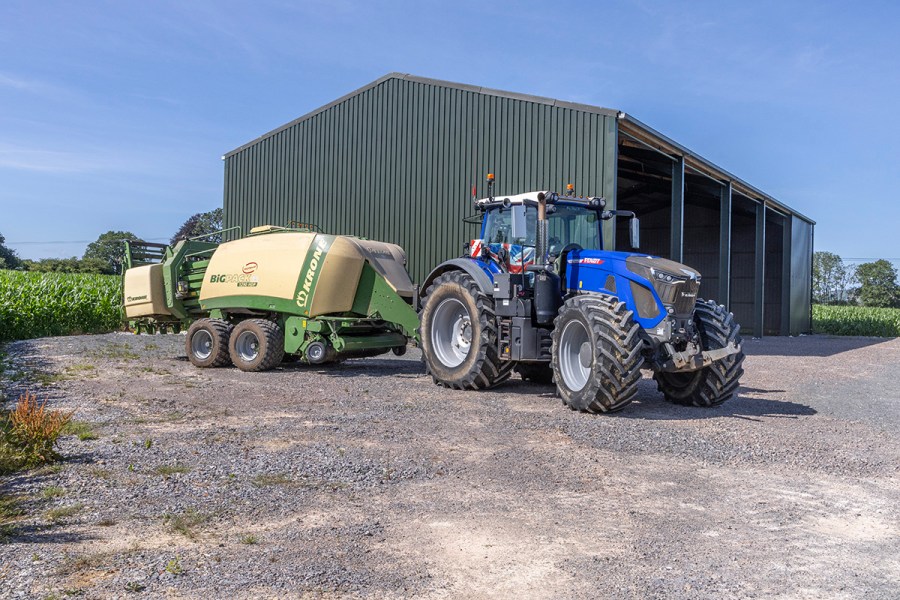
When Fendt took the wraps off its revised 900-series in 2019, the 415hp flagship 942 pushed the firm’s 900-series well over 400hp for the first time. With an all-new transmission and a change of engine, our test team hoped it could be a game-changer for its business. So, after seven years and almost 11,000 hours, how has this 942 Vario fared?
KEEPING IT BRIEF
- Single range transmission delivers longevity
- 9,500 hours on original Trelleborg tyres
- Auto-reverse fan is a life-saver
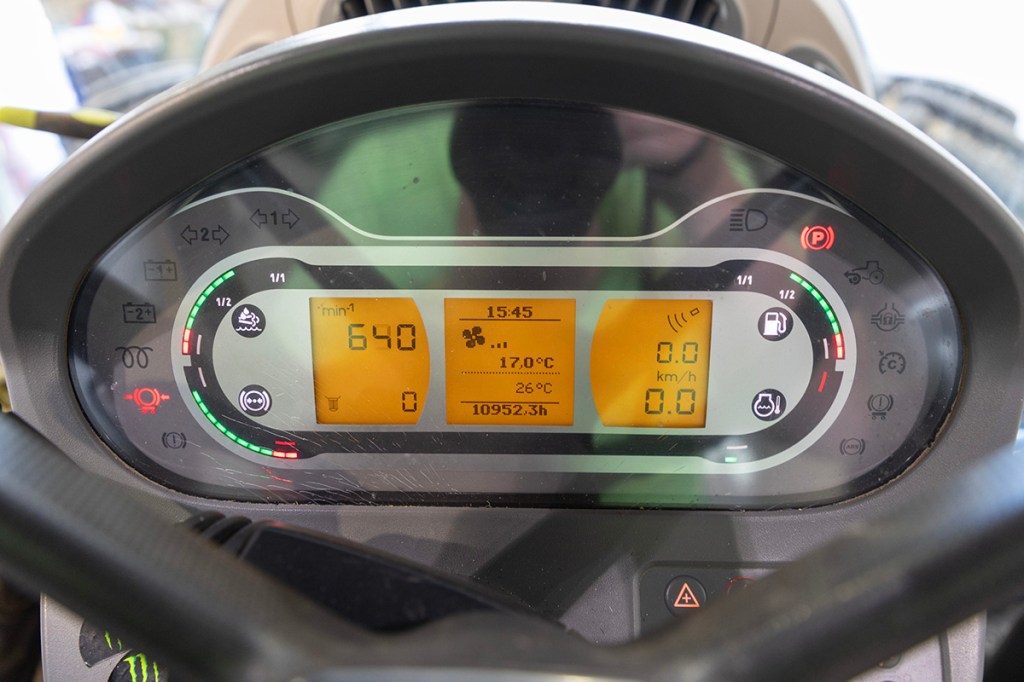
Over the last seven years, our featured long-term Fendt 942 Vario Gen6 has regularly flexed its muscles on a variety of tasks, and as a result its clock will have rolled over 11,000 hours by the time you read this. It’s had a constant workload – and a constant operator too – notching up hours on clamps, pulling a big square baler and carrying a 6.0m combi drill.
Almost in daily use as the flagship of a busy Dorset contractor’s seven-strong tractor fleet, the 942 stands shoulder-to-shoulder with a reverse drive Fendt 936 Vario, and a host of other 250hp tractors that clock-up around 2,000-2,500 hours/year, on a variety of general contracting duties.
Suffice to say, this nigh-on quarter-of-a-million-quid investment is still holding its own, and hasn’t broken the bank, courtesy of a five-year/8,000-hour manufacturer warranty and strong dealer back-up.
Back to 2019
So, what did the revised five-model 900-series bring to the table, at its launch? When Fendt revealed the Gen6 900-series in 2019, it picked up styling cues from its larger brother, the 1000-series, along with a raft of technical changes compared to its predecessor. The biggest perhaps, was that of the powertrain, helping the power bracket for this series to climb, as the lowest powered model – the 927 – was replaced with a new flagship, the 942.
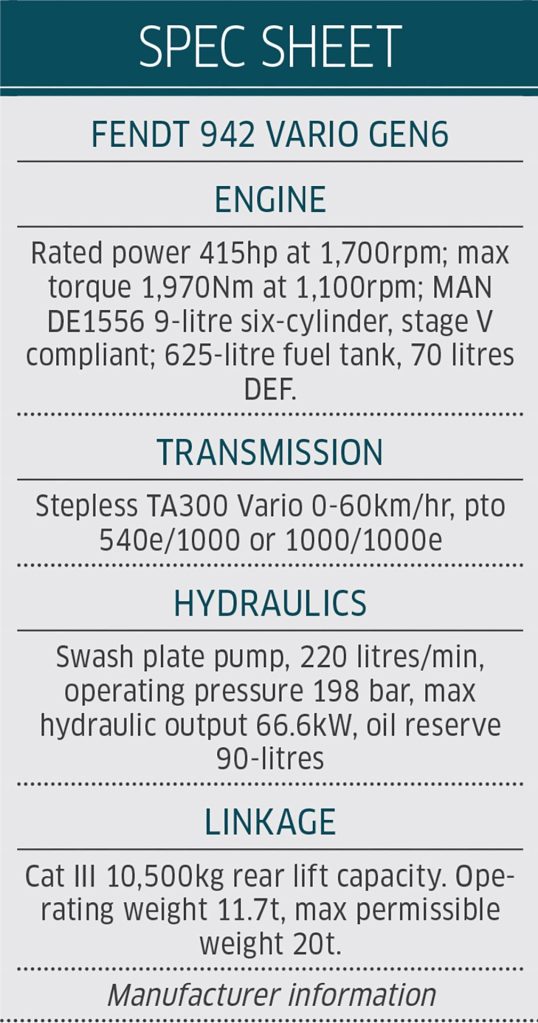
Up front, the new 900 models came with MAN power, delivered by a low-revving 9.0-litre six potter with four-valve cylinder head technology, replacing the Deutz 7.8-litre engine previously used. The D1556 MAN engine brought Stage V emissions compliance and a variable geometry turbo to boost its low-speed power production. For the flagship 942, this translated into a full power rating of 415hp that is constantly available in the 1,500-1,700rpm range. And that 1,700rpm figure also represents the engine’s rated speed.
Fendt’s low-speed engine concept also translates into 40km/hr at 950rpm, 50km/hr at 1,200rpm and 60km/hr at just 1,450rpm – 300rpm lower than the previous Deutz-powered 900 models.
This new engine also brought a fuel-sipping low idle speed and extended oil service intervals of 1,000 hours.
Power is pushed through a Vario transmission borrowed from the 1000-series – so the VarioDrive TA300 boosts user-friendliness with only one travel range, and the front axle is permanently driven at speeds below 25km/hr thanks to a pair of hydro-motors. This removes the four-wheel drive button from the armrest.
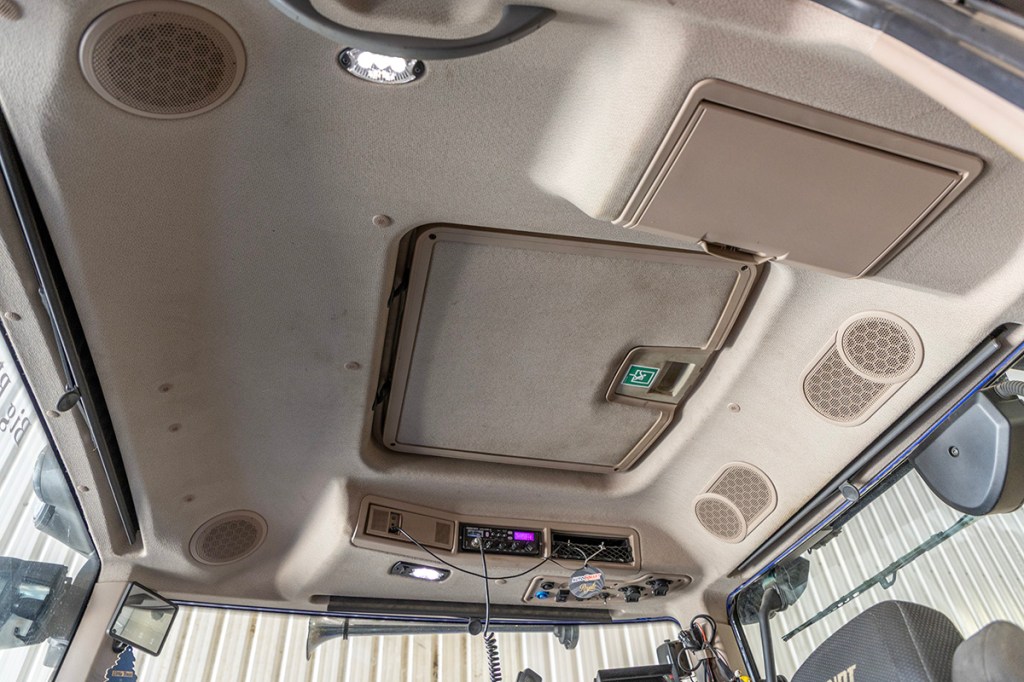
Cab comfort also got a huge shot in the arm, with the operator accommodation also taken from the 1000-series. The cab roof carries eight microphones that communicate with each other to optimise the performance of hands-free equipment, which includes an infotainment system linked to the 10.4in display.
Additional in-cab details include radio antennas in the roof and side windows, and mirrors that are part of the CANbus system and integrated into the tractor terminal, with access via hotkeys.
When it comes to hydraulic performance, the 942 has a spec identical to the 1000-series. That brings two load-sensing pumps packing 165 litres/min and 220 litres/min, with separate circuits that enable easier oil flow management from the cab and up to eight spools. Lift capacities are 12,600kg at the rear, and 5,600kg at the front.
This beefed-up Gen6 900 now tips the scales at 11,700kg unladen, and can be ballasted up to 20 tonnes, helped by new axles front and rear, and specially-developed Trelleborg boots. The wheelbase is also 100mm longer than the earlier 900 series.
Fendt fleet familiarity
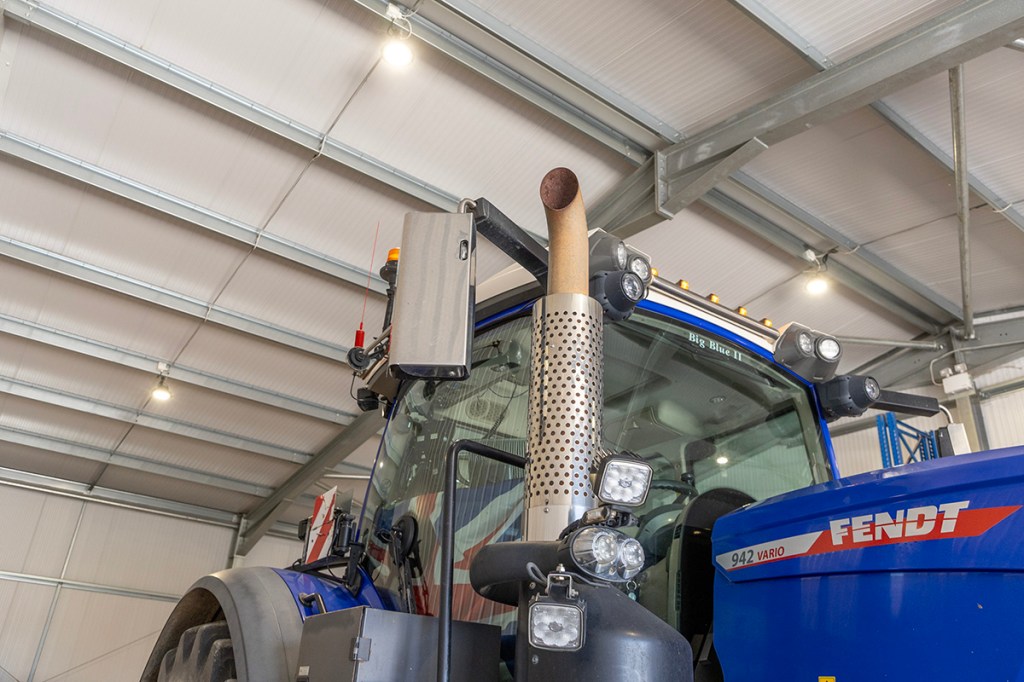
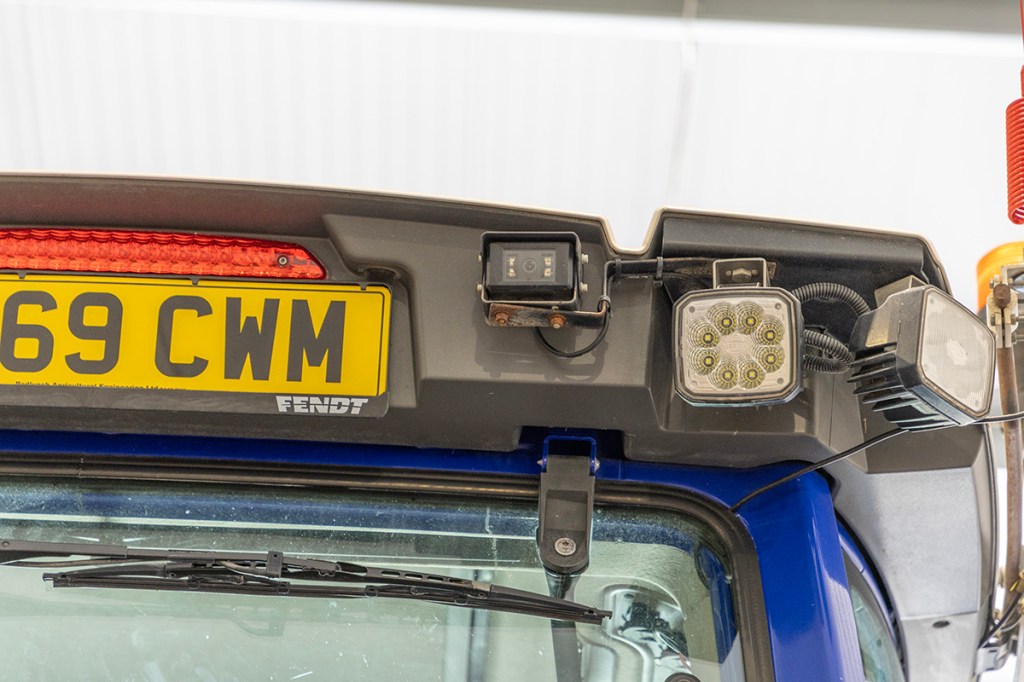
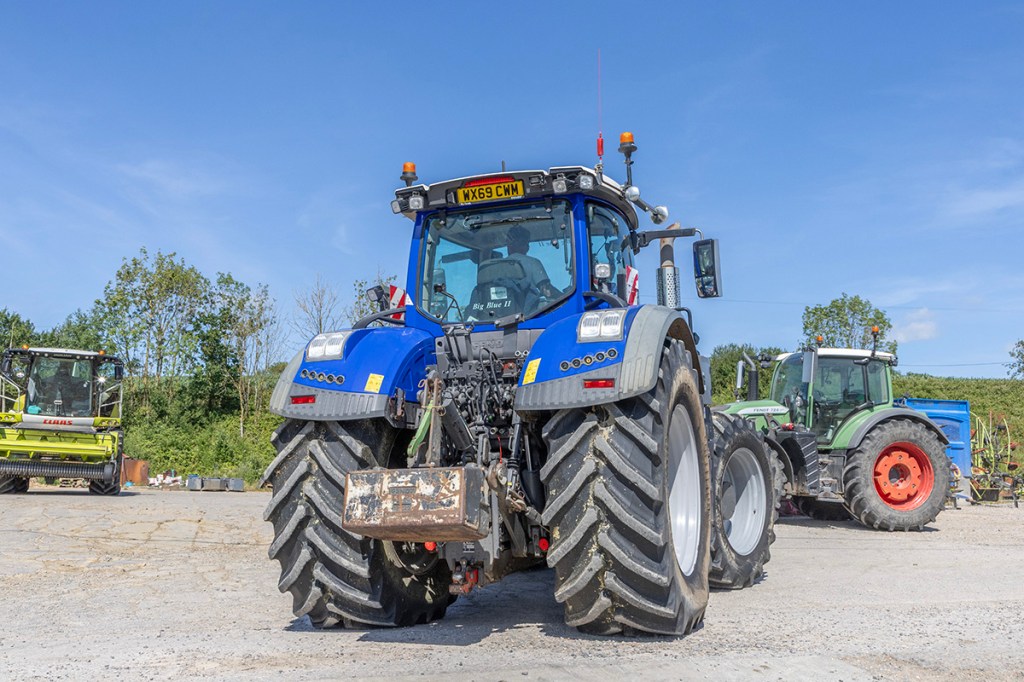
Our test team is no stranger to the Bavarian brand, with a long history of Fendt and a current fleet comprising six Marktoberdorf-built models (see user experience on page 18). Bought new in 2019, this standard-spec Profi Plus model has received some operator-led upgrades and some fitted by the dealer, from new. These include stainless steel mirror guards, stainless steel exhaust heat shield, a roof-mounted orange marker light bar, air horn and reversing camera mounted on the back edge of the roof to assist with reversing off silage clamps, that provides a second image alongside that of the forward-looking camera that lurks beneath the Dieselross emblem.
What you see here is what you get – aside from the bright blue factory paint job, giving the tractor its nickname Big Blue. It’s the third Big Blue on our test team’s fleet, and is the owner’s penchant for a striking blue paint finish, which certainly marks this one out.
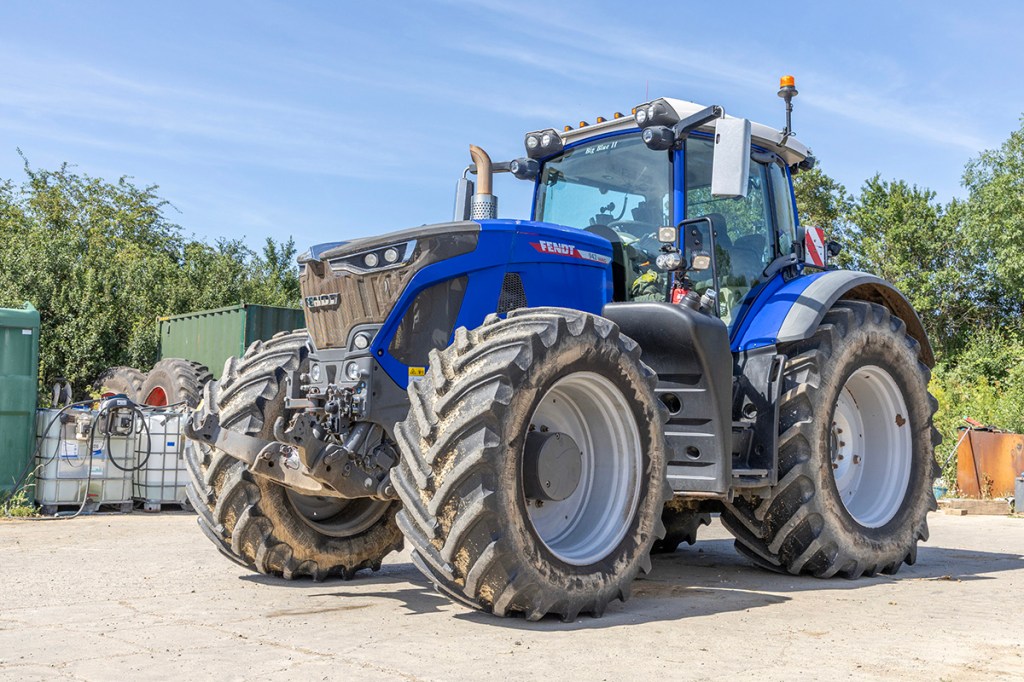
Though that non-standard livery has, says the team, had an impact on previous 900-series residual values, making them harder to shift, more-so than high hours on the clock.
This 942 has only recently been treated to a new set of Trelleborg TM1060’s, after the first set were reduced to nigh-on racing slicks at 9,500 hours. The team was hopeful it could get to 10,000 hours before swapping, but a lack of grip on the clamp put paid to hitting that milestone. This compares favourably to a set of Michelins on another tractor, that have barely covered 4,000 hours and are as good as done.
Needless to say, Trelleborgs are the preferred tyre for these operators.
A busy man
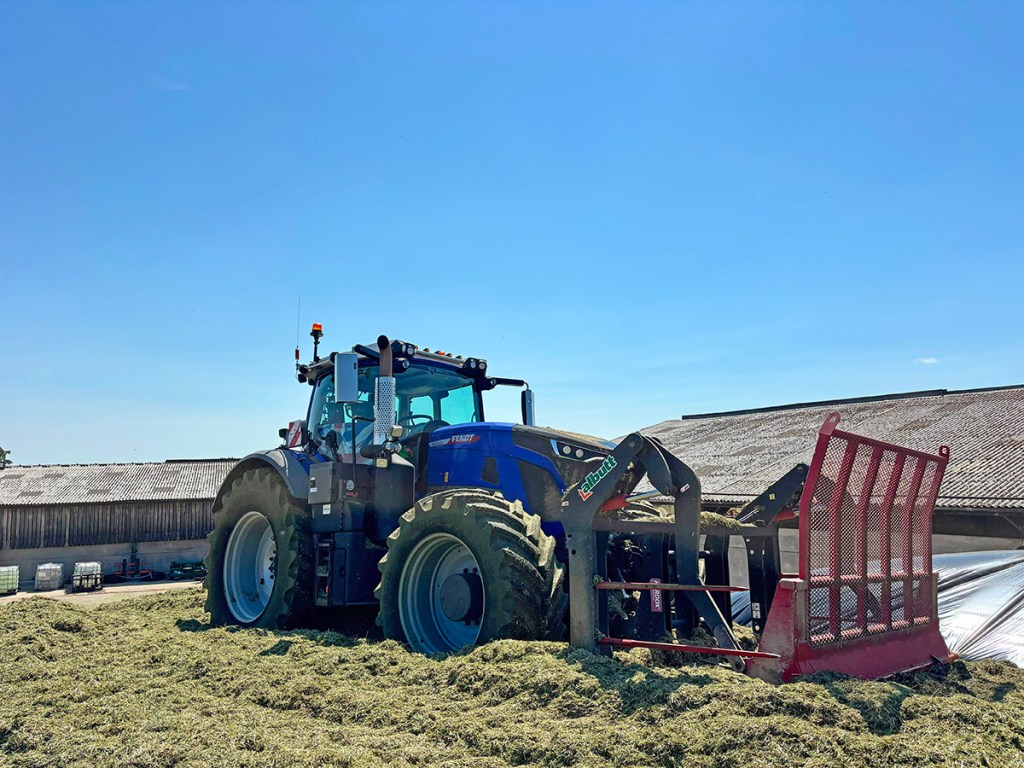
Clocking up an average of 1,500 hours/year, the 942 spends most of its time on clamps, spreading and rolling a variety of chopped silages into all manner of spaces, with trailers being packed tightly by a Claas Jaguar 990.
It’s a thorough test of the tractor’s manoeuvrability and performance, given the varied size of clamps encountered across the Dorset region. Visibility is key, and removing the front mudguards helps provide an unhindered view down each side.
Away from the clamp, its rear pto gets a workout with a Krone BigPack baler, and also with a 6.0m power harrow drill combi, and front tank.
A selection of front and rear ballast blocks are accessible by the big Fendt – as are wheel weights – to suit the range of tasks carried out. A 1,200kg block is usually hung off the rear lift arms to counter a 3.0m Albutt push-off front buckrake, when on silage work.
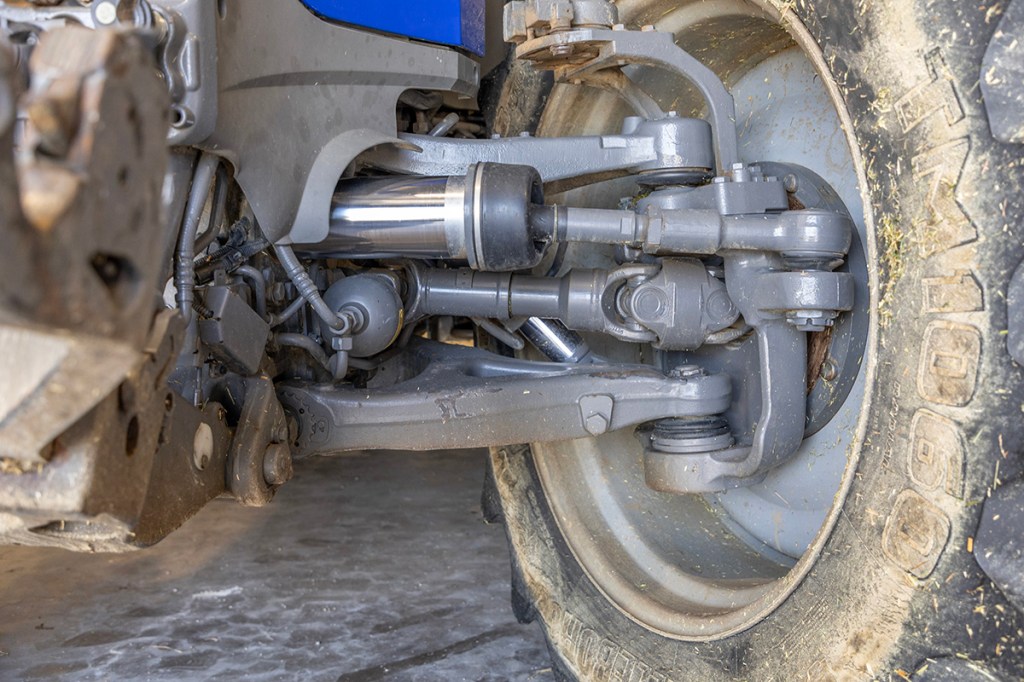
The test team is at odds with the 942’s front lift capacity. Its regular operator would like more, simply to take a larger buckrake, but its owner has some sympathy with the complex front axle design and its independent suspension set-up, which all say delivers on comfort and manoeuvrability.
Past experiences have drawn the conclusion that auto-locking front differentials have a lot to answer for, especially on heavy draft or ploughing, and the 942’s improved driveline and choice of workload, is said to be a key consideration in avoiding such previous mechanical failures.
Adding to the comfort factor is a cab sat on air bags.
In the office
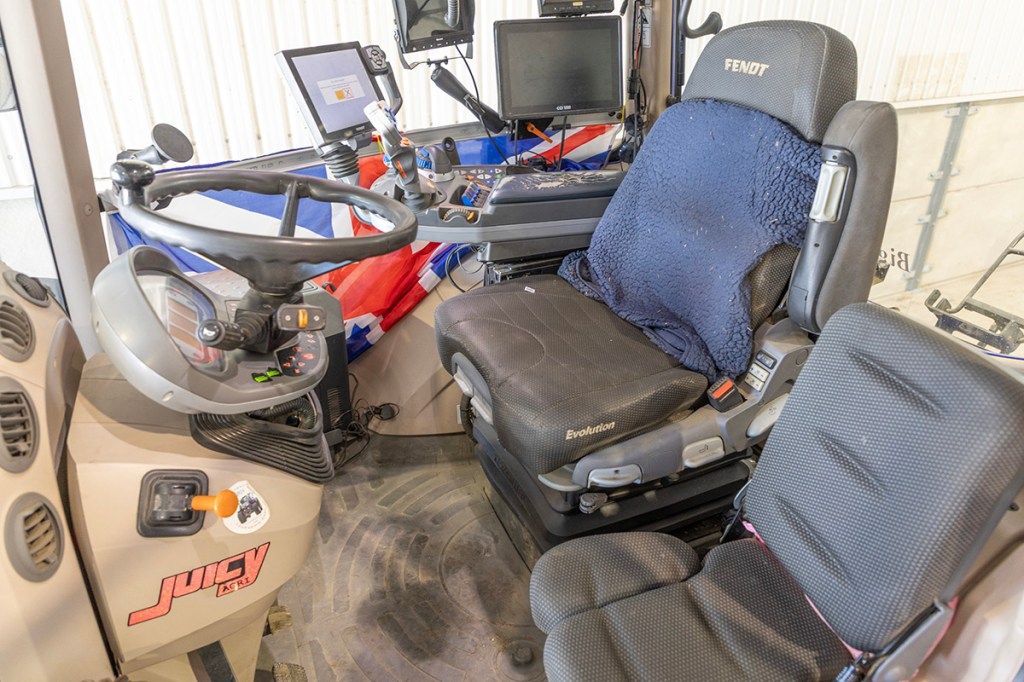
Cab space comes in for high praise. There’s plenty of room to stretch out, plus space for a lunch bag, and drinks holders can be found on the raised floor alongside the seat. Cab simplicity and controllability also gets a big thumbs up as the 942 can be as complex or as simple as its operator prefers. This operator has every implement used with the tractor – and all settings – conveniently saved in the terminal.
Pedal mode makes hitching up precise and easy, with joystick driving preferred for field and clamp work, and no complaints with visibility to either linkage – the front linkage view is assisted by a bonnet camera.
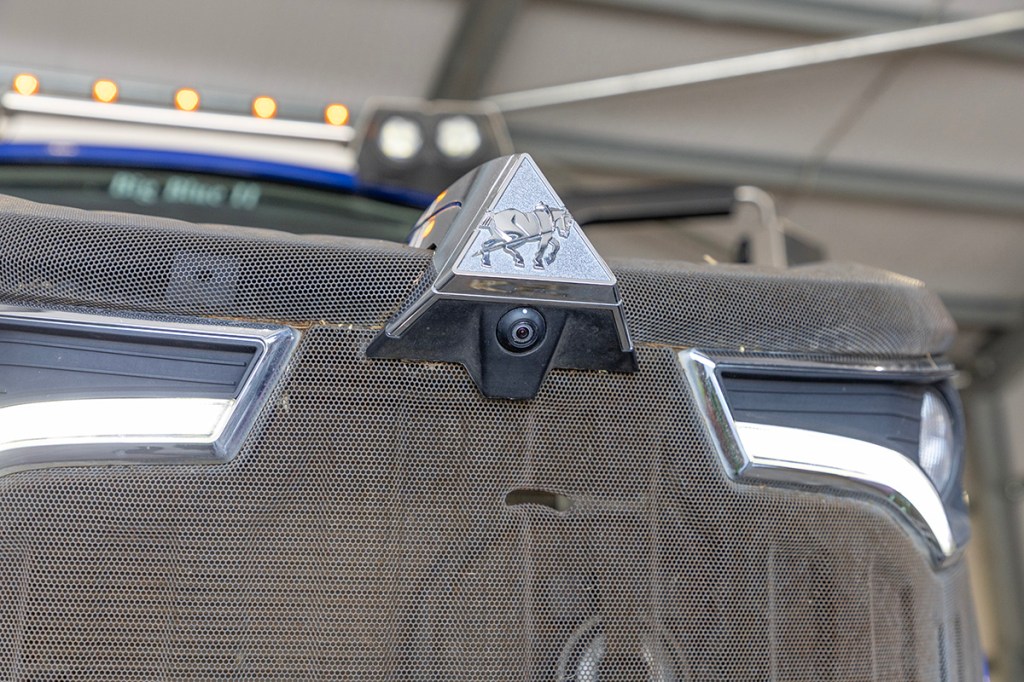
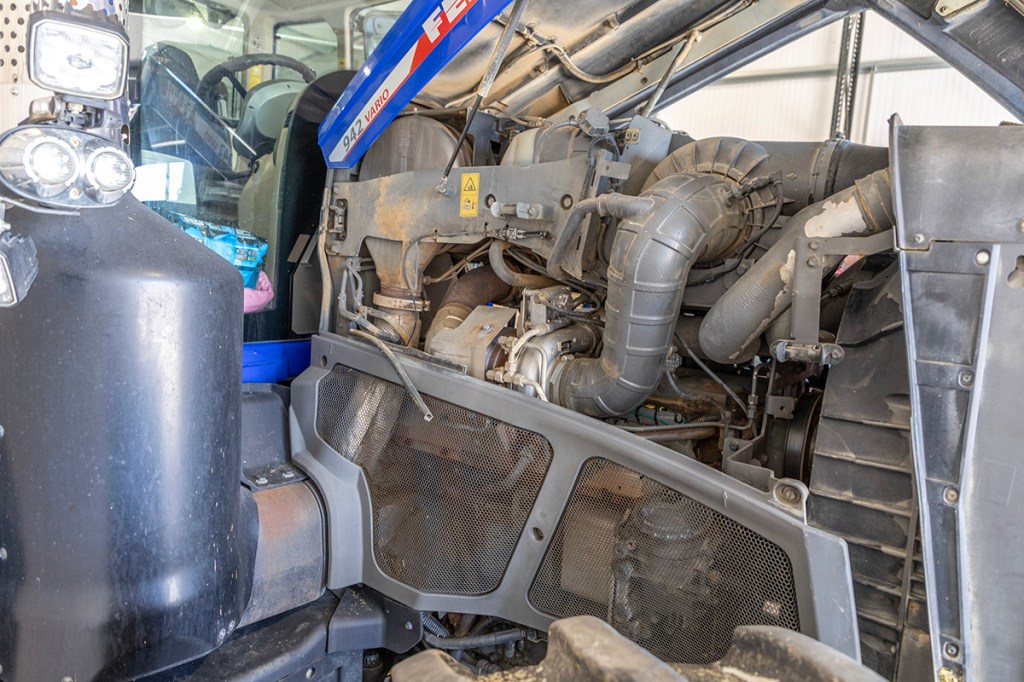
A narrow slot punched through the front grille was caused by the top link’s locking clamp being left unlocked, as the linkage was raised. Fortunately, no other damage occurred, saving the cooling pack from a crisis.
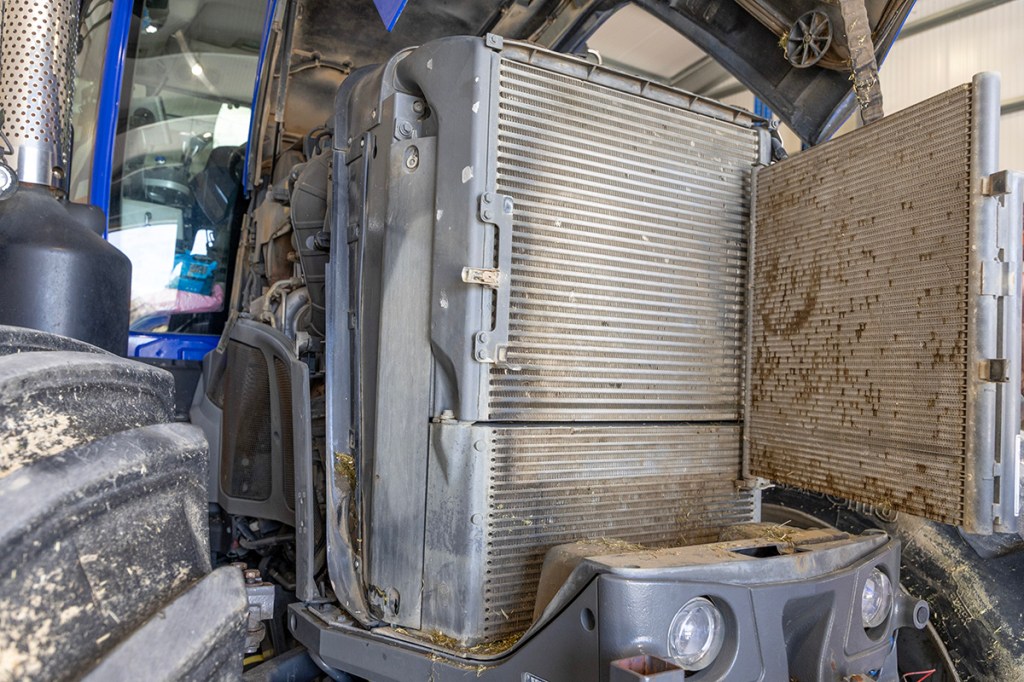
Temperatures are kept under control by an auto reversing fan, and lubrication is managed through few grease nipples on components that are not sealed for life, to prevent pins and linkages from premature wear. Lower link pins on this generation gained grease nipples too, to prevent pins seizing and snapping.
What’s gone wrong
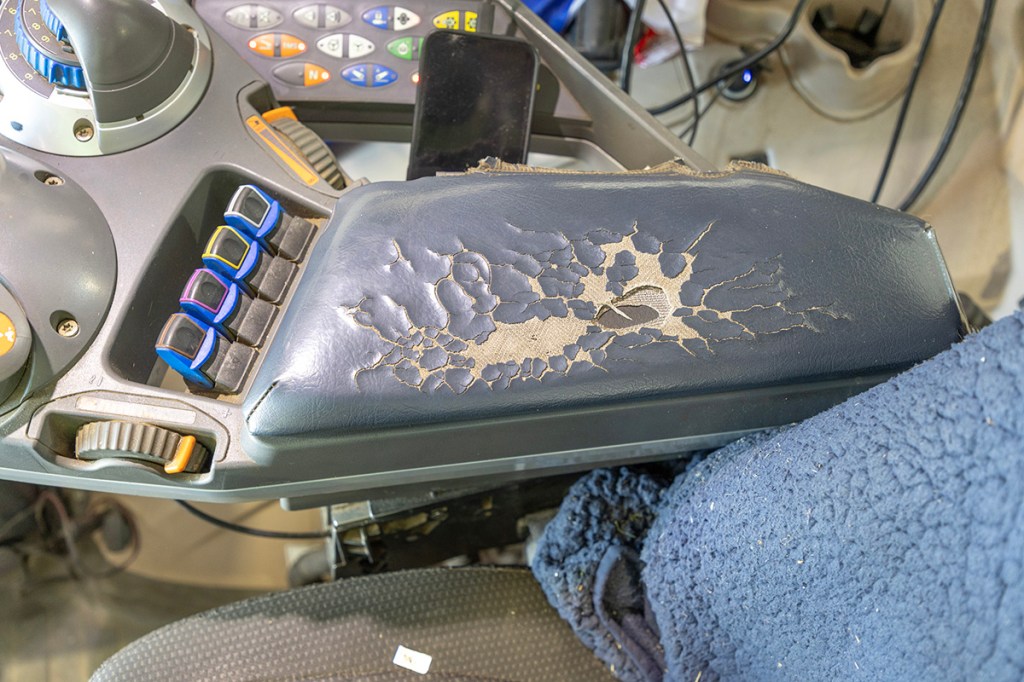
Despite its hour count, few items are showing signs of degradation. In the cab, the tractor’s armrest pad is one area that needs recovering or replacing given the time spent resting on it, while the remainder of trim and upholstery is barely worn.
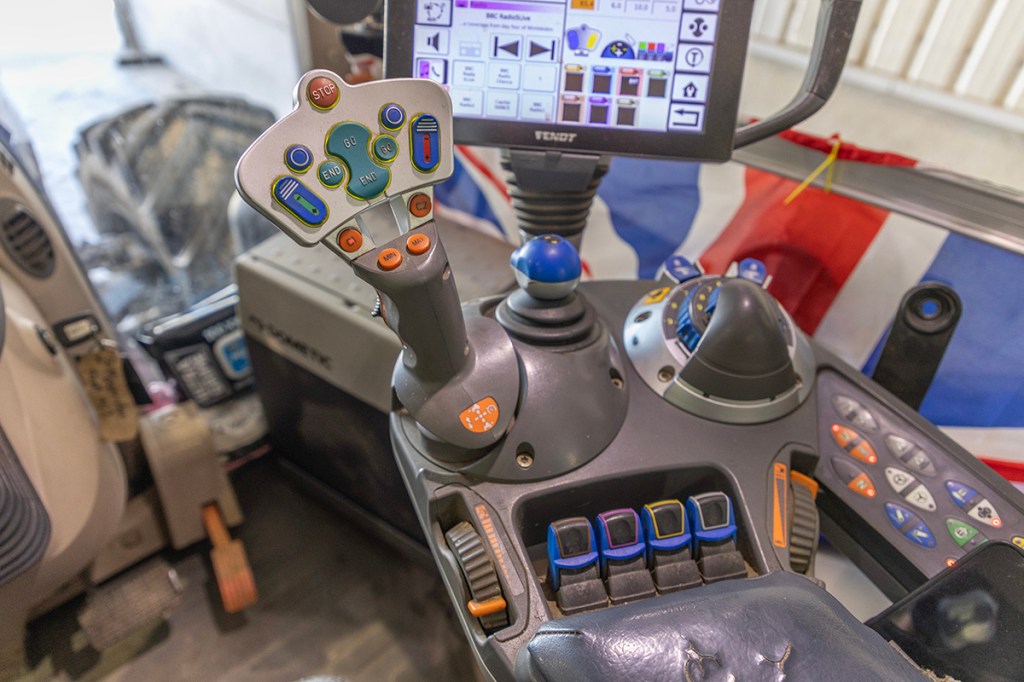
The main drive lever was swapped at 6,842 hours as a result of sticking functions, with the replacement item still showing little signs of wear through its button decals after just 4,100 hours of use.
The heated and cooled Evolution seat’s base was replaced at 7,003 hours, and while its regular operator hasn’t noticed the lumbar support’s weakening performance, the owner says when you’re in and out of many cabs, this aspect becomes more noticeable. If the tractor stays longer term, it’ll be considered for replacement.
Outside the cab, rear fender controls are fading and the curved section at the top of the exhaust pipe has burnt through from exhaust gas heat and pressure – it too is likely to be replaced as part of keeping the tractor in as good a condition as possible.
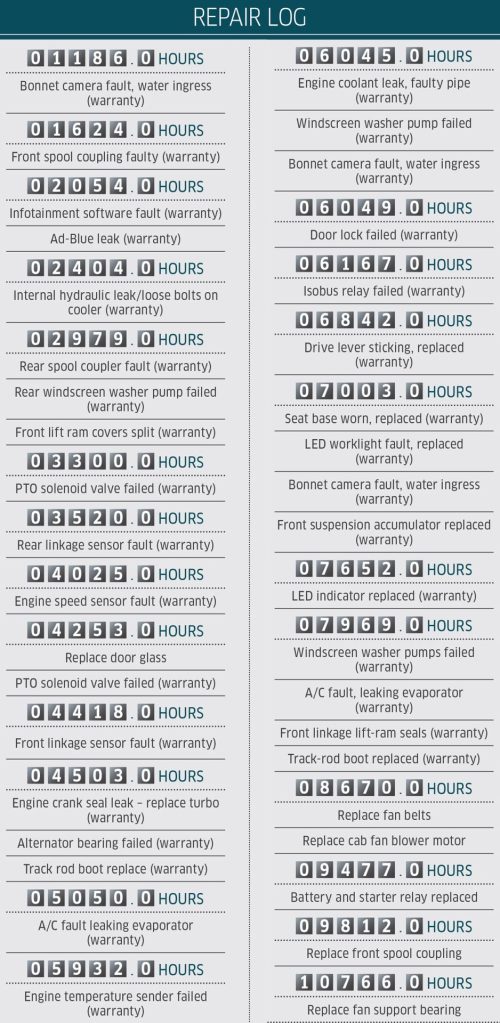
The repair log might seem a lengthy list, but aside from a pending turbocharger failure that was picked up through a crankshaft seal leak, few of the repairs are big ticket items, and almost all have been swept up within the 8,000-hour warranty package.
Local dealer servicing has been on-the-button every 500-hours, to keep on top of mechanical condition and overall reliability. However, there are repeat offenders in the repair list including three bonnet cameras, two leaking evaporators in the A/C system, a bunch of replacement windscreen washer pumps, plus several faulty spool couplers.
Non-warranty items included a door glass fitted at 4,500 hours in January 2022, followed by fan belts and cab blower motor in 2024, then the battery and starter relay in 2025 and more recently, a fan support bearing in 2026, at 10,766 hours.
Fuel efficiency comes in for a big thumbs up too – on lighter duties, the 942 sips just two litres/hour more than the 724’s. It’s not excessively thirsty when you want to summon all 415 horses, neither. AdBlue top-ups are needed with every fuel tank refill.
Summary
The 942 Vario is considered by our test team to be a strong and robust performer, carrying out the heaviest tasks for the business with some ease. Service, support and product knowledge from local dealer Redlynch has retained brand loyalty, with the tractor favoured for its engineered quality. The team has no concerns over mechanical reliability and its general build quality and sees no reason why this model wouldn’t run through to 20,000 hours. As the price of new kit continues to increase, the biggest challenge will be managing the ever-widening gap on the eventual cost to change.
Geoff Ashcroft
For more up-to-date farming news click here and subscribe now to profi and save.