

Non-chemical weed control continues to gain traction, especially for high value crops where active ingredients face ongoing restrictions and yield penalties from weed competition pose a serious threat to the bottom line.
KEEPING IT BRIEF
- Electric Weeder uses high frequency alternating current for systemic weed control.
- The implement is a collaboration between weed control implement maker Garford and electronics specialist RootWave.
- Initial models are aimed at the high value crop market, with other crops to follow.
A plethora of mechanical weeders have entered the market in recent years, and Garford Farm Machinery has been in the vanguard of this. The Cambridgeshire-based company offers weeders for a wide range of crops including cereals, and in 2025 launched the Robocrop AI, which uses artificial intelligence to combine colour, infra-red and depth information for weed identification and targeting.
In 2024, Garford, now a subsidiary of Zurn Harvesting, entered an agreement to develop an electrical solution with RootWave, a Warwickshire-based company which has been developing high frequency electric weed control treatments for 10 years.
So why introduce an alternative treatment into an already established product range? Managing director, Jonathan Henry explains: “Mechanical weeding is reliant on soil and weather conditions to be practical and effective. Depending on the growth stage of the weed, it can also require multiple applications, especially in a wet season.
“Hoeing in dry weather leaves the weed root exposed as it is pulled out so it will die off, but in wetter conditions regrowth can be rapid. This is especially the case in heavily cultivated ground such as onion beds – ideal conditions for crop growth, but also for weeds.”
How it works
The concept of RootWave’s high frequency contact transfer electrical weeding treatment is that an electrode makes direct contact on the target plant at the soil surface, with current passing through the plant and root. The current uses the soil as a return path to a ground contact device or second ground contact electrode.
“High frequency alternating current (AC) passes through the fluid between the plant root cells which heats until the cell membrane is damaged resulting in rapid desiccation,” explains Jonathan.
This, he adds, is more effective than spark discharge used in systems where an electrode is suspended above the ground. “Where spark discharge is used, the current arcs across to the plant but energy consumption is high and effectiveness variable.”
Where contact transfer is deployed, the impedance of the soil (and thus its ability to conduct) depends on soil moisture, so it’s not suitable for waterlogged ground, he points out.
“And the weed needs to be actively growing for this systemic technique to work.”
Field trials
RootWave trials have shown minimal disturbance to soil biology as the current flow is concentrated through the plant cells and has multiple paths through the soil as the return conductor. The technology has also been certified as suitable for organic production by the Soil Association.
Human – and other mammal – safety concerns are always in the spotlight with any ‘weed zapping’ treatments. RootWave uses high frequency electricity (18kHz A/C) rather than DC or low frequency AC for its improved safety profile, shown in studies to minimise the risk of cardiac arrest from accidental contact.
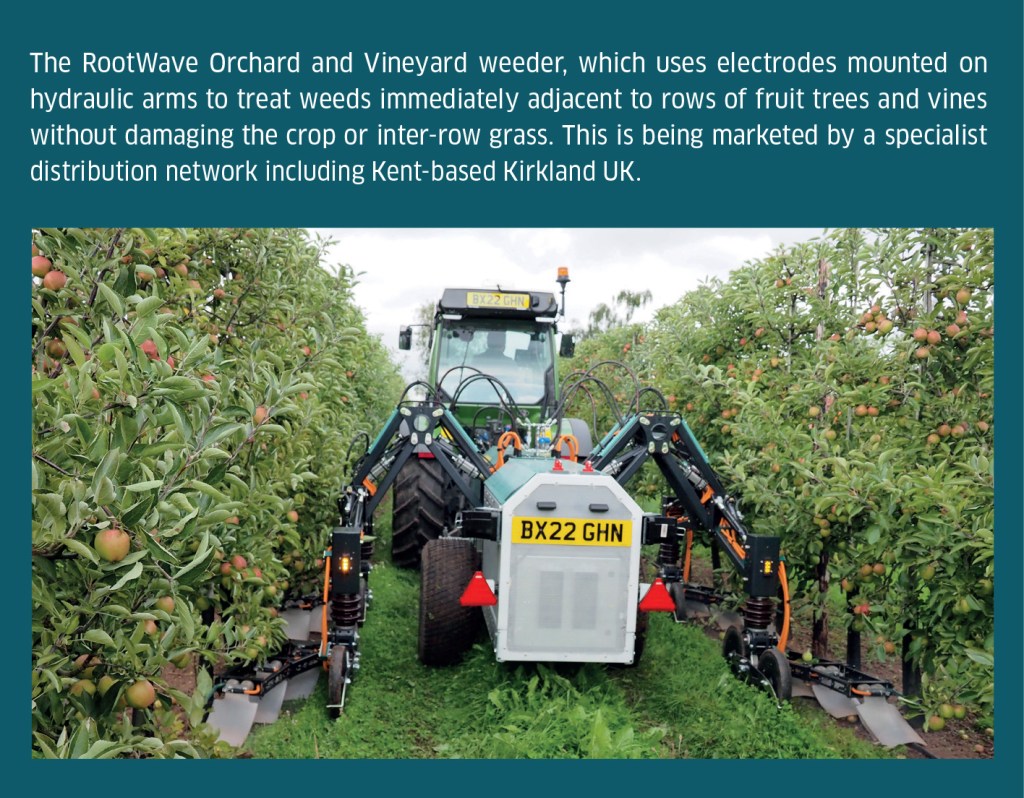
The Garford Electric Weeder is a tractor-mounted implement for high value crops and field scale vegetables, derived from RootWave’s orchard and vineyard solution which were launched in 2023 and is marketed through a specialist distribution network. RootWave continues to manufacture the electric elements while the engineering and assembly takes place at Garford’s Market Deeping factory.
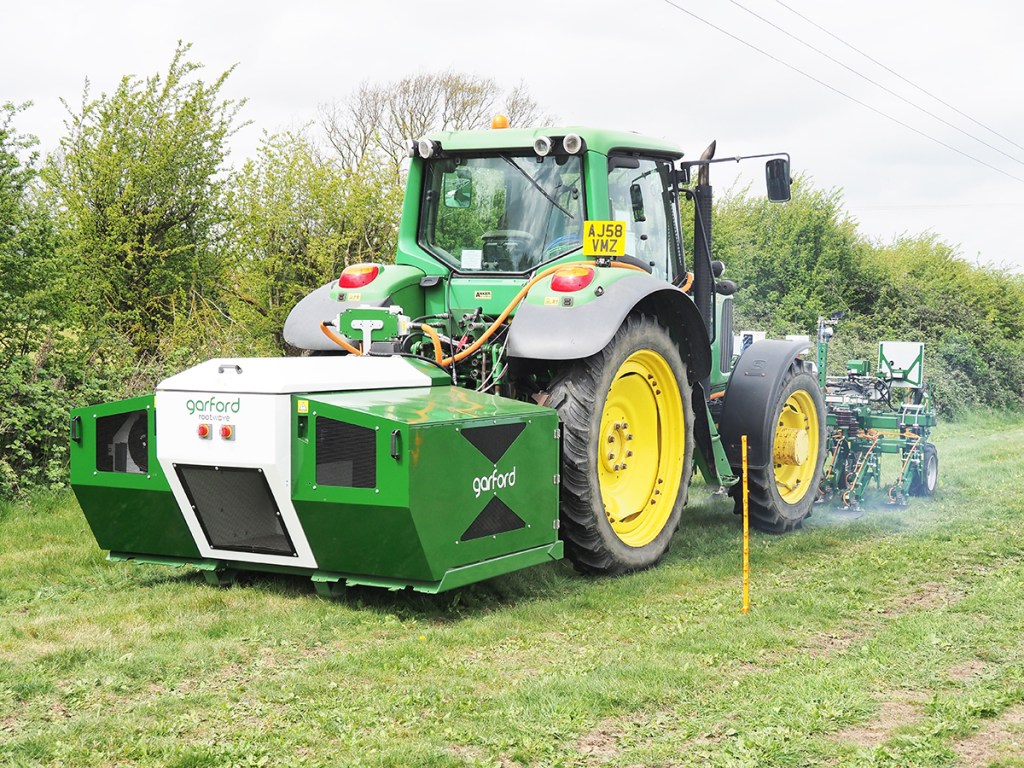
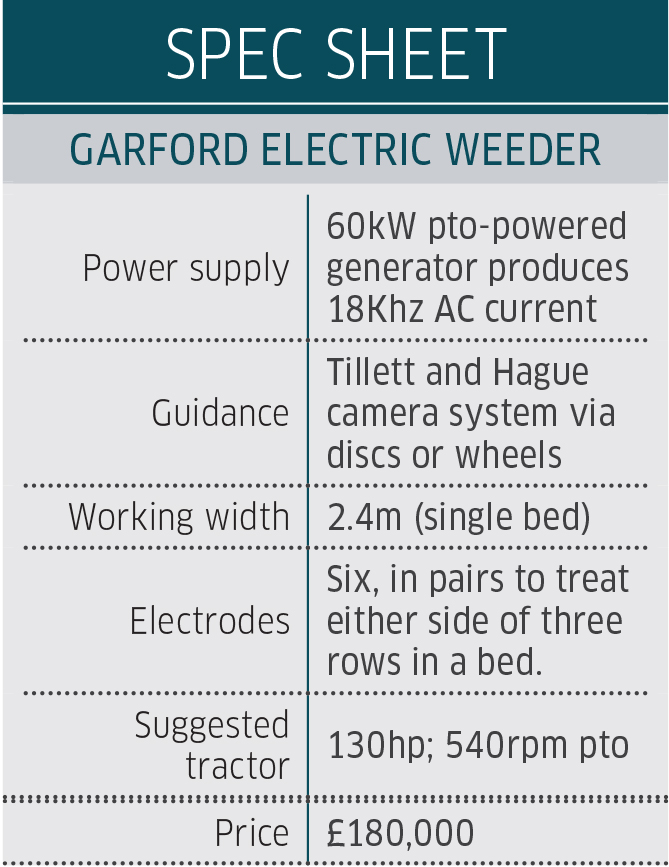
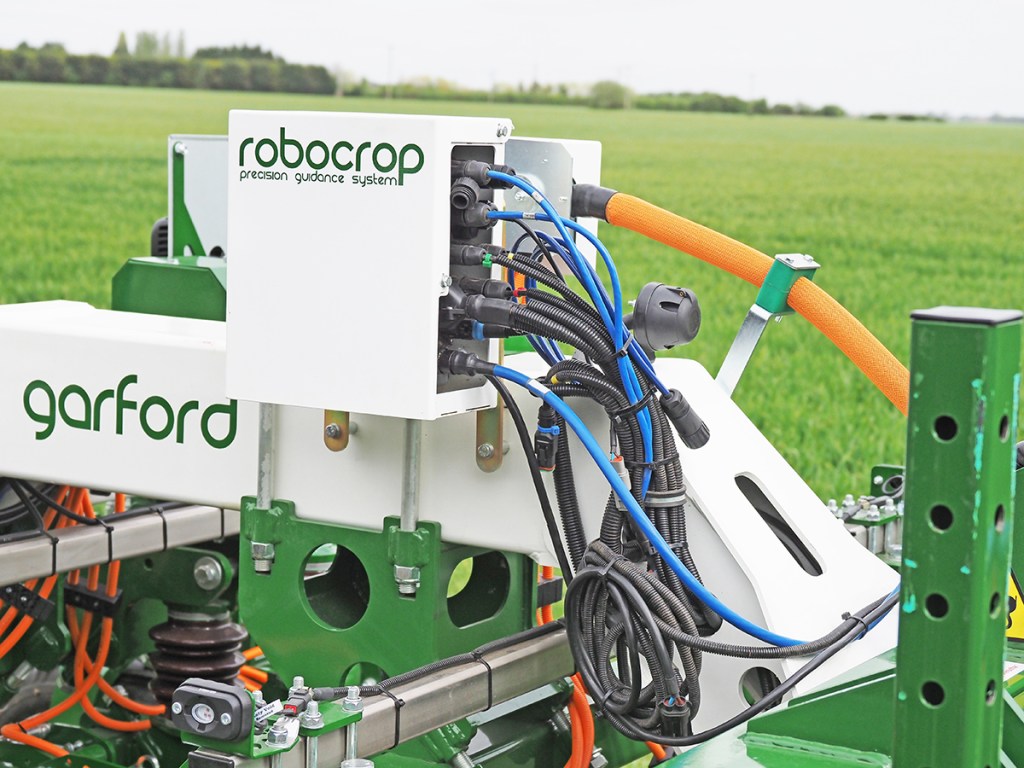
Electric power comes from a pto-driven generator, located in a cabinet carried on the tractor rear linkage which also houses the control unit. The initial 400V (60kW) power pack outputs 18kHz through RootWave’s Power Electronics, and on the other side of the cabinet there is space for a second 60kW generator in the future.
“Power Electronics is a software-controlled power delivery system operating via six channels to six pairs of electrodes,” explains Jonathan. “Each is individually managed so that it can deliver additional power if needed, for example where there is high weed density or a wheeling.”
Variations in soil moisture across the field, especially noticeable in early morning treatments, can also be catered for.
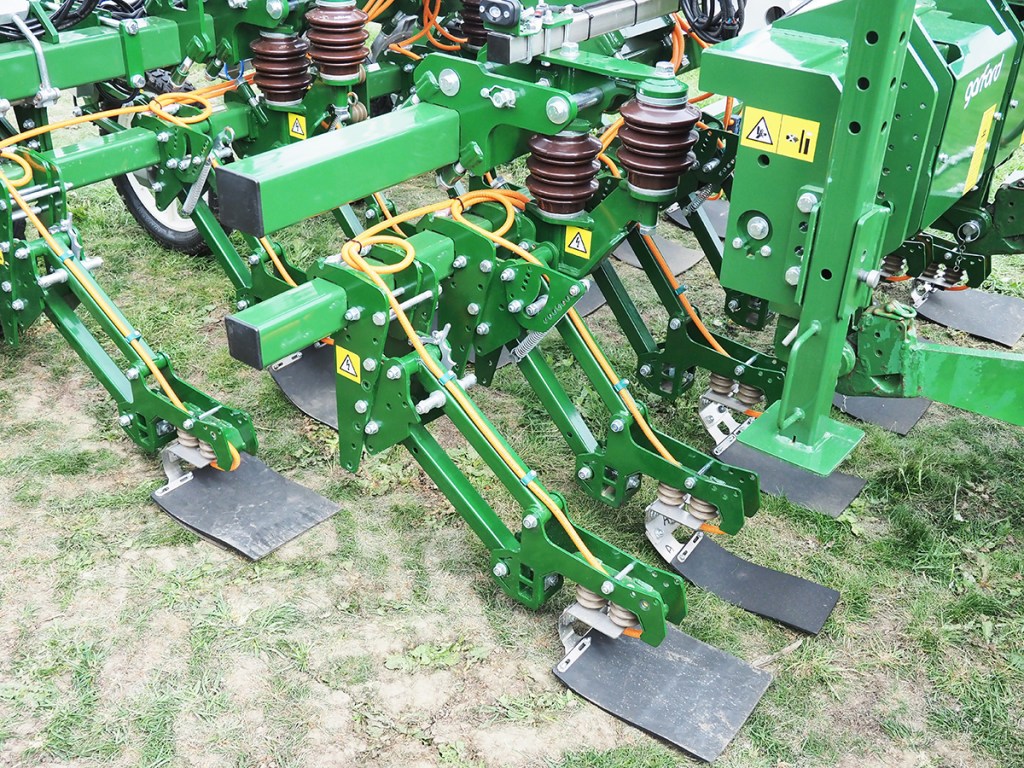
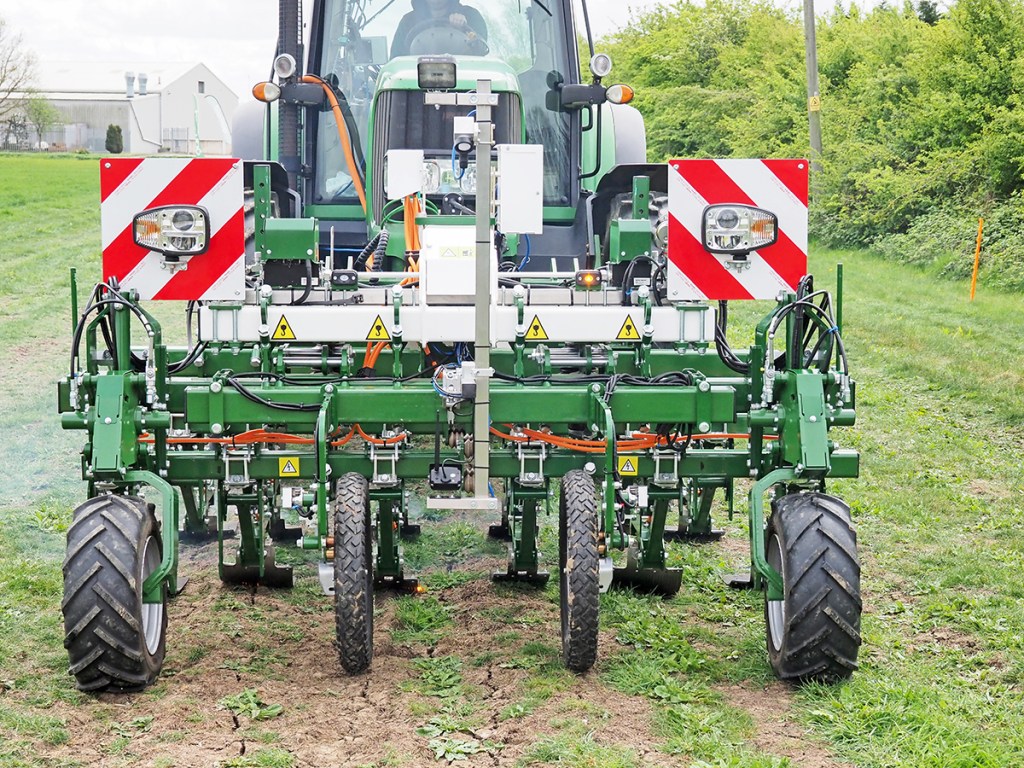
Power is transferred to a junction box on the front-mounted implement via a high voltage cable. Based on Garford’s Robocrop mechanical weeder with floating side-shift, the implement has front and rear toolbars for the ‘treatment’ and ‘return’ electrodes. It is guided by the proprietary Tillett and Hague camera vision system, using either steering discs or in stony conditions, wheels.
Under the spotlight
High resolution cameras work with an onboard AI system to identify the crop based on shape, size and position while detecting weeds in the row.
Sliding brackets allow the inter-row treatment zone to be adjusted for the crop growth stage, treating a wider area when the crop is small and narrowing up as it fills the row. Optional side shields can be fitted to protect adjacent rows in the more mature crop; the toolbar can also be configured for flat fields or raised beds.
The toolbars can be offset to give a ‘broadcast’ effect on stale seedbeds.
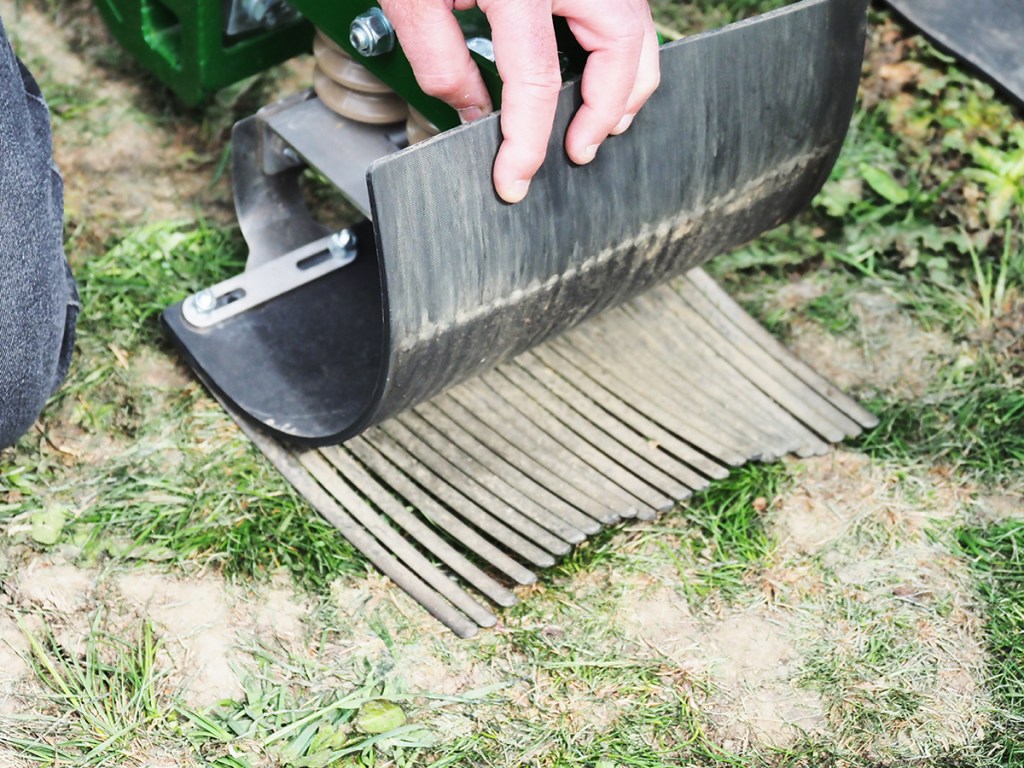
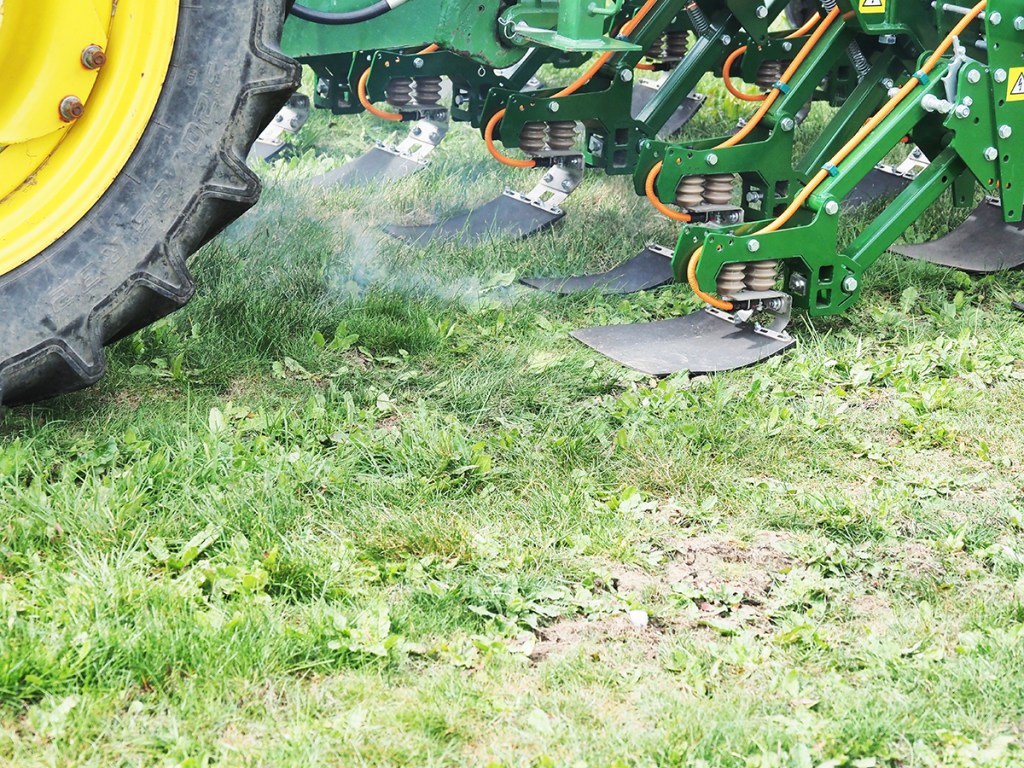
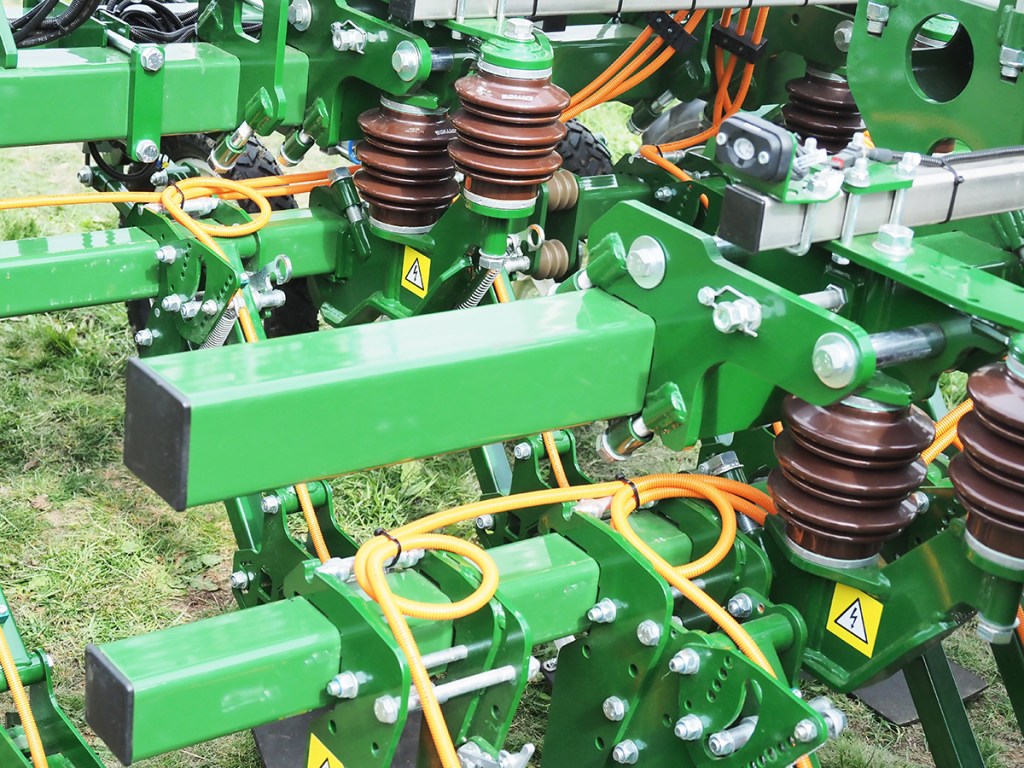
Garford has developed a new heavy duty parallel trailing arm for the electrodes; insulators are fitted both at its base and on the toolbars to retain the current within the electrodes and avoid shorting out. Sprung stainless steel fingers apply the current to the surface as they pass over it; small flashes and puffs of smoke can be seen as they contact the vegetation.
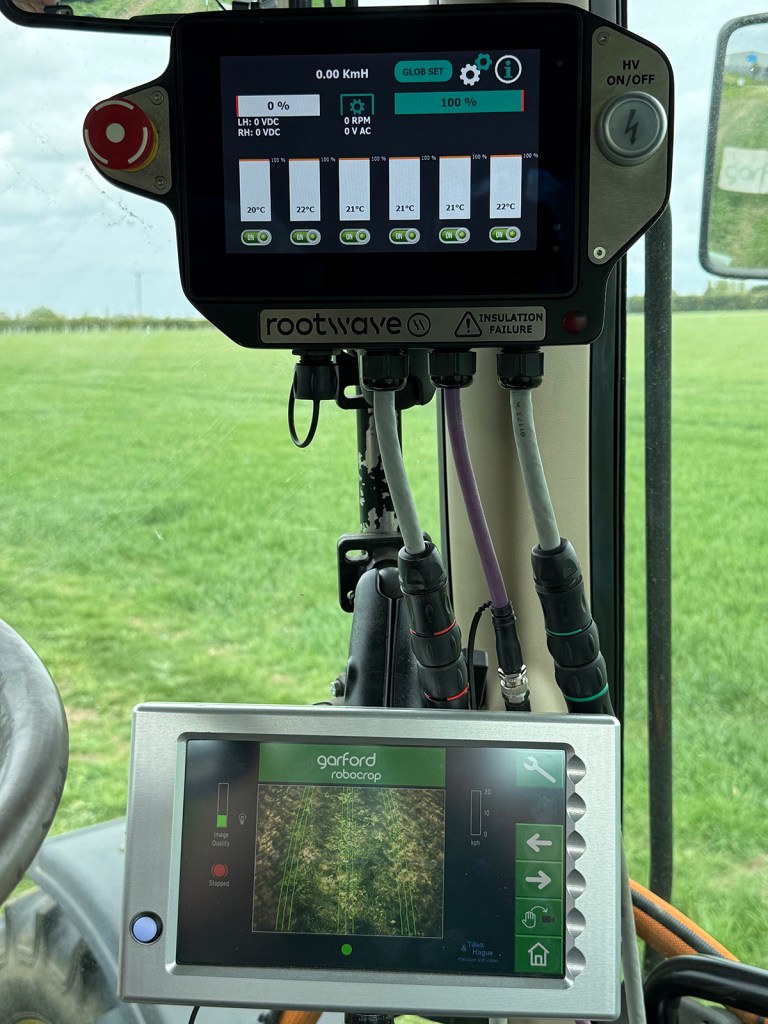
In the cab, two control screens are initially being used. For the electronics side of the operation, activation can only be initiated by pressing physical and touch screen on/off buttons. Once these are ‘off’, it is safe to interact with the implement to clear any field obstructions or address any issues.
LED monitors show High Voltage (HV) and insulation status. The operator can view and adjust power supply to the six channels, while a machine information screen shows operating hours and distance travelled.
The Robocrop screen displays the feed from the camera system and the path being steered between the crop rows; as a combined terminal operators would need to swipe between the two screens.
Garford suggests 4km/hr as the optimum forward speed for the Electric Weeder. “At this speed a single bed unit will outperform a laser weeder by four to five times,” points out Jonathan.
In the immediate aftermath, treated areas show browning of larger weeds and complete removal of smaller ones; within a few days they have died back completely leaving the crop intact.
Steady start
“We had a small number of machines on farm in 2025,” explains Jonathan. “We were also able to carry out further trials with these customers. On one organic farm in Scotland, only two passes can be made with a mechanical weeder as a third pass risks exposing the crop on the shoulders of the bed. The impact of weed competition is so significant to margins that the grower is keen to try other treatments. A laser weeder is used in-row, and inter-row treatment with the Electric Weeder brought convincing results.”

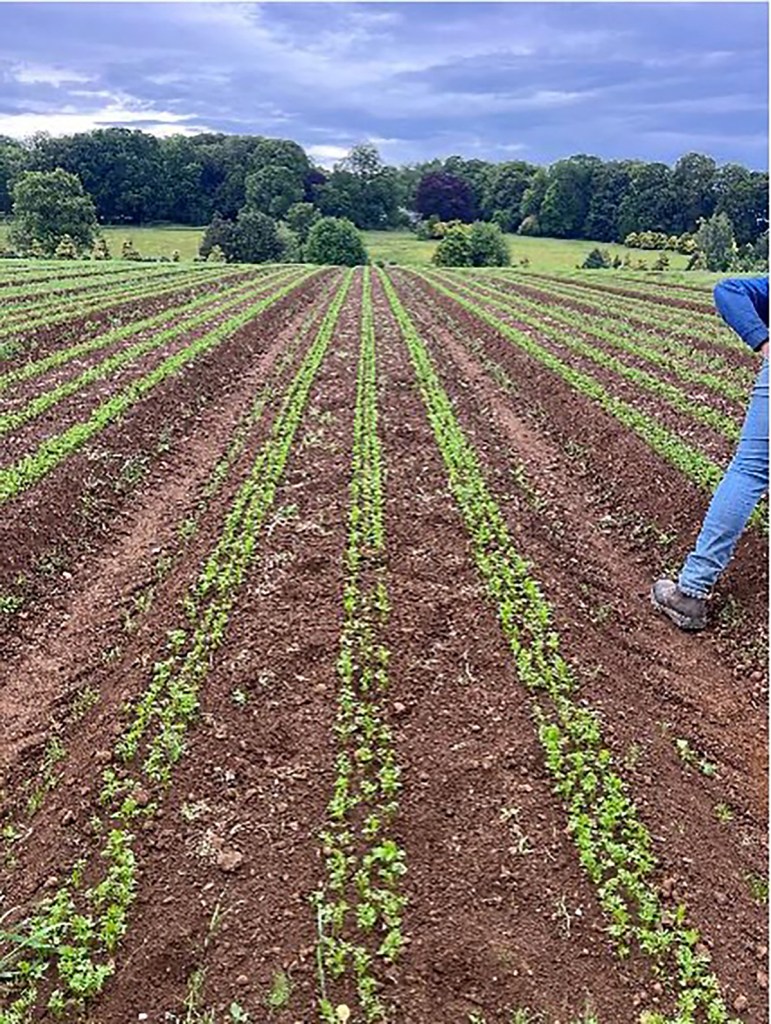
The Electric Weeder is also compatible with mechanical weeding where growers are looking to deploy multiple non-chemical weed control methods, he points out.
On offer to the market this year, the 2.4m unit is set up for a single bed, but with 120kW of power on board, a triple-bed or 6m weeder could be configured, and Jonathan reports interest in this from existing and potential customers.
Developments in the pipeline include incorporating the electrical functions display into Garford’s Robocrop AI terminal and adapting the generator for 1000rpm pto rather than the original 540rpm more common on orchard and vineyard tractors. The company suggests that a 130hp tractor is a good match.
Moving forward, trials are planned in sugar beet and maize before considering the options for cereals. Price for the single bed unit is £180,000.
Jane Carley
For more up-to-date farming news click here and subscribe now to profi and save.