
With many farms reducing their combinable area to take advantage of environmental support payments or grow other crops, added to two ‘easy’ harvests which have minimised wear and tear on these machines it is unsurprising that the combine market is at best, steady.
Smaller farms currently have no great incentive to invest in a new machine, with most sales focused on the high capacity end of the market where large businesses have a planned replacement programme in place; that is the message coming from the industry.
At the top-end of the manufacturers’ ranges, updates have mainly centred on incorporating emerging technologies to get the best out of these pricy purchases.
We take a look at the flagship combines on the market for 2027 and attempt to bust some of the jargon attached to the technology.
CASE IH
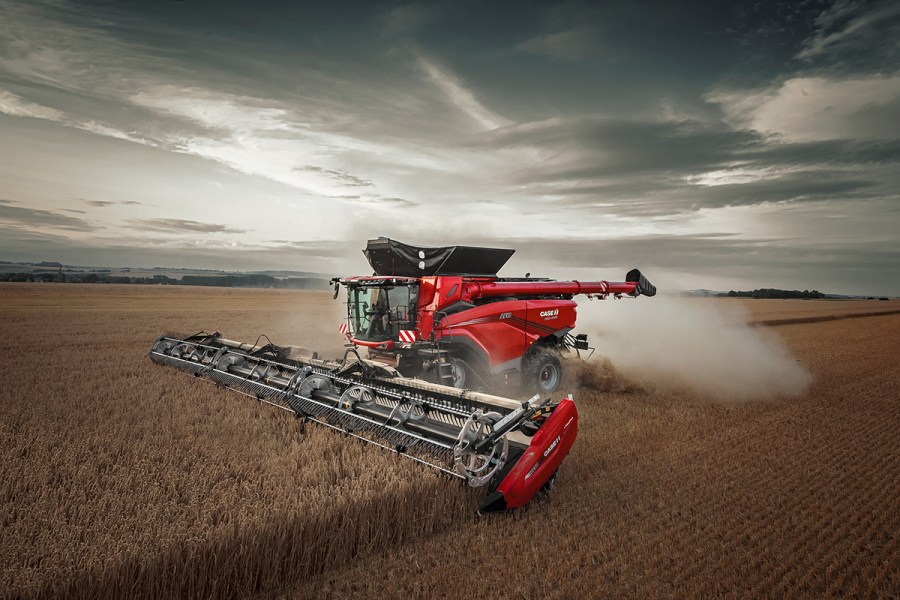
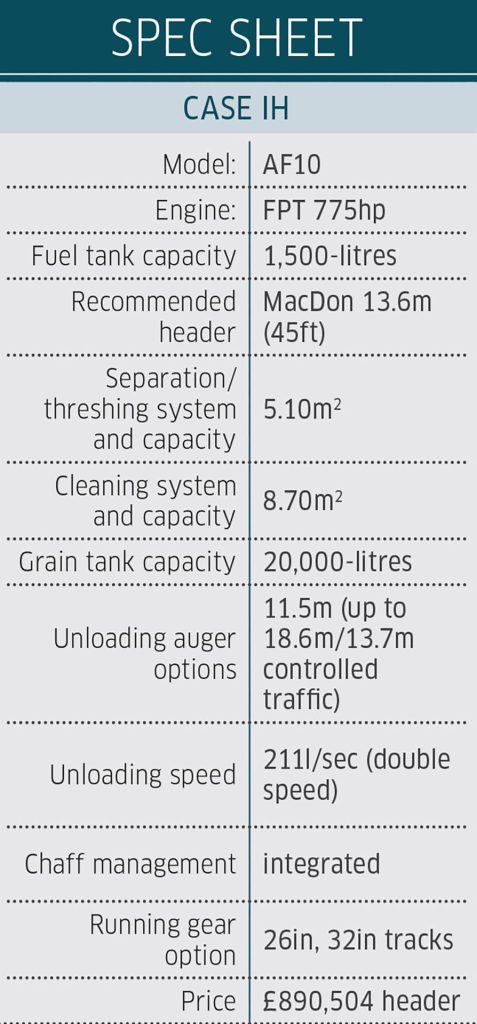
Launched in 2024, the AF9 and AF10 combines were completely redesigned to maximise capacity and throughput and incorporate efficient horsepower, simplified maintenance and connectivity. Case IH points out that he AF10 is the world’s largest single-rotor combine, with a grain tank capacity of 20,000-litre and a 210l/sec unloading rate with a half-speed option, while comparable figures for the AF9 are 16,000-litres and 159l/sec.
The new 762mm-diameter AFX rotor is the longest in the industry, at 3.67m, designed to boost crop flow, fuel efficiency and straw quality, while minimising grain damage and maximising separation.
CLAAS
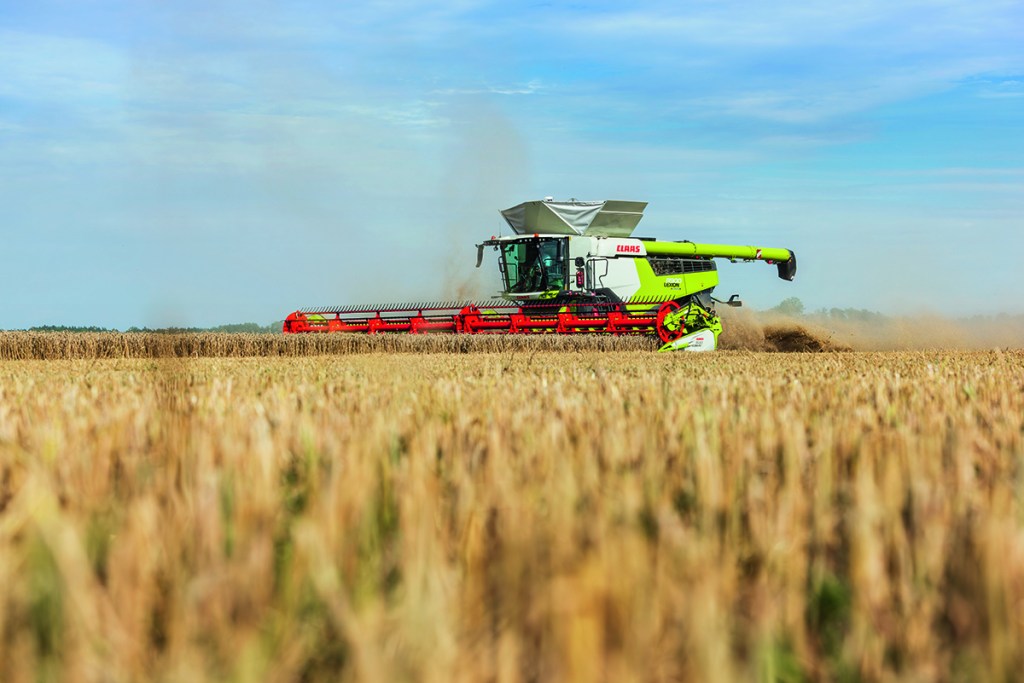
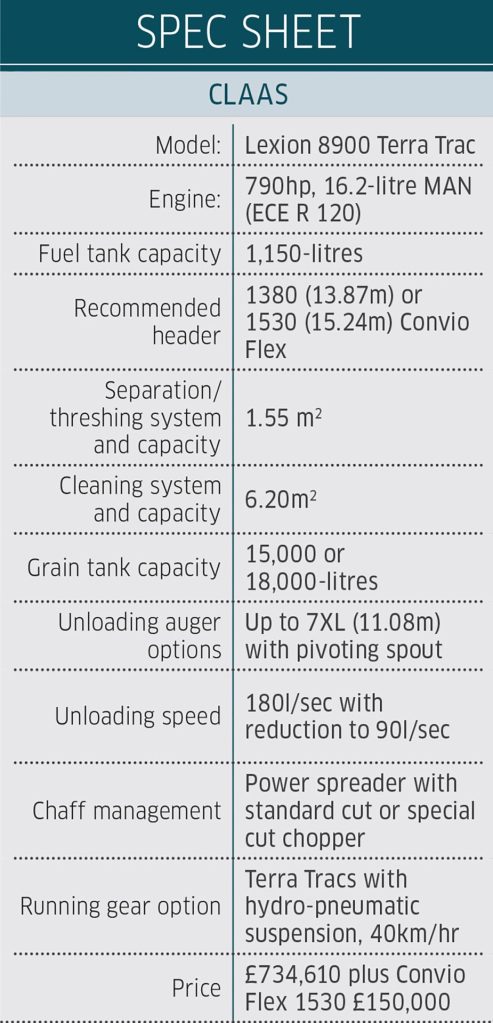
In addition to Nutrimeter Grain (see tech jargon buster) Claas is to offer the Convio Flex 1530 draper cutterbar to European Lexion customers for 2027 for the first time. With a working width of 15.30m, it features a triple suspended reel spider and two-part knife bar, driven by a planetary gear. As with all other Convio Flex cutterbars, the new 1530 features a number of automatic functions including automatic belt speed and the option of the Cemos Auto Header attachment system.
JOHN DEERE
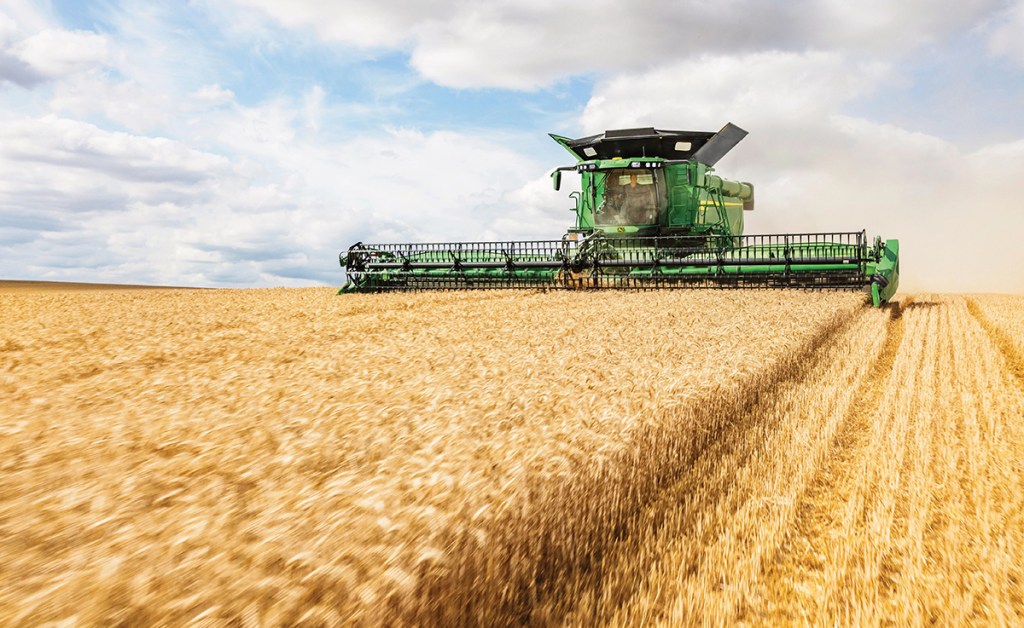
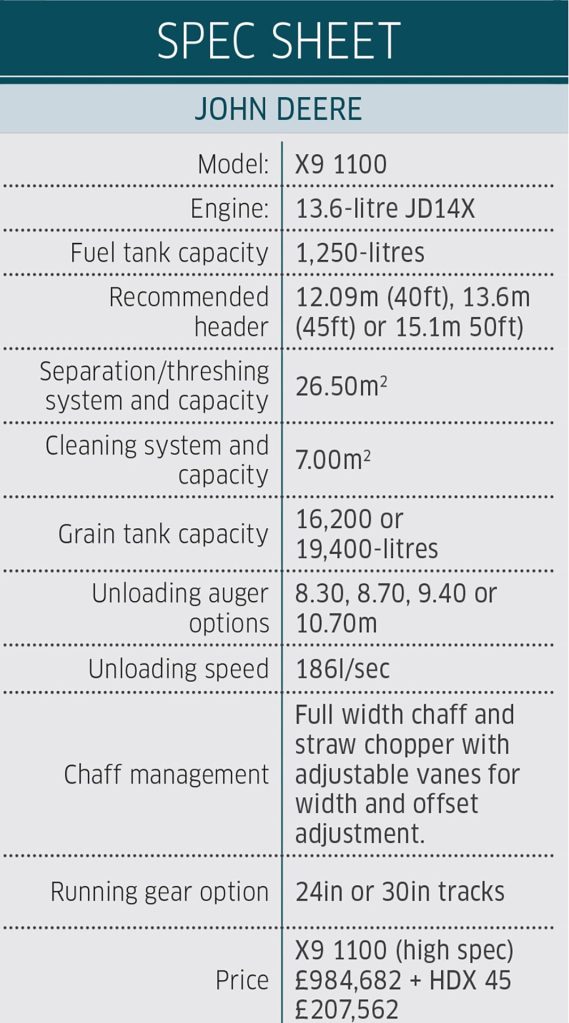
A new addition for the flagship X9 combine is a 15.24m (50ft) header. The belt-fed HDX 50 hinge-flex cutterbar, launched at Cereals, has 1,200mm deep belts to accommodate tall crops such as oilseed rape while its three-piece reel pivots with the bed sections to maintain an even feed on undulating ground.
Four wheels across the back of the table are said to aid accurate contour-following and the pressure in their hydraulic circuit can be adjusted to transfer weight back onto the combine’s front axle should ground conditions require it.
FENDT
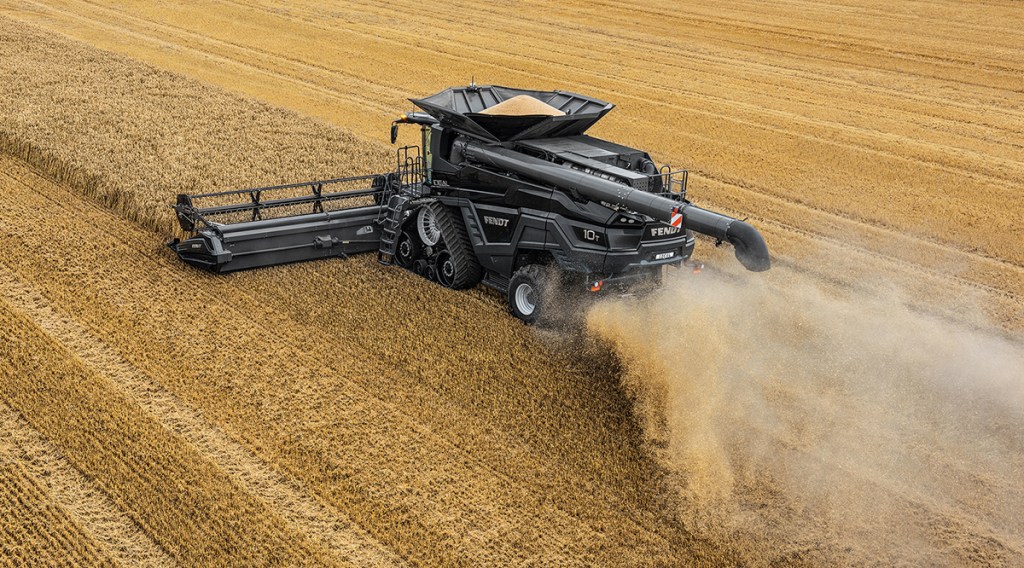
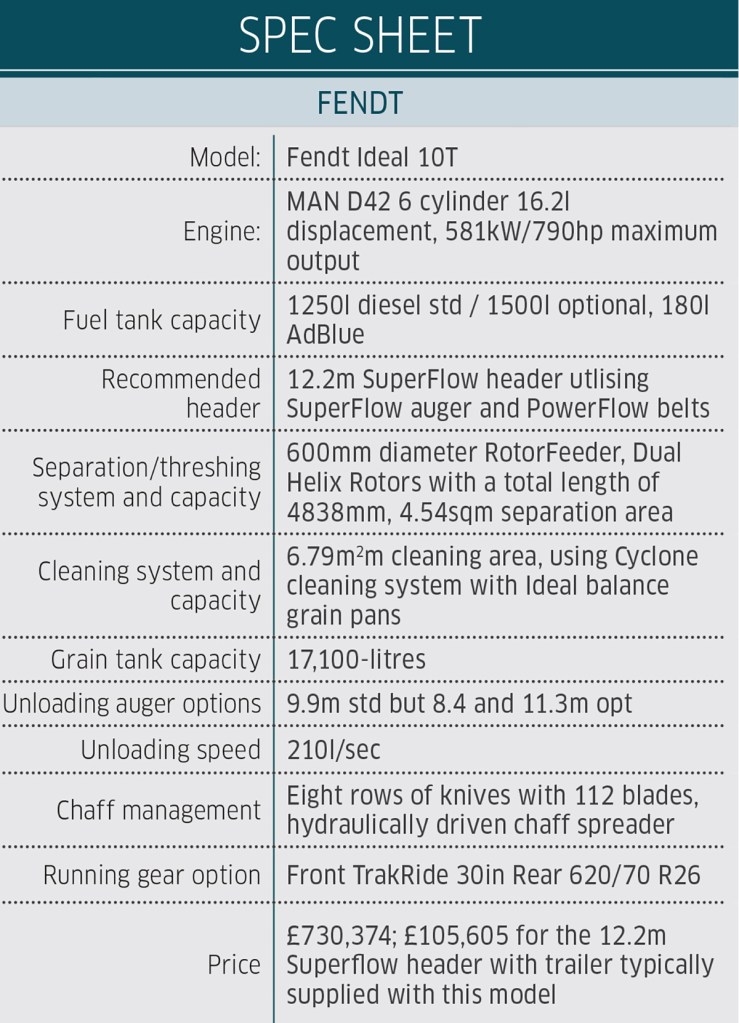
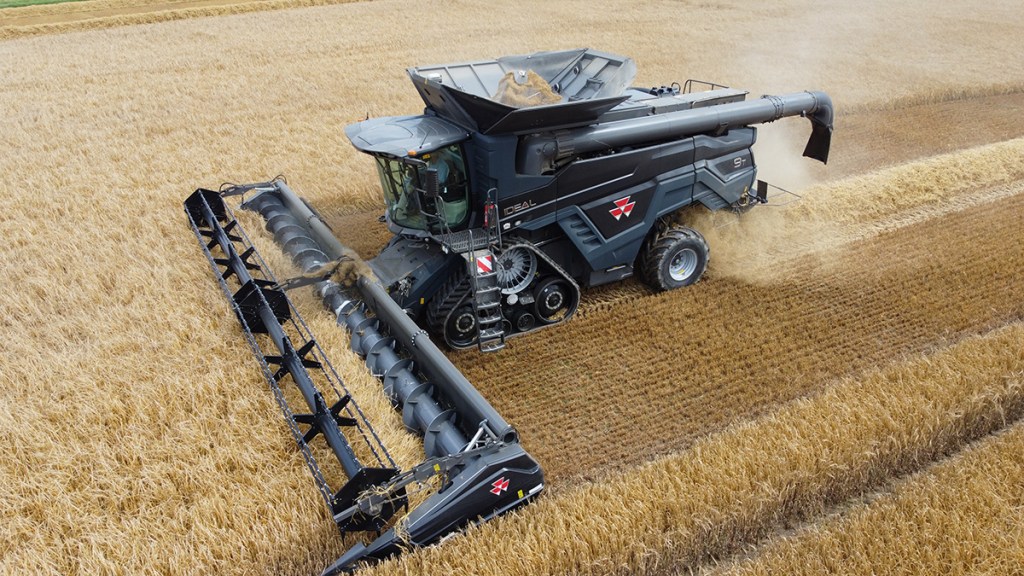
Updates to the Ideal range include increased cleaning capacity, a greater separation area and a lower total cost of ownership.
Model Year 27 units (MY27) will feature a Hi-Wear package for the feed area and feed drum. Wear plates in the feed area have been upgraded from stainless steel to Hardox, and the front wear plate and bolt guard are also made from Hardox.
An expanded Hi-Wear option adds a stainless steel base plate for the crop elevator and hard-chromed augers throughout the machine. Fendt recommends this option for operators harvesting large areas of maize and soya beans.
The Fendt Ideal also comes with a redesigned mounting system for wear plates on the front rotor scrapers. The new system uses self-locking nylon nuts and bolts of strength class 10.9, providing a more stable fix that withstands torque under demanding harvesting conditions without additional welding.
The MY27 also gets a new straw and chaff spreader kit which uses two hydraulically driven centrifugal discs with adjustable spread width to distribute crop residues without shredding.
This can be fitted in place of the straw chopper and spreader to help reduce unnecessary wear when working in maize.
Finally, a new standard radiator for the MotionShift transmission improves oil cooling performance, maintaining optimum temperatures during long road journeys and on steep gradients.
MASSEY FERGUSON
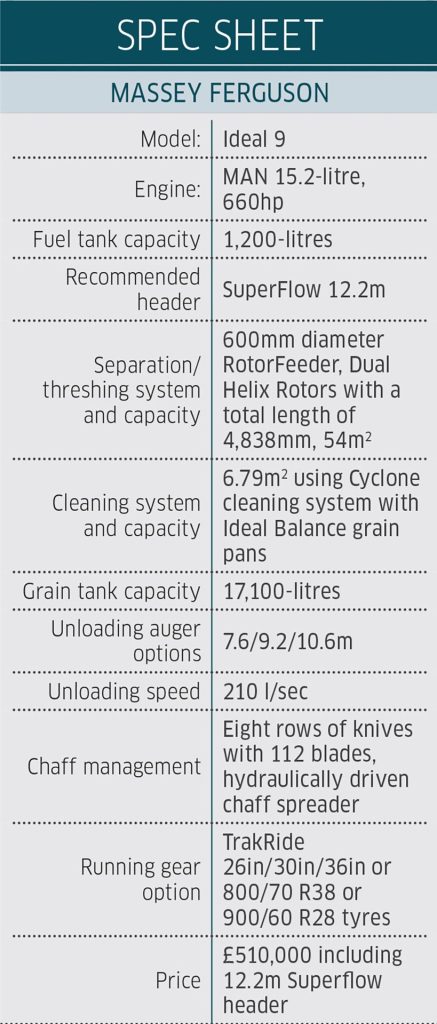
Identical in design to the Fendt Ideal, Massey Ferguson tops out its range with the Ideal 9, which is available in standard wheeled, Paralevel hillside and tracked versions.
Specification packages and upgrades dubbed ‘Next Edition’ have been added for the MF Ideal 9 for 2027, including Connectivity and Performance packs.
The Connectivity Pack comprises PTx Auto-Guide, as well as AutoTurn headland management for automated headland turns to maximise working efficiency and reduce operator fatigue. TaskDoc Pro brings automated task planning and recording and allows wireless data exchange between the combine and farm office. NF Connect adds convenience, allowing authorised users to check the machine’s location and status, while dealers can save time with remote fault diagnosis and check service requirements.
The Ideal Next Edition Performance Pack has been designed to increase convenience and maximise uptime. It includes an integral air compressor for easier cleaning away from the yard and LED work lights plus rear axle working lights to extend the working day. The pack also allows more functions and adjustments to be made from the cab, including the cutting table working angle, selection of chop or drop crop residue handling, plus chaff spreader and straw deflector adjustment. Styling highlighting the premium specification has also been added.
NEW HOLLAND
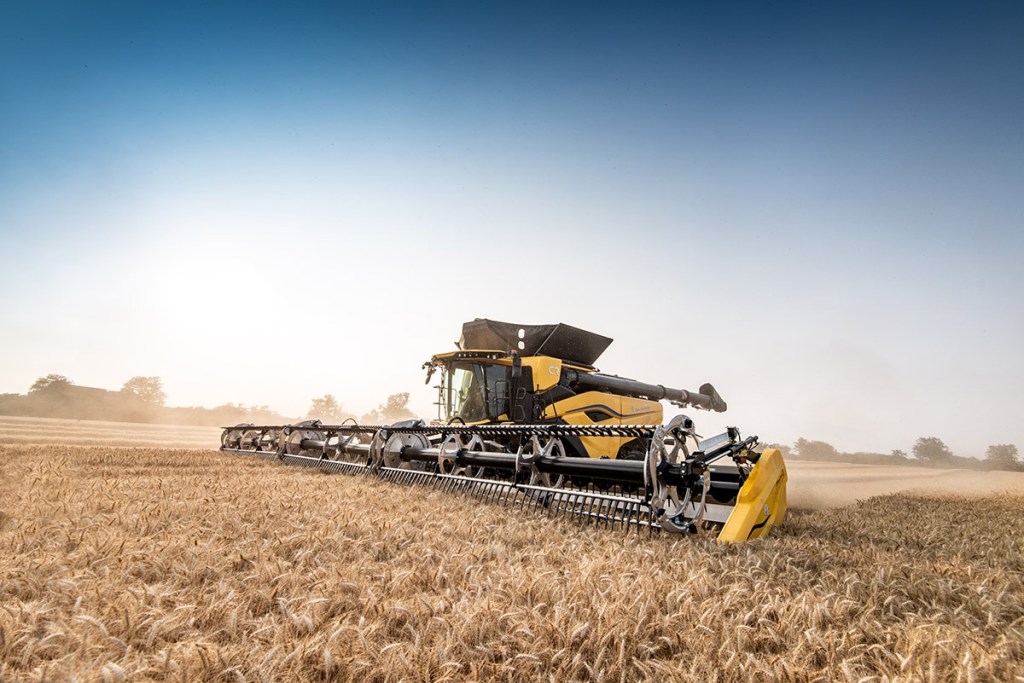
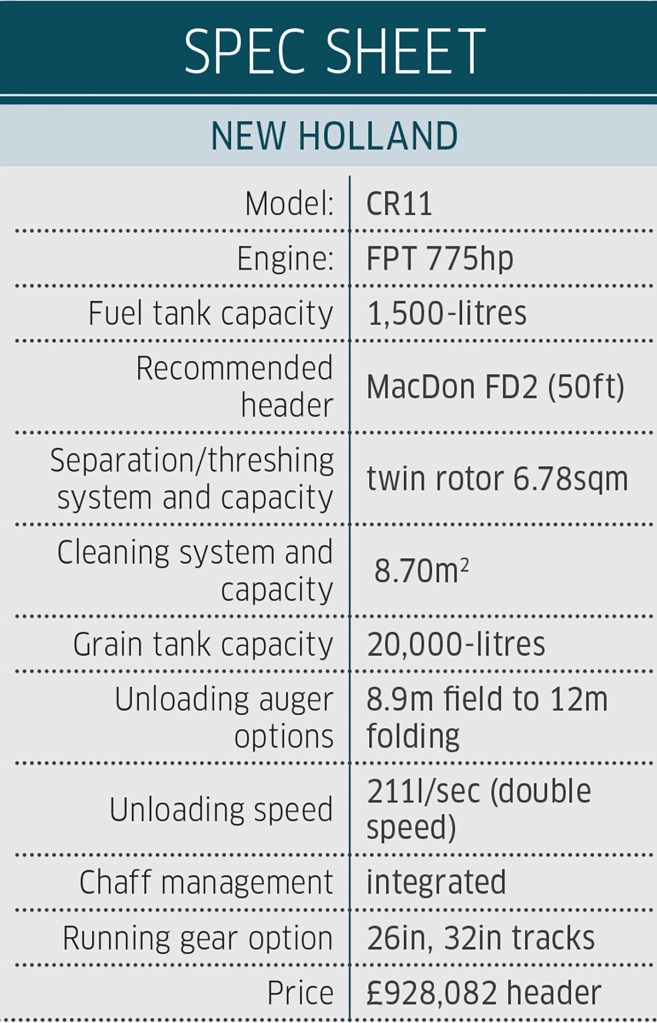
Unveiled in 2024, the new CR range is described as New Holland’s biggest advance in capacity gain and loss reduction in a generation. The machines are designed to handle greater volumes and heavier crops thanks to larger rotors running up the length of a CR machine.
Jane Carley
IT COMES WITH A WHAT?
To balance the requirements for throughput and quality, an expanding suite of technology is now available for combine harvesters. While it’s still possible to specify – and operate – a high capacity machine without the gadgets and some remain optional extras, manufacturers are increasingly building them into their offer packages. We take a look at common enhancements, what they actually do, what the brands call them and any special features.
THE TECH: YIELD AND NUTRIENT ANALYSIS
What it does: The latest refinement to yield monitoring, this feature uses a Near Infra Red (NIRS) sensor to provide real time yield and nutrient analysis of crops as they flow through the combine. Data is displayed on the combine terminal and transferred via a wifi or the mobile network to the farm office or grain store. In addition to easier store management and crop marketing, real-time moisture content measurement offers more accurate, site-specific yield recording and mapping.
What the manufacturers offer:
Claas: Nutrimeter Grain is a new option for Lexion combines, using the cuvette (spectroscopic tube) rather than reflection transmission method – said to offer a more homogenous measurement of the ingredients – mounted in a bypass to the grain elevator and capable of continuous throughput. Offers instant grain analysis, including protein, and can also accurately measure oil content in oilseeds.
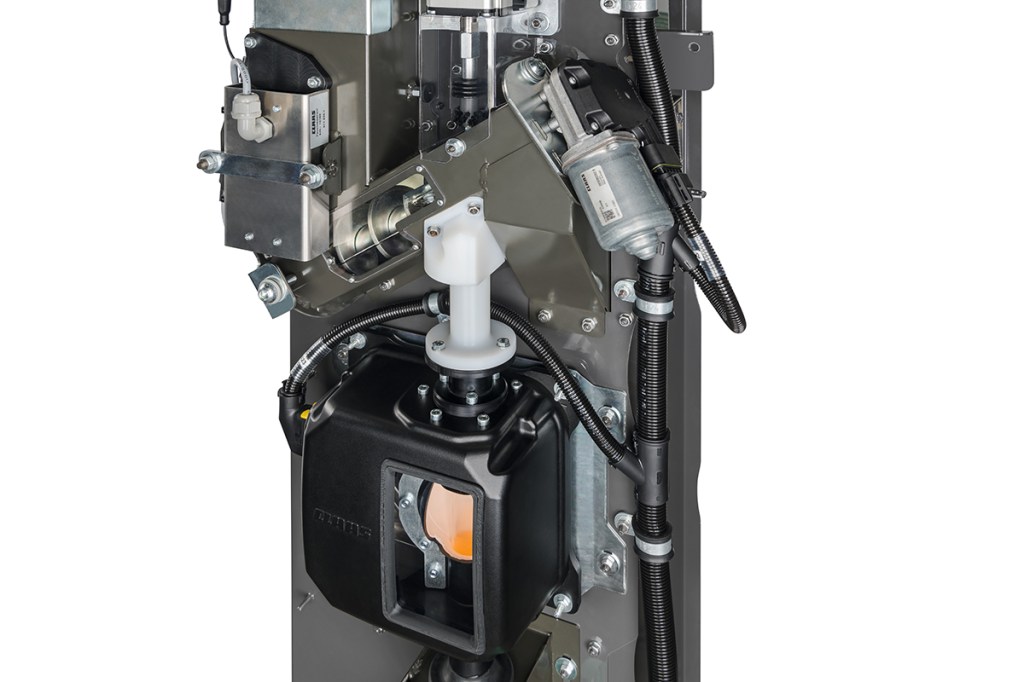
John Deere: Harvest Lab 3000 NIR Grain Sensing measures moisture, protein, starch and oil in different crops.
New Holland: NutriSense NIR sensor monitors moisture, protein and fat, starch, neutral detergent fibre (NDF) and acid detergent fibre (ADF).
THE TECH: AUTOMATIC GROUND SPEED ADJUSTMENT
What it does: Sensors are used to gather data used to make adjustments to ground speed, ensuring the optimum output from the machine without continual manual adjustment for variations in the crop and terrain or conditions. In some cases this works alongside automation of harvest settings.
Claas: Cruise Pilot controls forward speed on the basis of engine load. Operators can choose from maximum throughput with loss monitoring; constant throughput ensuring all key assemblies are subject to consistent loading regardless of conditions and cruise control (constant speed). Auto Crop Flow monitors the speed of the threshing/separation units, engine and straw chopper and can switch off the header or reduce ground speed to a halt in the event of a blockage.
CNH: Feed Rate (CaseIH) and Intellicruise (New Holland) set target ground speed and engine load as part of the Harvest Command (CaseIH) and IntelliSense (New Holland) menus and adjusts combine speed to optimise the load to the twin rotor system.
John Deere: Ground Speed Automation dynamically adjusts the combine’s forward speed by evaluating inputs such as terrain and grain loss. The Reactive version uses measurements of rotor pressure and engine load, while Predictive Ground Speed Automation enhances this with additional front-mounted cameras that
scan crops 4 sec ahead of the cutter bar to anticipate mass flow changes, allowing for precise speed adjustments based on crop conditions. It can also use satellite imagery for biomass mapping. Predictive Ground Speed Automation can be combined with Harvest Settings Automation to minimise manual adjustments in varying field conditions.
Fendt/Massey Ferguson Ideal: HarvestPlus sensors detect feeder load, tailings volume, basic grain loss data and yield and moisture information. This enables the combine to be used in a choice of automated harvest modes for constant speed, constant feeder load or constant feeder load and performance, the latter monitoring the rotor and cleaning shoe losses combined with feeder load. Engine load is always monitored in the background..
THE TECH: ROTOR AND CLEANING SYSTEM AUTOMATION
What it does: Real time crop visualisation and automatic adjustment of ground speed, rotors and the cleaning system.
CNH: Harvest Command (CaseIH) and IntelliSense (New Holland) automatically adjust the rotor cage vanes and rotor speed to determine the threshing and separation efficiency, controlling grain loss and grain damage.
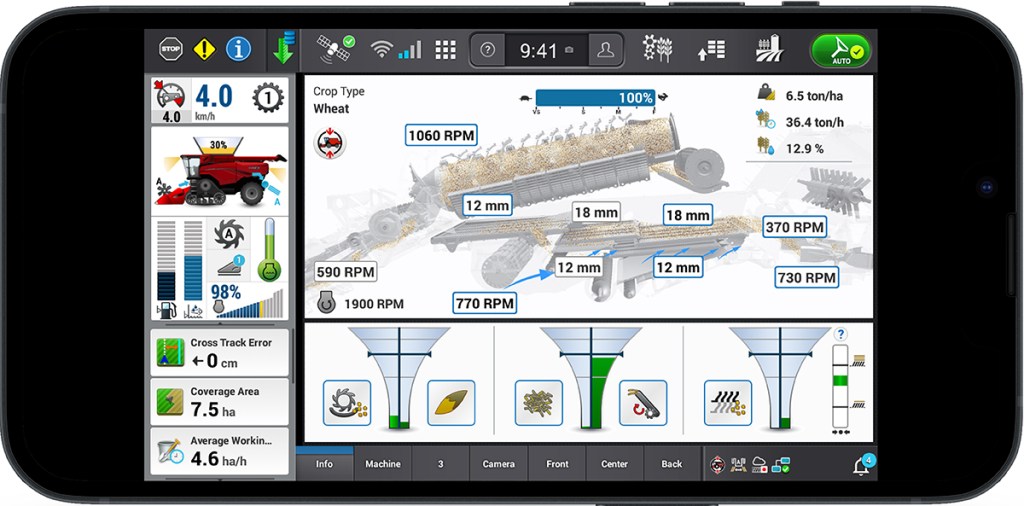
Cleaning fan speed and sieve adjustment is also automatically controlled to minimise losses and obtain the cleanest grain sample in the grain tank, irrespective of the load on the cleaning system.
An optional grain quality camera evaluates of the amount of non-grain material and broken grains in the grain sample en-route to the grain tank. These parameters are then used to optimise the threshing and cleaning settings.
Claas: Sensors are used for the following configurable functions based on harvesting parameters – Auto Separation, setting of rotor speed and rotor flaps and Roto Plus rotor; Auto Cleaning, setting of fan speed and upper and lower sieve; Auto Threshing, setting of drum speed, concave clearance, concave bar and flap.
John Deere: Harvest Settings Automation. Adjustments ae automatically made according to operator defined limits – set using a colour coded slider – for losses, grain quality and cleanliness. New loss-sensing technology continuously analyses performance versus the set limits. Adjustments are automatically made to optimise the combine and ensure these limits are not exceeded. The combine also provides recommendations for acceptable limits and initial settings.
The cleaning shoe has six loss sensors spread over the entire width, which detect losses wherever they occur. This data is also used by the Harvest Settings Automation system to automatically adjust the cleaning shoe settings and maintain pre-set targets for grain quality.
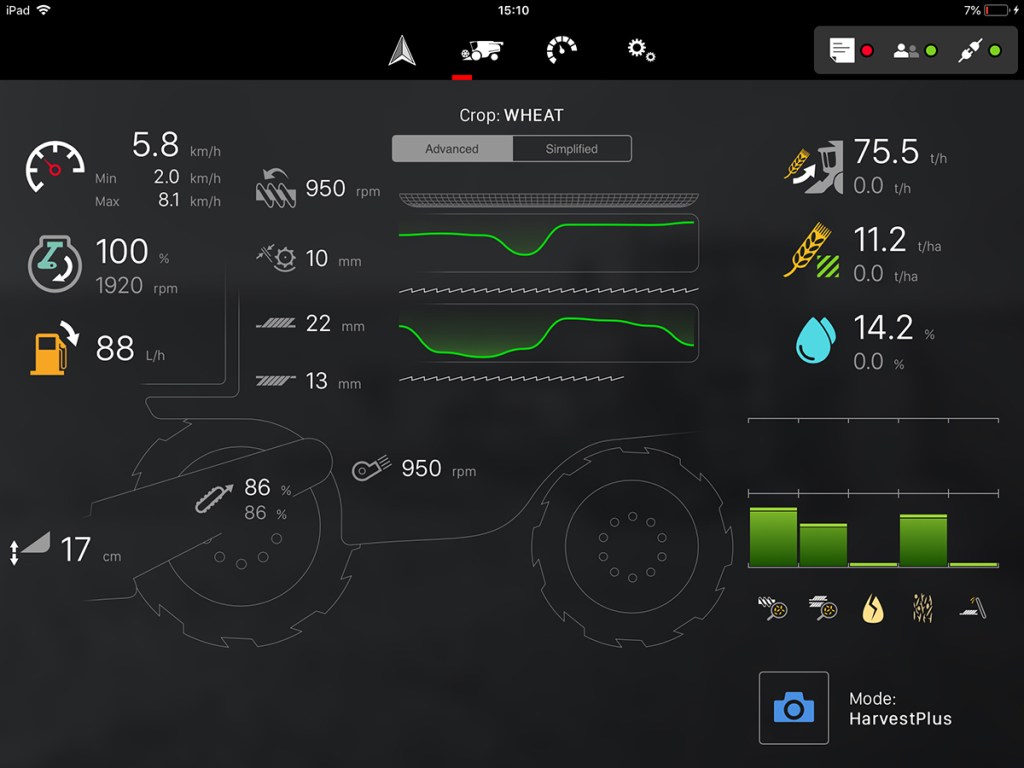
Fendt/MF: As well as the sensors in the HarvestPlus package, Idealharvest adds additional sensors to detect crop flow at the rotors and sieves, along with a camera to monitor grain quality. This allows the operator to view crop flow throughout the machine.
Through the SmartConnect app with premium dashboard layout, the operator can specify what the machine should prioritise; output, grain quality or losses, or a mix of the three. The machine then uses the data retrieved from the sensors throughout the machine to adjust rotor speed, fan speed, upper and lower sieves and forward speed to achieve the operators preferred priorities.
THE TECH: CLEANING SHOE CROP DISTRIBUTION
What it does: Levelling and controlling the cleaning shoe to compensate for sloping ground maintains cleaning performance.
Case IH: self-levelling cleaning system, plus adaptive cleaning fan speed that responds to the topography – can be controlled via the Harvest Command option. Part of the pre-cleaned grain is sent directly to the lower sieve, relieving the load on the upper sieve and resulting in an increase in cleaning performance while minimising grain losses. An inclination sensor initiates the levelling of the total cleaning system, which slopes up to 12% when working on side hills. This self-levelling sieve system allows use of the combine at full power and constantly high cleaning performance, regardless of gradient.
Claas: Auto Slope controls fan setting and 4D cleaning optimises rotor flap position on the basis of the slope in order to make optimal use of cleaning capacity.
Fendt/MF: Idealbalance is a pair of specially moulded return pans which use the full length of the threshing and separation chamber to distribute crop evenly to the cleaning shoe, said to avoid the need for a self-levelling shoe. The two return pans use a curved design to evenly distribute material from the rotors to the cleaning shoe, enhancing the efficiency of the cleaning system. Optional hillside flaps, introduced as part of the Cyclone Plus system, further optimise crop flow on slopes.
New Holland: The TwinClean system compensates for slopes by adjusting the cross-distribution on the cleaning shoe. Two automatic cross distribution mechanisms, one on the grain pan and one on the upper sieves, maintain an even cleaning shoe load in all conditions. Two sets of pressure sensors continuously measure the cleaning shoe load and detect any anomalies in material distribution between left and right. A side-shake mechanism adds a lateral element to the grain pan and sieve movement, which evens out the material over the cleaning shoe’s full width.
Jane Carley
For more up-to-date farming news click here and subscribe now to profi and save.