
When the hydrostatic drive in an item of kit starts to give trouble, a farm workshop fix is typically not an option. A visit to German outfit Jetschke Hydraulik in Hamburg gave us an insight as to why.
KEEPING IT BRIEF
- Hydraulic specialists may restrict offering repairs to registered equipment dealers and not direct to the end user, so check.
- Dedicated test rigs are required to check pumps and hydrostatic drive units from different manufacturers such as Linde and Bosch Rexroth.
- Refurbishing hydraulic elements within a transmission, such as the ZF S-Matic in last month’s issue, can reduce overall repair costs.
Apart from changing transmission fluids and filters, there is typically little you can do on farm to ‘fix’ a failing hydrostatic drive system —not much help if a piece of equipment you rely upon starts to play up when you need it most. What’s more, any major assemblies, such as a new hydraulic pump or hydrostatic drive, can have costs running into five-figures. This can make getting components refurbished a cost-effective option, as can accepting a properly refurbished item as a replacement.
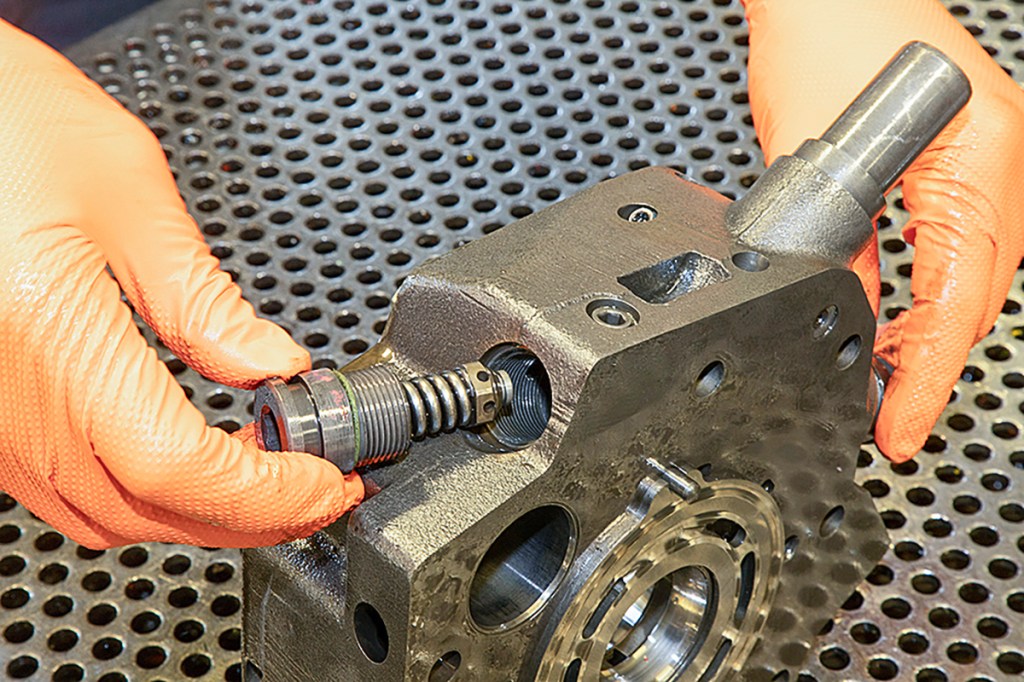
Piston pump and motor
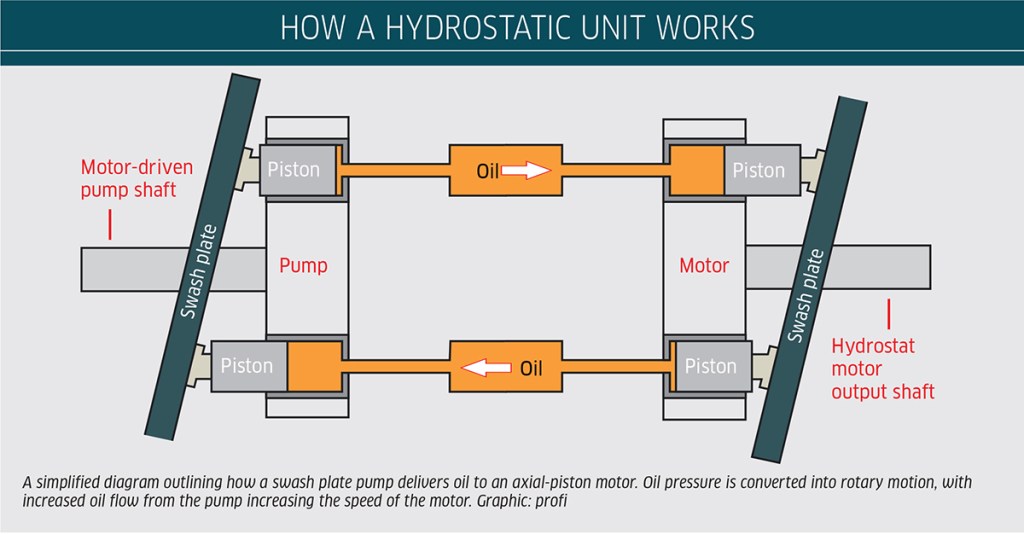
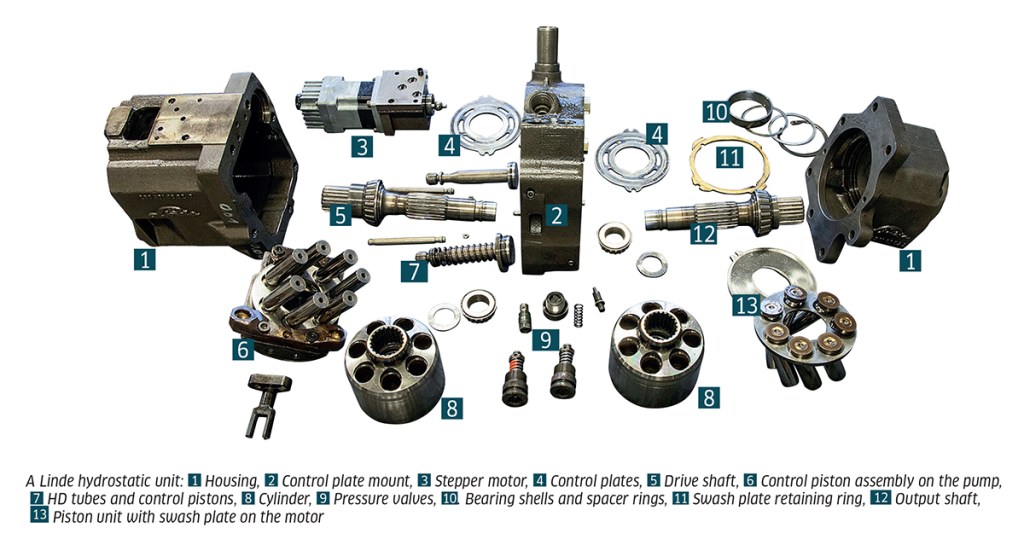
Hamburg-based Jetschke Hydraulik was working its magic on Linde HPV/HMF55 and HPV/HMF75 hydrostat units, as used in ZF S-Matic transmissions, during our visit. In outline, a hydrostatic drive system can use a range of pumps and drive motors to include axial flow variable displacement pumps and axial-piston motors. In modern hydrostatically driven kit such as a sprayer or a wheeled loader these are mounted as separate units. Components that work to similar principles can also form part of a hydro-mechanical tractor transmission, such as the ZF S-Matic originally developed by Steyr back in 1999.
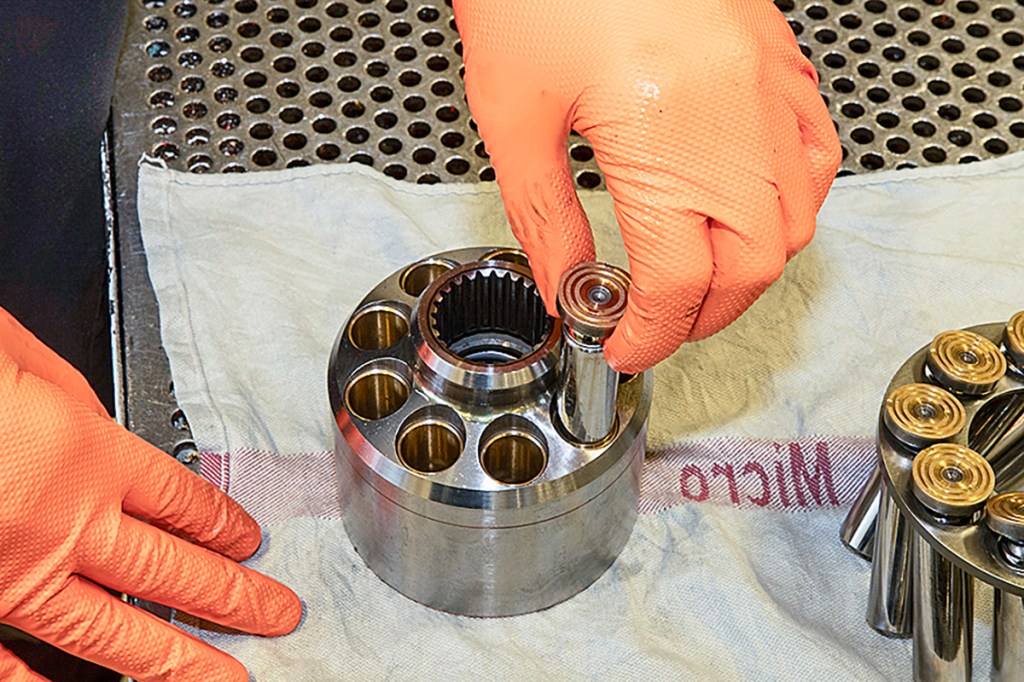
In crude outline, the swash plate that acts on the pistons within the pump has its angle altered to vary the rate and direction of oil flow to the drive motor or motors. As the pump swash plate angle is increased, the greater the piston travel and with it the flow of oil to the motor. This in turn increases the motor speed. When the pump’s swash plate angle is reduced, less oil flows and when it is vertical, the pistons no longer pump oil. When the pump swash angle is reversed, the direction of drive to motor or motors also reverses.
Controlling the pump
WithIn older fully 100% hydrostatic drive systems, the pump swash plate is controlled via a mechanical linkage connected to the accelerator or, more accurately, drive pedal. The more recent systems have moved from mechanical to electro-hydraulic control. This enables the system to be refined to ensure that engine power and pump output can be better optimised to improve the overall performance.
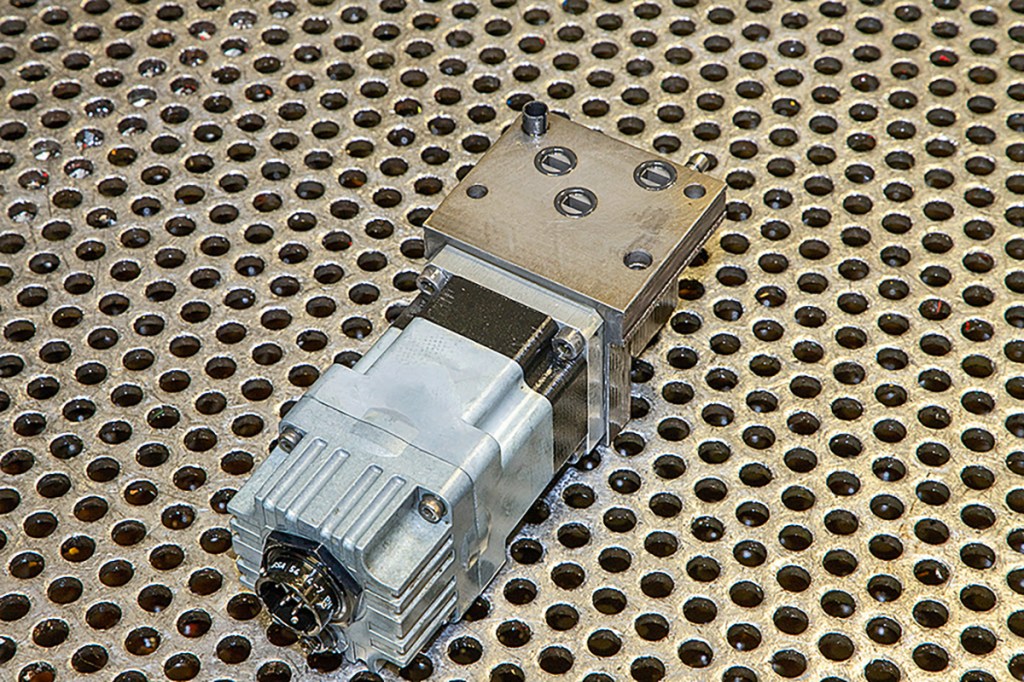
Matters become rather more complex when hydrostatic pumps form a part of a power-splitting transmission. Here engine power is transmitted mechanically and hydrostatically. This is the case with the originally Steyr- developed ZF S-Matic transmission. Here the hydrostatic element is controlled electro-hydraulically, with speed sensors within the transmission determining the pump’s swash plate angle. The readings from these sensors are quickly converted into PWM (pulse-width modulation) signals within the transmission control unit which in turn are used to control a stepper motor. The latter motor essentially controls the angle of the swash plate, with hydrostatic output related to the mechanical elements of the transmission.
A ‘failed stepper motor’ is something many readers will have heard of when there is a hydro-mechanical transmission problem.
Faults and wear
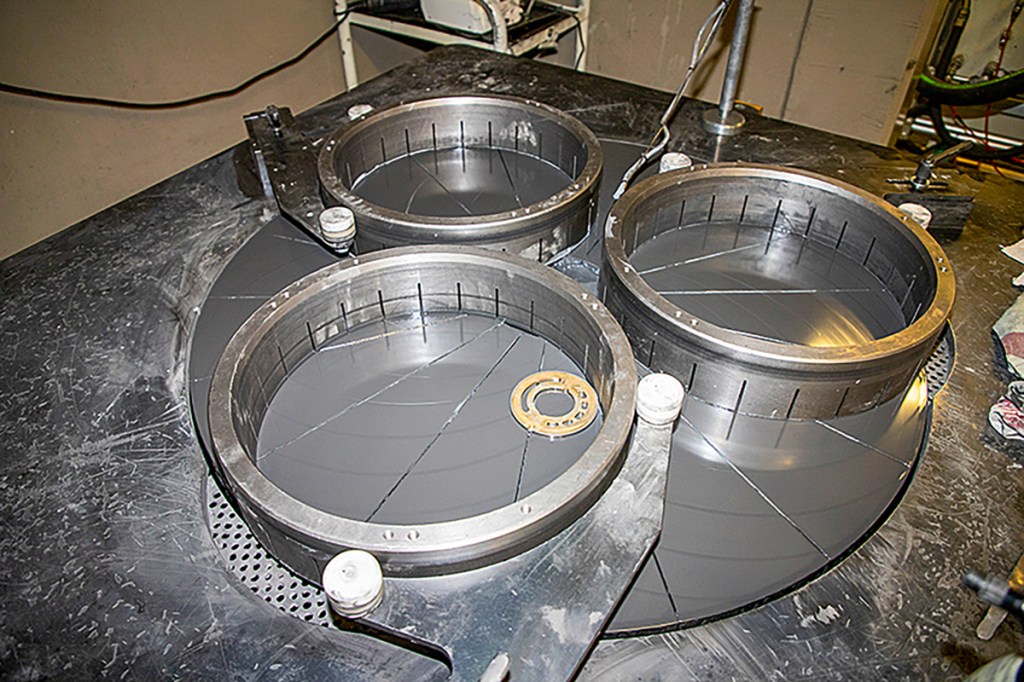
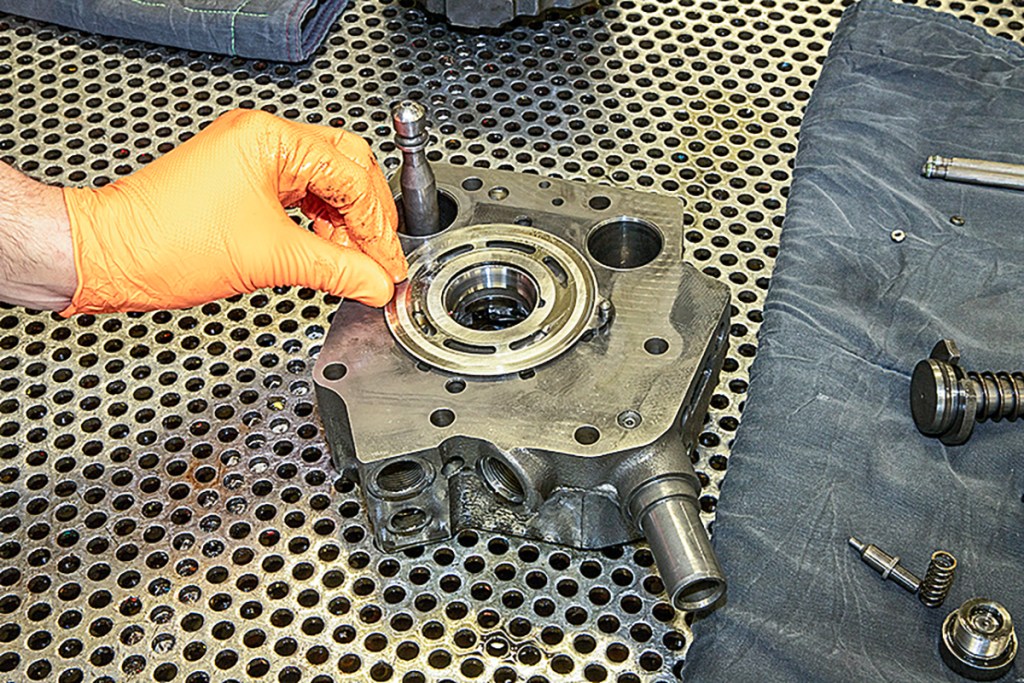
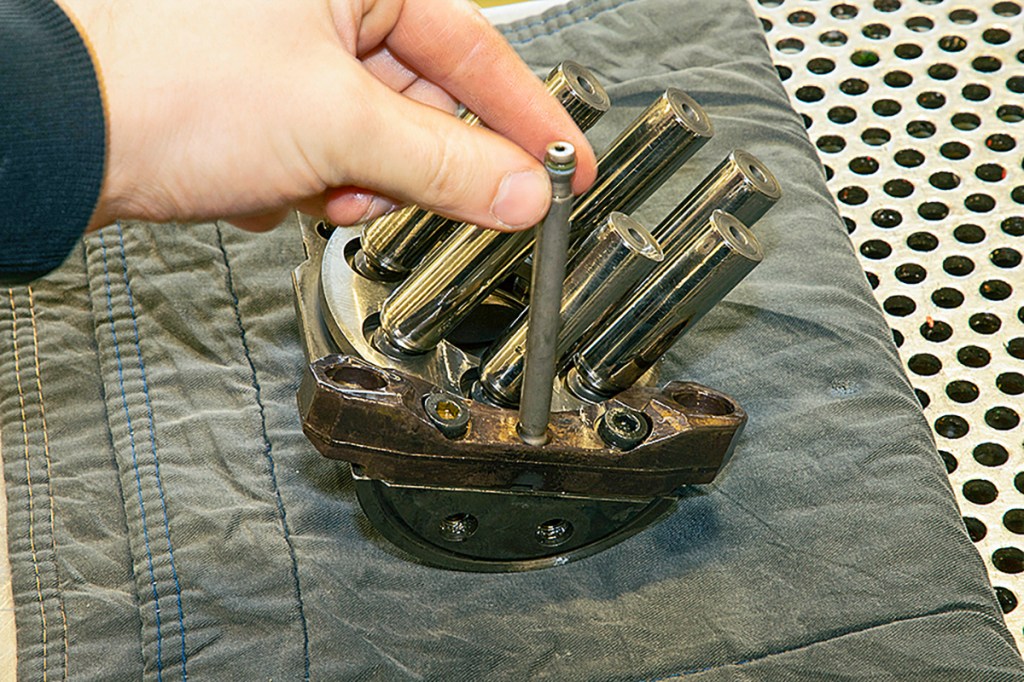
Now to the actual oily bits, in this case a piston pump. After dismantling the pump, all components are inspected, with particular attention paid to those elements that are exposed to any friction. These include the control plate upon which the cylinder block rotates. Oil is fed into the cylinders through holes in the control plate so, if the surface is worn or uneven, oil may leak and decrease overall efficiency of the pump.
It is possible to ‘lap’ a moderately worn plate to restore it to a smooth surface, but it may be more economical to just replace the unit.
As to the pump pistons, these are typically surface tempered to make them less liable to wear. The cylinders in which they sit are more liable to wear and if worn the complete cylinder unit is replaced. A failed pressure test picked up ahead of dismantling often indicates excess cylinder bore wear.
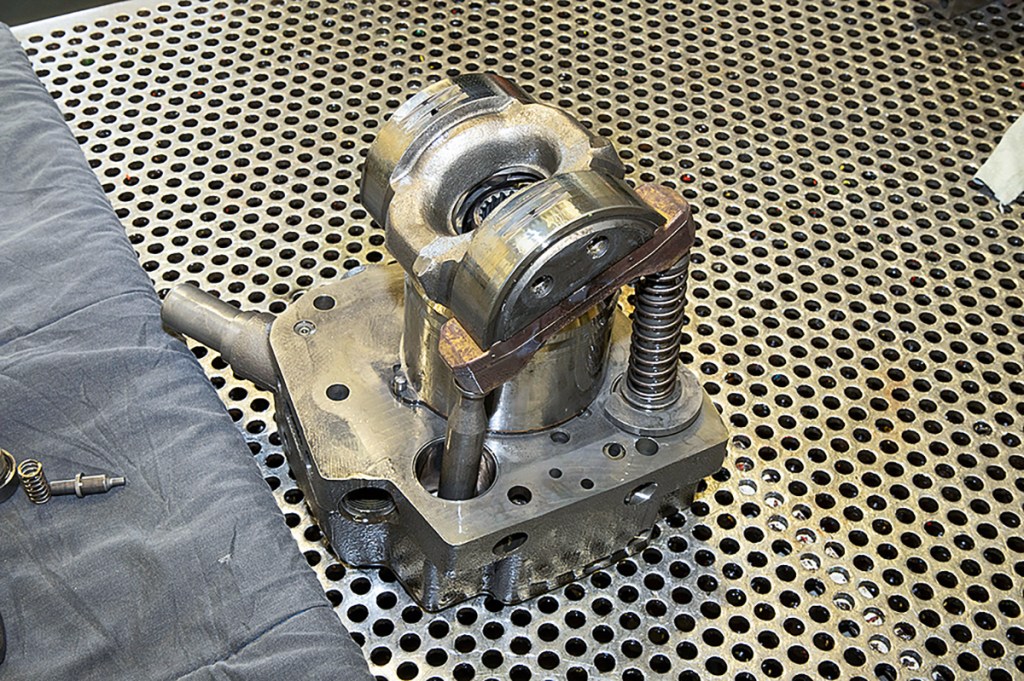
On the Linde pump we saw being worked upon, there were tubes with holes bored through them to lubricate the bearing shells opposite the swash plate. These tubes are secured by brass retaining rings that can become worn and allow the tubes to drop out of position and hamper lubrication. This leads to wear, with worn-off metal particles causing friction and irreparable damage to the pump.
As a matter of course, all seals and bearing shells are replaced on reassembly.
Overhauling the stepper motor
According to Jetschke Hydraulik’s workshop manager, Thomas Winkelmann, around 90% of S-Matic transmissions coming in for repair have a problem related to the stepper motor. In the past, the only solution was to replace these motor units but, with a retail price of £4,350 ex.VAT, Jetschke Hydraulik sought out a firm that specialises in refurbishing stepper motors as a sensible, cost-effective alternative. Jetschke Hydraulik now keeps refurbished stepper units in stock to reduce downtime.
Comprehensive test-rig runs
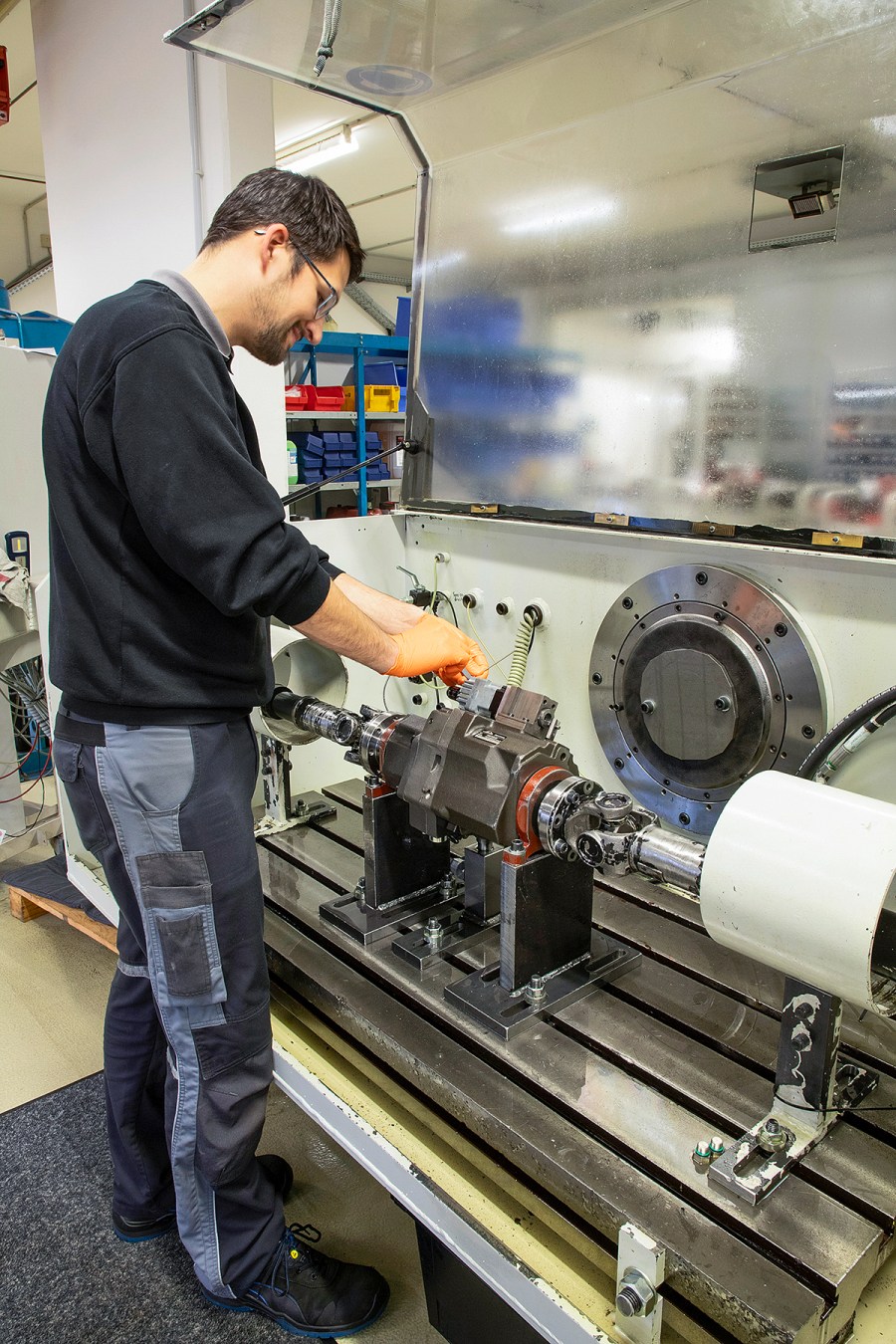
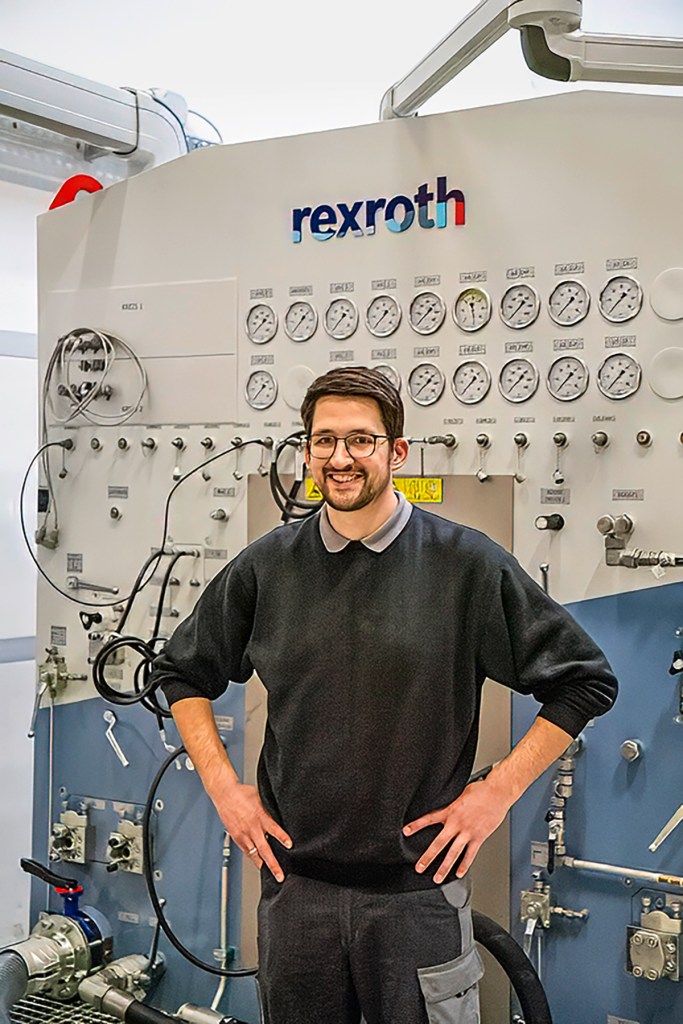
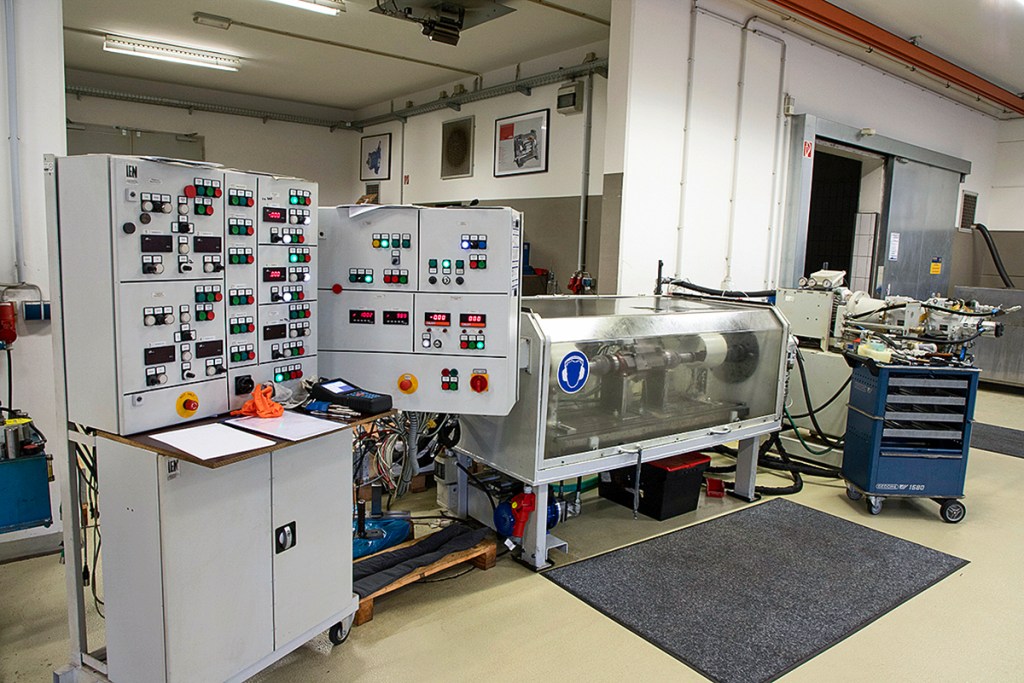
Jetschke Hydraulik uses a PTL universal test rig to test Linde hydraulic pumps, with a second in-house developed rig to test Linde and Bosch Rexroth hydrostatic systems under load. All repaired and refurbished components are coupled to the test rigs so loads and correct operation can be tested under simulated working conditions.
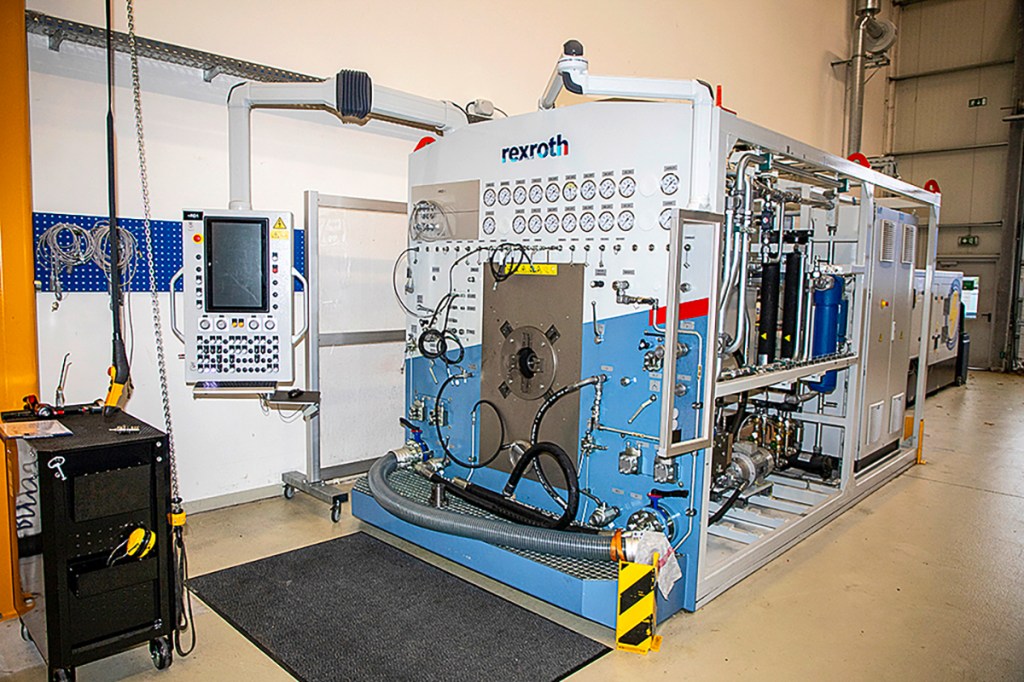
The same testing is undertaken on S-Matic transmissions, with refurbished units run up to speeds of 800 to 2,200rpm, with checks at varied swash plate angles in forward and reverse recorded to ensure the test readings meet OEM maker-specified characteristics. A further test ensures the stepper motor and the hydrostatic are correctly synchronised.
Jetschke Hydraulik added a further test rig when it entered a service agreement with Bosch Rexroth. This rig is enormous and needs more electrical power than is available from the mains grid, an additional 135kW generator being required to deliver enough power to the system. This test unit runs tests on both hydraulic pumps, and motors can work at operating pressures of up to 50 bar at flow rates of up to 300l/min.
Summary
Repairing and refurbishing hydraulic motors and hydrostatic systems take both specialist knowledge and equipment. The simple fact that even a specialist can need the help of other specialists, such as is the case with stepper motor refurbishment, says a great deal about the skills required for this sort of work.
Alexander Bertling
For more up-to-date farming news click here and subscribe now to profi and save.