
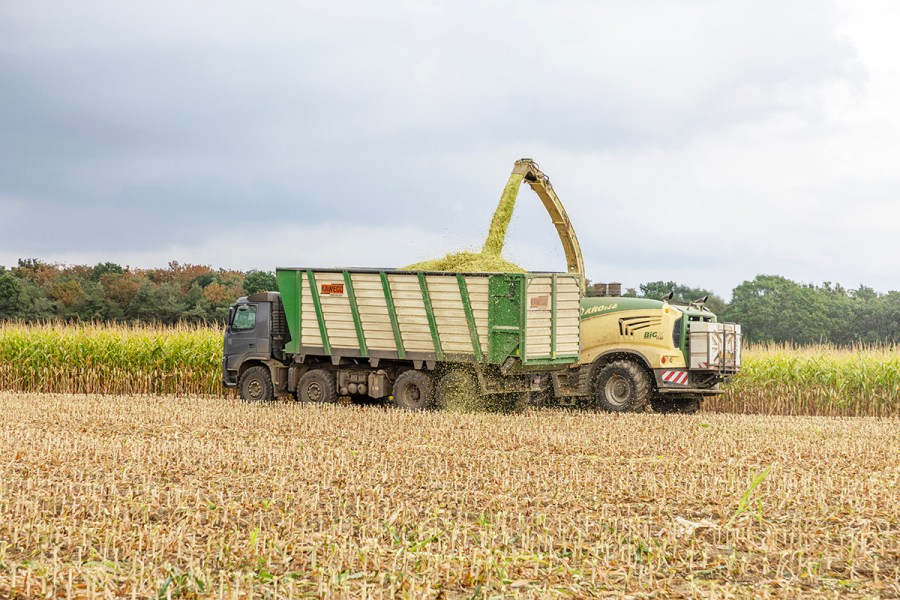
With a 4,850ha forage workload comprising grass, whole crop and mostly maize, one Hertfordshire contractor has invested heavily in logistics, to ensure that his team operates like a well-oiled machine that can make the most of equipment and weather windows.
KEEPING IT BRIEF
- Foragers work together
- Agri Trucks improve efficiency
- 1,500hp and 14-row goal
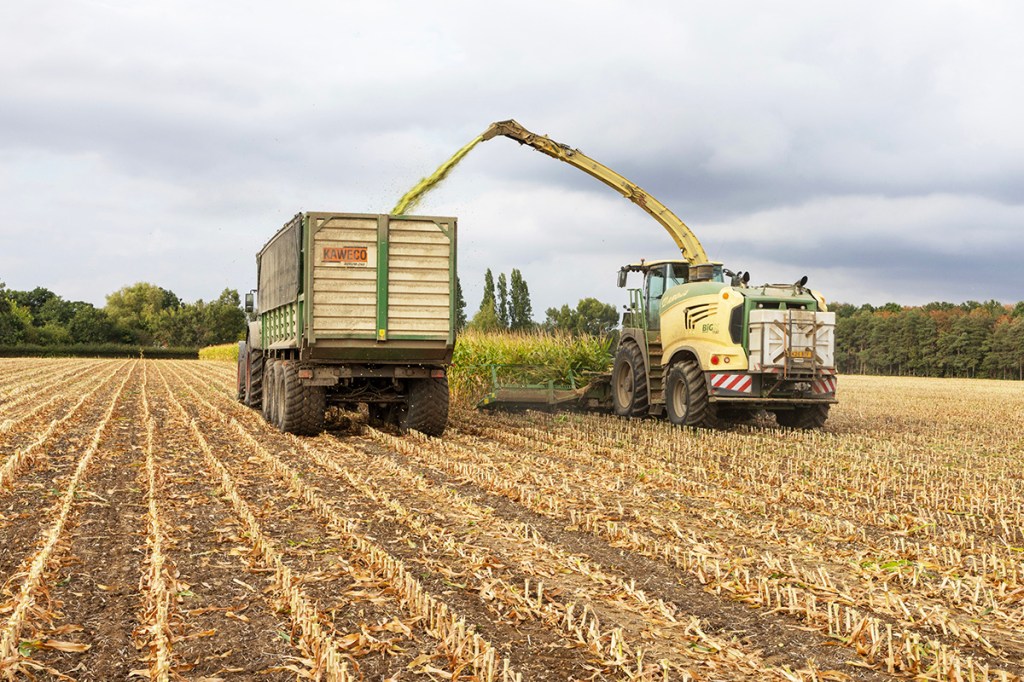
When the going is good, Hertfordshire farmer and contractor Joe Williams reckons his silage team can harvest and clamp 800ha of maize in a week. It’s no small feat – weather conditions, blocks of crop and length of haul from field to clamp are all influencers, and have to be just right.
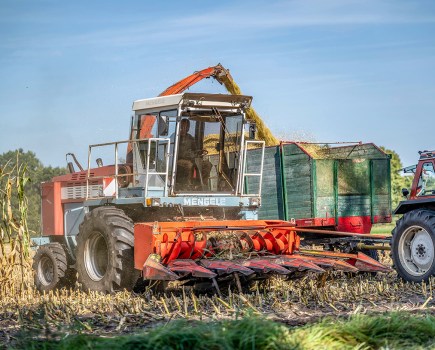
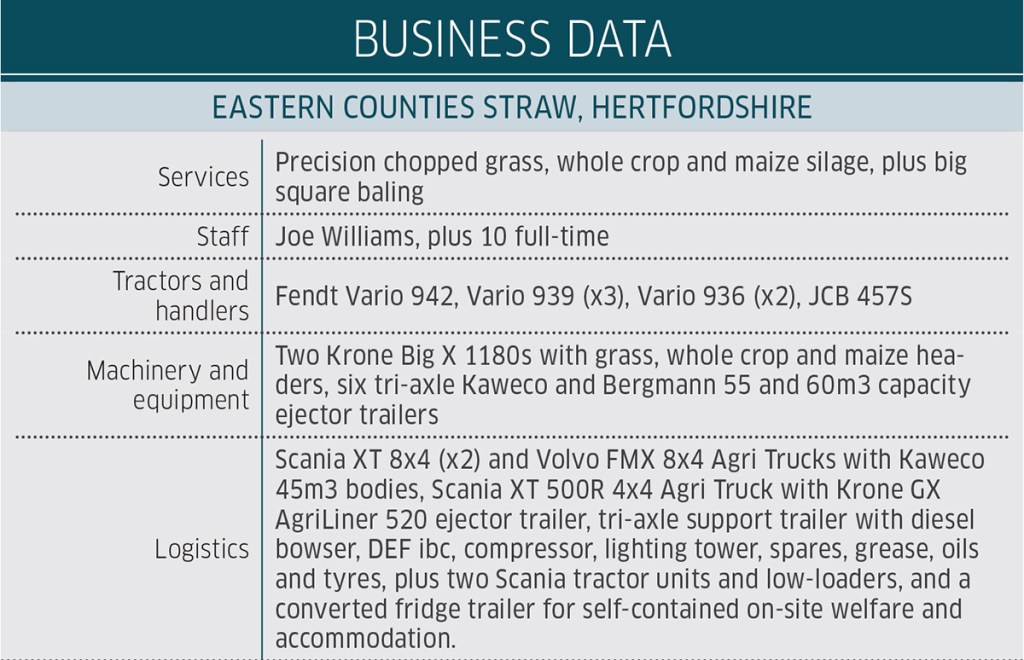
Logistically, it’s all about efficient planning so the team can avoid holding up the foragers. In this instance, those foragers comprise a brace of Krone Big X 1180s, each packing 1,156hp from their use of 24-litre Liebherr V12 engines.
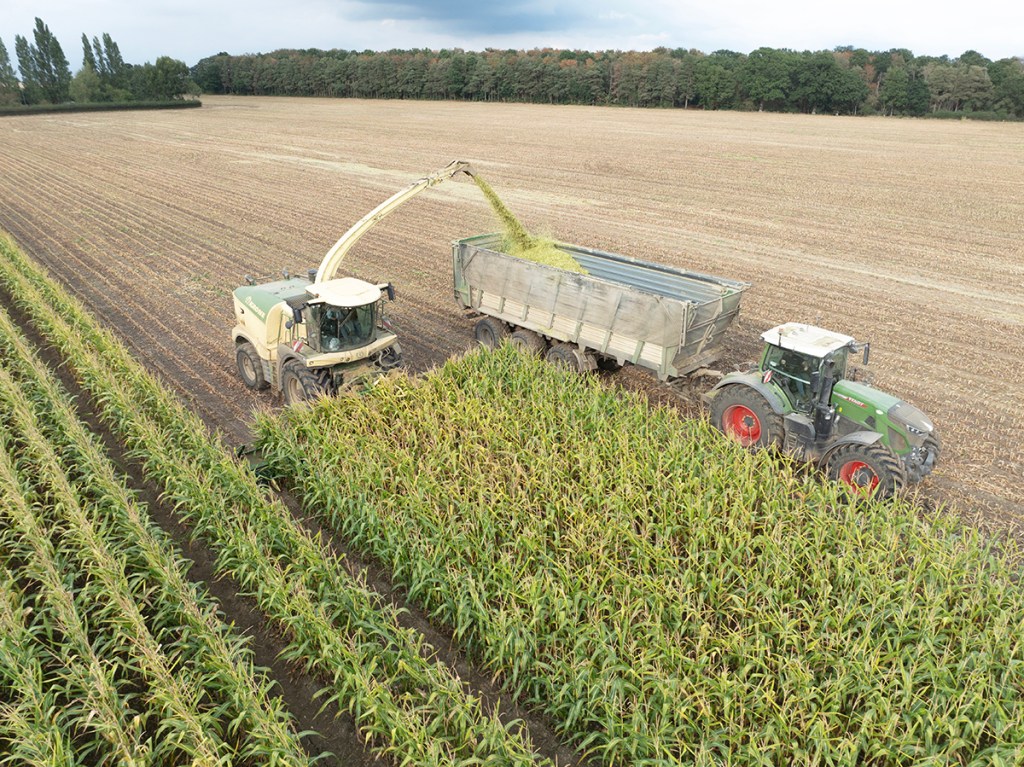
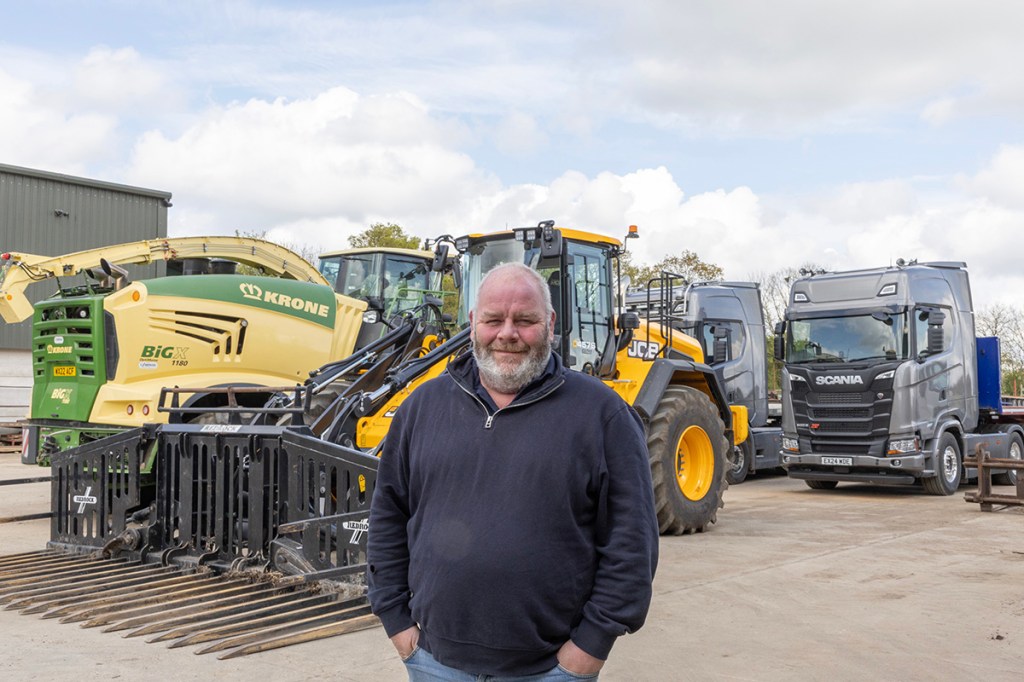
“It’s only 150 acres/day per forager, which isn’t an impossible task, and this year’s maize crop is certainly down on volume,” explains Joe Williams of Eastern Counties Straw based at Rooks Nest Farm near Royston, Hertfordshire. “But with moves, small blocks of crop and longer hauls, it can be challenging to hit that weekly target.”
With two Big X 1180’s, you could be forgiven for thinking it was easy.
“There’s always a snag somewhere, it’s just how you deal with it,” he says. “Breakdowns, punctures, refuelling and travelling between jobs, are all aspects that have an impact on productivity.”
The only way is up
Asked if he has enough power, Joe remains quite hopeful that the power stakes will continue to rise.
“I don’t think Krone will sit back with its 1180 now there’s a Jaguar 1200 from Claas,” he explains. “It’s been no different in the lorry world – power battles have raged for years between Scania and Volvo, so I’d expect some arm flexing by Krone and Claas.”
“We’ve tried the Jaguar 1200 and it’s a fair weapon. “We couldn’t do what we do without the backup of Adcock Agri and Crawfords – both dealers’ knowledge and support is excellent, and is instrumental to what we do.” points out the busy contrator. And I would have two 1,500hp foragers with 14-row headers if I could. Yes, there’s a knock-on effect with the size, scale and number of supporting machines needed, but it’s nothing that can’t be handled with a bit of planning and organisation.”
Keeping things moving
By his own admission, Joe is borderline obsessive when it comes to logistics. And with the help of telematics from Krone and Fendt, considerable time and effort is put in to assessing equipment performance and productivity, to ensure his silage operation runs like a well-oiled wheel.
“Telematics has helped enormously, not just with forager and tractor location, but it helps with customer disputes on field sizes and crop harvested,” he says.
“I don’t want to see tipped loads waiting to be pushed into a clamp, any more than I want to see foragers waiting for trailers,” explains Joe. “Logistics is a passion of mine, and I want all my kit to keep moving, not waiting. If everything is matched and flowing smoothly, then we can maintain a throughput of 500 tonnes/hour from the foragers. I’m always looking for ways where we can continue to improve.”
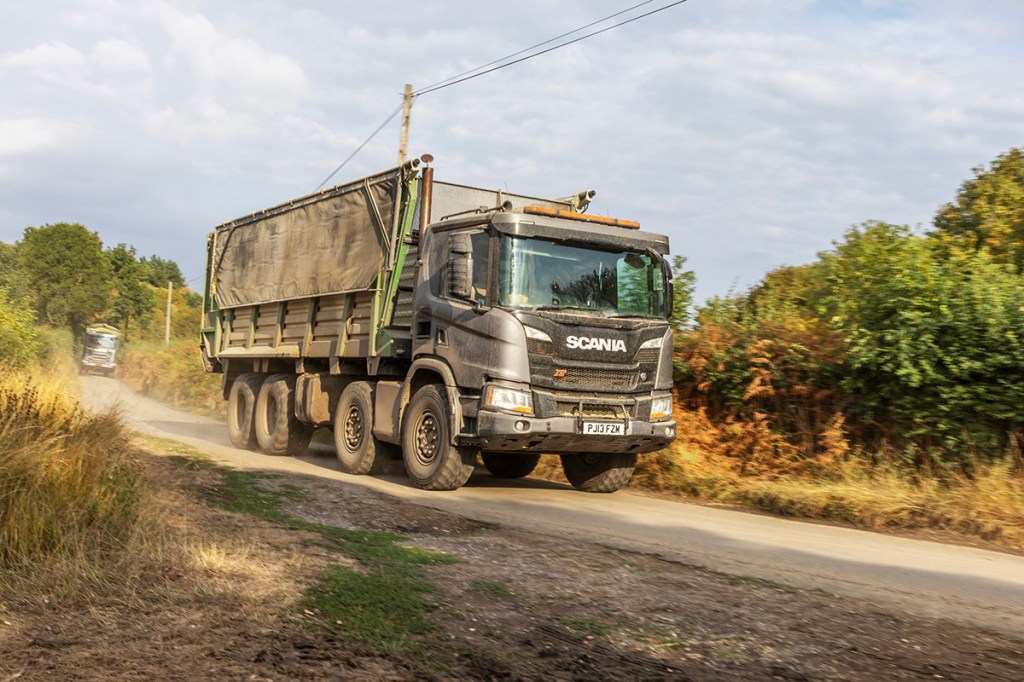
One of the biggest improvements made in recent years has come through the adoption of 8×4 Agri Trucks, to shorten journey times. Alongside its fleet of six Fendt tractors, the firm runs four Agri Trucks in the guise of two Scania eight-wheelers and one Volvo eight-wheeler all equipped with 45 cube ejector bodies, plus a 4×4 Scania Agri Truck tractor unit that pulls a 52m3 capacity, twin axle Krone GX AgriLiner 520 ejector trailer, coupled via a fifth wheel.
“The 8×4 Agri Trucks are a game-changer for us, and I’d run nothing but these if I could guarantee we’d never have to tackle wet harvesting conditions again,” he says. “So, for that reason, we’ll always need to operate with tractors and trailers too.”
For Eastern Counties Straw, cost is the big driver here.
“The 8×4 Agri Trucks cost around £100,000, complete with the body conversion the way we want it, using Kaweco bodies,” he says. “We’ve done around 22 of these conversions now.”
Joe points out that, like a Mercedes Benz Unimog, they can operate at higher speed, have full air brakes and ABS, offer more operator comfort and even at 500hp, are proving far more efficient on fuel than his lower powered tractors.
“We fit Michelin block-tread front tyres on the two steering axles, then add 560/60 R22.5 XPower flotation tyres to the drive axles. These rear tyres are around £470 each compared to £5,000 for a tractor tyre – what’s not to like?”
The bulk lorry trailer option is also available, helped by the firm’s operation of a pair of Scania S-series tractor units that can be coupled to 110 cube walking floor artic trailers. It’s all about having options and being versatile.
“We can load these bulk artic trailers at the headland using a conveyor, which keeps them off the fields” he says. “But when it gets really wet, we park up the Agri Trucks and just bring in more tractors and trailers, with subbies if needed.”
Artic verstatility
“We do use our artic tractor units to haul straw and also with our own low-loaders to move kit,” he adds. “It’s quicker and easier on transmissions, when moving foragers between jobs, over longer distances.”
The firm’s Scania 500R XT with 4×4 driveline is said to be the only one of its kind in the UK, and has been coupled with the UK’s only Krone GX AgriLiner 520 general purpose trailer.
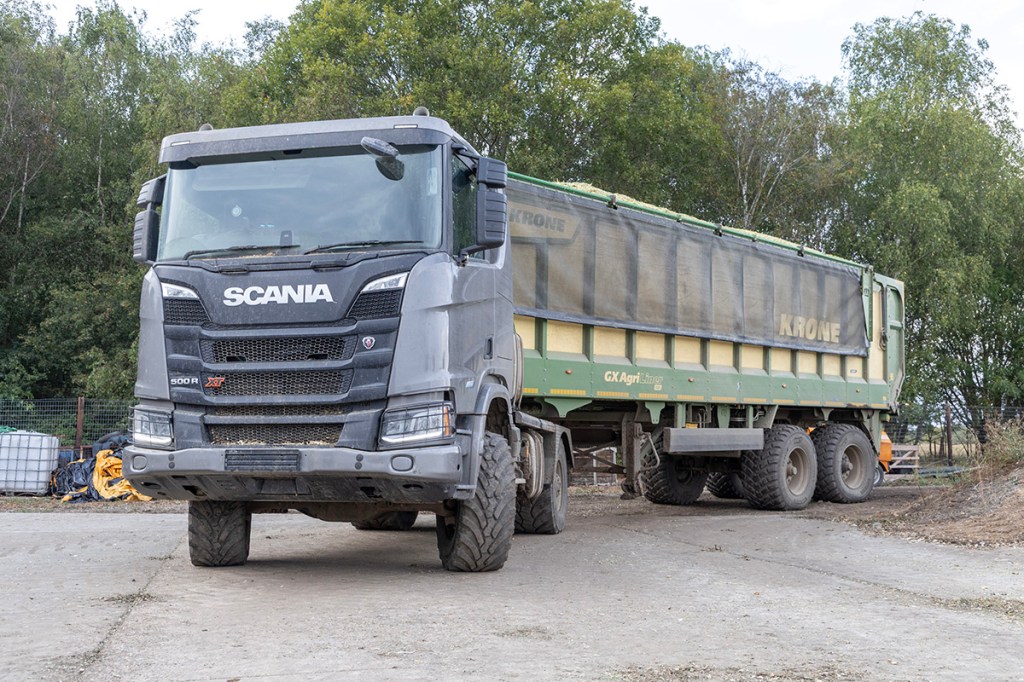
“All our other trailers are silage-specific, where the GX AgriLiner can be used for veg or grain,” explains Joe. “It’s much more versatile, and helps me to get a return on the investment.”
Despite the advantages he says the trailer is burdened with electronic technology which he views as a potential weakness.
“We’ve had a few issues with sensors, but if Krone gets them right, I’d have more of these too,” he adds. “For what the trailer is, it’s an extremely manoeuvrable combination in field gateways.”
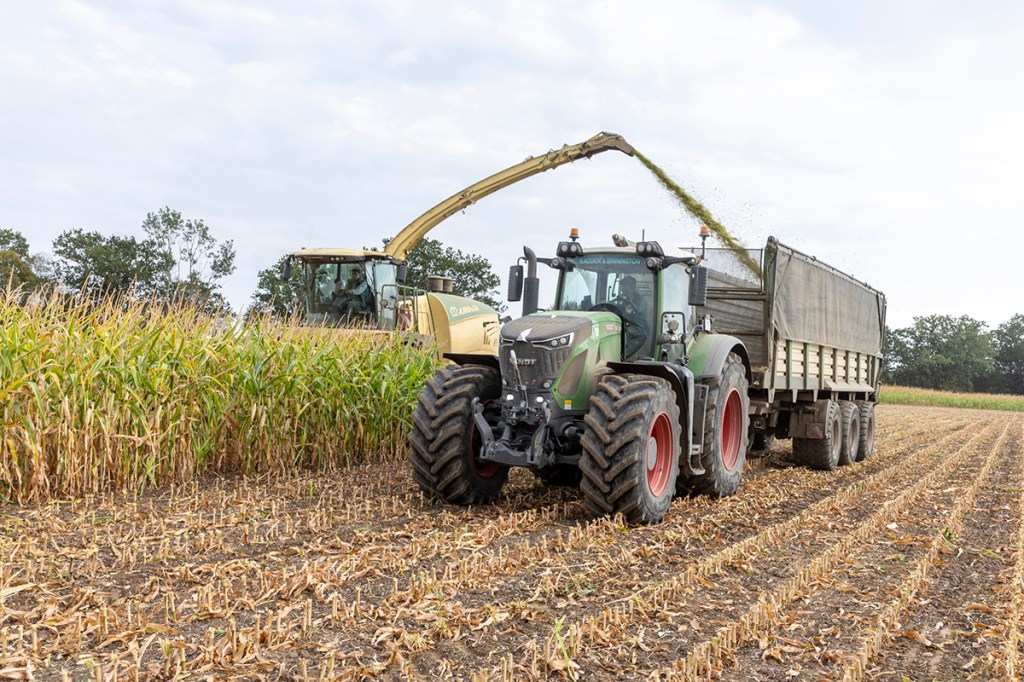
The tractor fleet is Fendt-based, and mostly Crawfords-supplied, with a 75-plate 942 spearheading the line-up, beneath which are three 939’s and a pair of 936 models – the latter are the firm’s lowest powered. Hours and age extend from 11,000 on a 67-plate 939 that had a new transmission in 2025, through to last year’s almost box-fresh 942 and 939 purchases.
“It’s the right tractor for what we do,” he adds. “Good road speed, premium product, good reliability and a strong residual value with service history, regardless of hours.”
Pushing out, pushing up
Trailer choices are Kaweco and Bergmann units in tri-axle configuration and boasting 55m3 and 60m3 capacities with ejector mechanisms. The firm chooses not to use the ejectors to compress loads, but is a deliberate choice to avoid tipping trailers.
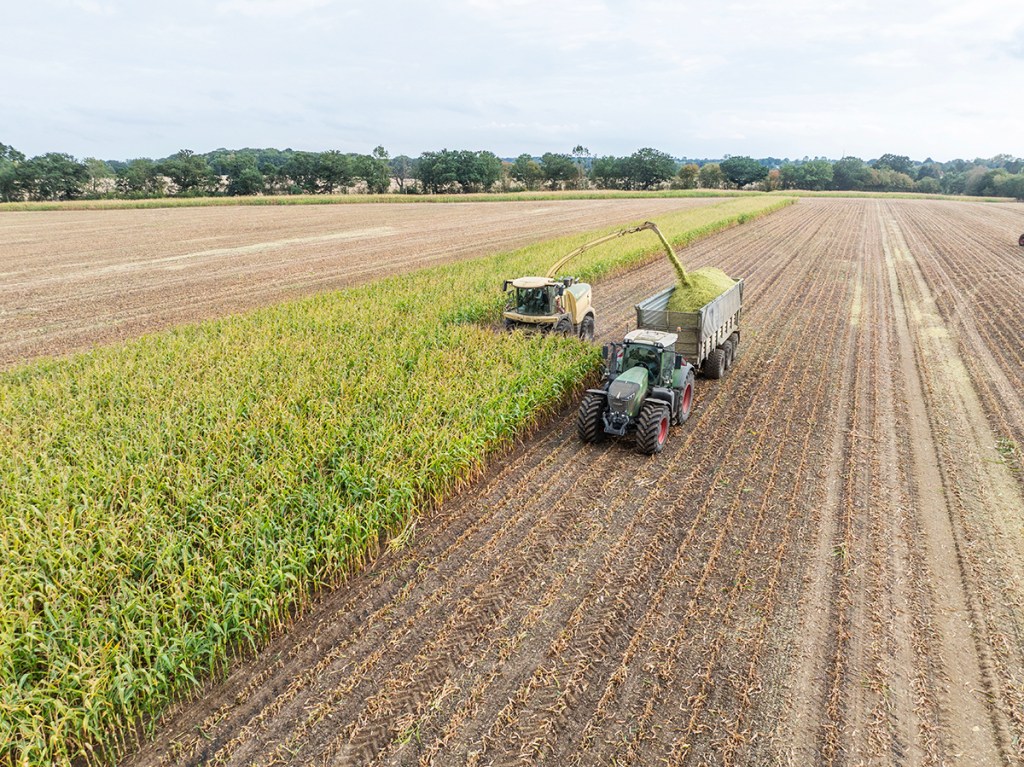
“With all our ejector bodies – be it on the trucks or behind the tractors – there’s no danger of tipping over,” he explains. “We can eject a load much closer to where the loader operator needs it to be, rather than tipping at the bottom of the clamp.”
He says that non-tipping bodies offer a further advantage, as the ejector floor can also be used to put material down in a layer.
“With our 8×4 Agri Trucks, the weight of silage is over the two driven rear axles, so we can reverse up the clamp at full power until we lose traction,” he says. “And by moving slowly down the clamp while ejecting, the load can be spread very effectively.”
The Hertfordshire farmer and contractor faces a 4,850ha silage workload that includes some grass and whole crop among a predominantly maize-based workload for multiple AD plant customers. And looking past the headline power figures for the two choppers, the key to logistical success is a steady flow of trailers and good kit on the clamp.
“We can have up to 11 trailers on two foragers, particularly on the longer runs and this can lead to parking one chopper up, or moving it onto the next job, in good time,” he says.
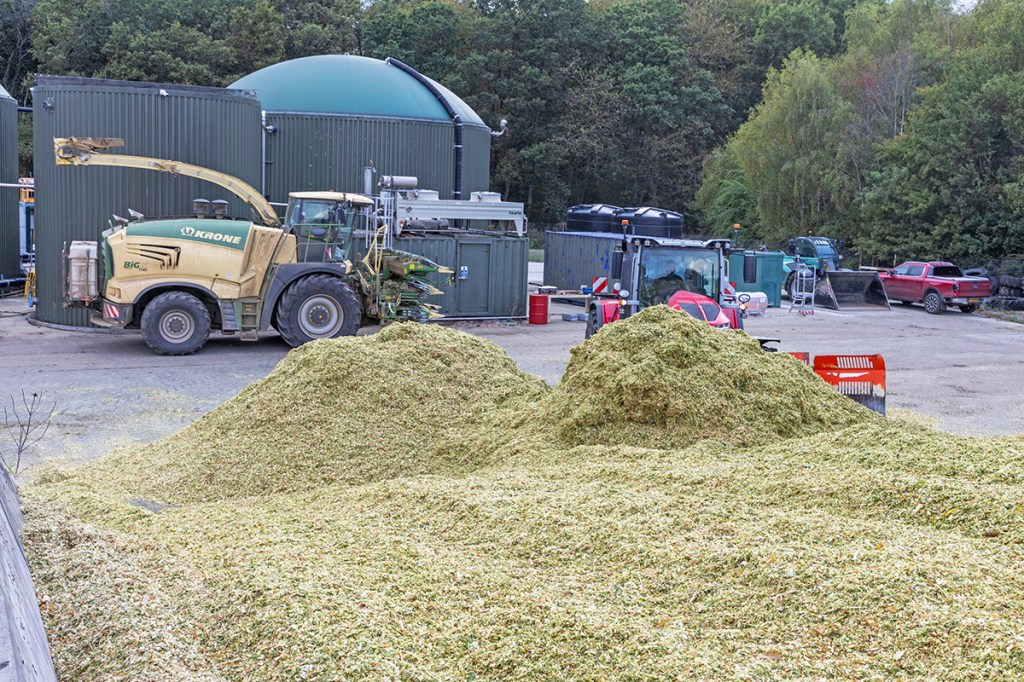
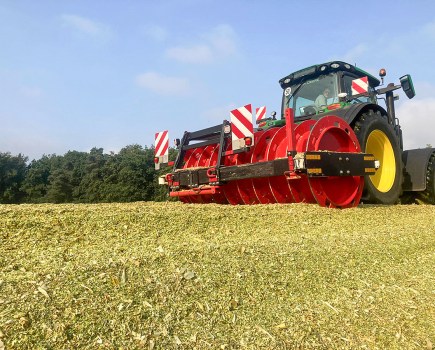
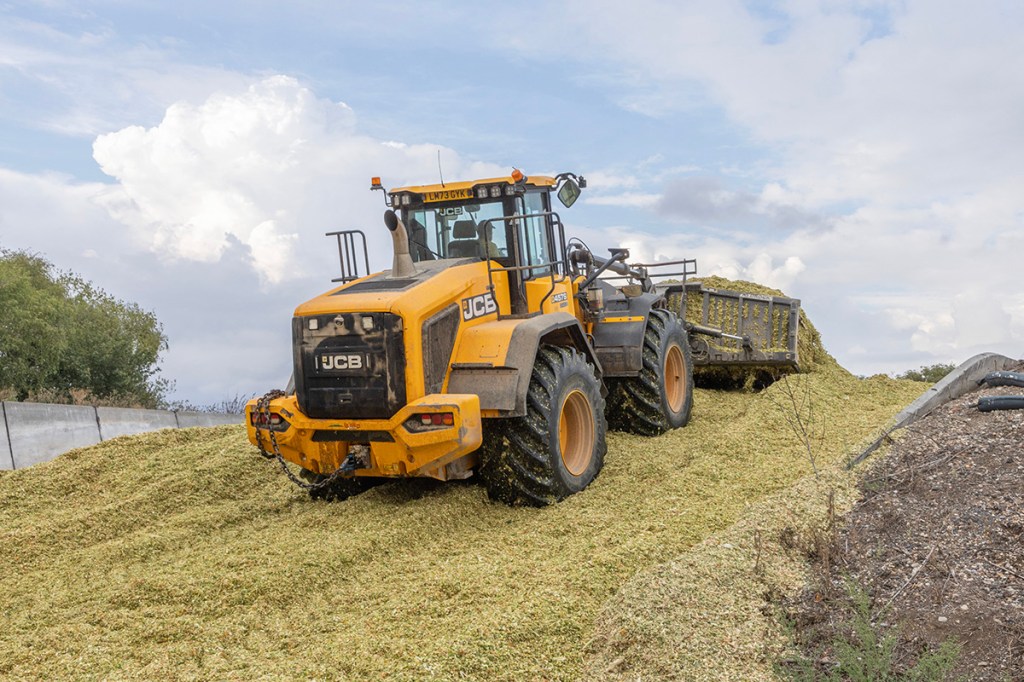
At the clamp, Joe’s team operates with a JCB 457S wheeled loader and 4.80m Redrock folding fork and for this season, a hired-in Massey Ferguson 9S.425 operates in support, complete with a Holaras folding maize blade and rear axle ballast.
“The 20-tonne 457S could keep up with both foragers, but the clamp would be under serious pressure, and consolidation would suffer,” he says. “Better to have some capacity for rolling and pushing, and the 9S has proved to be a great bit of kit to share the burden.”
Where the firm had previously operated a Fendt 1050 on the clamp with on-the-move tyre pressure adjustment, Joe says this is an area where the MF loses out.
“VarioGrip has been a great feature for us,” he says. “But having a big shovel is far more beneficial to our operation than on-the-move tyre pressure adjustment. It’s a compromise we’re happy to accept, and with that 16ft fork, a 60-cube heap of maize will disappear in three pushes.”
Communication
With a WhatsApp group keeping all silage team operators up-to-date with progress, the shovel driver often takes on the responsibility of planning trailer routes to ensure smooth running during harvest.
“We try and avoid routes that need to use passing places, so we can haul the shortest distance loaded, then return to field on a different route – longer if needed,” he says. “And by keeping both foragers together in the same field, trailers can choose which one they go to.”
“It does boost productivity, because if two foragers are in different fields, you can guarantee that all the trailers will go to one forager and be queuing, while the other forager will be stopped and waiting for trailers.”
Dropping grass
Grass gets an equally planned focus of attention, despite the acreage slipping down, though the maize workload is increasing year-on-year. Mowing is now the domain of a Krone Big M 450 to take over from a tractor and triple mower combination.
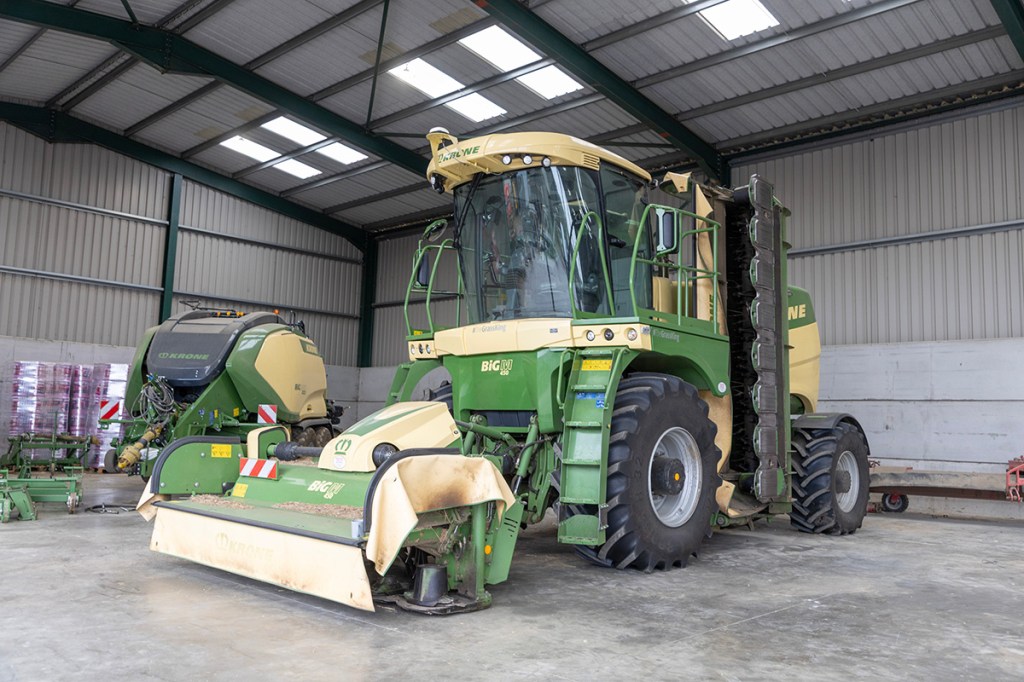
“If you want output, you do need power, and a Fendt 936 with a set of triples has been our mowing rig of choice,” he says. “But the self-propelled mower is far more cost-effective, and it’s output is useful at 30 acres/hour.”
He says that such a tractor and triple mower combination will cost the wrong side of £400,000, and the tractor alone will cost £40/hour plus a driver and fuel.
“Buying into an ex-demo Big M to cover 1,000 hours of mowing is a far more cost-effective route,” he adds. “Grass is grouped, so we don’t need to rake – just chop and haul.”
Home from home
The firm covers most of East Anglia, and travels west as far as Northants and Oxfordshire, and reaches down into the south east, with crop to harvest in Kent.
It’s a process that needs a full support package for a team that can spend weeks away from home. With a serious nod to welfare, Mr Williams bought a refrigerated artic trailer and through the farm workshops, turned it into portable accommodation with the construction of three hydraulic slide-outs on each side, boosting living space.
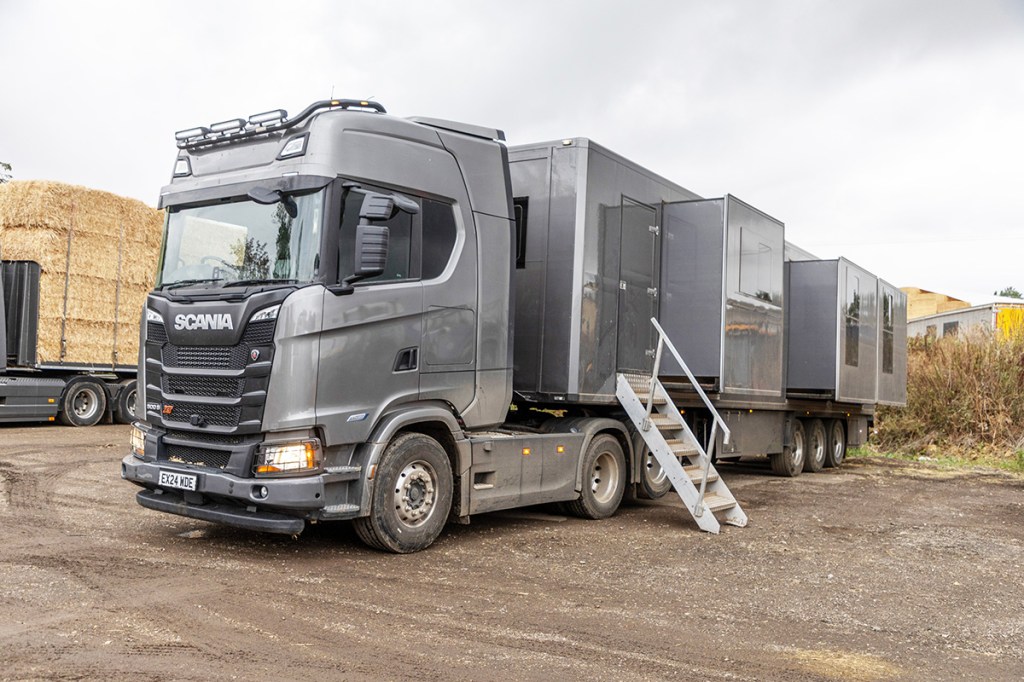
“Our mobile accommodation trailer can sleep eight, it has shower and bathroom facilities, plus a living area, kitchenette and Starlink,” he says. “It’s important that the team has somewhere clean and tidy to rest, when working away from home, rather than find B&B’s, hotels or kipping in the back of a van – it’s no longer acceptable.”
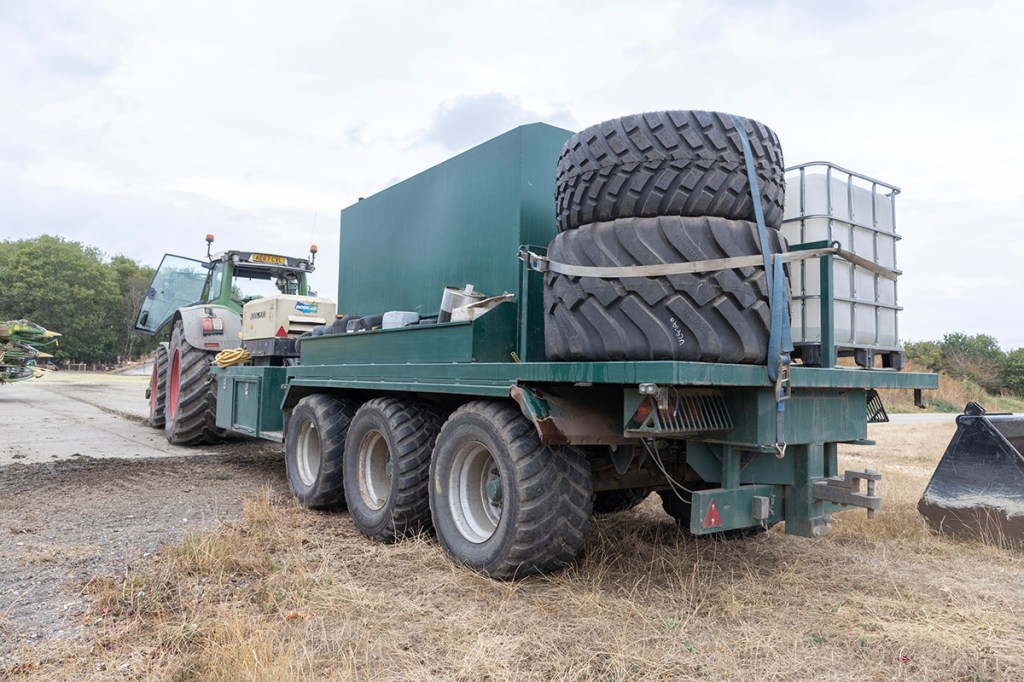
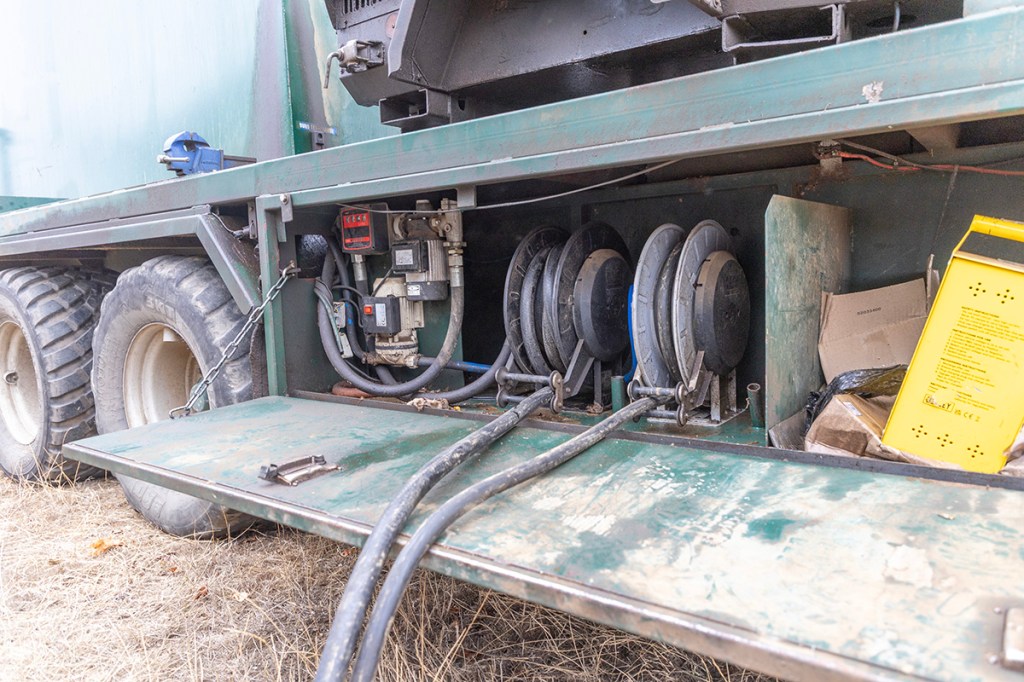
It’s not the only aspect of mobile support that the silage team counts on. The firm also runs a comprehensively equipped, tri-axle field-service trailer too, hauled by a Fendt 939. On the front linkage is a hydraulically-driven road brush, used to clean-up local roads once the silage team has moved on.
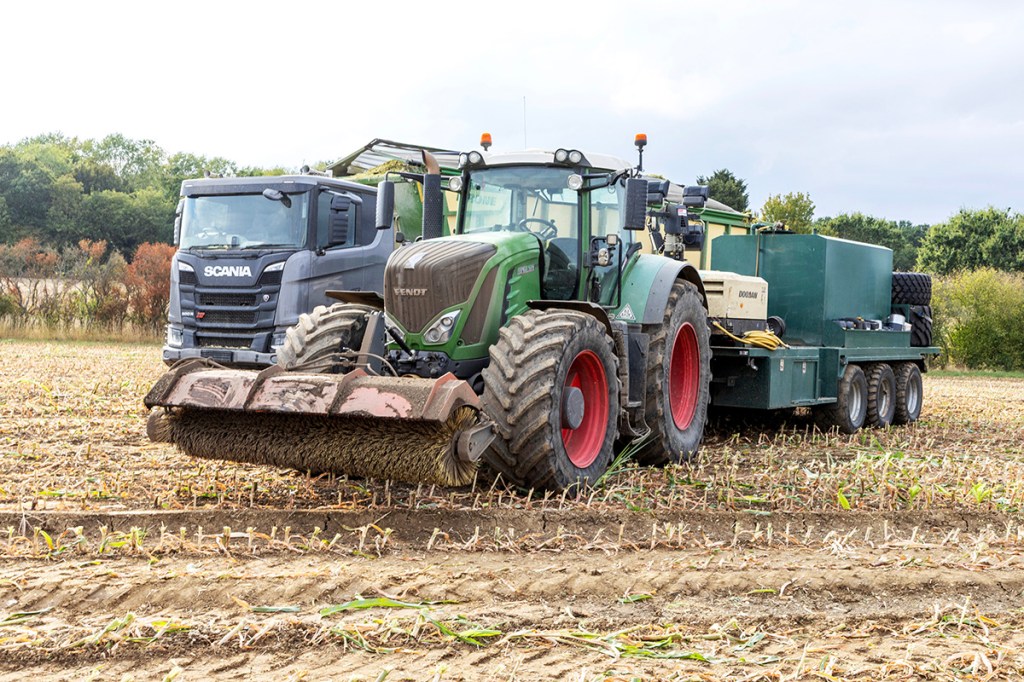
The trailer carries a Doosan road compressor, generator with integral telescopic lighting tower, plus replacement wheels and tyres.
“Given the distances that the team travels, we do need to be self-sufficient,” adds Joe. “And that means having plenty of diesel, an IBC of diesel exhaust fluid, tools, spare parts, greases and oils ready to use.”
Summary
Detailed planning and communication holds the key to unlocking ever more efficiency for this well-oiled and well-travelled silage-making machine. With a keen eye on logistics, telematics, machinery movements and support, this is one outfit that knows what it takes to keep the wheels turning, while managing the variables. It needs more than just reliable kit, and Joe Williams has gathered up a good team of operators that are able to think on their feet, to repeatedly pull this off.
Geoff Ashcroft
For more up-to-date farming news click here and subscribe now to profi and save.