

The British manufacturer has come a long way since developing its first self-propelled sprayer in 1981 as we discover on a recent visit to the factory in Rutland.
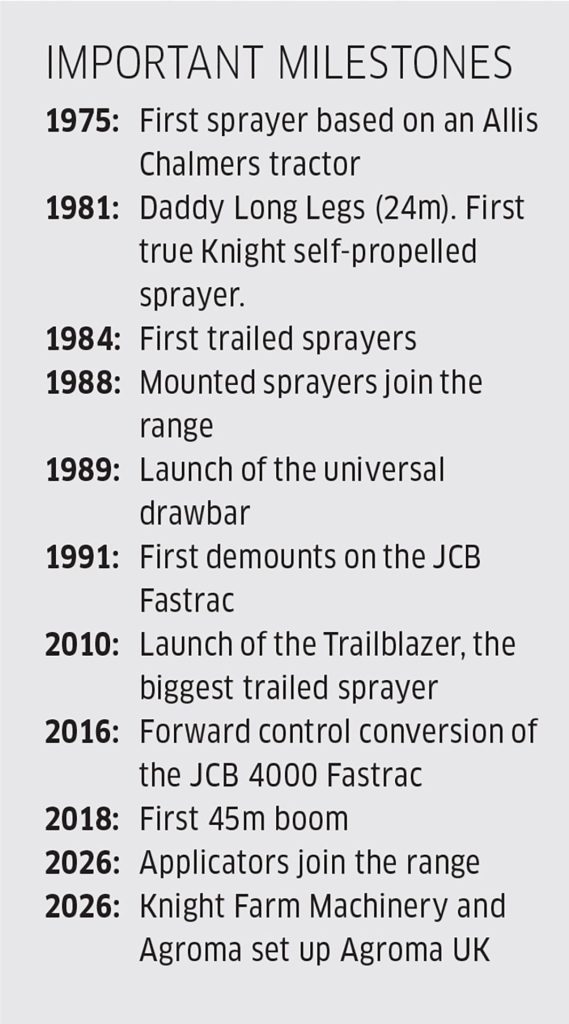
While best known for its yellow crop sprayers, Knight Farm Machinery has built all sorts of weird and wonderful machines over the years, including a harvesting platform for pumpkins and de-icing machines for airfields. This variation also extends to Knight sprayers which include forward control Fastracs for climbing up silly hills in Scotland, and high-clearance sprayers for tall crops, such as maize, cotton, blackcurrants and even Christmas trees.
The family business first had a stab at making a self-propelled sprayer in 1975. This was based on an Allis-Chalmers ED40. Four years later, it began converting County Hi-Drive tractors to forward control units for Moteska. However, it was the 24m high clearance ‘daddy long legs’ that really put Knight on the self-propelled map. Developed in 1981, it was the answer to farms seeking a ground driven alternative to the aerial spraying of tall crops such as OSR and beans.
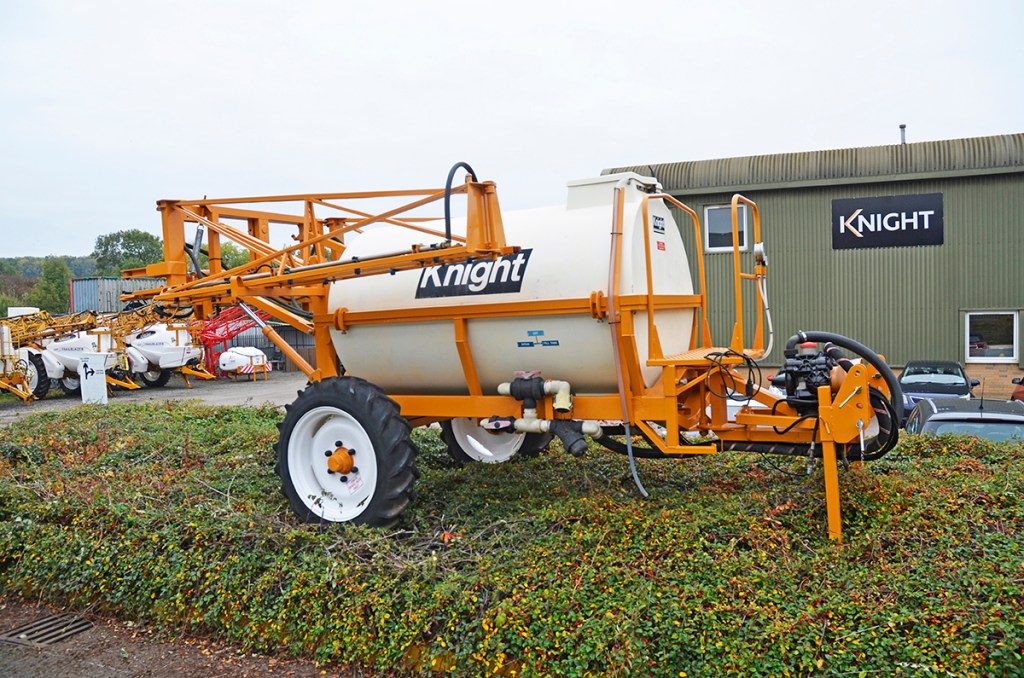
After moving to a new site near South Luffenham, Oakham, in 1996, work began on the Crusader, the first true Knight self-propelled sprayer. “All previous models were based on a tractor,” recalls Brian Knight. The Crusader’s cab was sourced from France, the 150hp engine was a Perkins, and Poclain hydraulics and the first model had a 3,000-litre tank.”
Inside the plant
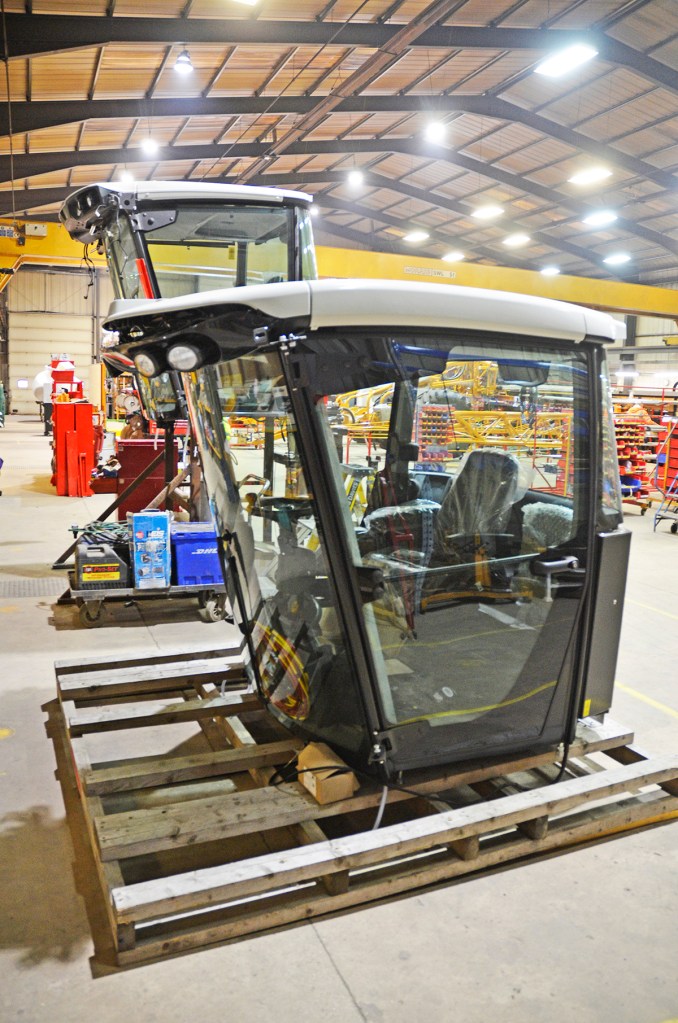
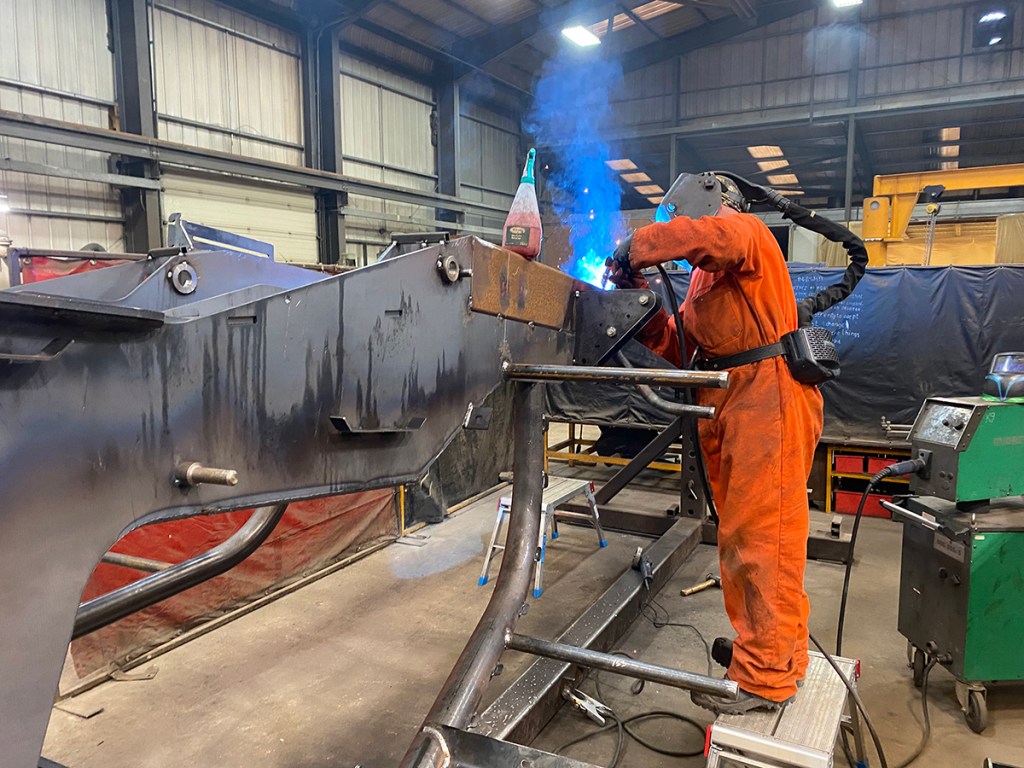
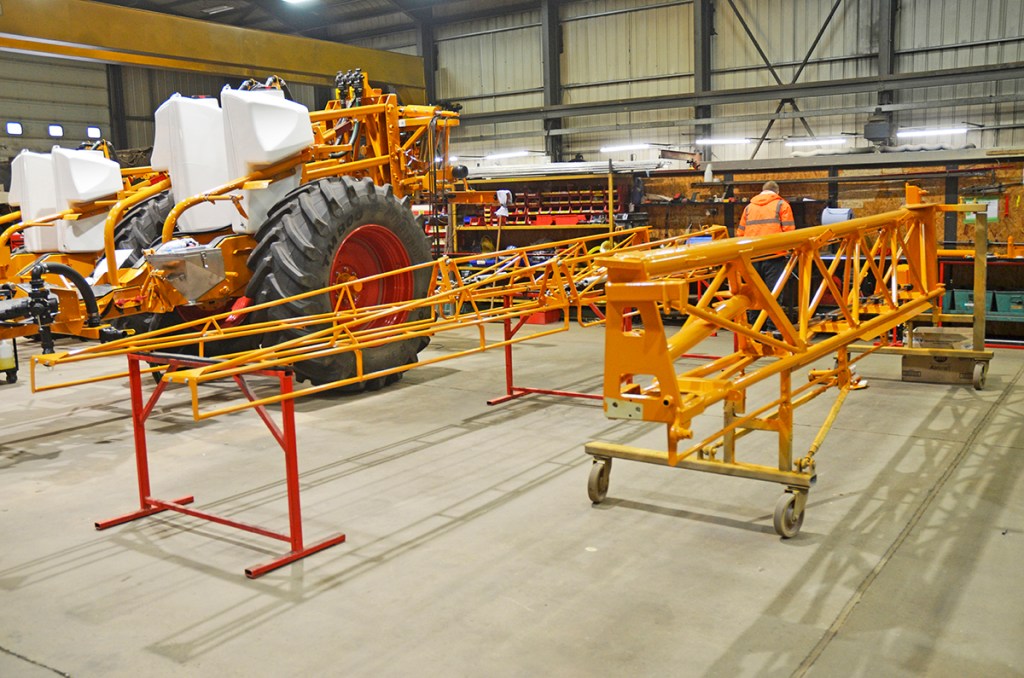
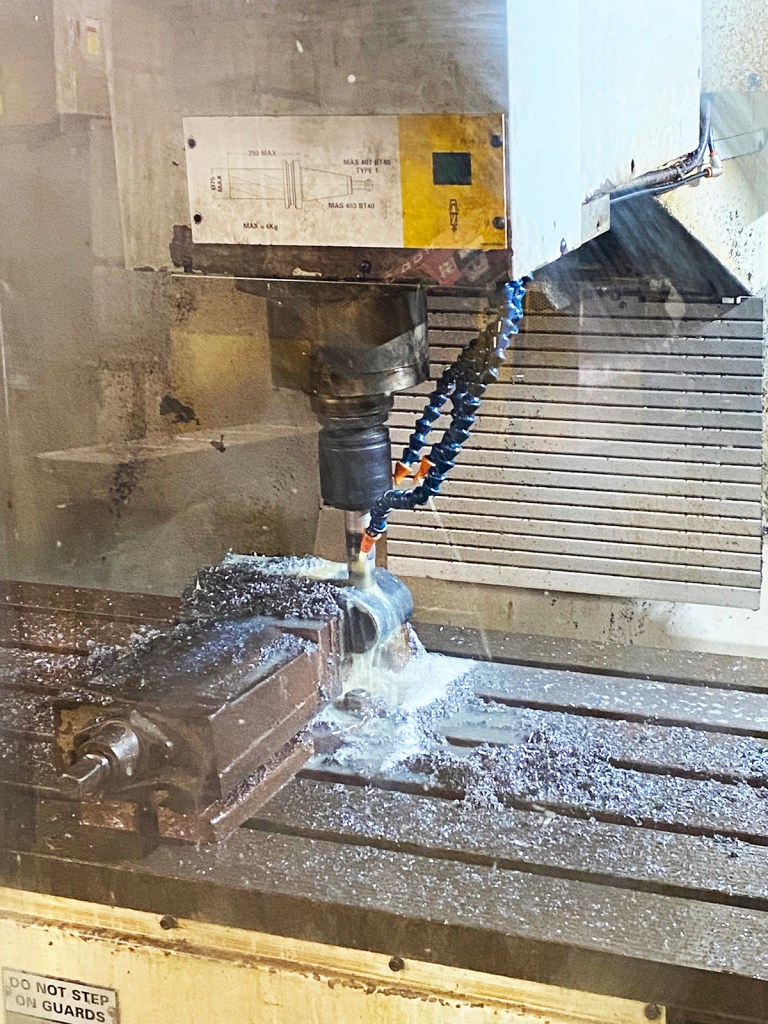
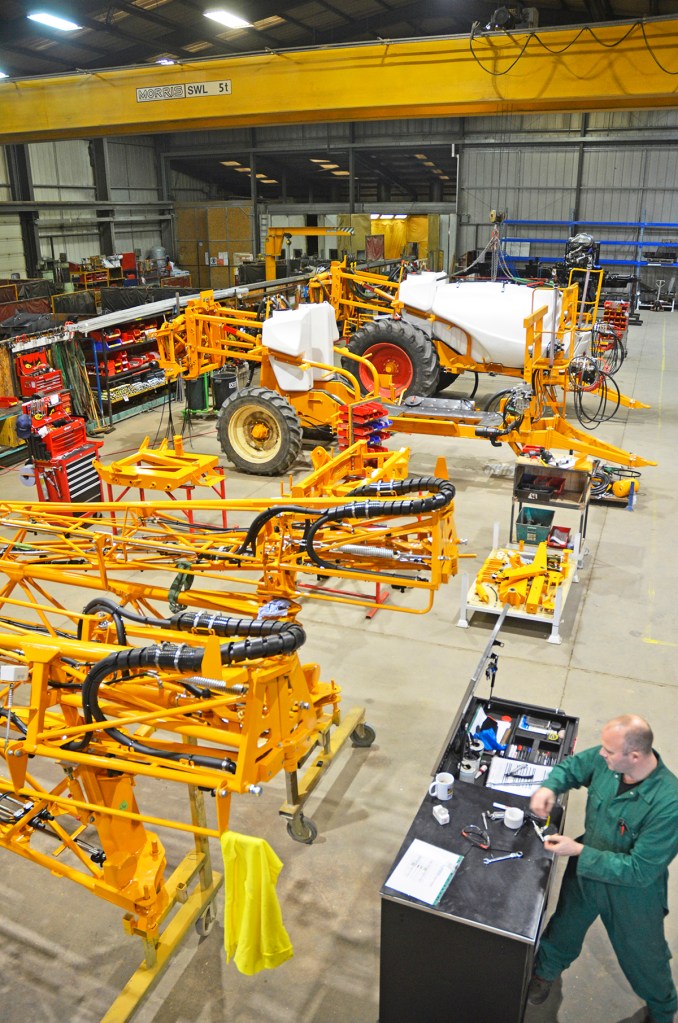
Our tour of the site began in the fabrication building. Spray tanks, wheel motors and axles, are all outsourced, while all key components, such as the chassis, drawbar and boom, are all made in-house.
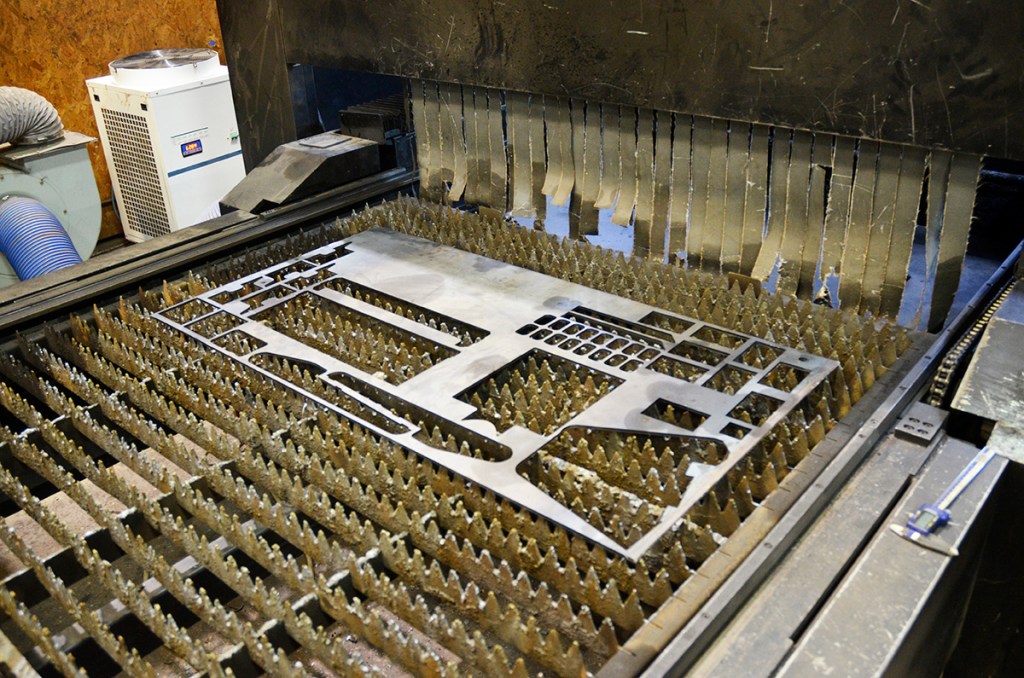
Mild steel is cut by a laser, the 3.5m x 1.5m bed of which is large enough to accommodate two sheets. During busy periods they can load one sheet for cutting and then unload the finished one. While capable of handling steel from 0.5mm to 15mm thick, standard stuff is usually no more than 10mm.
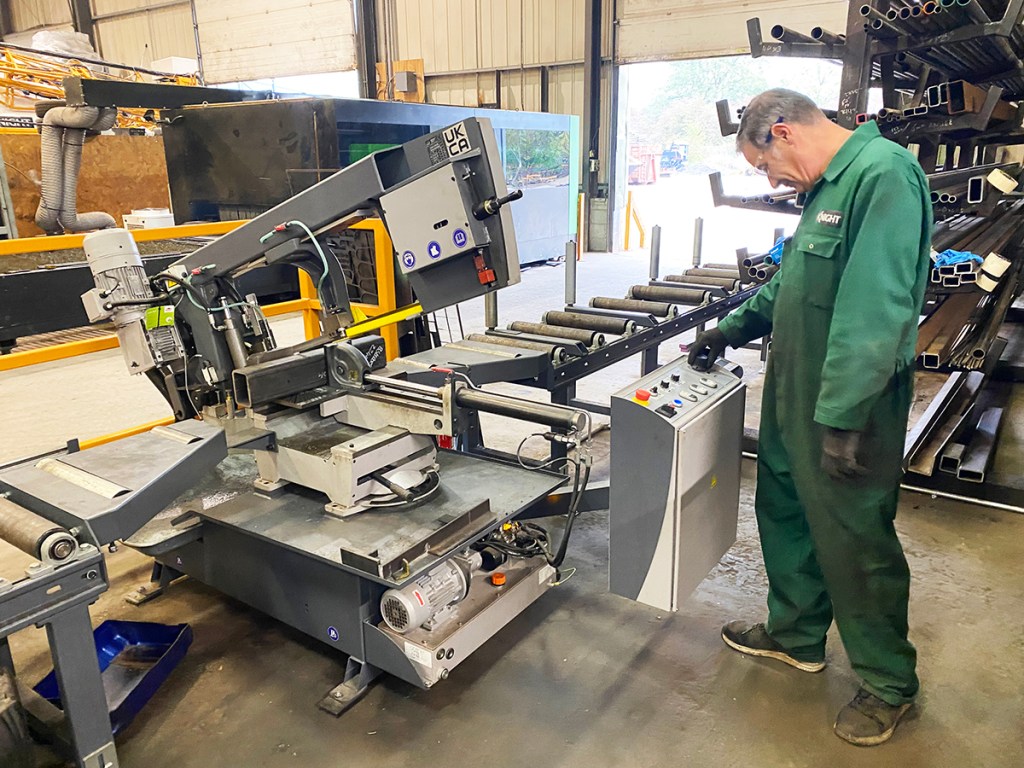
The plant’s 20-year-old bandsaw was recently replaced by a new and much faster one. Cutting all big chassis rails and 5.0m lengths of boom tubing, the hydraulic jaw on the new saw can cut in both directions and has a digital back stop on it. The semi-automatic programmable saw next to it cut lots of different lengths of 40 x 40mm box section. Once loaded, it feeds itself automatically, cutting a whole kit need for a spray boom.
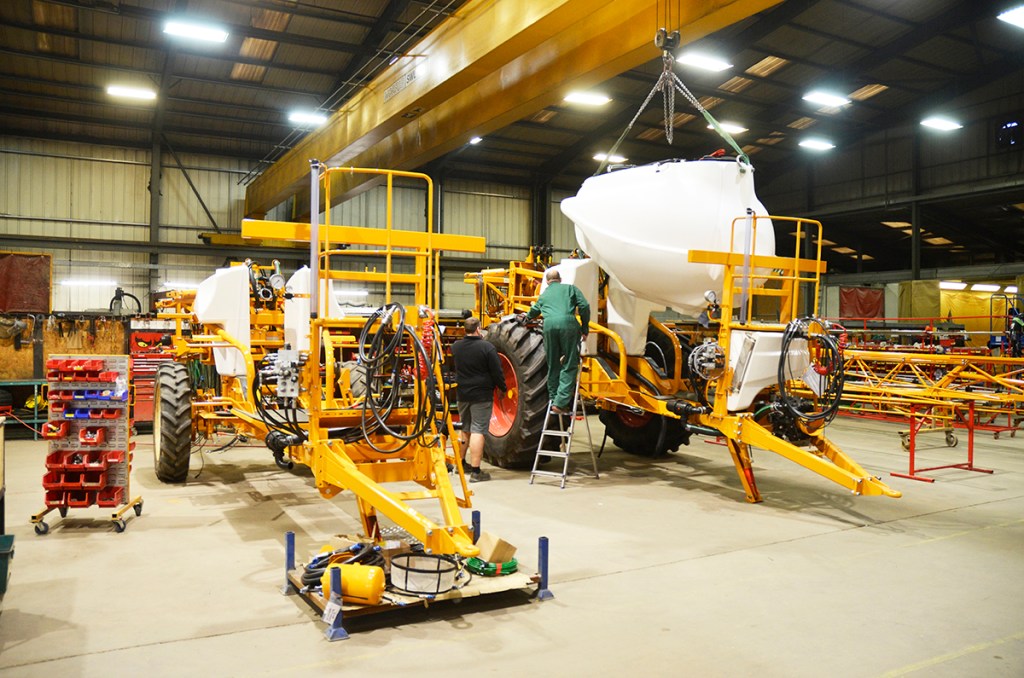
We also saw the chassis bay where parts are pieced together. Here the box sections cut on the band saw and profiles from the laser cutter are brought together on a jig. The process starts with the chassis rails to which all the pieces of the puzzle are added. There are jigs for different machines and two sizes for trailed sprayers.
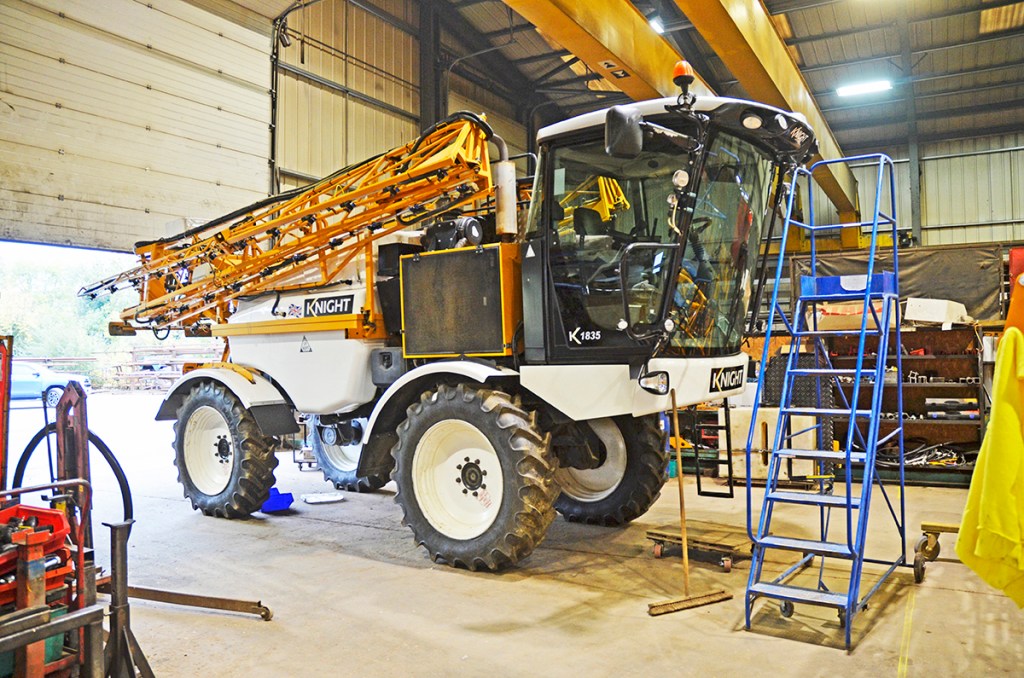
Chassis are built from the ground up inside the 3,000m² and 1998-built assembly building. Trailblazer (KT) sub-assemblies lined most of the eight bays at the time of our visit.
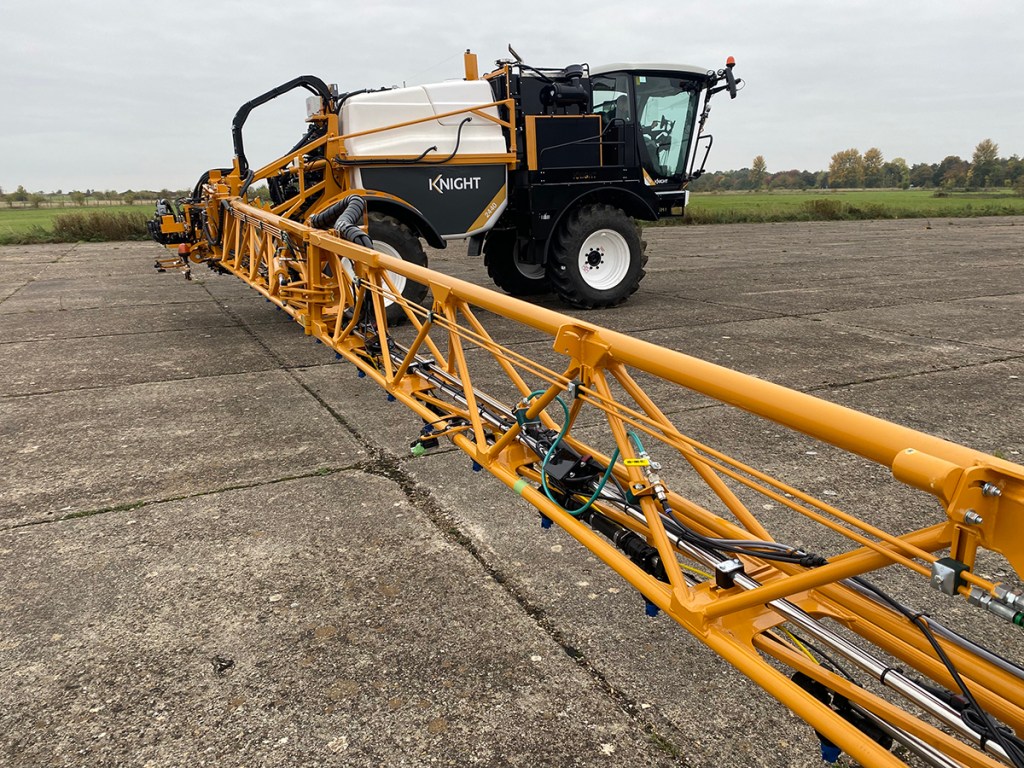
Trailblazer tanks are all made in Italy, but those used for self-propelleds are sourced locally in the UK. One that caught our attention was an 8,000-litre tank going onto a 36m Trailblazer. The largest so far from the company, the chassis was modified to get it to fit. The first of these super-sized Trailblazers is destined for a British customer.
The tank goes on before the boom and when this is done, all electrical and function testing is carried out, after which it is taken outside, the tank filled with water, and the spray lines tested.
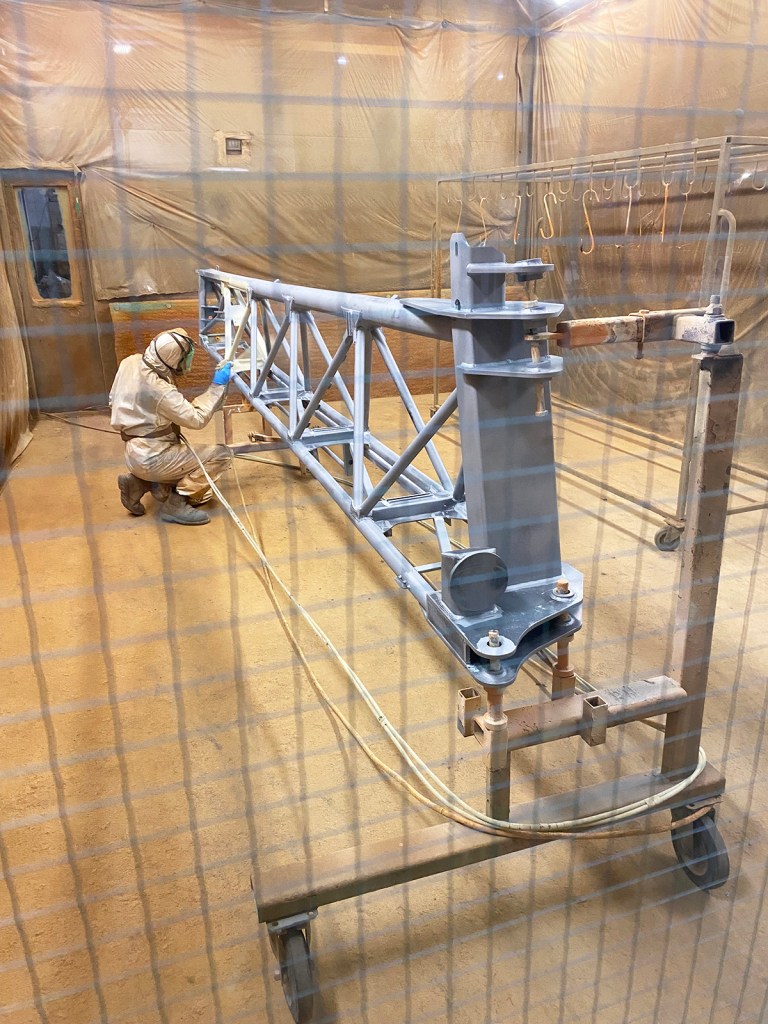
We did not see one, but as well as supplying Belgian firm Beyne with machines, Knight also sends the odd 4,000-litre/36m machine to New Zealand, Japan and Isreal. The Japanese machines are interesting. These are shipped with rear-mounted four-cylinder engines, while the six-cylinder 174hp Perkins motors in all Knight sprayers is positioned behind the cab.
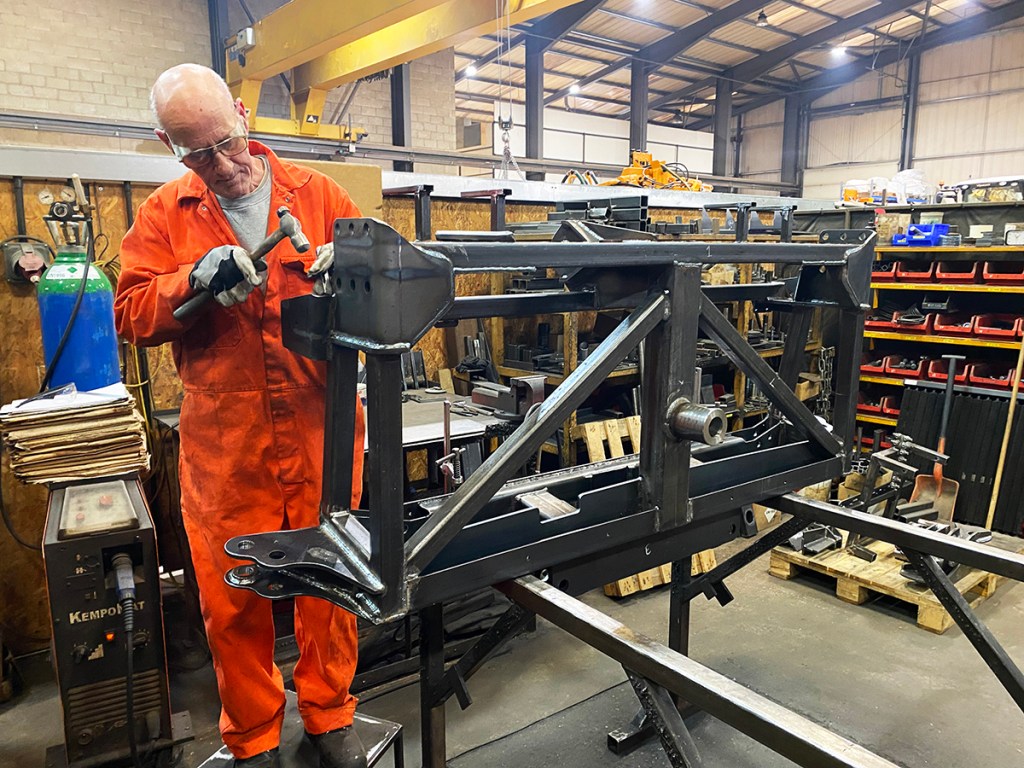
Knight still make booms for third parties, and since 1998 has delivered several thousand of them to run on another brand in North America. It also makes the front mounted alu booms that accompany Japanese machines.
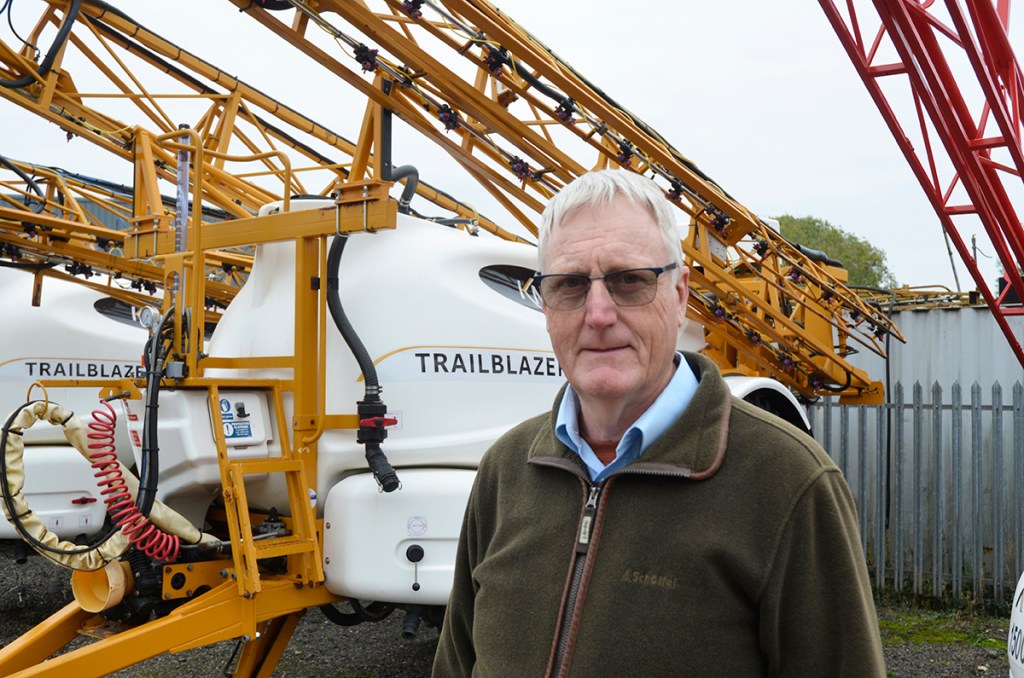
Appointed nearly 15 years, the Israeli dealer mainly takes self-propelleds. The first trailed sprayer was delivered in 2025, and all machines for Isreal are painted red.
3,000 new sprayers a year
Precise numbers were not being discussed, but several thousand Knight sprayers have been produced since 1984. “At the peak when we moved here the total UK sprayer market was around 3,000 units a year,” recalls Brian. “We were at the cutting edge of development and built six new sprayers a week. These were mainly trailed 24m machines with 2,000-2,500-litre tanks.”
Today, the UK market has fallen to less than 1,000 units a year, and 36m/4,000-litre machines are the most popular. Similarly, the head count at Knight is also down from a staff of 50 in the 1980s to 20 today.
Brian confirms that current production numbers are not high enough but adds that they have numerous ideas and concepts. “It is a lot less stressful to develop these than it is to build a machine and try and sell in what is currently a tough market.”
Future Knights
Despite the lower volumes, Brian is confident for the future of the family business. Daughter Clare Slane already works for the company as does son Matthew. “Both are engineers with degrees. This is important,” he stresses.
Knight holds around 20 patents. One innovation that is common today, but pioneering at the time, was the hydraulic electric steering drawbar in 1991. Other patents were secured for a hydraulic breakback system (2005), MAXImizer fluid circulation system (2007) and Smart-Inject chemical injection nozzle (2024).
Tank capacities continue to increase, and Knight has made a few 6,000-litre/45m trailed Trailblazers. Continuing to innovate is also important, and the development of its first 8,000-litre trailed sprayer is one example. Main news this season includes the new KT trailed range and the new KSP self-propelled line-up.
Our visit was just before Knight switched to the new dark grey tanks, and some ranges gain revised capacity options. The latest KT trailed models are now available in sizes from 3,600 litres right up to a new 12,000-litre design, while the new KSP self-propelled range spans 3,500-8,000 litres.
SmartRinse is also new. Previewed at LAMMA, the fully automated sprayer rinse system ensures that when the empty sprayer leaves the field that the tank, pipework and nozzles are fully rinsed.
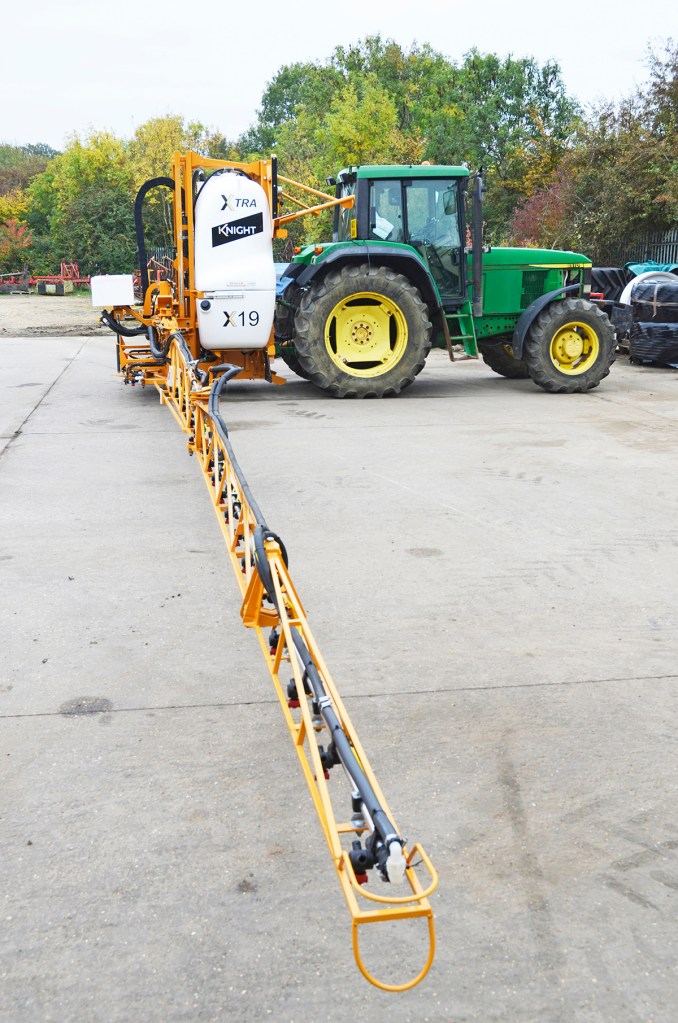
The firm’s recent entry into the liquid applicator systems market with the new KA range based on its sprayer front tanks. Available in 1,300, 1,500 and 1,900-litre capacities, they are all designed for precise application of crop nutrition and protection products via rear mounted equipment such as drills, seeders and potato planters.
In addition to making its own sprayers, Knight recently teamed up with Greek manufacturer Agroma. Called Agroma UK, the joint venture imports and distributes the Greek company’s mounted, trailed and specialist sprayers via an expanded sales team through established and new UK and Ireland dealers.
Based at Knight HQ in South Luffenham, as well as a selection of new Agroma machines and spare parts, the site also provides technical support, and hosts product and technical training.
Steven Vale
For more up-to-date farming news click here and subscribe now to profi and save.