
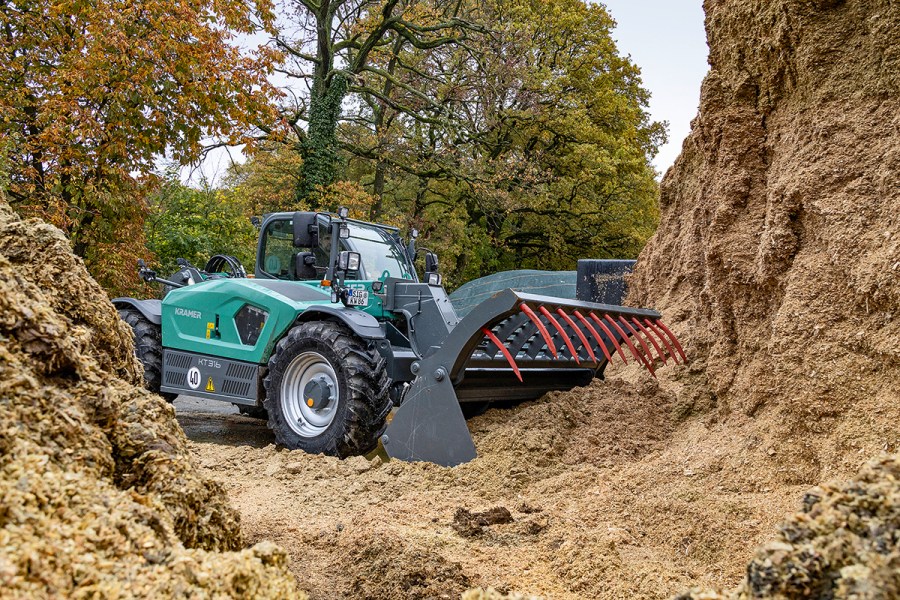
The KT316 bridges the gap in the Kramer range between the compact models and those with a lift height of over 7.0m. It uses features from both, with their respective good and bad points, as we found out.
KEEPING IT BRIEF
- The Kramer KT316 has a lift capacity of about 3.1t and a 6.0m max lift height.
- Hydraulic performance depends on engine revs.
- The telehandler is nimble and has a nippy engine.
Anyone sitting behind the wheel of a KT316 will soon learn that they need to keep a slight press on the foot throttle to extract the full potential out of this little telehandler. It is something you get used to, just as you do with the convenience of the SmartAttach system and other features. But more on that later.
Key stats
First things first: what will it lift? Like most telehandlers the clue is in the model name; Kramer Telehandler, 3.1 tonnes and a max height of 6m. Nice and simple.
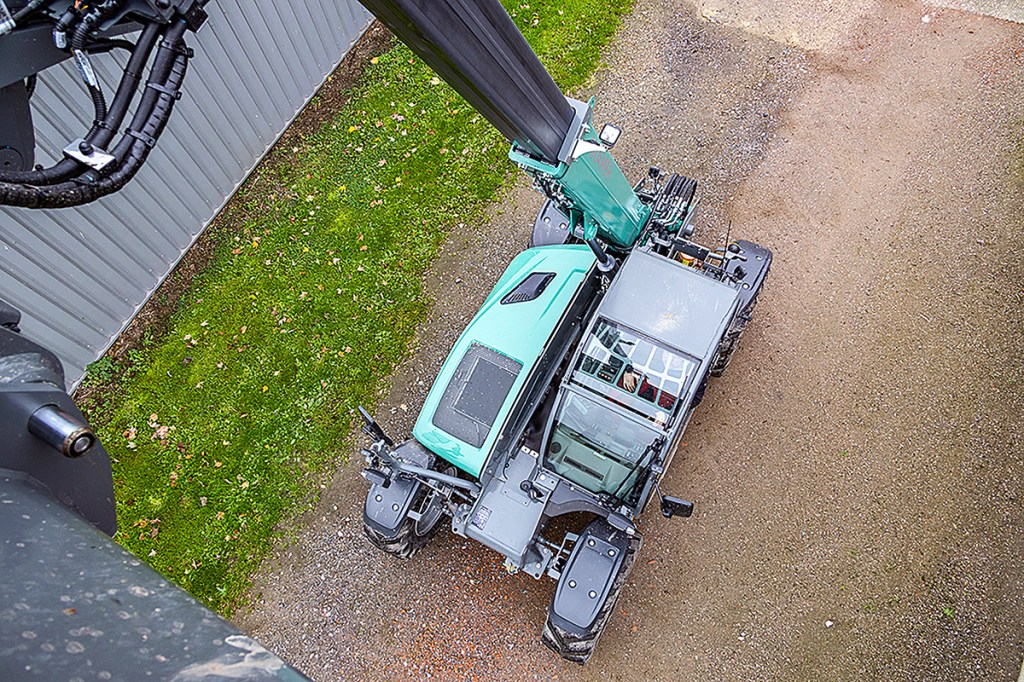
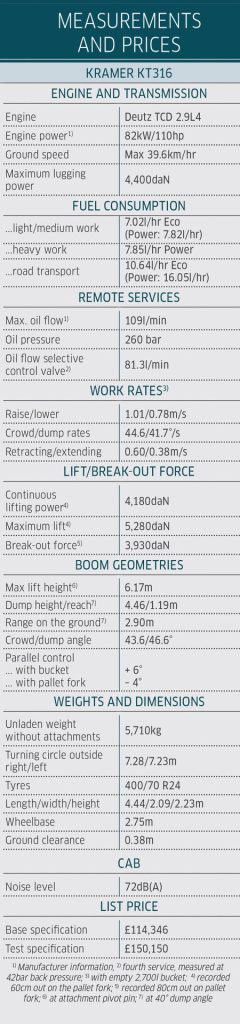
We did our own test measurements which showed a maximum lift height of 6.17m at the pivot point of the headstock. With a 40° dump angle, the multi-purpose bucket still achieves a 4.46m dump height. The max dump angle is a very good 46.6°. But be very careful: when the supplied 2,700-litre big bucket is fully tipped, it will touch the front wheels when lowering.
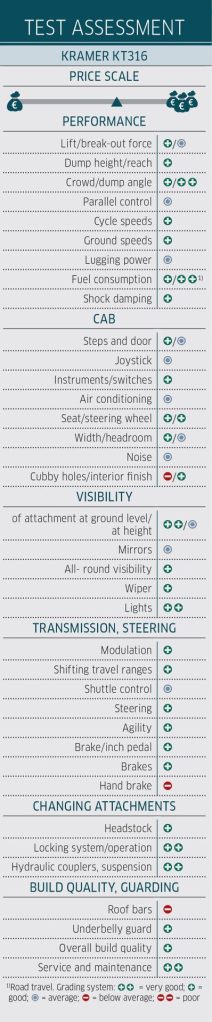
The handler’s boom, has a cross-section of 215x250mm, extends by just over 2.0m and during our tests managed a maximum lift force of 5,280daN (at a height of 4.0m). The limiting factor is the attachment cylinder. The breakout force was 3,930daN, and the lifting force across the lift range measured 4,180daN — all acceptable results for this size of handler.
This particular Kramer model is pitched at farms which need to work in tight spaces but need more muscle than the smaller KT276 can provide. To get that performance, the operator has to keep the revs up: the KT316 uses a 109l/min gear pump for fast load cycles. With cold oil, this could stall the low revving engine. Kramer counters this with an “anti-stall system”, a nifty valve that limits the oil pressure to 150 bar when the engine is idling, restricting lift and breakout forces to about 1 tonne.
As the revs increase, so does the maximum pressure of the hydraulics. Full power is available from 1,400rpm. We’d really like to see the engine speed increase automatically when the hydraulics are used, something that Kramer already does on some of its telescopic wheeled loader models.
We really liked the boom suspension, which in auto-mode kicks in from an adjustable speed between 3 and 20km/hr.
Another comfort feature is the end of stroke damping on both the boom and attachment cylinders.
We also checked the parallel lift control. The multi-purpose bucket crowds continuously by 6°, which is excellent for preventing spillage. By comparison, the pallet fork tilts by 4° even in the lower third of the lift range, but it stays constant through the rest of the range.
Easy coupling
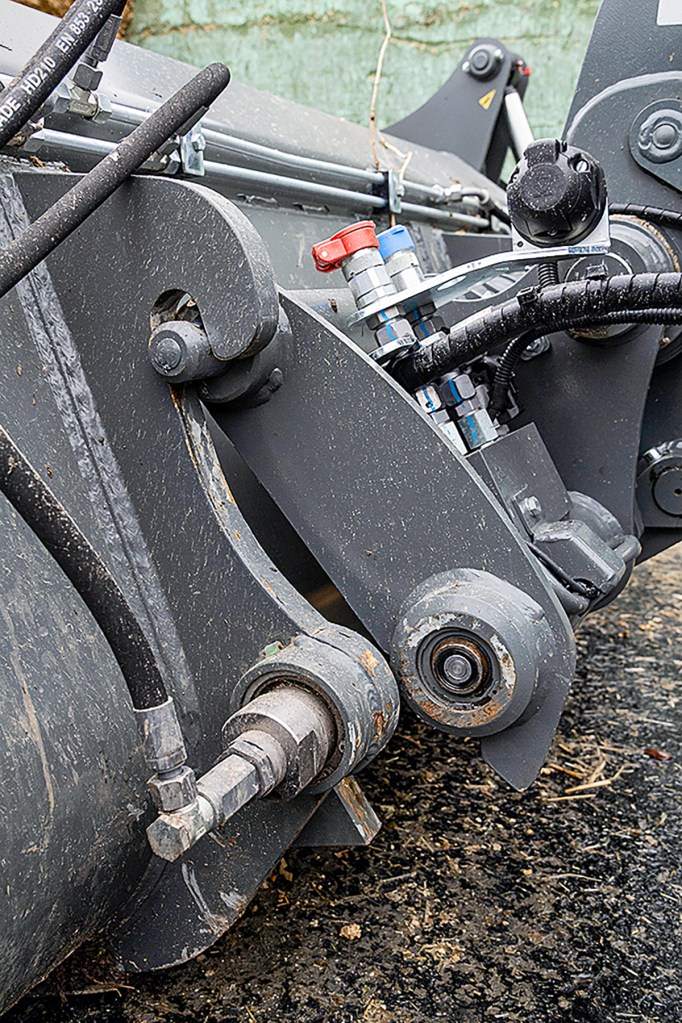
Kramer supplied our machine with its own quick-attach, but other headstocks are also available. As well as being treated to the hydraulic locking version, our KT316 had the optional, handy SmartAttach system. This makes putting on and taking off the likes of a shear grab a doddle; you don’t even have to leave the cab. Fantastic.
That said, a bit of common sense is needed – dirty hydraulic couplers should be cleaned beforehand. During our test, we regularly called on this self-coupling SmartAttach system and had no real issues. Using non-SmartAttach implements isn’t an issue, as the couplings on the headstock are far enough apart. We also liked the pressure relief button for the fourth hydraulic circuit, which sits out on the left side of the boom’s swan neck.
We measured a flow of 81.3l/min from the third circuit, which is spot on. A valve block distributes the oil flow independently of the load, allowing seamless operation of the different functions.
Working modes
The KT316 offers three work modes, with the last-used mode remembered when you restart. We mainly used the manual mode. There’s also stacking mode (automatically extends/retracts the boom during lift/lower) and bucket mode (crowds the bucket faster when lowering).
The machine also has a handy ‘return-to-level’ function and allows the operator to store a specific position for the crowd/dump cylinder — excellent.
Finally, on hydraulics, the KT316 uses a new combination of filters and tank design. This is reckoned to reduce any air in the oil circuit to minimise foaming. As a result, the oil tank volume for the 316’s transmission and boom hydraulics has been reduced from 80 to 38 litres compared to the smaller KT276. This means that the machine reaches operating temperature much more quickly and lowers maintenance costs.
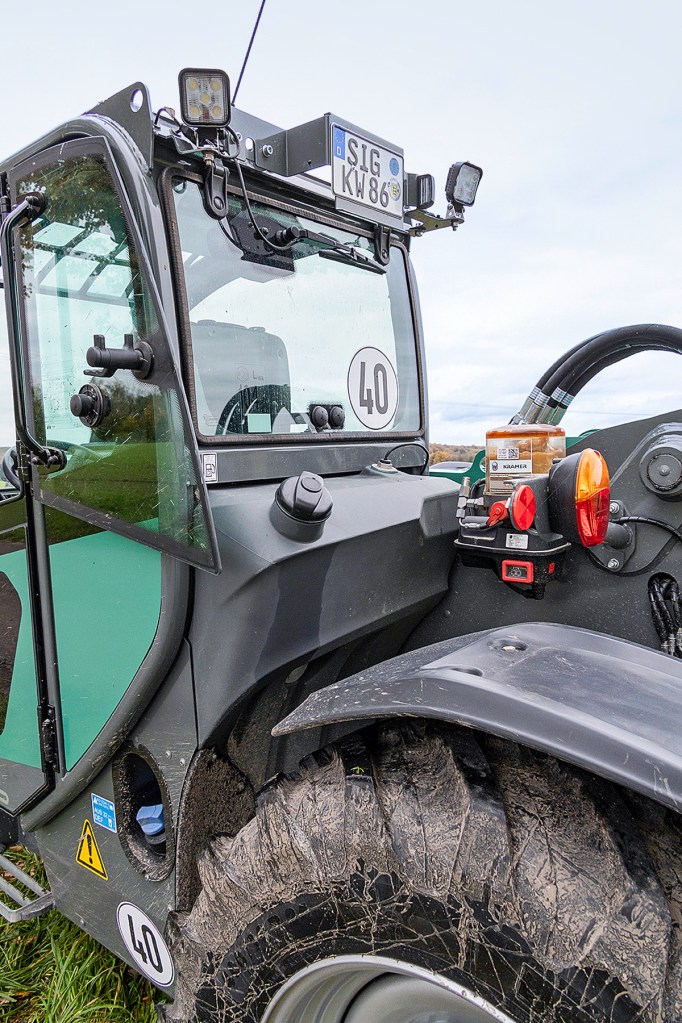
Less impressive is the fuel tank. It’s easy to access, behind the cab, but the short filler neck is lower than the highest point. As a result, the nozzle cuts off early and you can’t fully utilise the tank’s full volume.
Deutz engine
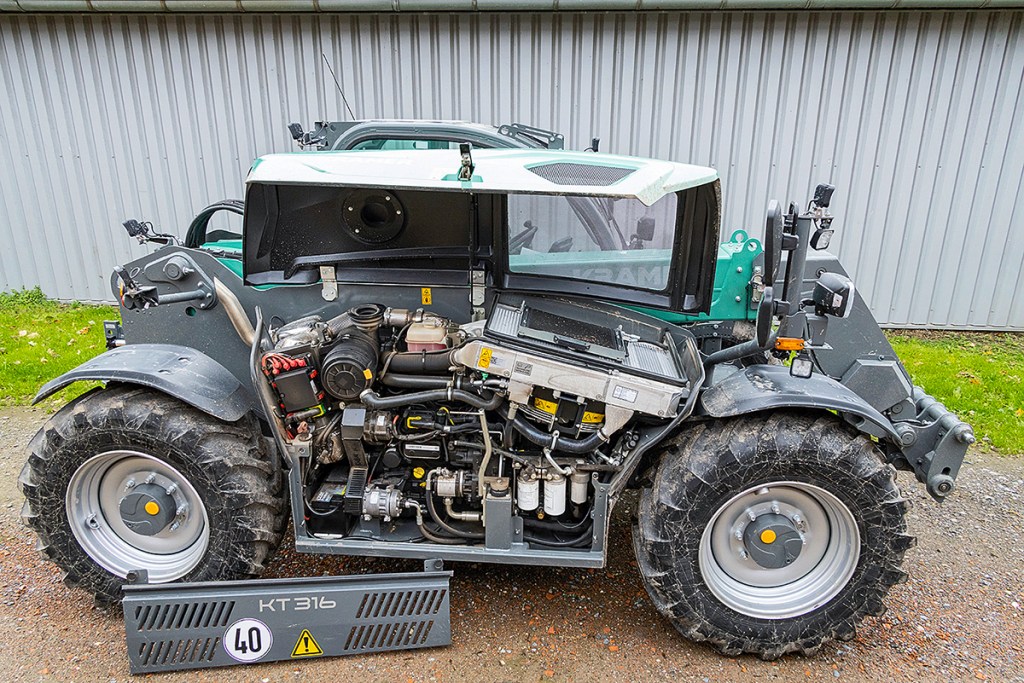
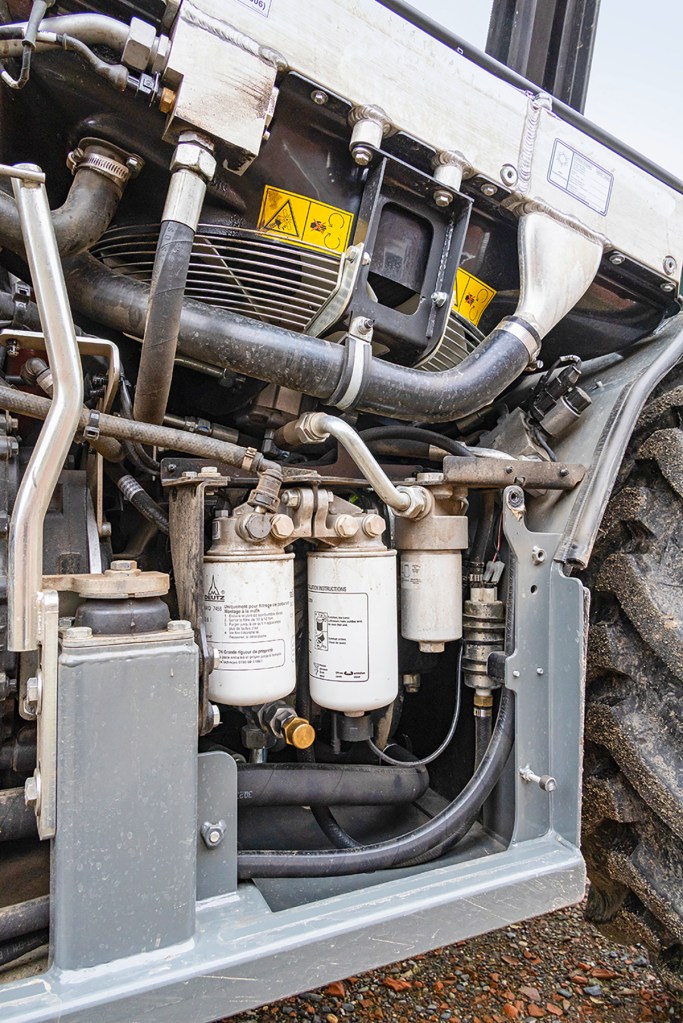
Under the wide-opening bonnet sits a Deutz four-cylinder, 82kW/112hp, 2.9-litre engine. An automatic engine shutdown is available as an option but sadly was not fitted to our test machine. The reversible fan is standard spec and is pretty much essential with the horizontal radiator layout. Service access to the oil filters is excellent.
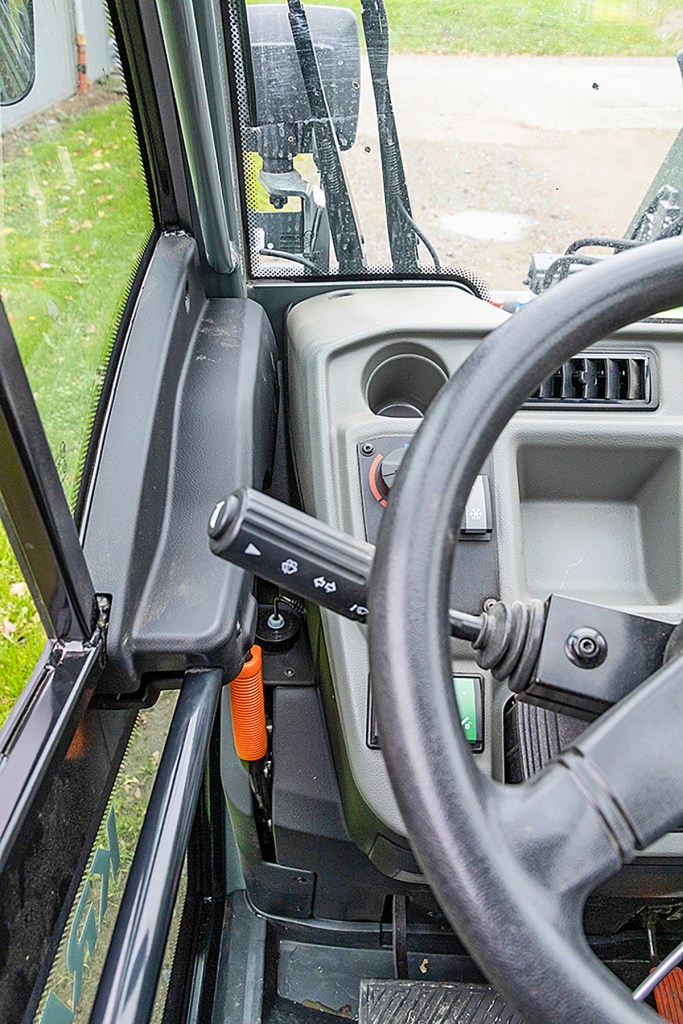
Speaking about accessibility, a quick note on the KT316’s handbrake: the engine will not start unless the handbrake is engaged. That takes a bit of getting used to, especially as the lever is poorly positioned to the left of the dash and is quite hard to see and reach, particularly with the door closed. Even its bright orange colour doesn’t help much. An electronic parking brake with auto function would be a significantly better solution, but Kramer says it would also be an expensive solution.
Nippy and frugal
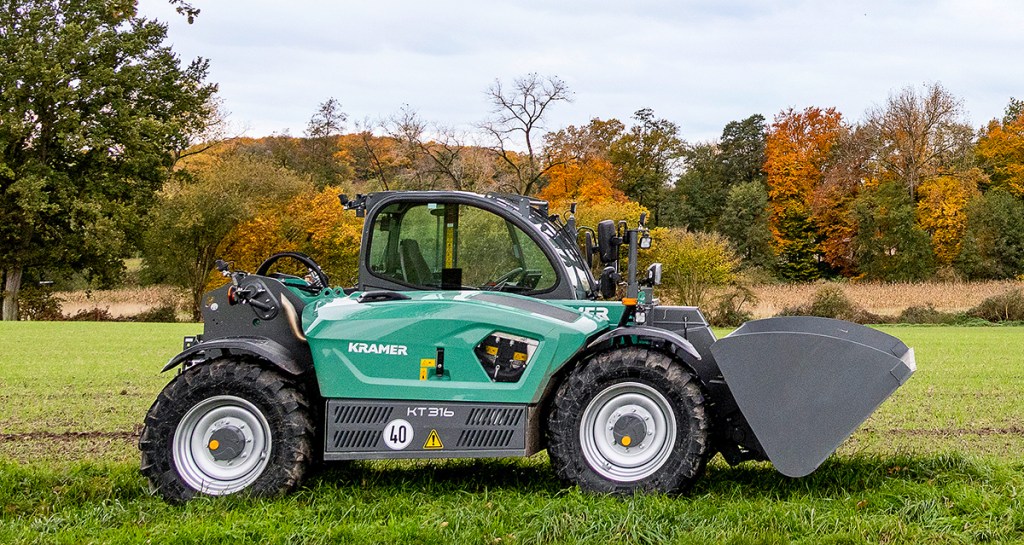
Kramer’s KT has a single-speed hydrostat transmission. In our tests, the drive felt lively with plenty of bite. And thanks to the engine speed reduction feature tagged as Smart-Driving, the handler reaches 40km/hr at a relaxed 1,600rpm.
The KT’s operator can choose between three drive modes: Power, Eco (softer revving, ideal for road work), and Constant Speed Drive (CSD), essentially a creep function for tasks like sweeping. The user can then adjust the engine and travel speeds via the two orange levers on the console.
During our time with the KT, the differences between modes was most noticeable on the road. In Eco mode, the KT316 used almost 6l/hr less diesel than when in Power mode. Even during light yard work, we enjoyed a 0.8l/hr saving.
A button allows the maximum speed to be limited — this only changes the pedal travel, hence speed modulation, not lugging power, which we measured at 4,400daN.
On handler modulation: our pre-production machine’s brake pedal had a slightly abrupt response. Pressing the pedal immediately disengages the drive, with braking force coming in slightly later. That makes inching operation difficult — especially as hydraulic performance depends on higher revs. And when starting on an incline, the handler always rolls a few centimetres, which is not ideal for precise loading operations.
40km/hr is only available with rear-wheel steering disengaged, whereas in four-wheel steer mode, it’s limited to 30km/hr. Steering modes can be switched on the move from a dial; the symbol flashes until the wheels are straightened through centre. Steering is light, though the pump is clearly audible. The driveshaft under the machine is tucked behind a belly plate and is maintenance-free — brilliant.
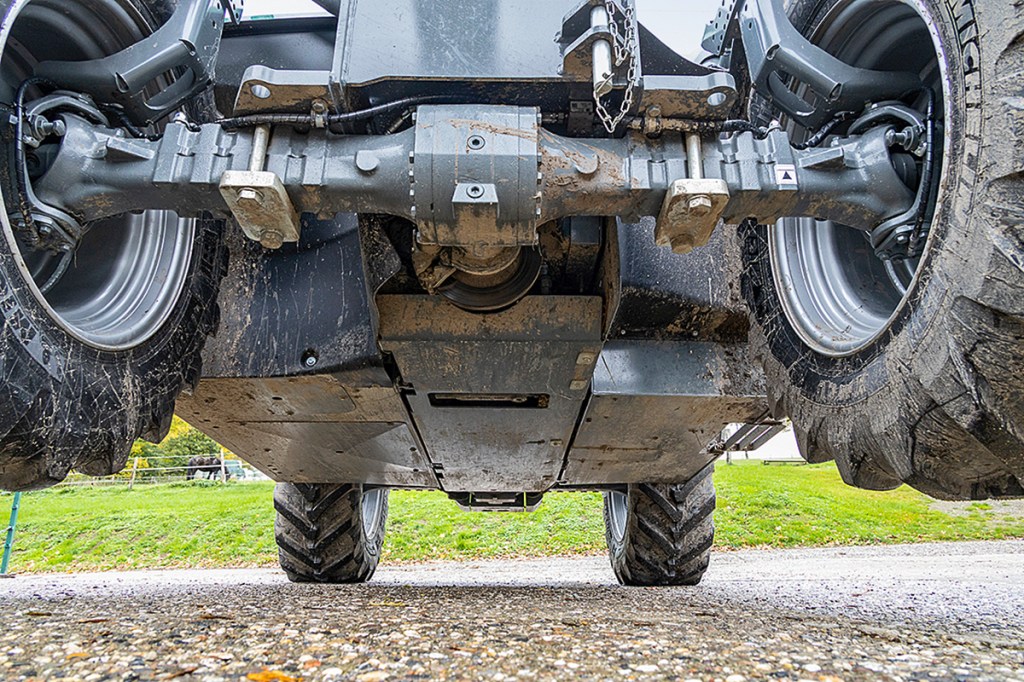
On the Dana-Spicer axles, Kramer fits a 100% differential lock on the front axle. It can only be engaged when stationary: press the button on the back of the joystick and apply the brake pedal. Only then is the dog clutch engaged. This is slightly fiddly, but it prevents driveline wind-up and tyre scrub in normal use.
More comfort in the cab
Inside the cab, unlike the smaller model, the KT316 only comes with the high-cab version as space is needed for the AdBlue tank.
The large door annoyed us. It lacks a gas strut so tends to swing open or shut when the handler is parked on a slope.
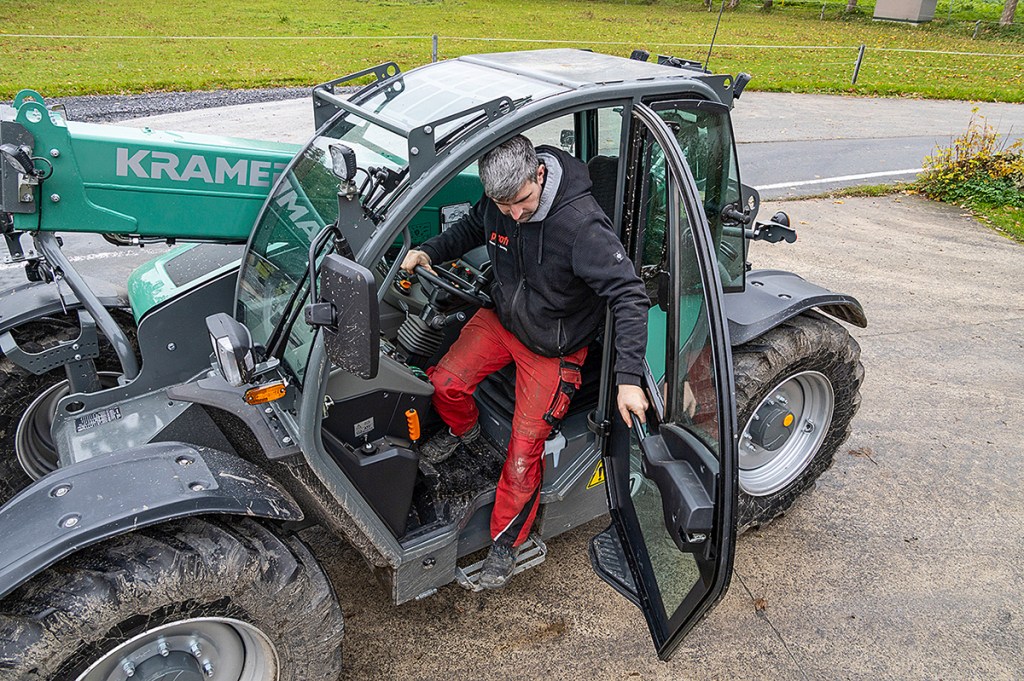
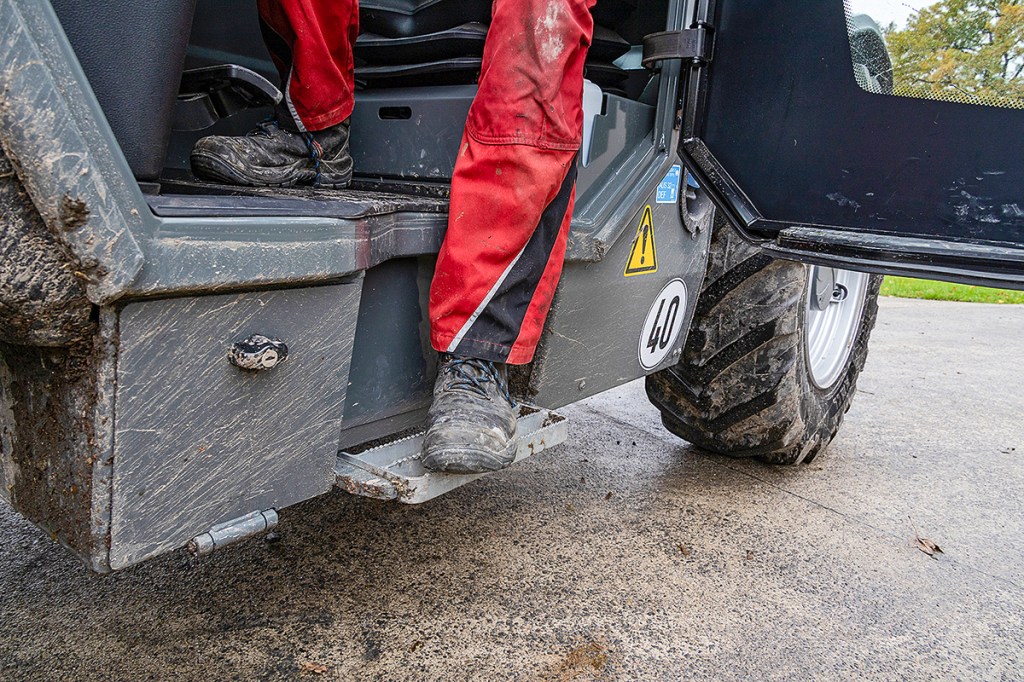
On the plus side, the recessed steps make getting in and out safe and comfortable. Once seated on the air-suspended Grammer seat, the operator will find a well-finished environment. The steering wheel can be easily adjusted for reach and rake using a lever.
The windscreen wiper sweeps a large part of the glass. The roof window is difficult to wipe when it gets fogged up: to save on the handler’s overall height, Kramer has opted to have the protective grille inside. The sun blind could also be better — it’s too short and too transparent. Otherwise, visibility from the cab is good, and the headstock carriage is pretty easy to see when changing buckets. The joystick, mounted on the fixed side console, is straightforward to use and the functions can be precisely controlled.
One point of some debate between the profi test team was the position of the direction change switch, which sits on the joystick right next to the button for telescoping the boom. Switching to reverse while retracting the boom requires a momentary pause as your thumb swaps between the two buttons.
Good controls
Labelling and reach of controls are excellent. A colour-coding system helps: red for safety functions, orange for drive control, green for the hydraulics, and grey or black for electrical controls.
The display shows operating information, such as fuel consumption, and allows the operator to set joystick sensitivity or flow rate for the fourth aux. Navigation with the rotary push dial works well and the menu layout is clear. The screen also shows the rear-view camera image, but you cannot click to see the image; it is only shown when reverse is engaged.
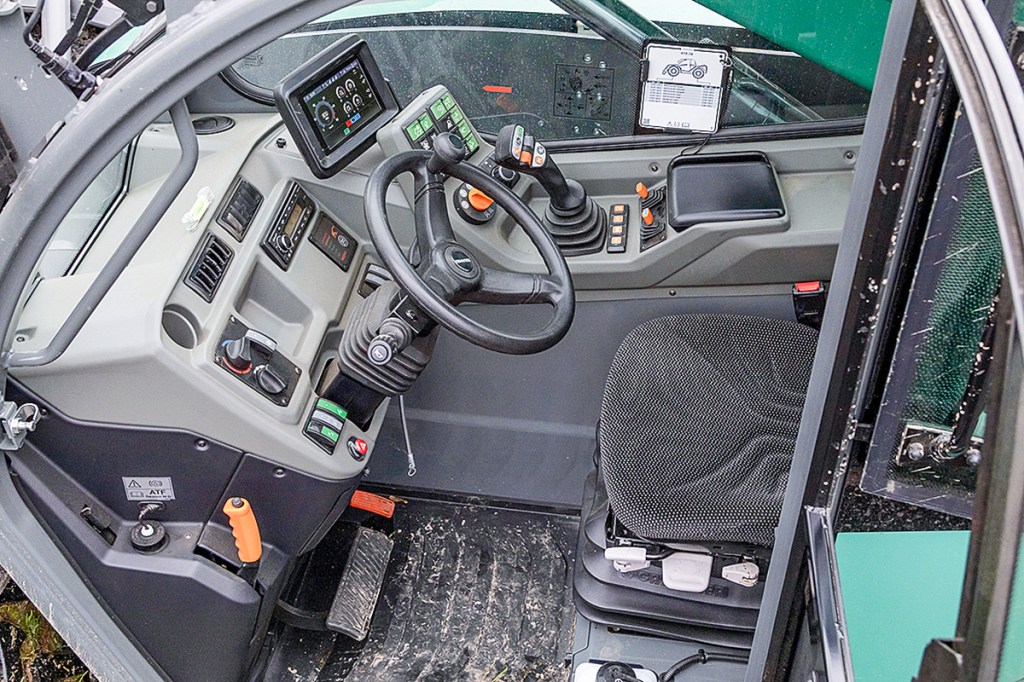
We missed having a decent amount of storage in the cab – one cubby hole in the dash isn’t really enough. At least there’s a deep storage area under the cab.
There is the £3,200 option of an integrated weighing system, developed by Kramer in collaboration with Bosch-Rexroth, allowing dynamic weighing while on the move. The scale can be tared and a target weight entered at the touch of a button on the display. When the load is lifted, the display shows the weight, the accrued total and the target weight.
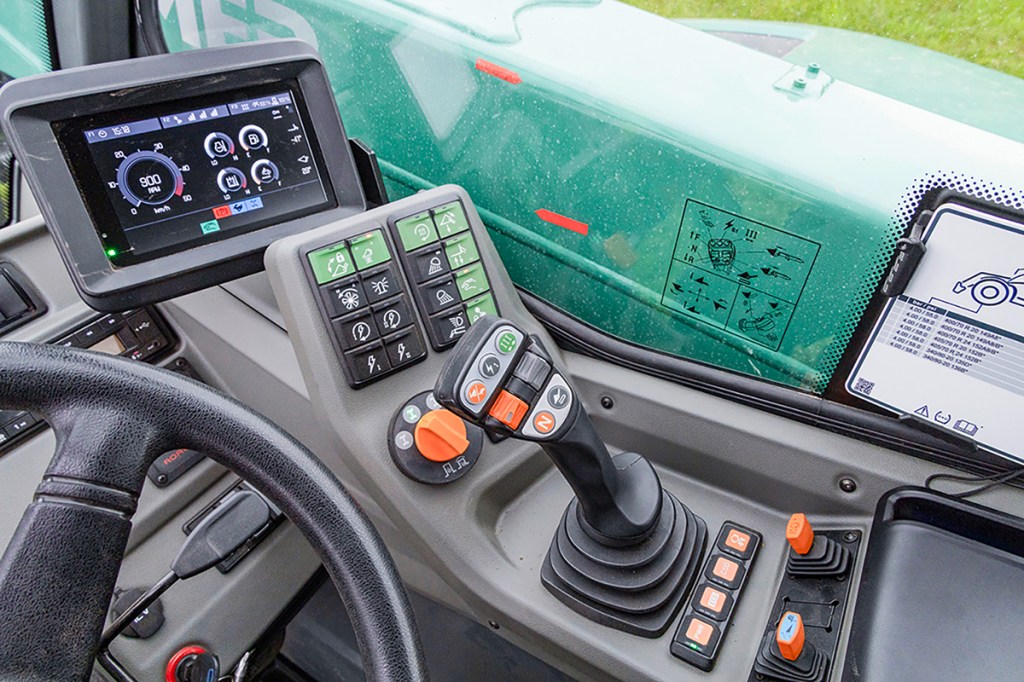
It also notes the number of emptied buckets, although the system requires a relatively large dump angle before it recognizes that the bucket has been tipped. An audible alert sounds when the target weight has been reached. The scale can be operated in both automatic and manual modes. Pausing or reversing the weighing process is possible at any time.
For now, there is no job management or component list feature. These, as well as residual quantity and data export, are planned for future software updates.
Effective lighting
Finally, a word about the lighting: This was well received by our test team. Positioned at a height of 1.60m, the headlights do a good job of even illuminating the attachment, while the ten LED work lights, provide good all round illumination.
Other details
- Optional rear hitch and hydraulics for a trailer are available for the little KT316.
- The central greasing system, including lubrication for the headstock, is an option and recommended by the manufacturer — at least the option of the pre-installed lubrication line (£150).
- There is also a simpler, lower spec model range, e.g. with a rigid steering column.
- Kramer uses strain gauges on the rear axle for overload protection; due to the system’s design, the overload protection may be triggered when at full steering lock. According to Kramer, calibration by the customer is not necessary.
Summary
Kramer’s KT316 is a compact, manoeuvrable machine with a lively drive system. However, its power delivery could be smoother, and comfort features such as automatic engine speed control and a handbrake should at least be available as options. Nevertheless, we enjoyed working with the KT316, not least because of its visibility, manoeuvrability, and the SmartAttach coupling system, which makes attaching to hydraulic kit incredibly easy. Overall, the machine made a solid, well-made, and well-finished impression.
That leaves the price: Kramer’s starting list figure for the KT316 is £77,000. Our test machine had a good few extras including SmartAttach, integrated weighing system, and central lubrication … so the machine we had would list at around £89,000.
Lucas Colsman
For more up-to-date farming news click here and subscribe now to profi and save.