
With the price of new kit having rocketed in recent years, have the established machinery makers opened the door to new names from China? We climb aboard the Lovol P5130 to see how much bang you get for your buck.
KEEPING IT BRIEF
- The £53,999, P5130 comes with a three-year/2,000-hour warranty.
- Lovol claims to have made over 83,000 tractors in 2025, with the majority sold in China.
- Front axle and cab suspension will be added later this year when the P5140 is added to the range.
So, the time has finally come to trade in your trusty steed of several years, but the numbers being jotted down are starting to make your eyes water. You begin to explore the alternatives, and this is where the industrial might of China has the edge. Cheaper labour and energy costs mean they can charge less for their wares. And cheap doesn’t always have to be nasty: just look at the current crop of new names in the car market for proof.
Aiming to do the same in the tractor world is Lovol, part of the massive state-owned Shandong Heavy Industry Group, which makes everything from buses to boats, even excavators up to 220t. You get the picture: they make a lot of stuff. Indeed, Lovol claims to have produced over 83,000 tractors last year and plans to hit 100,000 by 2030.
The current crop pitched at the European market includes the lower horsepower and basic spec M series tractors, but what we are looking at here is the P range, which currently consists of the still simple P4000 and slightly more sophisticated P5000.
Hang on a minute
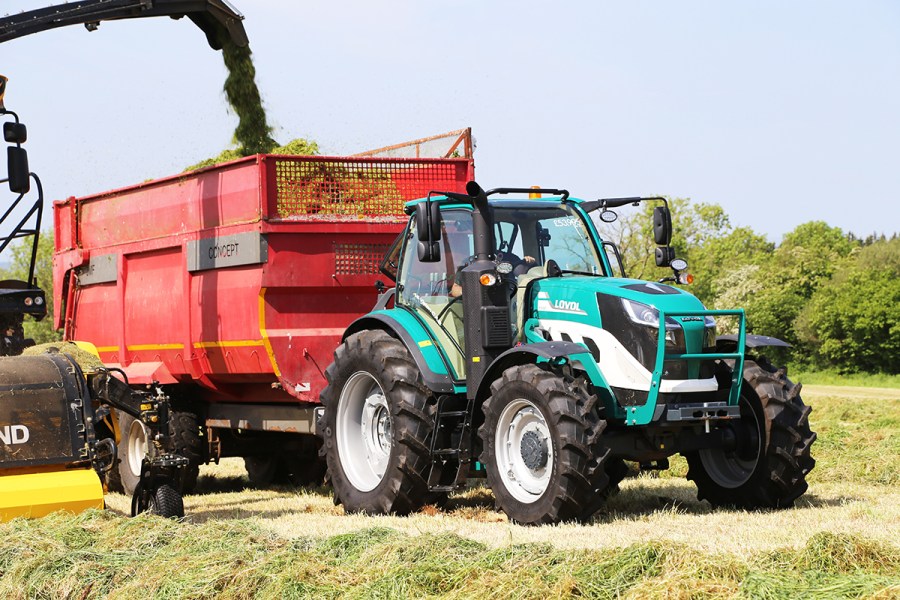
If the styling along with the green and cream colour scheme of the pictured P5130 is giving you a sense of Déjà vu, then fear not. Lovol previously snapped up Italian tractor maker Goldoni and revived the Arbos brand, setting up an engineering centre in Migliarina di Carpi, near Modena. But that all went quiet in 2020, and, two years later, a Belgian firm bought Goldoni and the Italian factory.
Yet, evidently, Lovol didn’t leave Italy empty- handed and took home the tractor designs it had been developing in Italy, having spent multiple-millions. The Chinese engineering team has continued to work on the range, and there are rumours of a 260hp tractor with a CVT currently being put through its paces in central Europe. Also expected to be launched later this year is the P5140, which will bring front axle and cab suspension, which will also make its way on to the P5130 that we look at here.
So, what have we got?
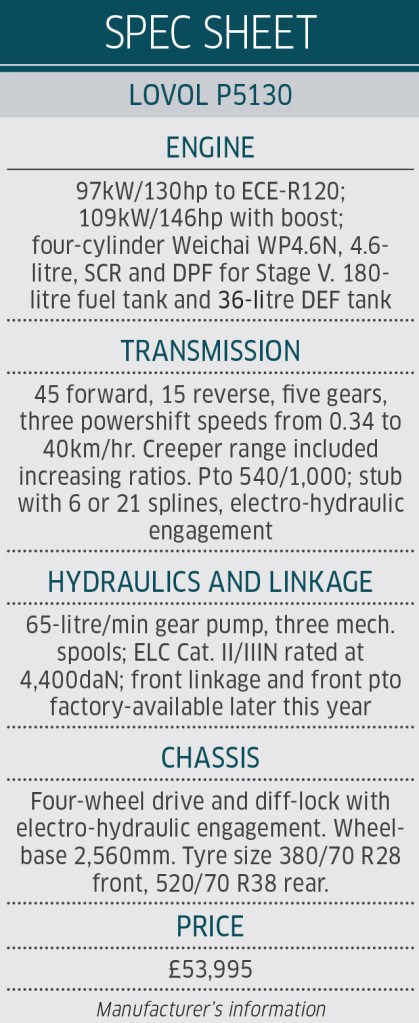
For now, the P5130 is currently the most powerful Lovol on the European price list. It gains its rated output of 130hp from the firm’s own Weichai WP4.6N engine which has a manually selected boost function that ups the ponies to 146hp. The 4.6-litre, four-cylinder has been made Stage V compliant for our market using a combination of SCR and DPF located in the exhaust stack.
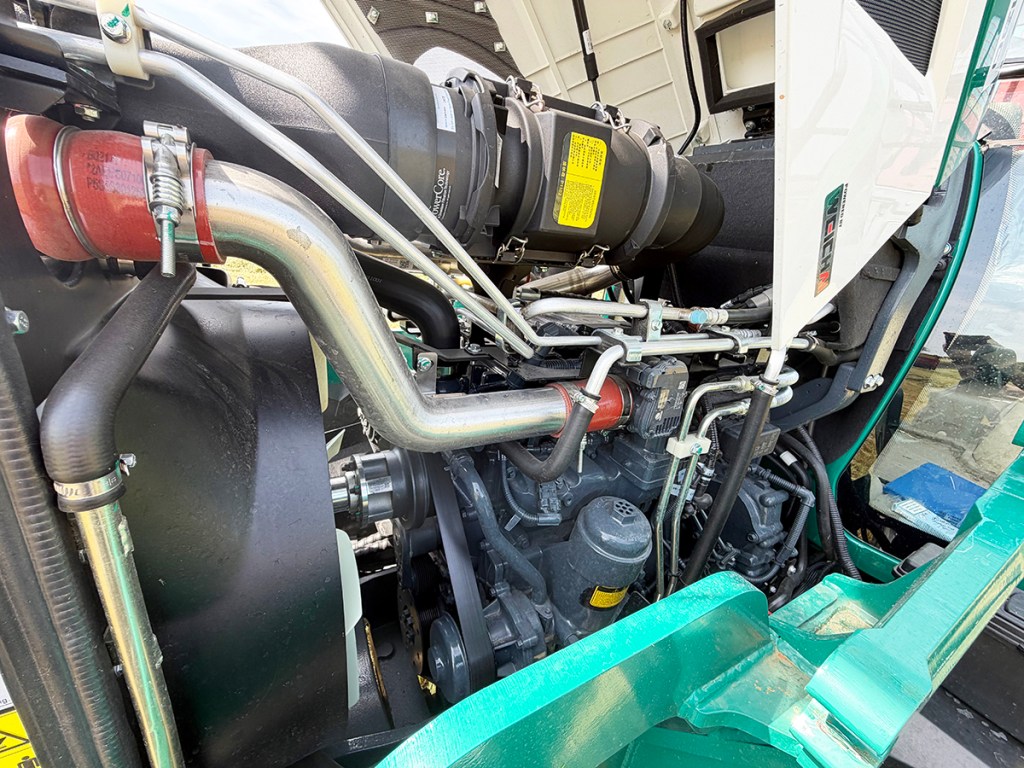
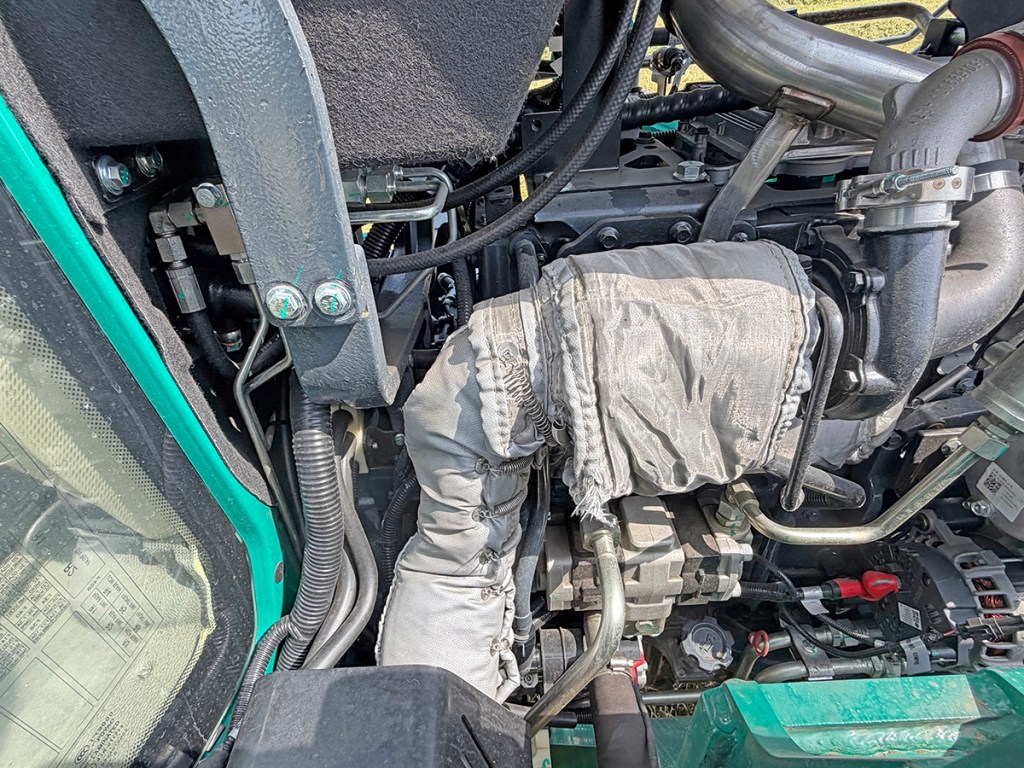
This means that when the relatively broad bonnet is raised it reveals a less than usual cramped layout. Top marks to the designers of the cooling pack: slackening three eyelet nuts allows the condenser at the front to swing over to one side and the intercooler to hinge up for better access to the main rad. There is even an elasticated screen in front to keep heavy chaff getting between the cooling fins. There is also space below for a front pto, which, along with the front hitch, will appear in the Lovol options list later in the year.
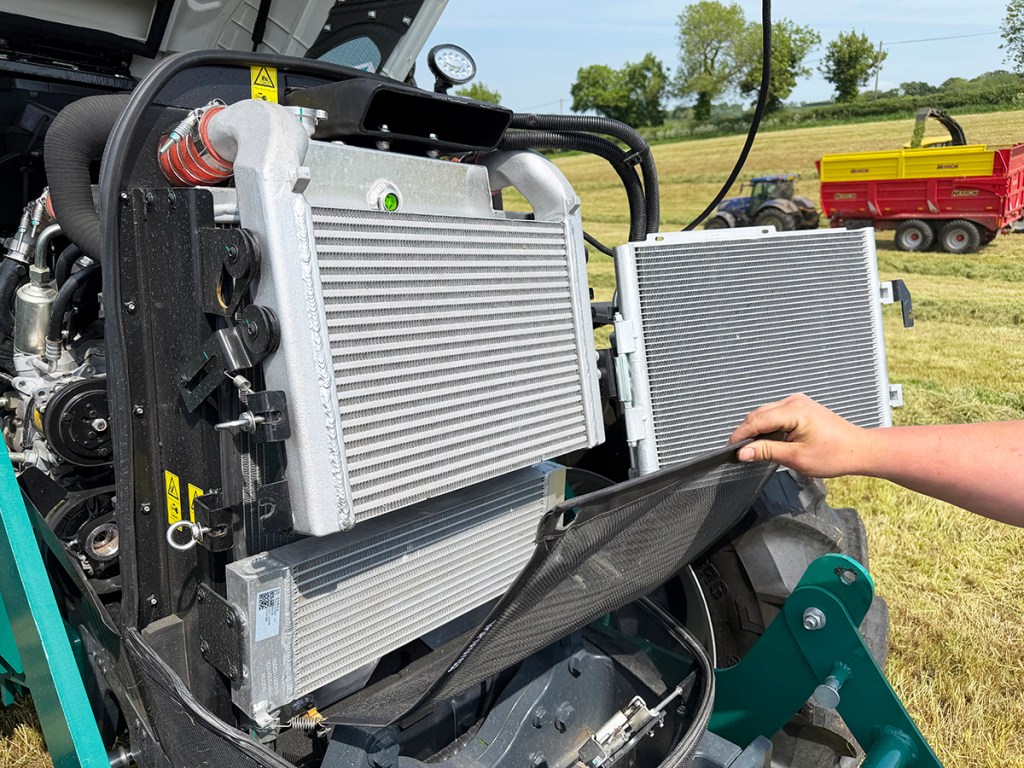
Behind the cooling pack there is a generous amount of space. Accessing the oil and air filters is all relatively straightforward — service intervals are every ??? hours, while the shared transmission/hydraulic is on a ??? hour interval. Speaking to Northern Ireland distributor Alexander Tractors, who helped us with this driving impression, a full service on a P5130 should be in the region of £????.
The five-gear, three powershift transmission complete with an electro-hydraulic power shuttle is also made in house by Lovol. The spec also includes a creeper ‘box, so the speed range spans 0.34 to 39.5km/hr which is achieved at 2,200rpm. Wet disc brakes provide the stopping power.
There are just the two speeds available, 540 and 1,000rpm with no Eco option. The speed is mechanically selected from the cab, with the pto engaged electro-hydraulically. There is also no external pto control button on the mudguards, something that we would like to have when using a slurry tanker vacuum pump.
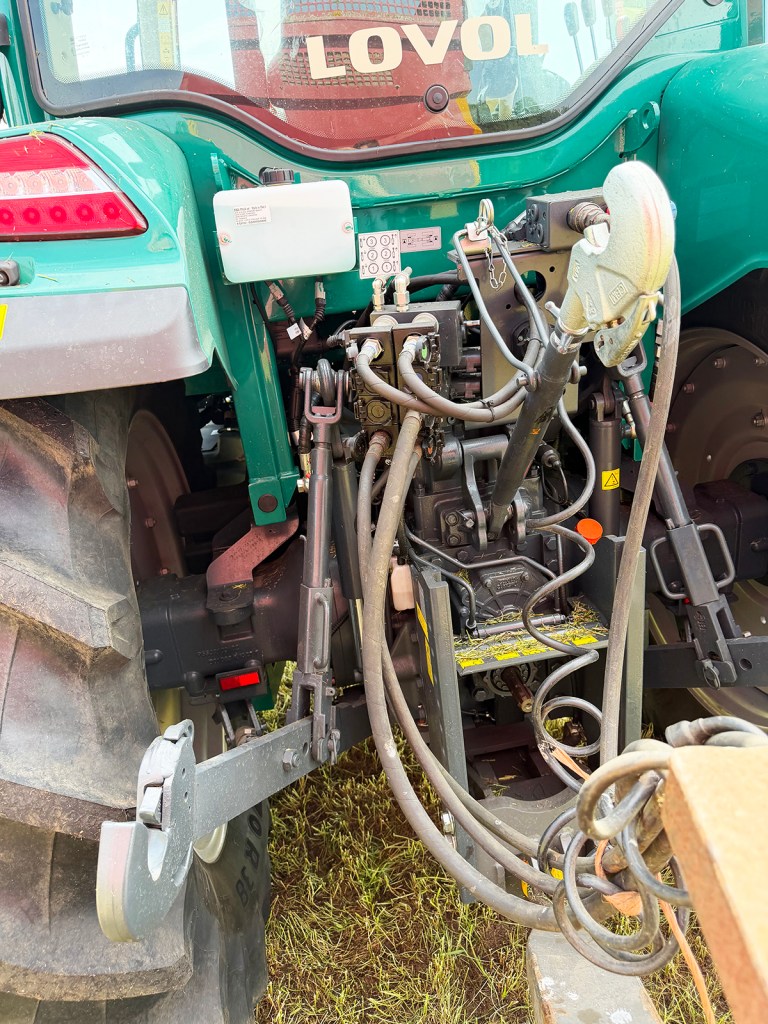
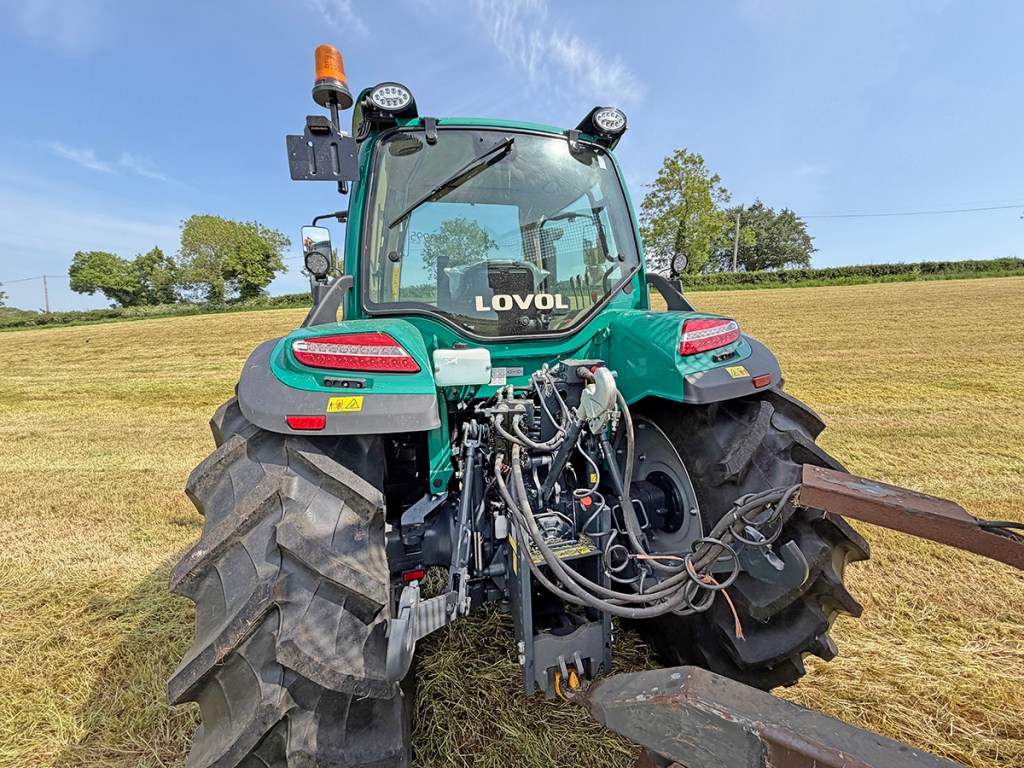
Three double-acting, mechanical operated remotes are standard spec. There is a fourth spool on a rocker switch for operating the Bill Bennet pick-up hitch which doesn’t have any lift rods. The gear pump is rated at 70l/min, which is a bit below par compared to more familiar makes. It was able to tip the 14t trailer we were using, but extra flow would still be beneficial, especially on loader work.
To make connecting the pipes that bit easier, the couplers sit at a slight angle on the left-hand side of the top link. On the subject of the rear linkage, this is Cat II/IIIN rated at 3,000kg, and the spec includes hook ends. The stabiliser is locked with a bolt rather than an easier to adjust clip like most other makes. The P5130 benefits from electronic lift controls, which means that you also get external buttons to aid hitching up.
Hop in
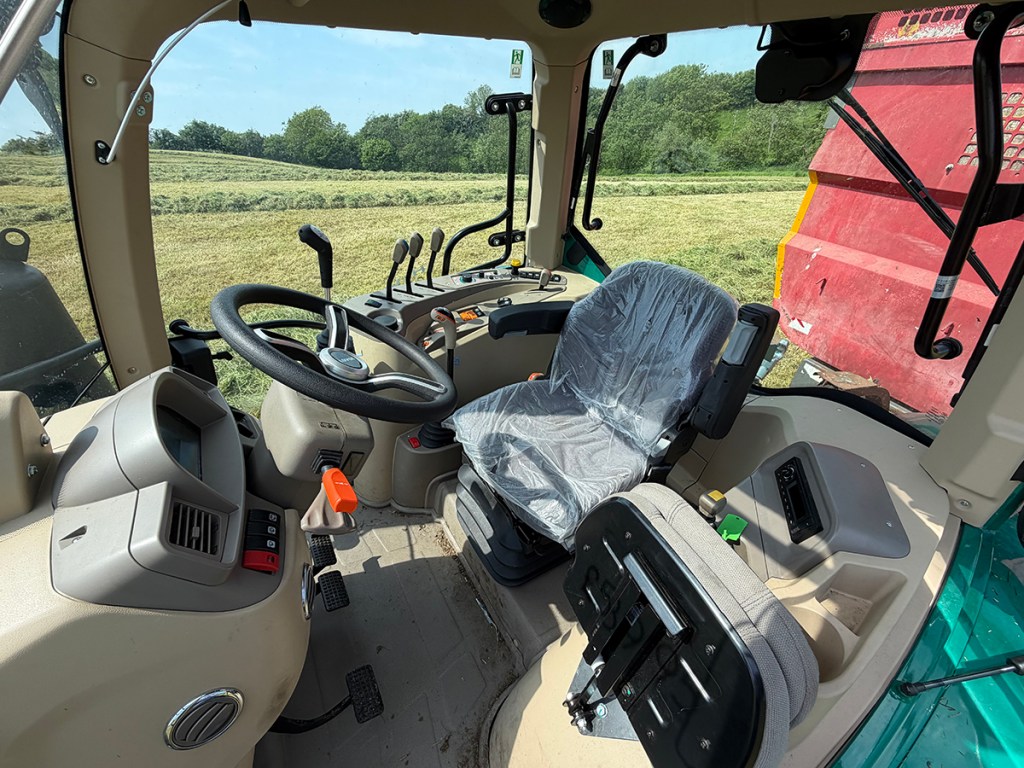
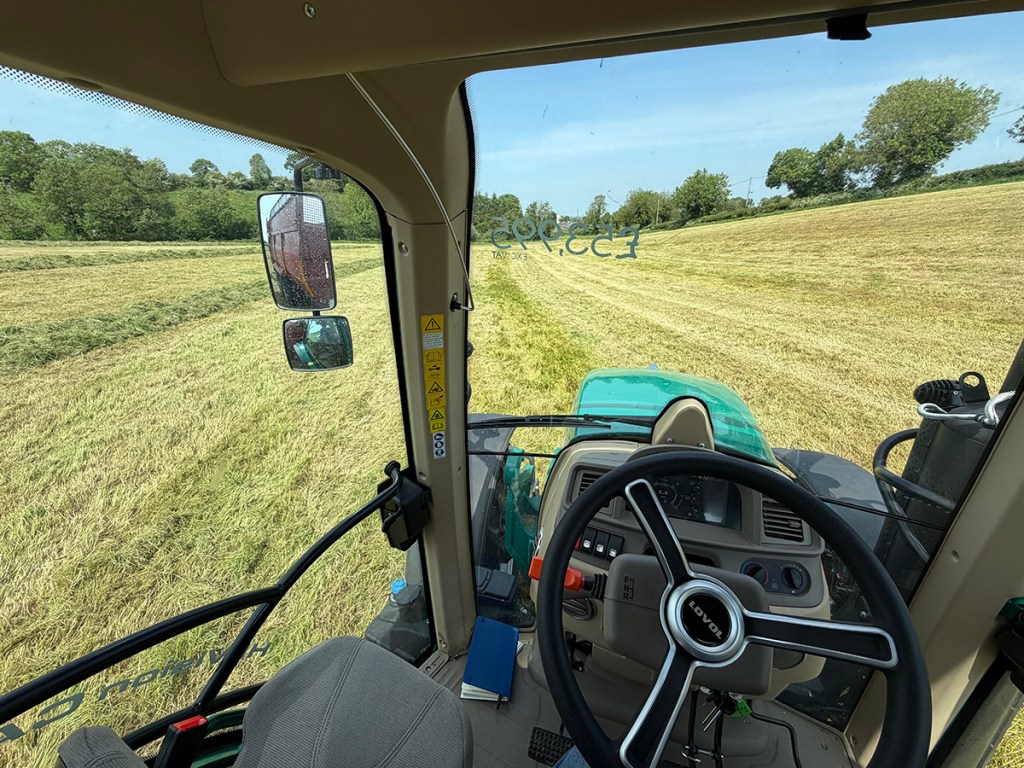
With the under-pinnings dealt with, it is time to climb the three steps to the air seat in the ‘Hi-Vision Cab’. Two things will initially strike you, the bright beige interior is probably not the best of bedfellows for livestock farms, although it does look like it will scrub up well. The second is that overall fit and finish of the trim is impressive, especially when you consider the very attractive price tag — £53,999 on-farm.
Steering wheel is reach and rake adjustable — although the latch must be pushed down rather than lifted up like most other tractors. The multitude of fan outlets are all around the steering column, but even on a hot day, the air-conditioning was doing a good job of keeping us sitting cool. If we were being critical, then a slightly bigger cab would be better, especially when you have someone occupying the passenger seat. By the way, the passenger seat automatically flips up when your sidekick makes an exit; you don’t have to grapple with a release lever every time. Again, this shows that a bit of thought has been put into things. But bizarrely the indicators are not self-cancelling.
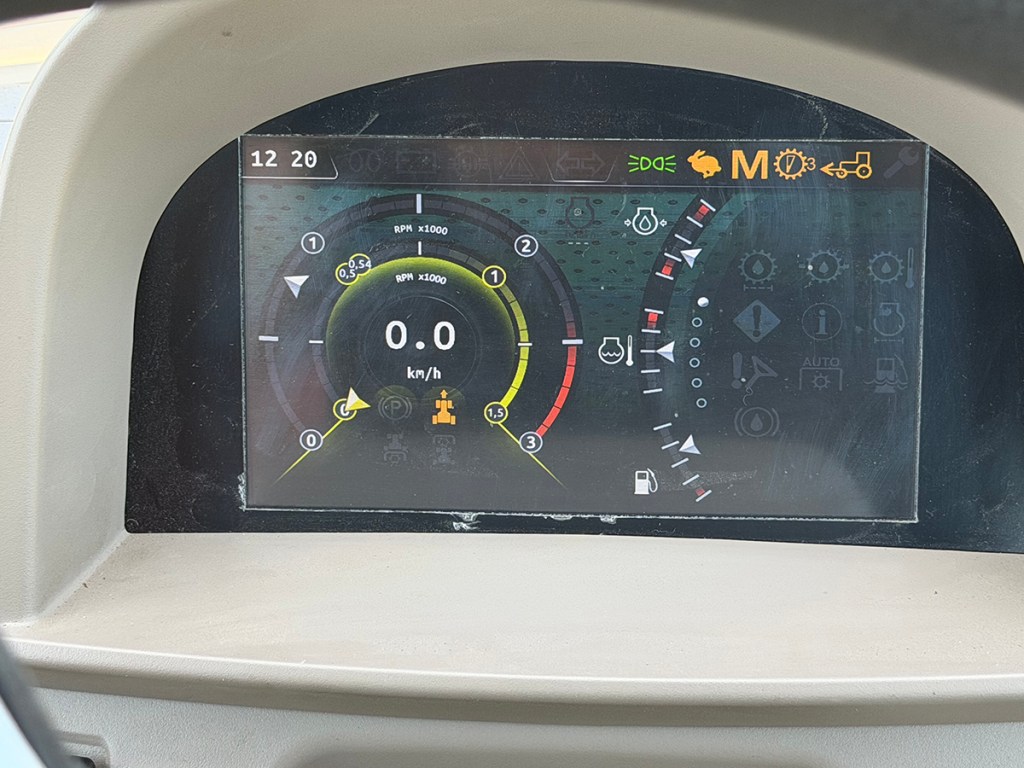
All of the key tractor information is shown on a colour display. It is not the sharpest of screens, and the current powershift speed is along the top, so it becomes hidden by the steering wheel when in the most comfortable position.
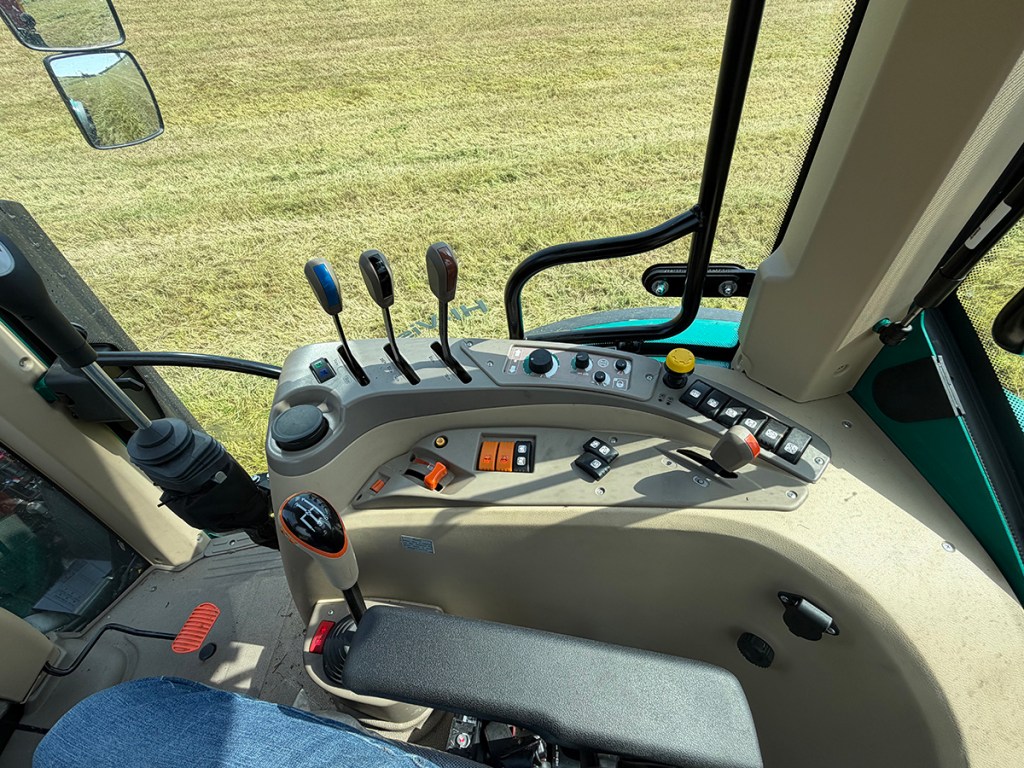
The right-hand side console is logically laid out with the various buttons grouped by function. The three mechanical spool levers are also angled for easier operation.
The gear lever uses an offset H pattern, with a declutch button making shifting through the five speeds a relatively relaxed affair. A pair of buttons on the side of the gearstick looks after the three powershift steps. Top speed is 39.5km/hr and requires the Weichai motor to work at its full 2,200rpm.
Fresh out of the box
Our tractor was practically a newborn, so everything was still fresh. A transmission calibration would have made up and down shifting a bit slicker. As it was, when hauling the loaded 14t silage trailer, the powershift changes were not as responsive as you’d have really liked, and this is where double-checking the current powershift ratio on the dash was hampered by the obstructed view. Once the revs were kept over 1,000rpm, then the four-cylinder was able to put in a creditable load-lugging performance while climbing the hill.
We kept the boosted power setting selected, and it is hard to understand why this is even on a rocker switch, because who has ever complained of having too much power? On this size of tractor, the difference in fuel use is going to be negligible — an economy pto speed would be far more beneficial.
The view is mostly unhindered. Even the girthy exhaust stack is not overly obtrusive. The windscreen also curves back into the roof which will be welcomed by anyone on loader work. Incidentally, Lovol also offers a factory-fitted loader option which was on this tractor. The brackets include a bracing strut running under the tractor for additional load support.
Manoeuvrability didn’t strike us as being an issue, although steering front mudguards would be much better than the current rigid version. The P5130 does look under-tyred with our test tractor sporting Trelleborg 380/70 R28s on the front and 520/70 R38 rears.
Lovol uses a slightly different four-wheel drive ratio set-up than European makers and tends to fit a smaller front tyre in relation to the back. Wider tyre options are in the pipeline.
Independent front axle suspension and mechanical cab suspension are currently being tested on the P5140 which is expected to join the P5130 in October — great, as we have become used to the extra cushioning for soaking up the bumps.
What did we think?
Is the Lovol better than other tractors on the market? No, but it is cheaper and, let’s be realistic, the price is what is going to get people to have a closer look. In fact, it is the reason we were wanting to have a go with the P5130 — to see just what you get for your money and what it’s like to use.
Having dealt in second-hand machines for years, Alexander Tractors is also well aware of its potential Lovol customer base — and it’s not intensive ag contractors. Buyers of previous budget-friendly European brands are one audience, and then you have the likes of dairy farms wanting a diet feeder tractor, where the alternative in this price range is a five-plus year machine already wearing more than a few thousand hours. The attraction of a three-year, 2,000-hour warranty will be an advantage for Lovol.
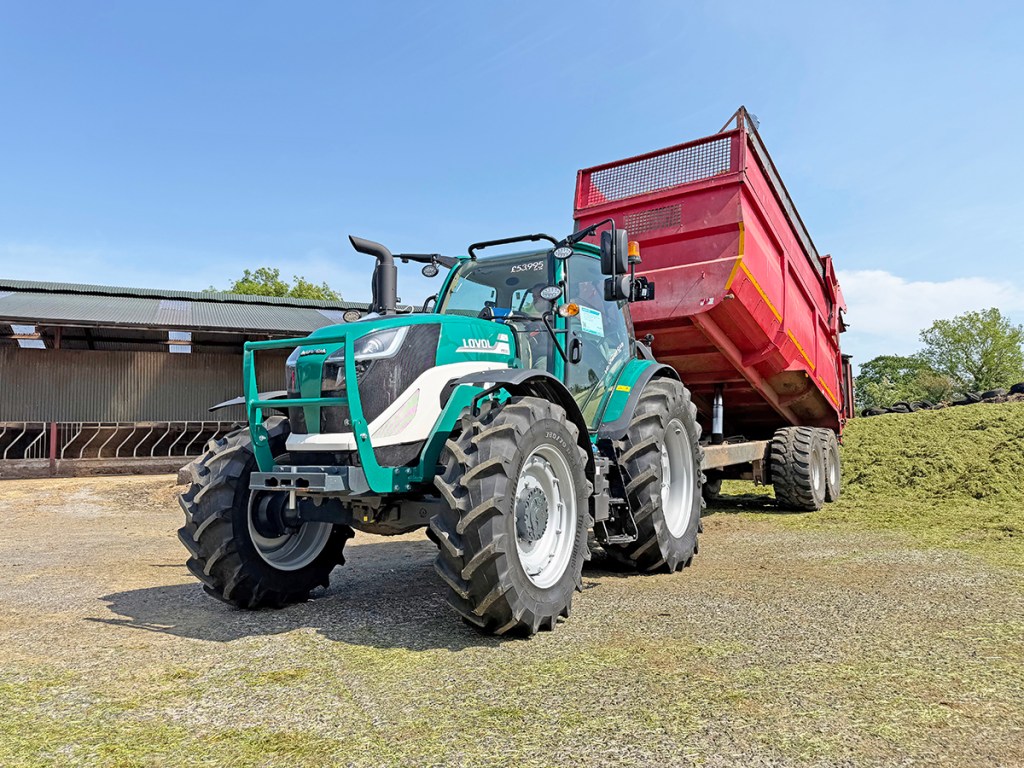
Carting silage, the P5130 did what we asked of it. Granted, suspension and self-cancelling indicators were missed, but the speed ratios were well laid out, and we had enough oil to tip the trailer. Now that it had a few hours graft behind it, a transmission calibration should smooth out the speed changes.
We can’t answer the question of how reliable it will be; we just don’t know yet. Our initial feeling is that it seems well put together and there has been some logical thinking from those involved with Lovol in Europe and in China. James Alexander does make the point that Lovol wants feedback, and, if the other European markets are singing from the same hymn sheet, then the Chinese engineering team will make changes.
It will be interesting to see how components like o-rings and seals fare once the tractor has seen a few thousand hours of hard work. But, for now, it seems to do a job. And did we mention the price?
Mervyn Bailey
For more up-to-date farming news click here and subscribe now to profi and save.