
A hot water pressure washer is an increasingly popular choice for farm use. Here we look at a Kränzle Therm-RP 1400 AT to see what a more powerful machine has to offer.
KEEPING IT BRIEF
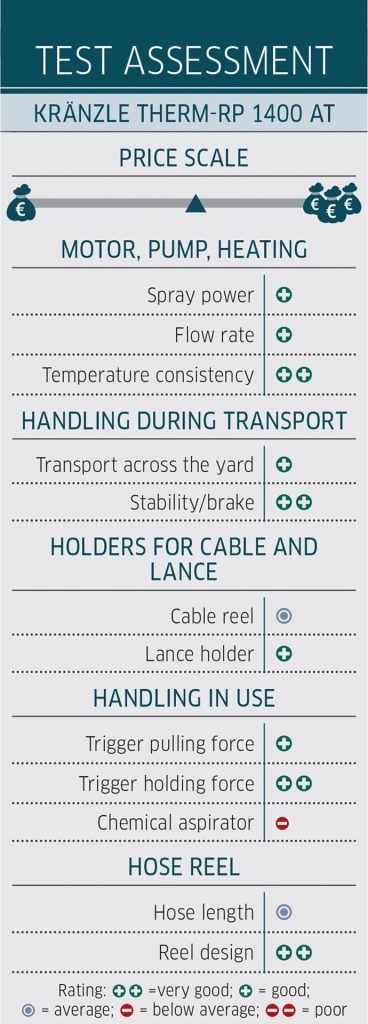
- The 6.3kW Kränzle Therm-RP 1400 AT had plenty of high-pressure cleaning power.
- Output temperature accurately controlled using washer’s percentage mode.
- Proven technology and solid build should deliver long-term performance.
The benefits of using warmed water to clean anything, be it your hands through to buildings and farm kit, is something that needs no explanation. Higher washing temperatures will typically boost the effectiveness of cleaning and disinfecting products too, which, in turn, can reduce the amount of product required to do the job. In brief, if you need to clean something, a hot water pressure washer can do a better job, even when working at lower pressure.
The flip side is that a hot water washer may be more likely to need care and maintenance and will cost more to run than a cold water washer. Then there is the critical question of temperature control. You do not want to risk damaging equipment by washing at too high a temperature, or you may want to wash livestock requiring an accurate and consistent temperature.
The Bavarian hot water, high-pressure cleaner
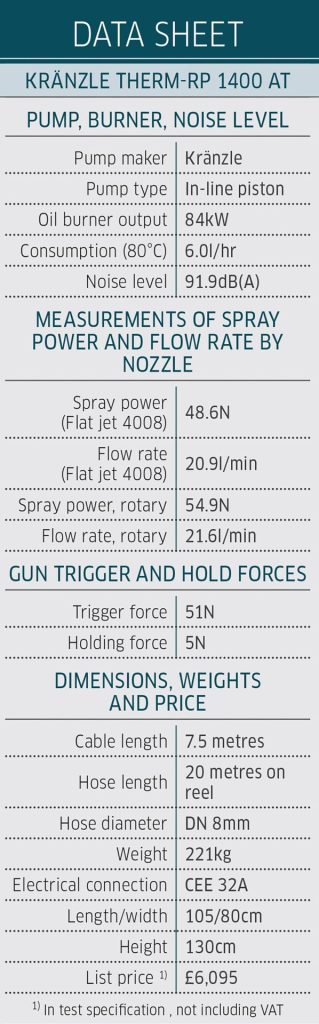
Here we look at the three-phase Kränzle Therm-RP 1400 AT. Introduced in 2022, the model’s name and number outline what it has to offer. The ‘therm’ element refers to internal oil burner water heating capability, RP for ‘Reihen-Pumpe’, or translated ‘Inline-Pump’, more on this later, and the 1,400 litres per hour water output. AT shows this variant is fitted with an automatic retracting hose reel option. The washer is supplied with a 7.5m power cable.
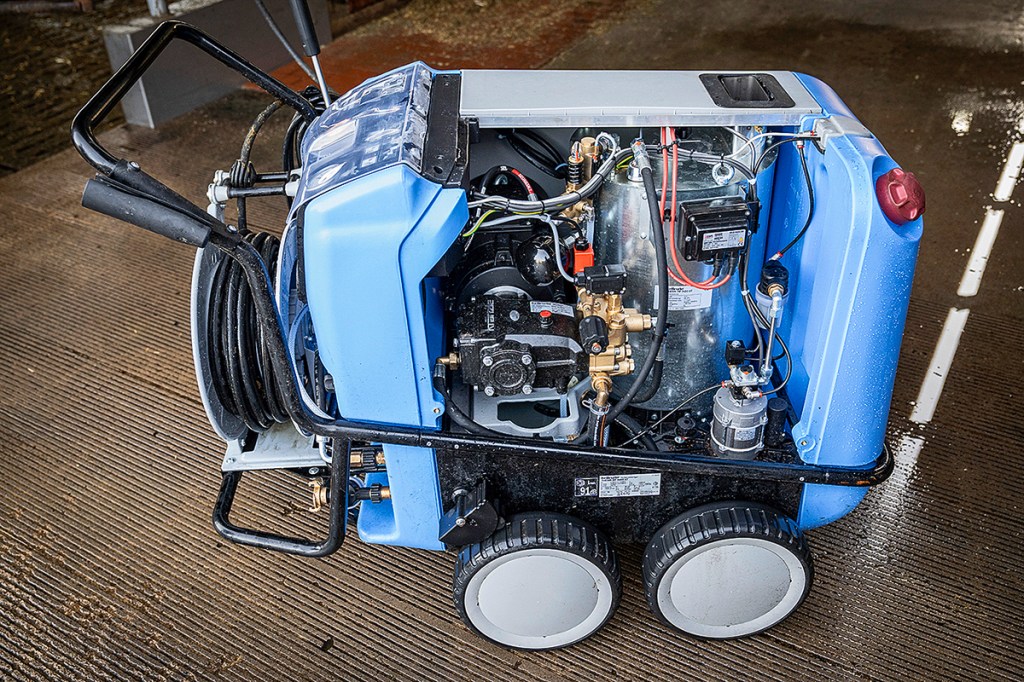
A hefty 6.3kW motor drives a crankshaft moving three plungers to the pressure pump via connecting rods lying in series. The pump runs at 1,400rpm to deliver a claimed 23.3l/min at up to 190 bar pressure. We put these outputs to the test, measuring 20.9l/min of flow at the end of the supplied 20m (twin wire DN 8) high-pressure hose with the flat jet nozzle (4008) and 21.6l/min with the rotating Turbokiller nozzle. This is a loss of up to 10% of the flow rate through the hose and nozzle, which is a good figure.
Spraying power
It is the combination of both water flow and pressure that produces the cleaning power. Expressed in Newtons, we recorded spraying pressures of 48.6N with the supplied flat jet nozzle, this increasing to 54.9N using the Turbokiller nozzle. That’s perfectly respectable performance for a 23.3-litre/minute class 6.3kW motor. For context, another of our tests between cold water pressure washers with a higher 25-litre/minute class saw them draw 8.2kW and 10.7kW which delivered between 61N and 76N of spraying power respectively.
If you are after a bit more output, Kränzle does also offer a more powerful 1,600l/hr /26.6l/min alternative, the Therm-RP 1600. This is the one we would choose for regular washing of large areas, but that much power
is simply not needed for more general farm cleaning duties. High-pressure is just part of the cleaning equation as higher water flow rates will deliver better flushing of debris.
Dry-run protection
Pressure washers can suffer from cavitation damage if the water supply is poor, a 12-litre water tank under the combined motor pump unit providing a good buffer should the main supply fail or drop off for some reason. This tank had no lid so it could be vulnerable to contamination, but, as the washer has a full plastic enclosure, there shouldn’t be any problems. There is no low-water detection system within to shut the machine down to protect it from dry running, so the user needs to ensure there is good flow to the machine. There is an in-built flow monitor, but its job is to protect the heating oil burner system. This prevents the burner from firing up if there is no water passing through the coil (as is the case with all hot water washers using similar systems).
An auto-stop function switches the pressure washer off when the trigger gun is closed, with the motor running briefly to allow for immediate use if the trigger is pulled again. If the washer is left on but not operated after that time, the control system switches the motor and oil burner into a standby mode for up 20 minutes.
84kW heating output
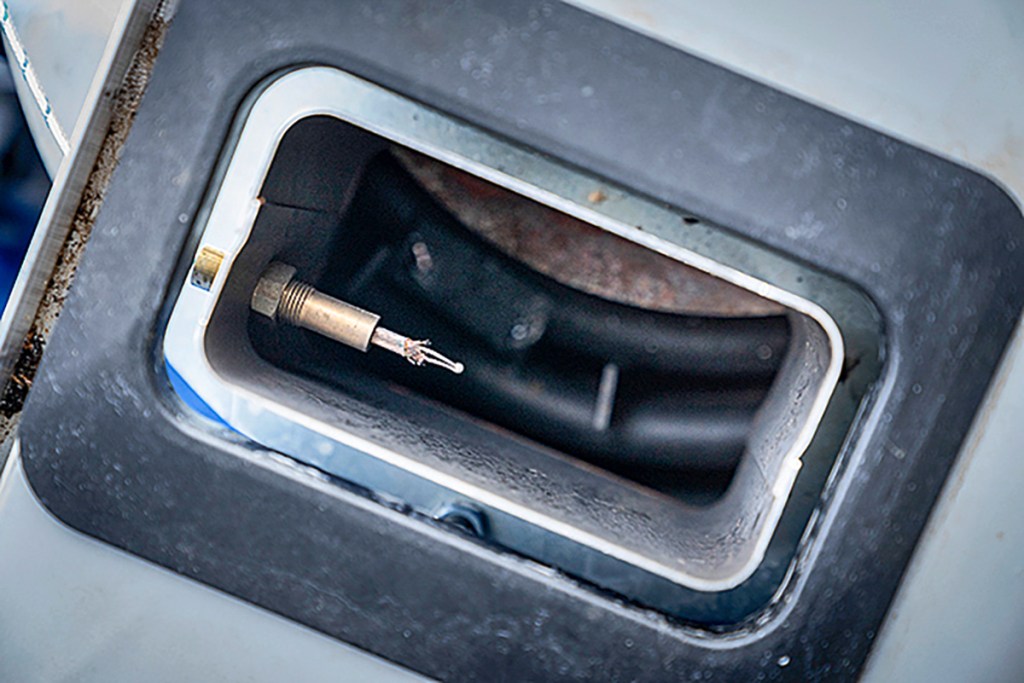
The washer’s oil burner has a rated 84kW heating capability achieving temperatures up to 140°C. It will run on both diesel or kerosene heating oil. A huge 43 metre mild steel internal heating coil is used to warm up the water, with a stainless-steel coil optionally available. A replacement mild steel coil retails for around £740 (ex. VAT). Kränzle states that, as the design has no flame directly contacting the coil, it does not need routine descaling. This reduces overall maintenance demands when compared to other designs. The company does, however, recommend occasional use of its decalcifying concentrate in areas where the coil might be more prone to calcification.
Two method temperature control settings
The burner has a fixed heating capacity, with the output heat controlled by the burner switching on and off to deliver the desired temperature. The operator has two ways of controlling the desired water temperatures by:
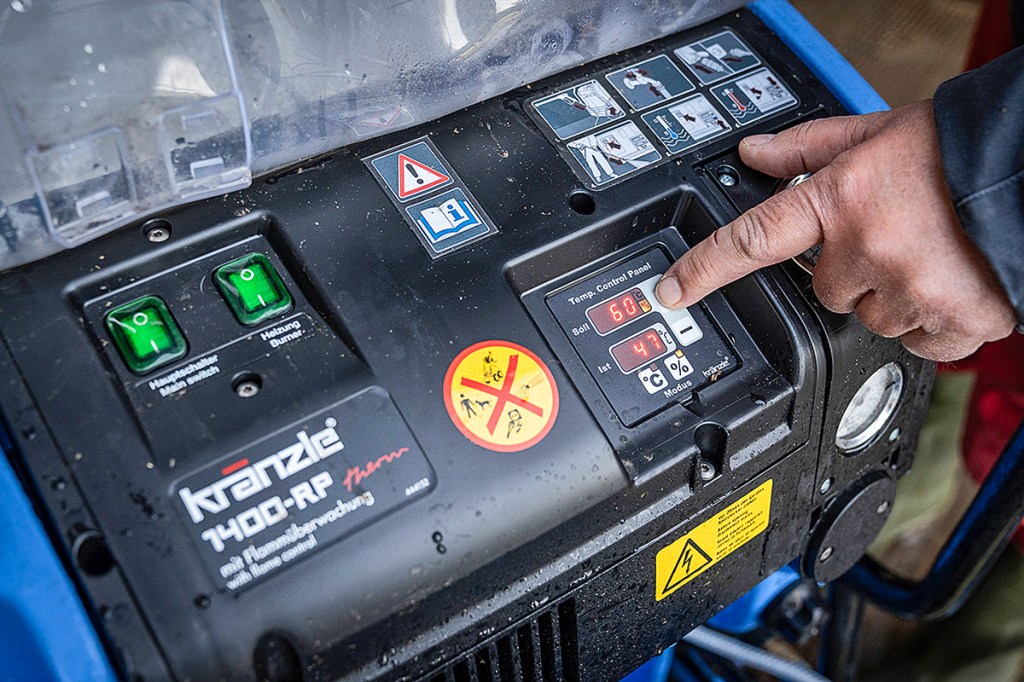
- Degree mode. This conventionally heats water passing through the coil up to the target temperature and then switches on/ off to maintain that target temperature. As the heat sensor can only measure actual temperature at the outlet of the coil, the burner switching on and off can see output temperatures fluctuate by as much as +/-10°C.
- Percentage mode: This mode operates in a different way, the user setting how long the burner runs per minute, fine-tuning this with the input to set the desired operating temperature. Depending on the selected setting, the water temperature in this mode should sit at a consistent heat level at around the target value with a variance of just +/-1°C.
In our time with the washer we found that when working with the percentage mode we maintained the water temperature at ± 2.5 °C of the target temperature.
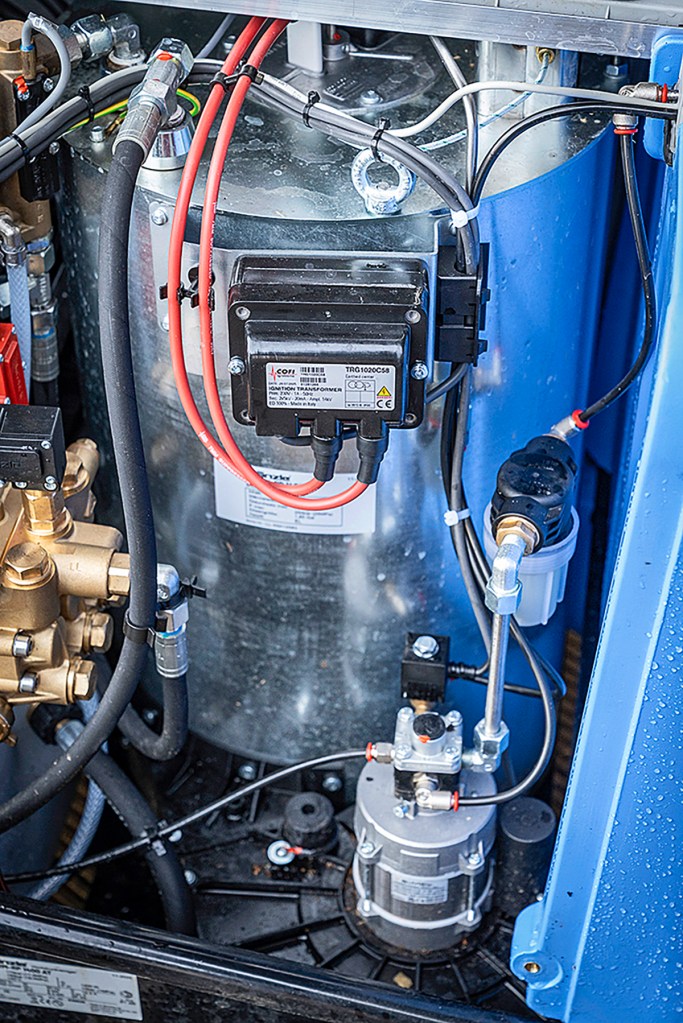
Internal diesel tank
A 35-litre tank supplies the burner with fuel oil. At a constant 80°C water temperature, we measured fuel consumption at 6l/hr or around six hours of work per fill. Obviously the consumption rates will drop at lower cleaning temperatures.
The washer can be taken to the farm diesel tank for topping up or filled via a funnel. If the tank needs to be drained there is a plug on the underside of the tank itself with access to it secured by a couple of bolts to avoid accidental tampering.
We ran the burner exclusively using B0 diesel for a total of over 90 operating hours. Combustion in the burner was clean with little odour.
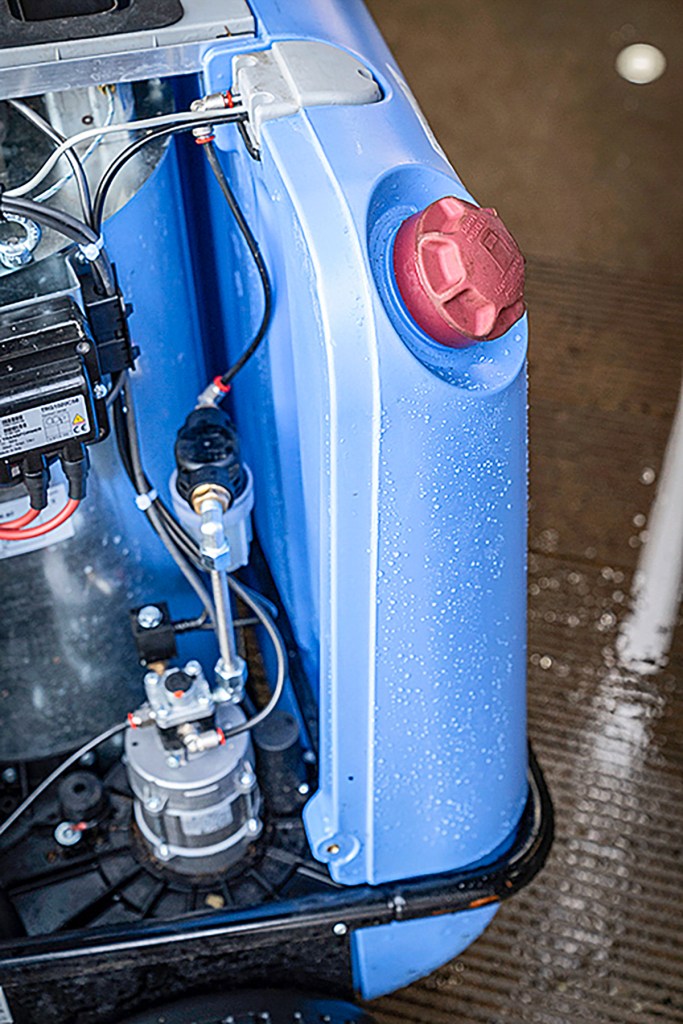
Pump draws in chemical
Chemicals including detergents are drawn in by the pump on the suction side and not through an injector on the high-pressure side. This means all additives used need to be compatible with the pump and heating coil, which could be something those using aggressive cleaners, such as for degreasing machinery, need to consider. For such jobs it is recommended a foam lance or a high-pressure injector is used.
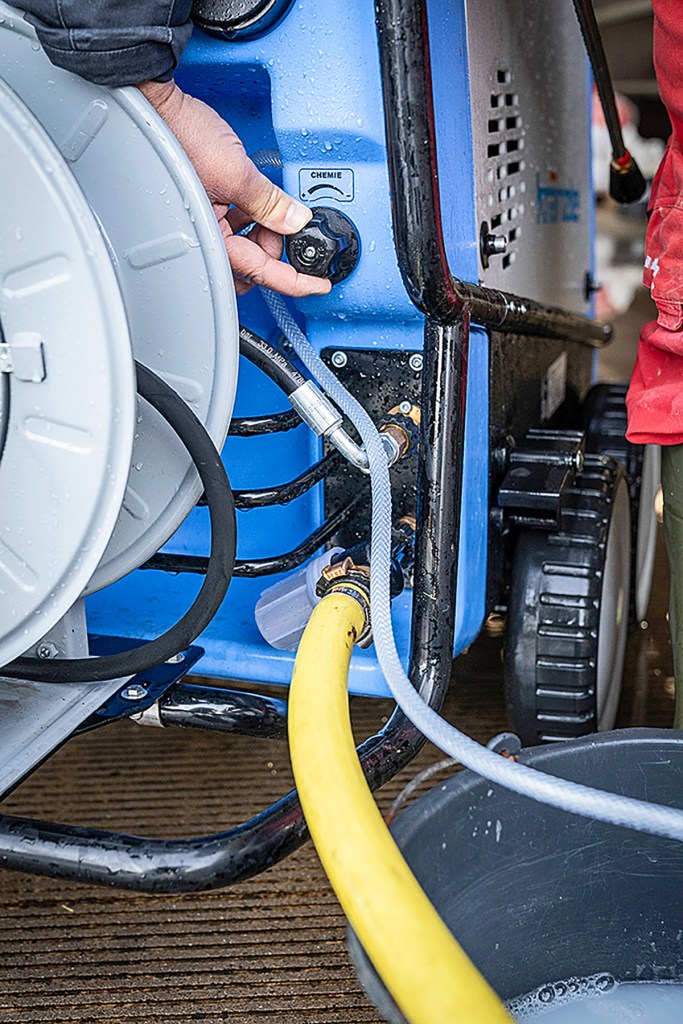
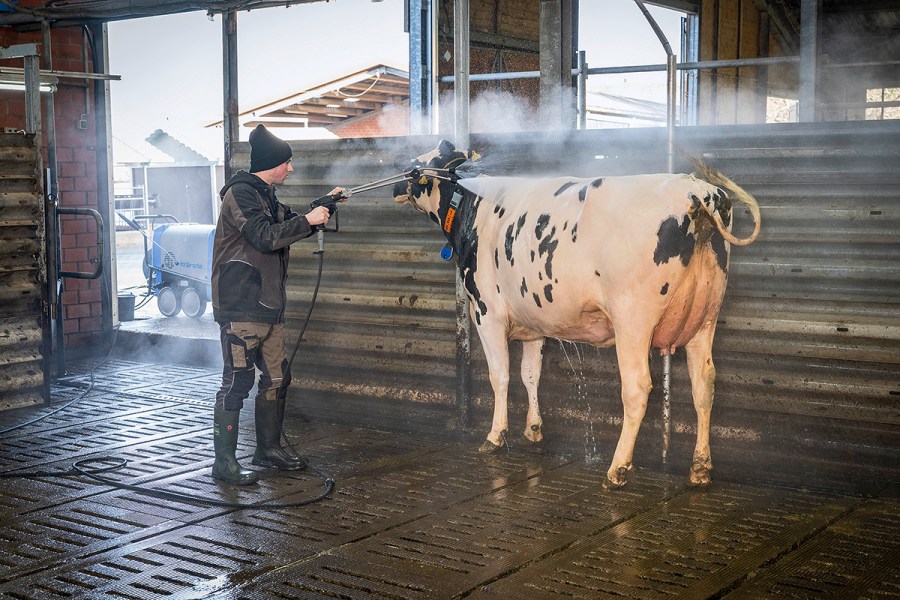
Part of our test involved using an animal shampoo to wash livestock, and for this we went with the standard pump suction. Due to relatively high dilution rates, we initially thought it necessary to set a relatively high concentration level to get the shampoo to flow and then reduce it to what we wanted. We found the chemical continued to flow in for several minutes after the chemical was shut off. We soon learned to turn off the shampoo input ahead of finishing the job. The reason why the concentration was initially thought to be too low was that it has to travel some way before arriving at the nozzle.
No problems on extended test
We ran our test on a breeding dairy farm that washes its livestock regularly. Here a primary focus was on the washer’s accurate water temperature control. Over a ten-week period, the Kränzle washer was in regular use with repeated checks to ensure it was performing to the high standard demanded for its primary application. Let’s cut to the chase. The Therm-RP 1400 AT handled the job brilliantly throughout and proved adept at other cleaning tasks.
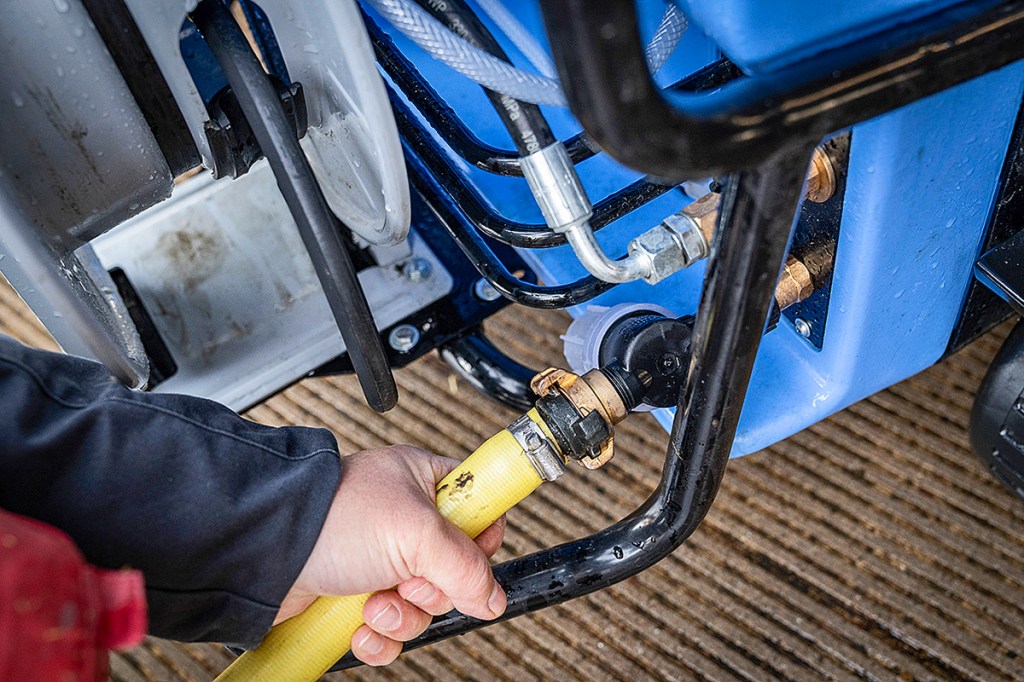
As to any criticisms, the chemical additive system as mentioned was not too bad once its mode of operation was understood. A small gripe was to find the machine supplied with a basic plastic connector for the input hose. Kränzle subsequently supplied us with a brass-reinforced Geka coupling which we feel should be fitted as standard.
Low trigger holding resistance
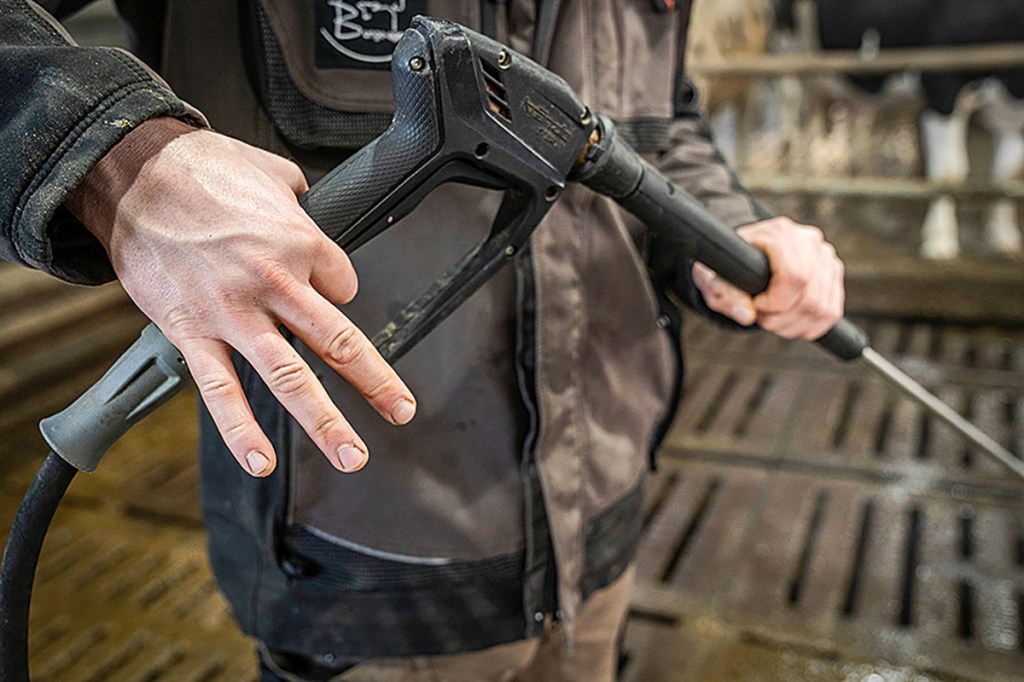
Due to the clever internal design of the Kränzle gun, the lance trigger has a low holding force of just 5N. In layman’s terms, that means you can hold the trigger open with a single finger. The pull force to activate the gun is a bit more, at a reasonable 50N. As we informed Kränzle we would use the therm-RP to wash animals they supplied us with a double lance. This was fitted with an integrated rotary valve that, when opened, directed water to the secondary lance to lower the output to a pressure that was suitable for washing livestock. This worked well.
We were also supplied with two additional lances, one with a rotating high-intensity jet and the other with a pendulum spray nozzle. The latter nozzle delivers up to a claimed 30% increase in cleaning performance and has no moving internal parts. It should prove practically indestructible and worked well.
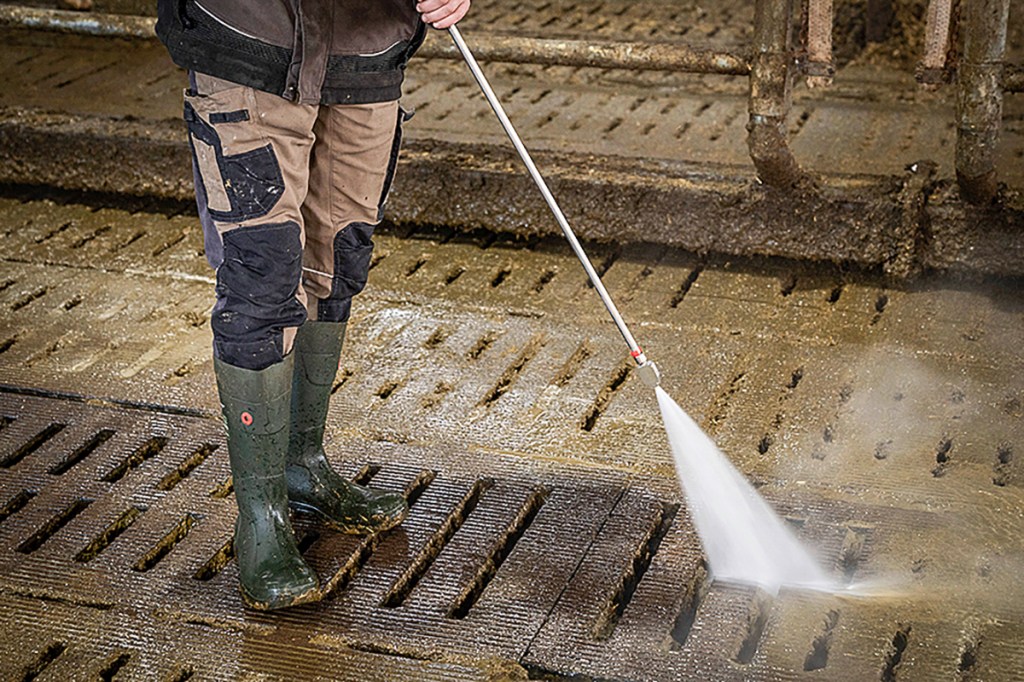
The lances attach via a quick-release system, so swapping between them was fast and easy. There are two slots behind the hose reel that are used to secure stored lances on the machine. These worked well, with the lances staying put when the washer was trundled across the yard.
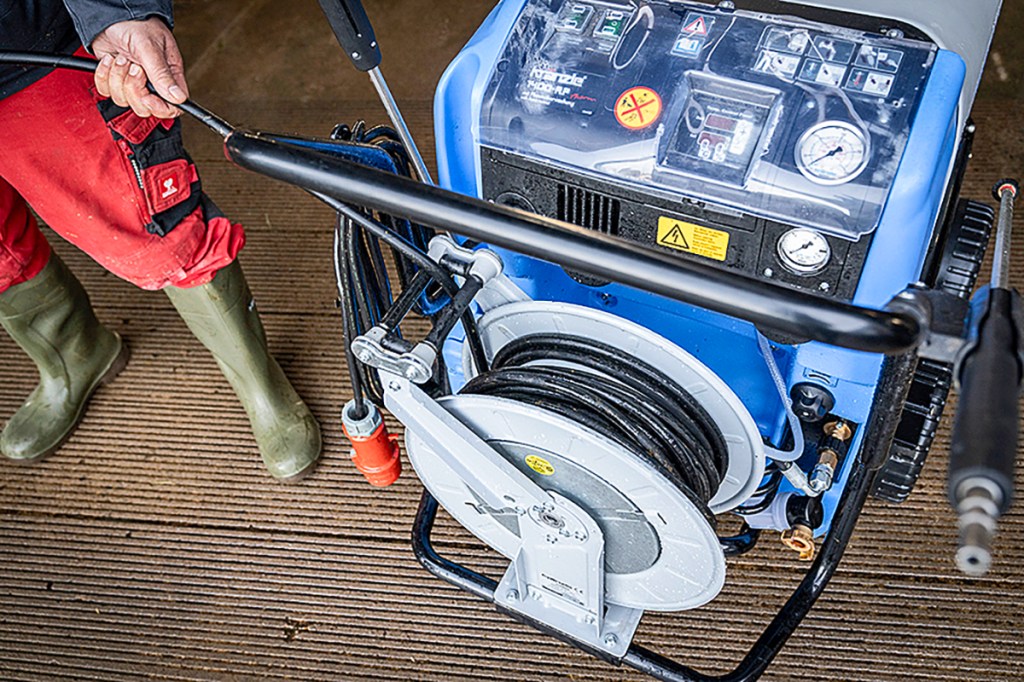
The automatic hose reel also worked well, drawing in the high-pressure hose strongly which speeds up packing away the machine. That said, we found 20 metres of hose a bit on the short side. Additional lengths of high-pressure hose can be joined separately with the use of a hose joiner, and there’s even a convenient hook to accommodate any extra hose when it’s not needed.
Summary
At first glance, the plastic housing of the Kränzle Therm-RP 1400 AT does not look especially premium to us, but its size and weight are impressive. Under the bonnet it is a solid bit of kit that is easy to operate in varied day-to-day use. In the UK, a 400v three-phase Therm-RP has a retail price from £5,260, or £5,540 with a manual wind hose reel with 20 metres of high-pressure hose fitted. Price of the Kränzle version as tested in Germany was £6,095.
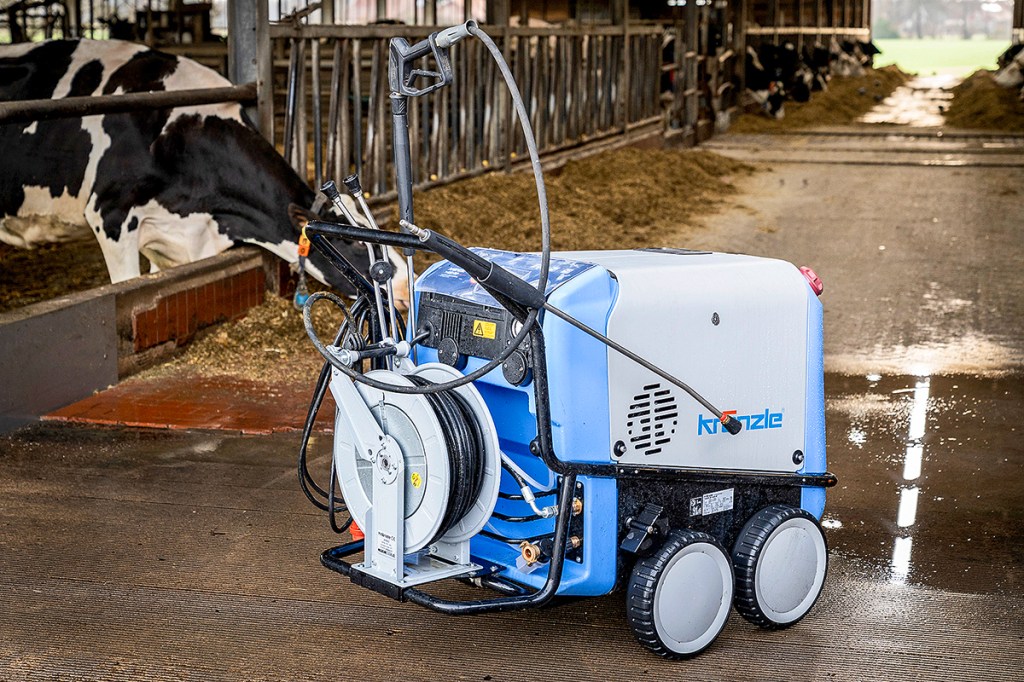
In the test, the machine ran without any problems. We just filled it with fuel, hooked it up to the water, plugged in, switched it on and got to work. Maintaining the set target temperature, important with our livestock washing task, was reliable throughout.
For those who want more spraying punch Kränzle’s Therm-RP 1600 is well worth a look. Retail prices start at £5,370, or £5,650 with a manual-wind hose reel and a 20m high-pressure hose fitted, and rise to £6,205 with the auto reel (all prices ex.VAT).
Martin Zäh
For more up-to-date farming news click here and subscribe now to profi and save.