
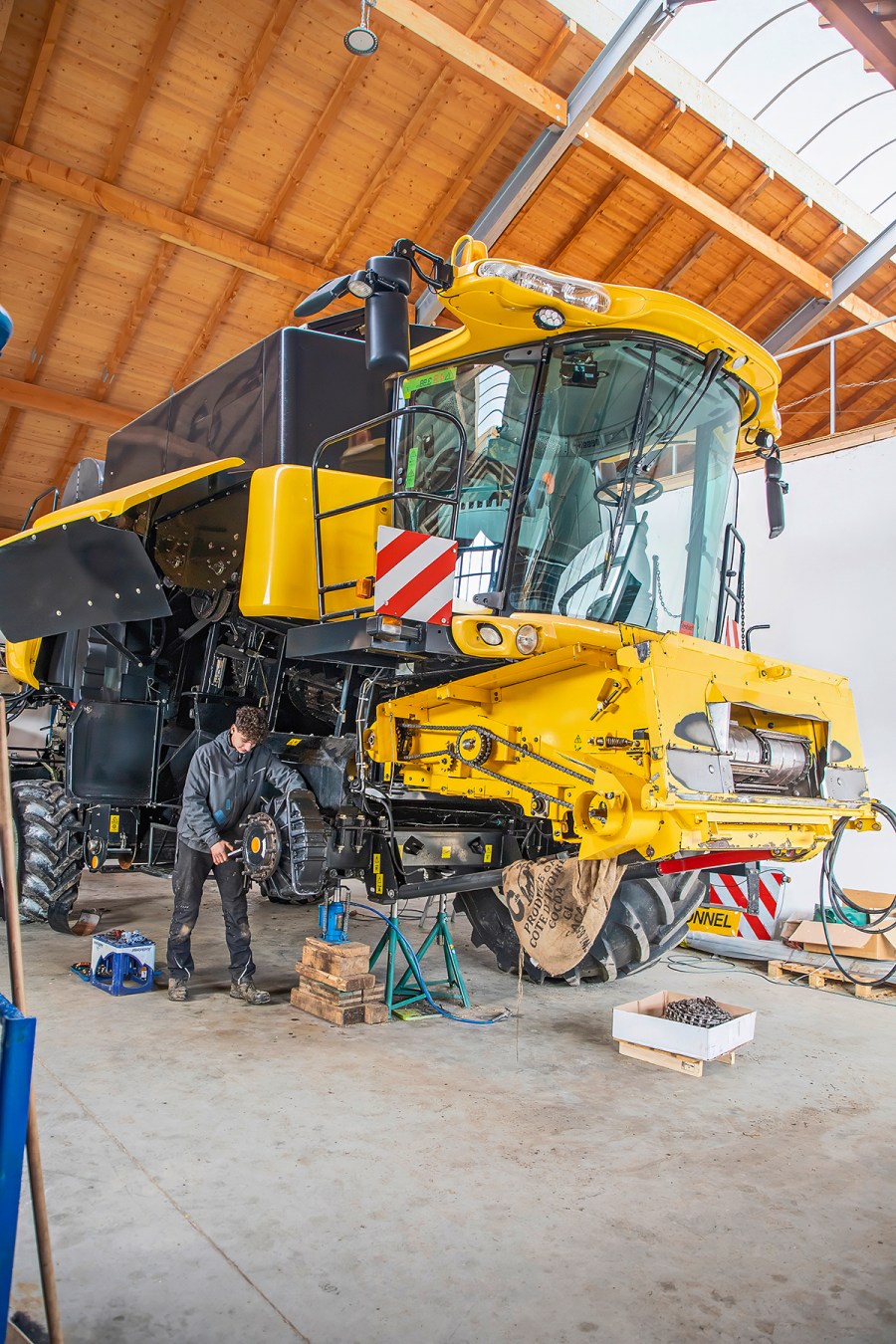
Although organic farmer Anton Maier had his eye on a new combine,
he decided to buy a used machine and embark on a major DIY repair job.
KEEPING IT BRIEF
- The CR960 replaced a Deutz-Fahr TopLiner 4065 HTS.
- A detailed repair list was drawn up.
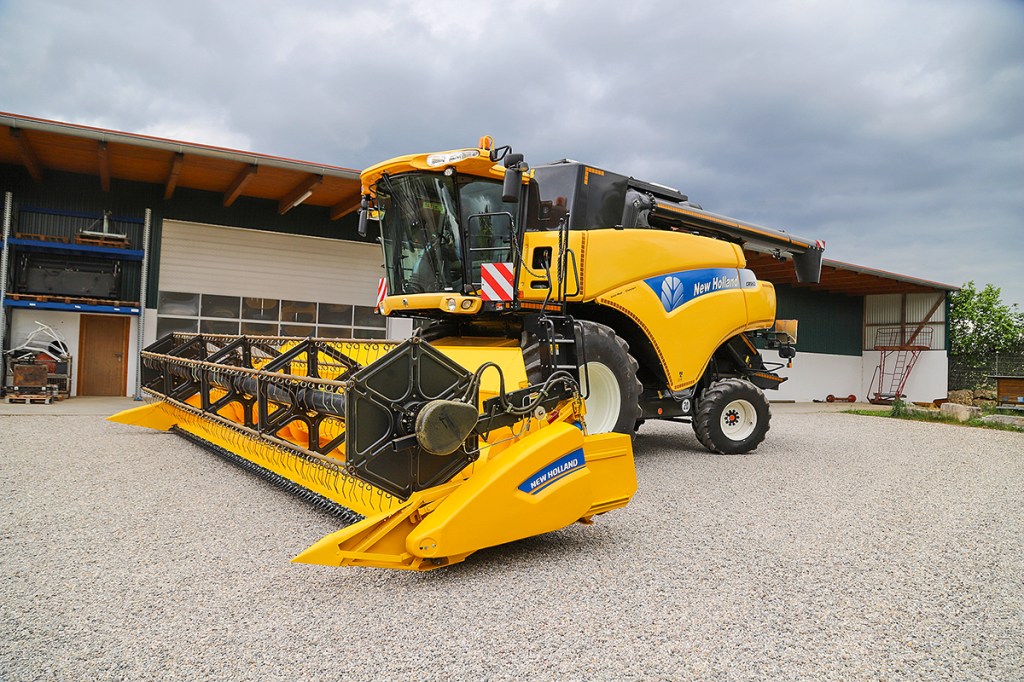
- Thanks to its narrow rotors, the CR960 can run on 900 tyres and still squeeze within the permitted 3.50m road width.
Anton Maier and his sons Max and Martin farm 150ha of organic land at Eitensheim in Bavaria, with around 60ha dedicated to combinable crops such as wheat, oats, malting barley and sunflowers. Up until now these crops have been put under the knife of a 1992 Deutz-Fahr TopLiner 4065 HTS harvester.
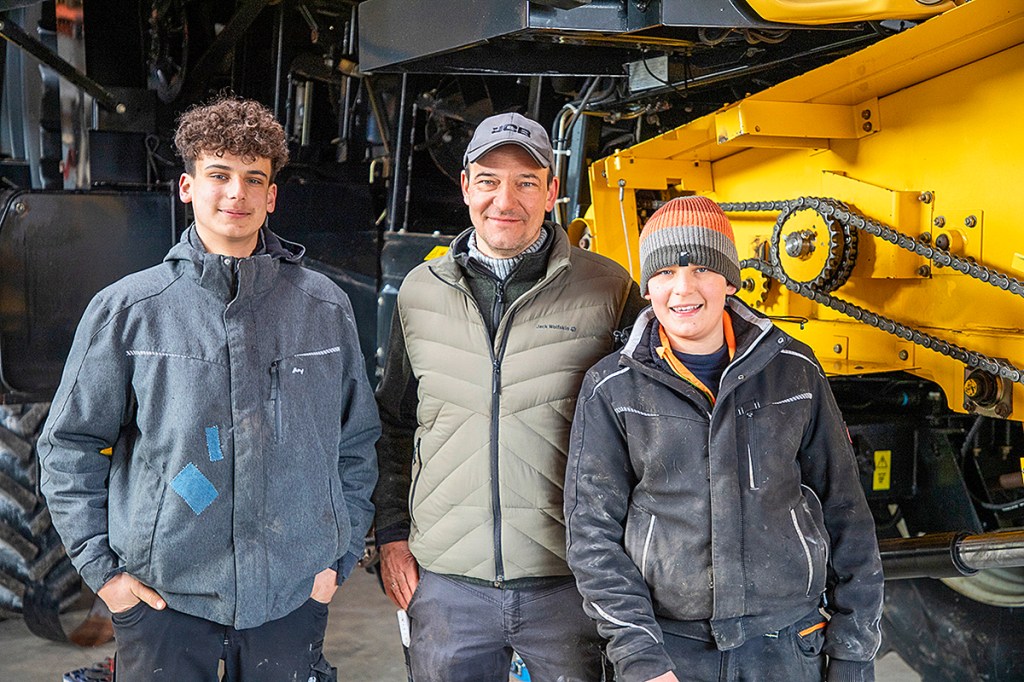
Just a glance at the old Deutz and you can tell the Meiers look after their machines, as it stood spotless in the shed, tucked away for its last winter on the farm. Three years ago, this was also given a front-to- back overhaul. But now, with the arrival of the 2005 New Holland CR960 with about 2,000 drum hours on the clock, the trusty TopLiner is heading off to a new owner for this harvest.
Why the CR?
“We’d been on the look-out for a CR for quite a while, because its two rotors make it an incredibly simple design while still delivering excellent threshing and grain quality,” says Anton Maier, explaining his choice.
What’s more, the 345hp engine matches the throughput nicely. Too much power, wrongly set up, often means higher losses and increased wear. “It’s simply the right machine for us,” points out Anton.
The combine they ended up buying had belonged to a contractor in Lower Saxony and looked to be in good overall condition. Some oils had already been changed, but several wear parts needed attention. “We thoroughly went through the combine with a mechanic friend of ours and drew up a list with all of the parts that needed replacing or repair.”
It turned out that, on top of the €55,000 purchase price, a further €15,000 in parts would need to be budgeted for.
A few lay-up gremlins
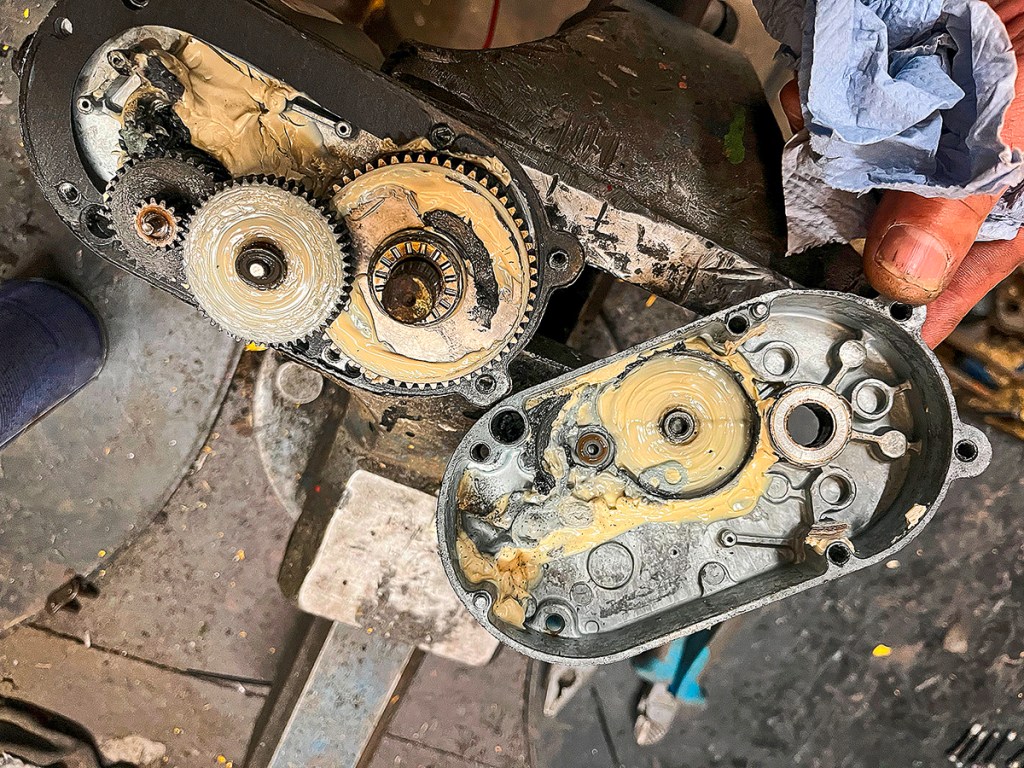
The combine had last worked in the 2024 season and arrived at the Maiers’ farm in December 2025. Having been left standing idle had caused a few problems: for instance, the electric gear motor for the concave was playing up. “I removed the concave motor, cleaned it properly, replaced the gummed-up, hardened grease and put it back together again.” This saved Anton having to buy a replacement for about €1,300. The adjusters for the top and bottom sieves were also out of action.
The linkage on the top sieve was broken, badly corroded in places and stiff to move. On the bottom sieve, the quick-release catch was worn and no longer locking in place.
“Since overall threshing quality can also be significantly influenced by the speed of the threshing drum and the twin rotors when harvesting similar crops, the sieve adjusters were probably rarely used,” explains the technically minded farmer.
Sorting out the leaks
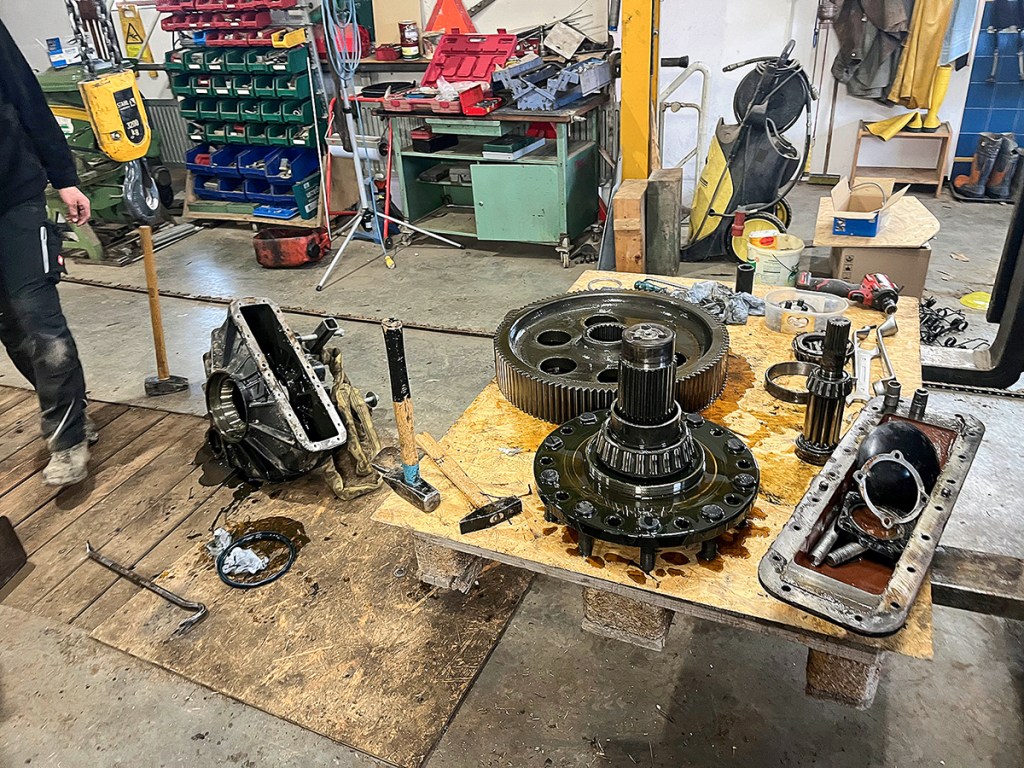
A number of oil leaks also needed sorting out, the biggest of which was traced to the right-hand wheel drive. The cause was a faulty shaft seal on the main drive shaft, which meant the whole drive unit had to be removed and stripped down.
A bearing damaged during removal was replaced at the same time. Further leaks were found at the oil motors of the chaff spreader and the feed belt to the straw chopper; they were fixed using appropriate seal kits.
Another problem was discovered in the hydraulic circuit for the drive system; or to be more precise, there was a serious leak in an accumulator that cushions any pressure fluctuations in the system. “We noticed the drive would occasionally throw up an error message and then shut itself down every time,” reports Anton. Once the accumulator had been fixed and the system bled, that fault was cured, too.
Resourceful fixes
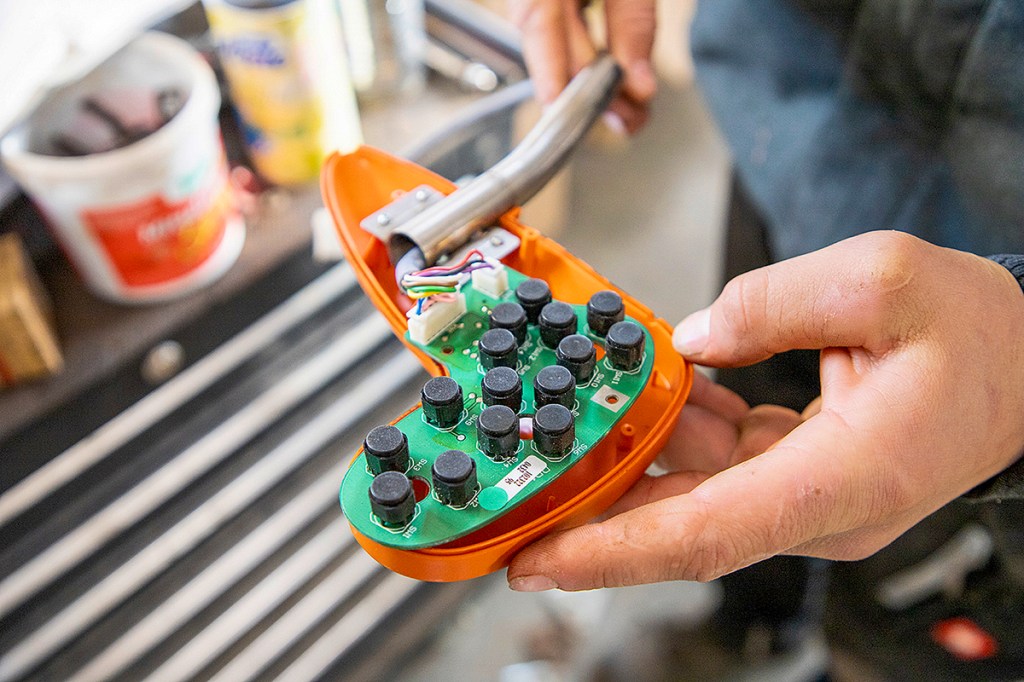
The drive lever was also causing a bit of bother. Among other things, it houses the buttons for the header, which are soldered onto a circuit board. Some of the buttons were sticking and not working properly. Since a new drive lever costs about €1,300, the father and his sons opted to repair it. Replacement buttons costing just €3 each were found. We actually explained how to swap buttons on a circuit board in profi 4/2024, if you want to have a look at how you can also do this.
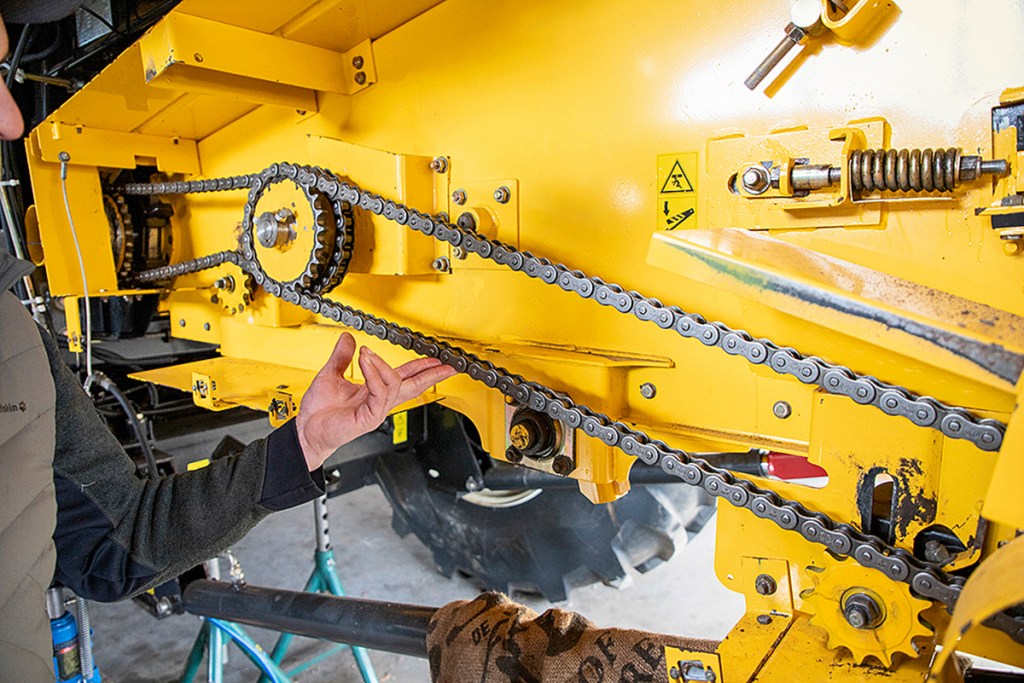
On the elevator, the resourceful trio replaced the feeder chains and the bearings in the pulleys. They reused the slats, though some had to be straightened out with a hydraulic press. The drive chains on the outside of the elevator were also replaced. The shaft on the middle sprocket was worn so a new stub shaft was fitted.
Since there were marks on some of the sheet-metal parts, wooden guide rails were added. “We copied that from our TopLiner — it’s got wooden guide strips for the roller chains fitted, too,” explains Anton.
A few more wear parts were swapped along the way including the drive belts for the fan and the returns elevator. The Iveco engine, in contrast, is known as being dependable, so, after around 2,850 hours, there wasn’t much to do apart from setting the valves and replacing the valve cover gasket.
Header headaches
Initially, the Maiers weren’t keen on taking on the 6.80m wide header offered with the combine, a 2006-manufactured unit. “Given the different year of manufacture and the amount of wear on it, it was pretty obvious it hadn’t originally belonged to our CR,” says Anton. In the end, though, the header and trailer were bought along with the combine for a modest extra sum.
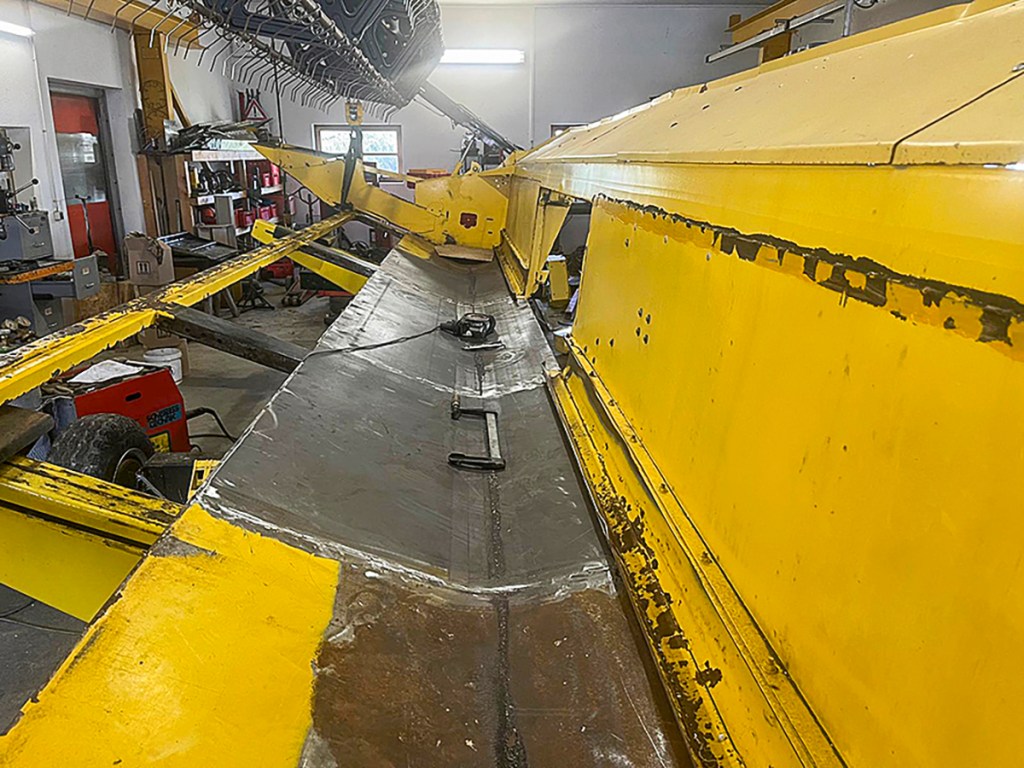
Back on the farm, it was completely stripped down. All of the bearings on the intake auger and the drive, plus the chains and tensioner wheels were replaced. A fair bit of sheet-metal work was also needed. “The rear panels of the Vario table were so worn and partly bent in the middle that the header could no longer be adjusted properly. We cut them out and fitted new 3mm Hardox plate panels instead.”
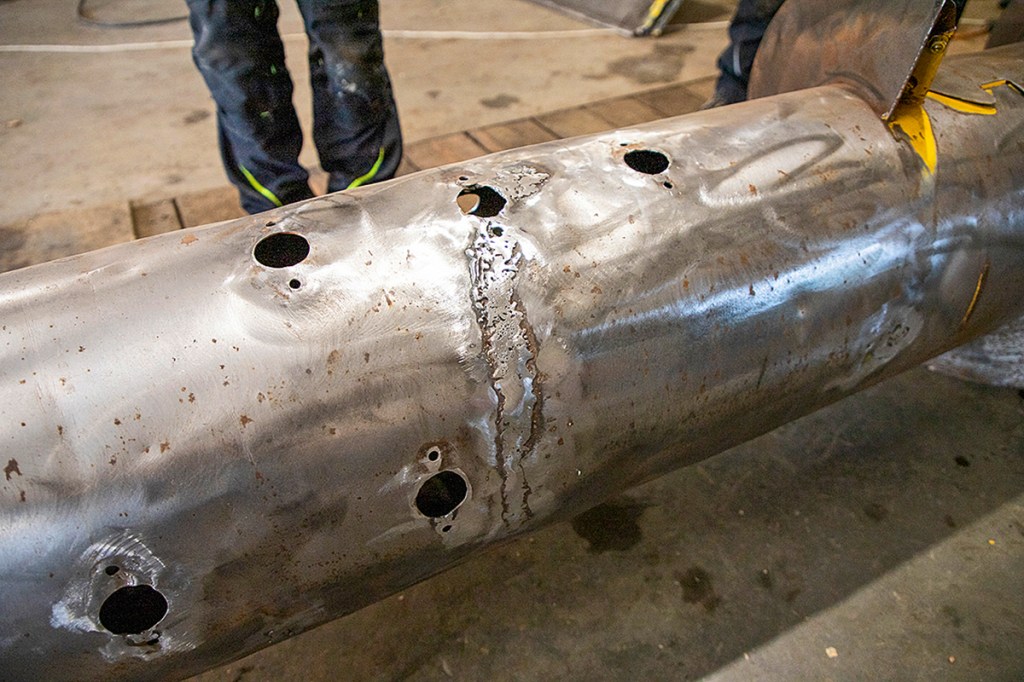
The side guards also needed some on-farm panel beating. The cutterbar was fitted with new fingers. Luckily, the spare knife supplied with the header turned out to be as good as new and was fitted using new guide rollers. The old knife was refurbished and serves as a spare now. The auger had already been re-welded in one spot and had clearly been straightened before. “What mattered to us was that it was running true. We reinforced the existing weld with a flat bar and fitted new intake fingers along with new plastic guides all round.”
The auto header height control also needed some attention, with the potentiometers on the left and right under the table recalibrated by a specialist. Finally, the ram for controlling the height of the reel was resealed with a seal kit.
Further upgrades
While the combine was being gone through, they also carried out a number of upgrades including fitting extra LED work lights and a change of tyres. The combine, previously on 710/70 R38 front wheels, is now booted with VF 900/60 R38s. All part of minimising compaction on the ploughless organic set-up. A Capello sunflower header is also set to arrive.
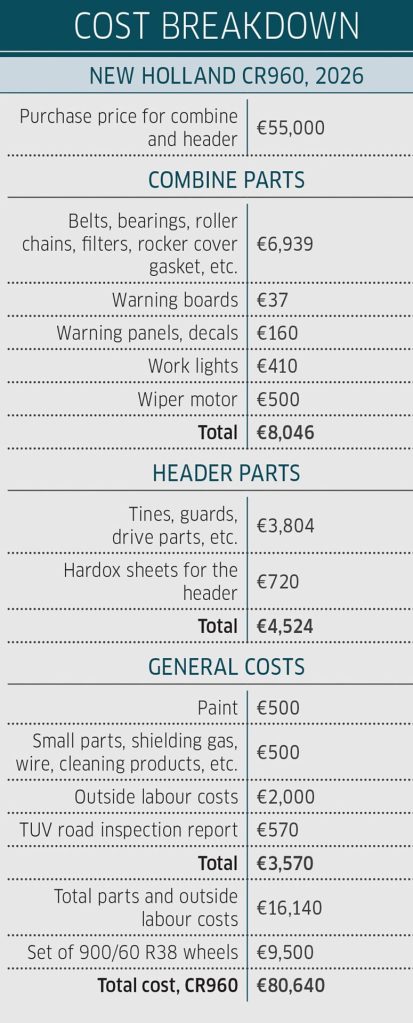
Costs and summary
All in all, the parts bill came in close to the €15,000 budgeted. A further €9,500 was needed for new tyres. Total costs, including the purchase price, tots up to about €80,000. Not included within this figure is the Maier family’s own labour: about 400 hours went into overhauling the combine and a further 350 hours into reworking the header, all carried out in the farm workshop.
Anton estimates the annual combining area will be about 80ha. This workload includes a few contracting jobs in the neighbourhood. In the not-too-distant future, though, this acreage is set to rise to about 120ha. “My sons and I enjoy the technical side of things, so it was a nice winter project with a few challenges thrown in,” comments Anton.
“Now we’re looking forward to harvest. We’d like to say a particular thank-you to Erhard Brandl in Eitensheim, who gave us great support with advice and sourcing many of the parts,” Anton adds.
Alexander Bertling
For more up-to-date farming news click here and subscribe now to profi and save.