

While completing our FR780 practical test, we also had the chance
to check out the new ForageCam system, which detects the all-important quality of kernel processing. Here is our exclusive report.
KEEPING IT BRIEF
- There are three silage harvester makers that can measure the CSPS value in the crop flow in real time.
- We were able to use the ForageCam during our FR780 test.
- The comparison with the lab results shows a clear trend: New Holland is training the software with additional characteristic curves.
Three forager manufacturers (Claas, Fendt and New Holland) received a DLG silver medal at Agritechnica for their controlled kernel processing. The trend within the industry is clear: maize kernels should be cracked into as small as possible bits or even ground to meal.
Expressed as a percentage that shows how well the kernels are broken in maize silage, the Corn Silage Processing Score (CSPS) has come increasingly into focus in dairy cattle feeding.
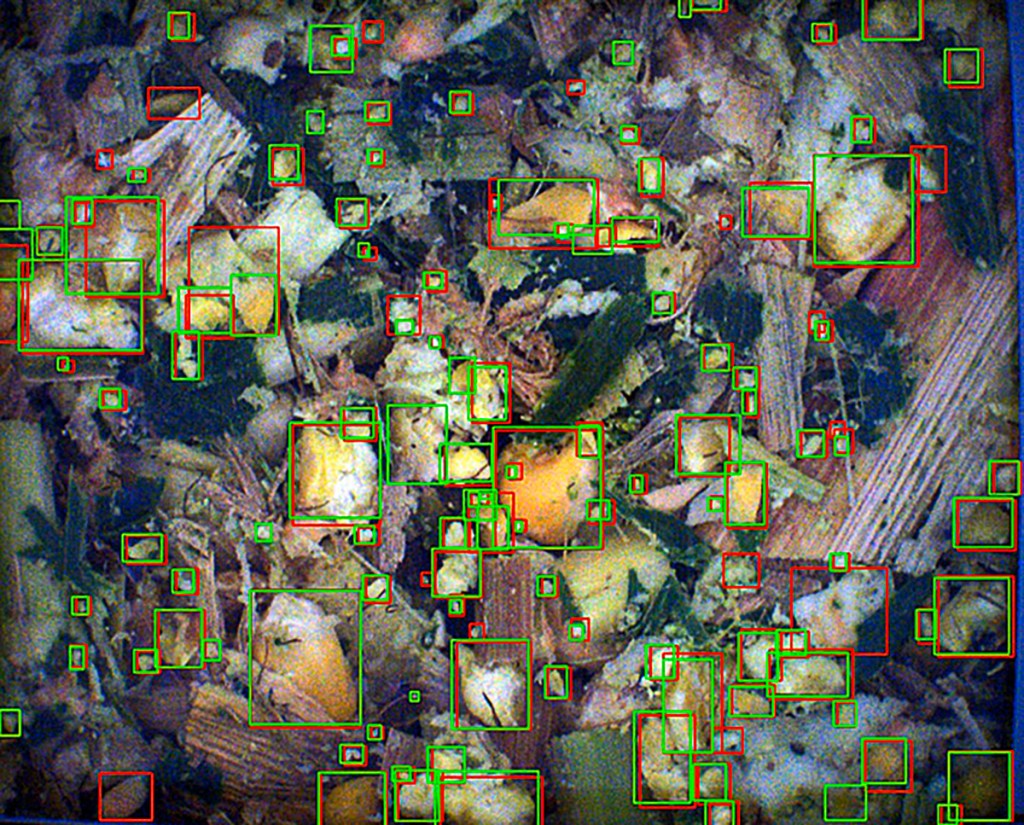
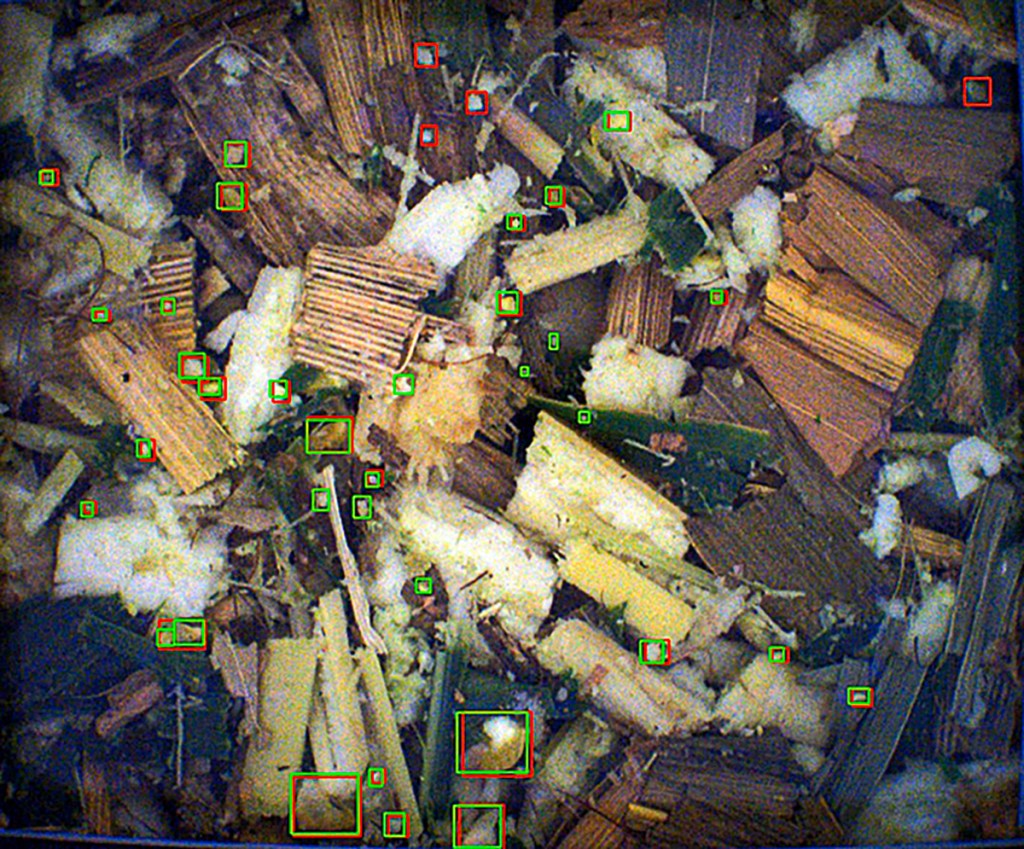
A bit of background. Scientific studies show that well-processed maize kernels improve starch digestion in the cow’s rumen and thus contribute to higher milk yields and better animal health. That is why the CSPS score has been categorised: anything over 70% is considered very good and should have a particularly positive effect on milk yields; values within the 70-50% range are still considered good, whereas scores of less than 50% are insufficient.
Up to now, the CSPS test was carried out in a lab: the sample was dried and fractioned in a system of sieves with 4.75mm meshes. Any insufficiently crushed/broken grains remained on the sieve. The starch content is determined from the total sample as well as the fraction smaller than 4.75mm. The CSPS score is then computed on the basis of starch content in the fine fraction relative to the total starch content.
Result only after harvest
Downside of the lab-based analysis is that it takes several days. Although there are initial trials that use apps for this, these only offer snapshots.
We were able to take a closer look at New Holland’s ForageCam unit during our FR780 practical test (see page 24). During this test we also sent samples to the lab to compare to the real-time results from the ForageCam.

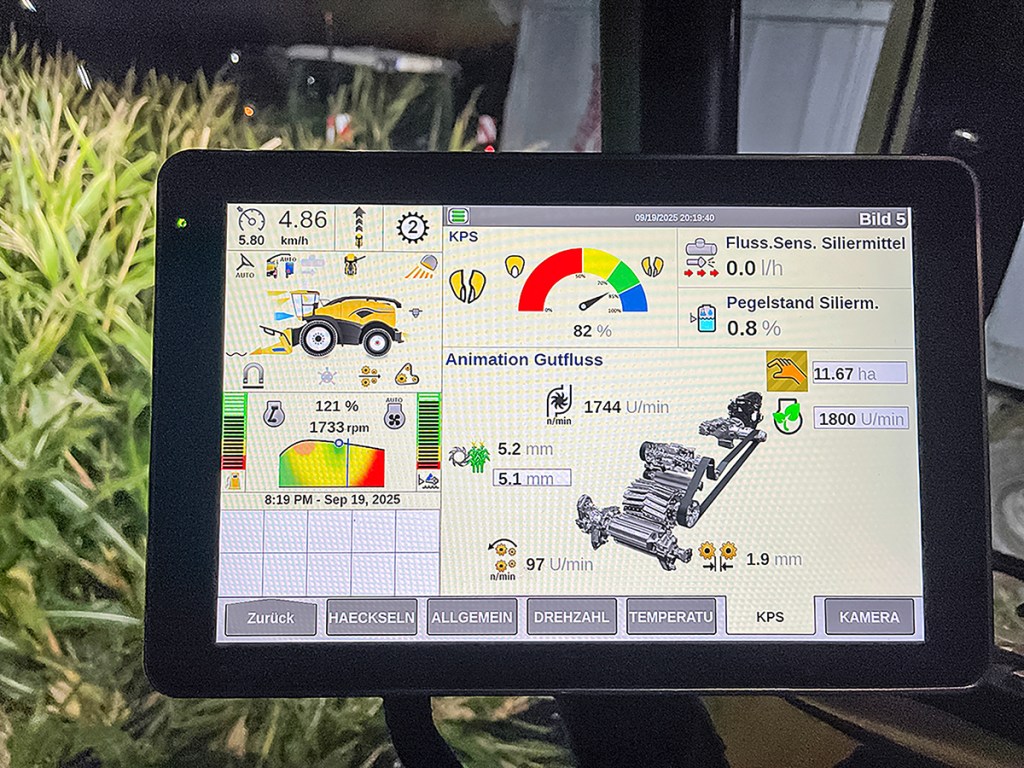
The hardware is easy to explain: a high-speed camera in the chute takes 11 photos per second of the crop flow for the software to decipher. In its analysis, the software first distinguishes between the kernels and leaf/stem material; then it measures just the kernel material. The current CSPS value of the chopped fresh maize is shown on the in-cab display moments later.
In our test, we set up the forager to achieve CSPS values of 87, 80 and 70%. It was quite surprising just how often the forager would open the rollers relatively wide: from 1.1mm at 87% to 2.7mm at 80% and as much as a 4mm gap at 70% — which is good for wear, throughput and diesel consumption. We also took our lab samples in these three settings.
Initially the automatic control of the cracker gap only worked with support from New Holland’s development department with a laptop connected. In subsequent tests, the FR forager operator was able to manually adjust the cracker using the real-time CSPS information on the cab terminal.
Right direction
The results from Lufa Nord West show that rising CSPS values on the harvester terminal also mean rising values in the lab. We will have the same samples analysed in other laboratories too, because even in these lab tests the CSPS values can vary quite a bit from one to the other.
Even so, we did not want to withhold the first results from the relatively late harvest: the maize was fairly dry at 38.5% DM and starch content was high (39.5%). With the CSPS set at 70% on the terminal, the lab measured a CSPS value of 55%. With the forager given a target of 80%, the sample actually had a CSPS value of 69%. Changing the target to 87% the results were actually measured at 76%.
There is certainly still room for fine-tuning here. New Holland is, however, confident that it will be able to produce an accurate system by the time the ForageCam system goes to market, not least because many characteristic curves have already been fed into the software at this early stage.
As with many costly assistance systems, it is often difficult for contractors to justify a higher price to their customers. And the reality is that the technology warrants a surcharge as it has the potential to bring customers real benefits. For example, one could apply a tiered pricing model based on the CSPS achieved. And if the score is right, diesel can be saved thanks to the wider cracker gap. A win-win situation.
Jan-Martin Küper
For more up-to-date farming news click here and subscribe now to profi and save.