

This month’s on-farm mods are all about spraying. Our profi readers have come up with a variety of ideas to either improve precision or just make the operator’s job that bit easier.
Crop sprayers have to work very precisely and safely — not just because crop protection products are extremely expensive but also to prevent any environmental mishaps.
And when things go wrong, it can quickly become costly: for instance, if the sprayer isn’t properly washed out before switching crops.
Yet it’s not just all about the cleaning — our practically minded profi readers have also come up with some clever ideas for filling and operator comfort.
Sebastian Rüther
For more up-to-date farming news click here and subscribe now to profi and save.
IN-FIELD CLEAN
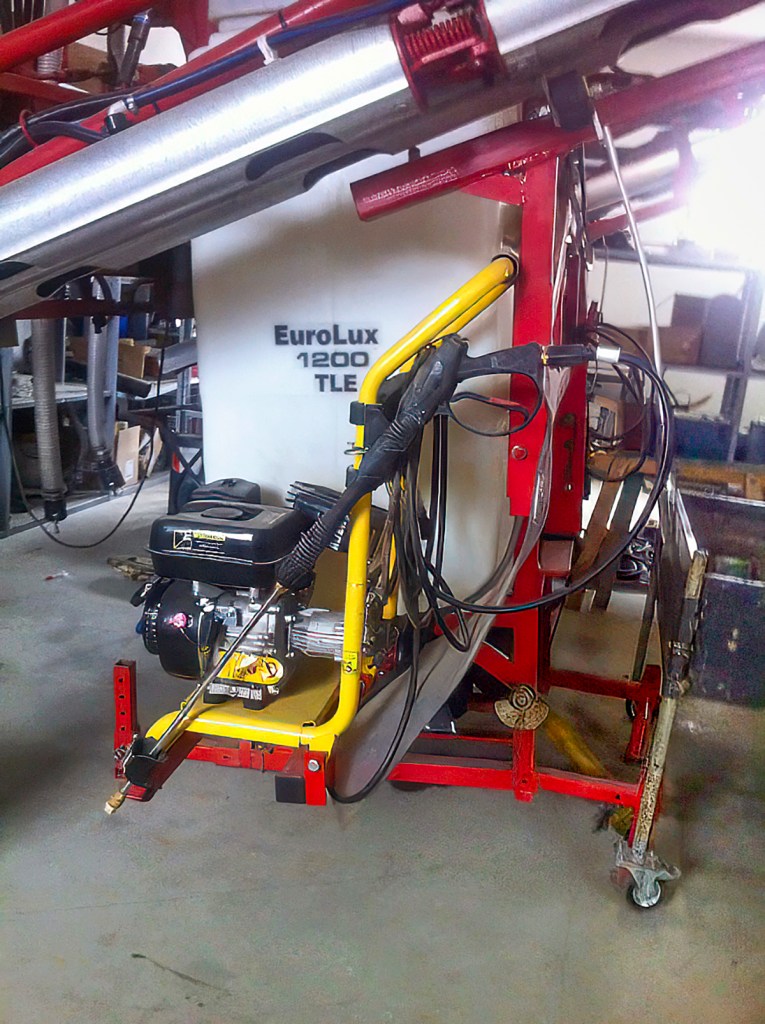
To properly clean off the sprayer in the field, Alex Hartinger fitted a petrol engine-powered pressure washer. The clean water tank feeds the washer. This makes the set-up fully self-contained, allowing the sprayer to be cleaned in the field in line with good practice.
TIDILY ROUTED
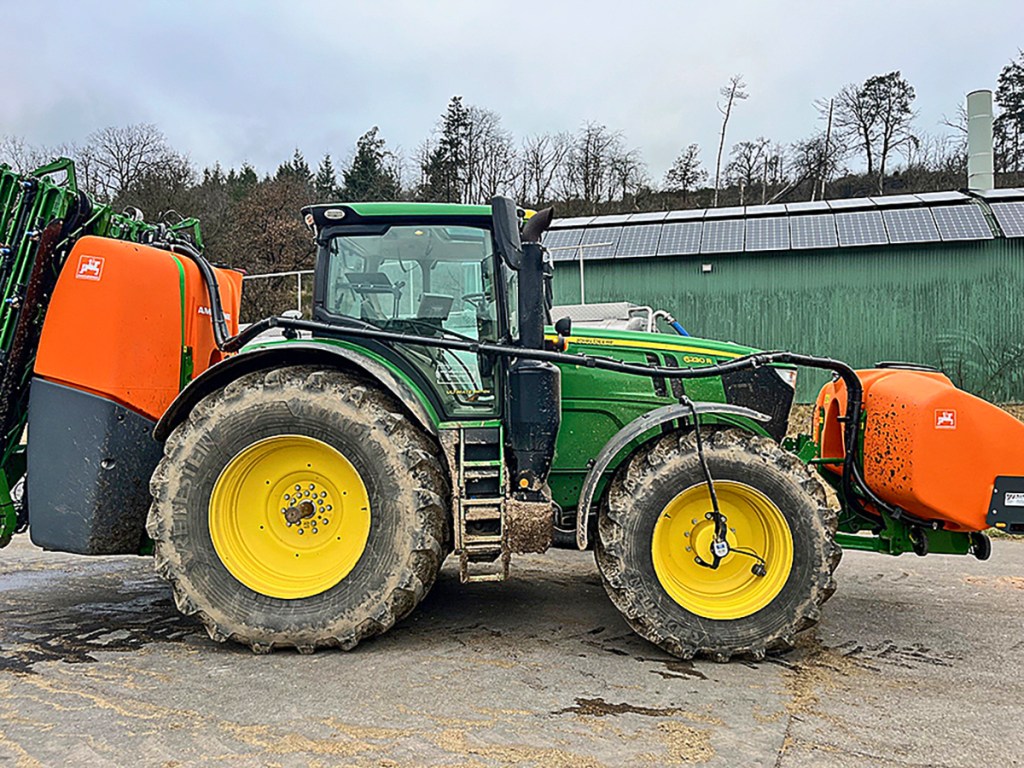
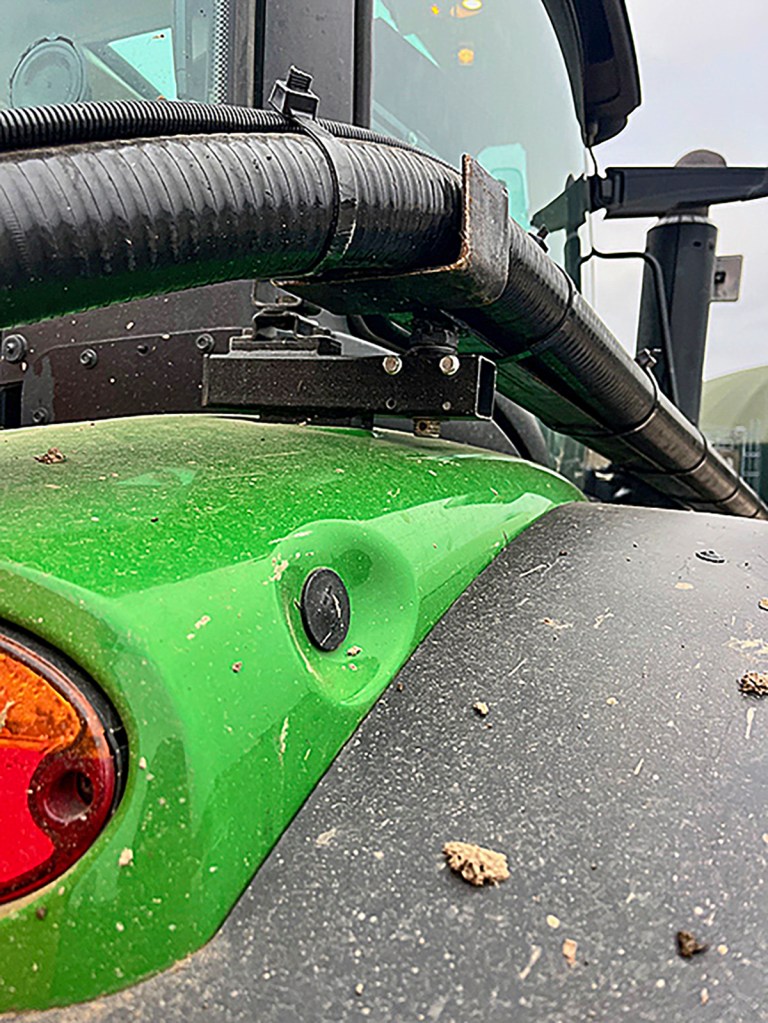
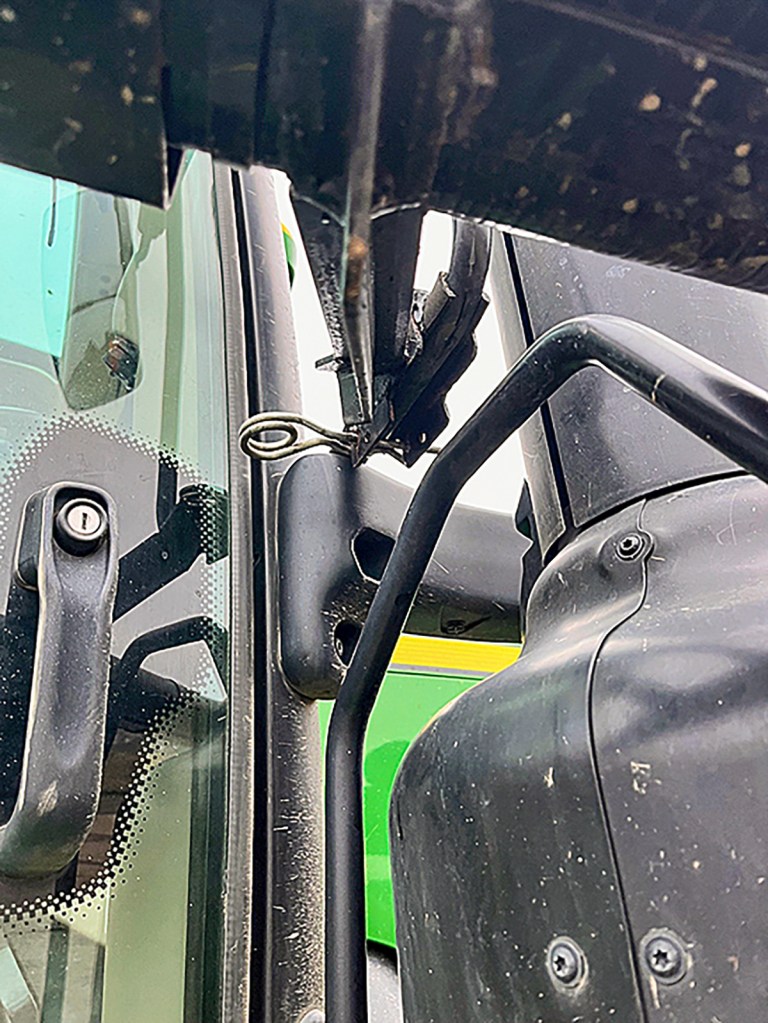
This reader made two lightweight, easy to install holders to route the three hoses and cable from the front tank to the rear-mounted sprayer on his John Deere 6230R. One of the holders is attached to the warning panel bracket; the other is hooked to the handle and secured with a split pin. All of the hoses have quick coupling ends, making fitting the sprayers a simple one person job.
FROST FREE
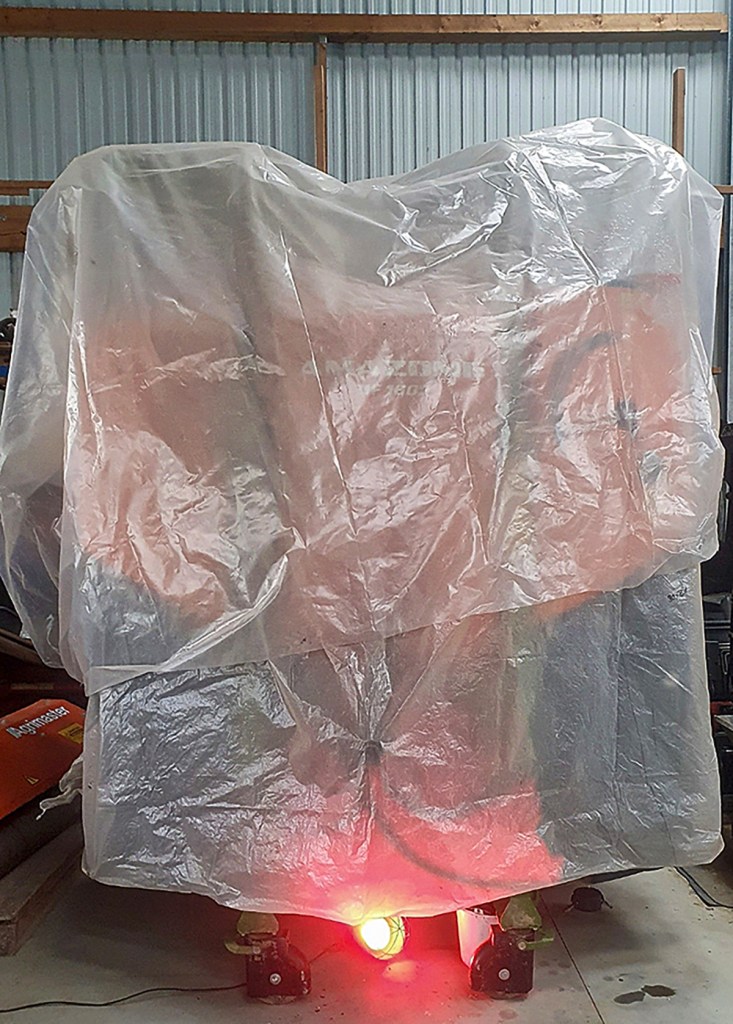
During particularly cold spells, this hibernating sprayer is covered with a plastic cover and warmed with a 175W heat lamp.
WHEELY GOOD
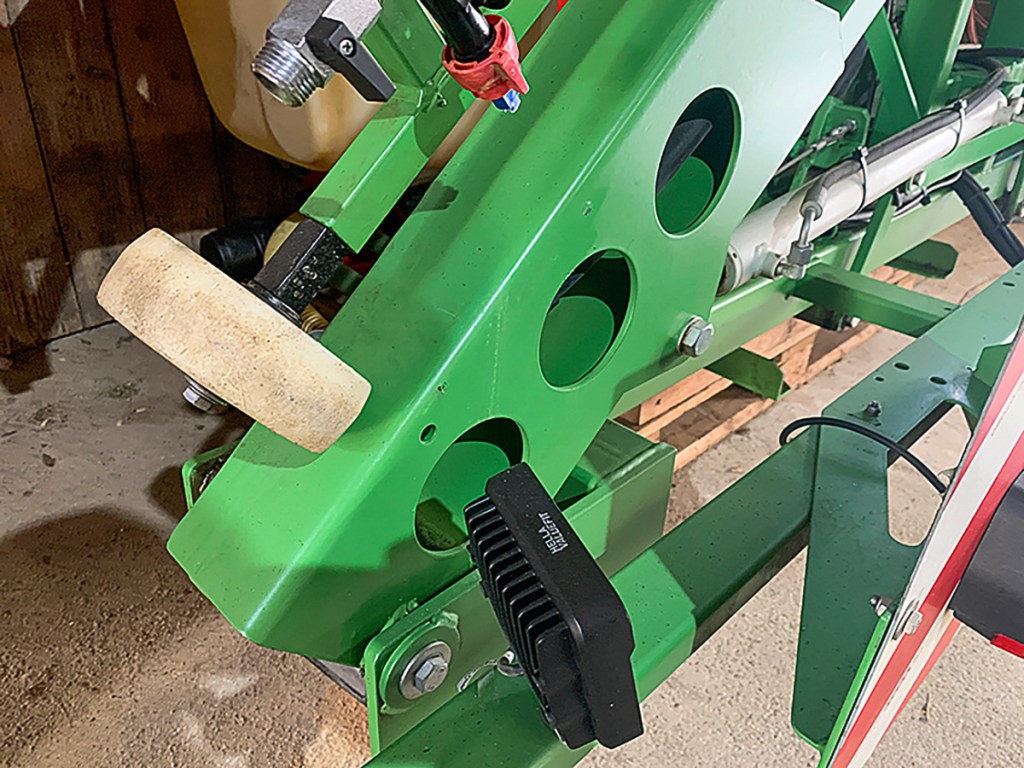
This farm has a long sloping field where the boom’s slope compensation can reach its limit. To protect the boom from hitting the ground, Matthias Fuchs installed a 125mm plastic wheel on the ends of the boom.
WELL PROTECTED
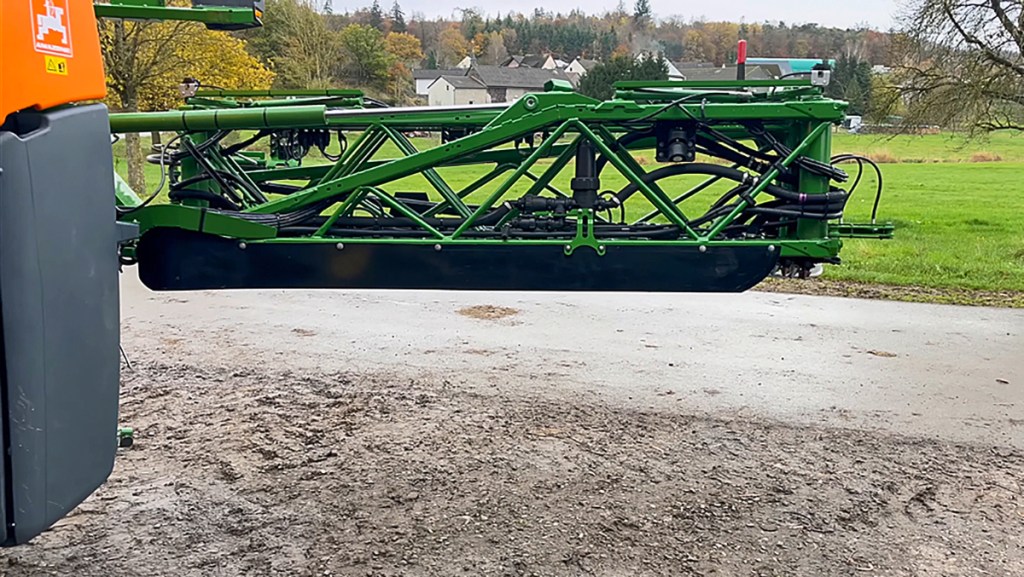
To prevent the folded boom from getting splattered with muck and stones, this owner attached a 3mm thick strip of plastic with stainless steel screws. This protects the UF boom when leaving a muddy field.
THREE IS THE MAGIC NUMBER
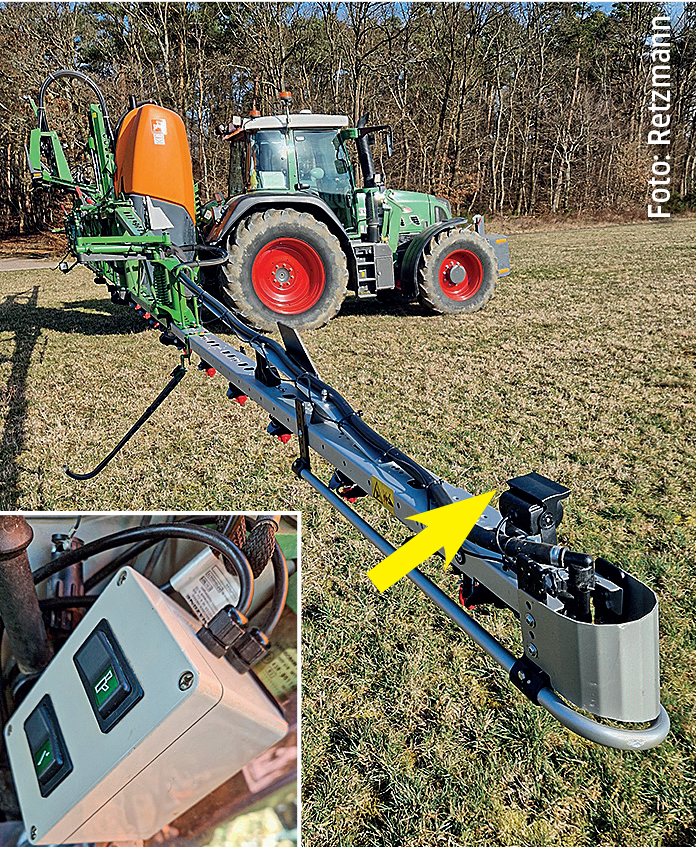
Jonas Retzmann added an extra bracket so the reversing camera can be tilted farther down to see the end of the boom. He also fitted a second camera on the right-hand boom, making it easier to judge whether the outer nozzle needs to be switched off when spraying along the field edge. A third camera was installed to the tractor’s number plate bracket to complete the picture. However, as the Amatron 4 can only display one camera image at a time, he built a simple switch box to toggle between the different cameras.
HOME-MADE SLOPE CORRECTION
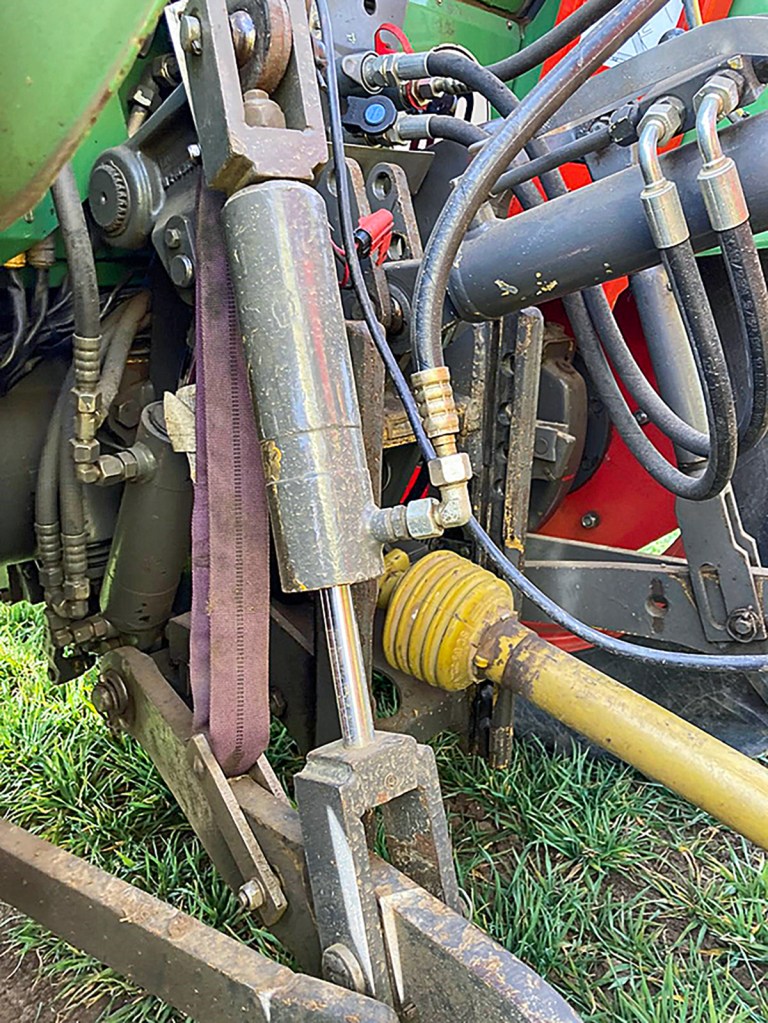
To give this older sprayer slope correction, the owner replaced the tractor’s lift rod with a spool- operated ram to get the boom to the right height.
GENTLE IN OILSEED RAPE
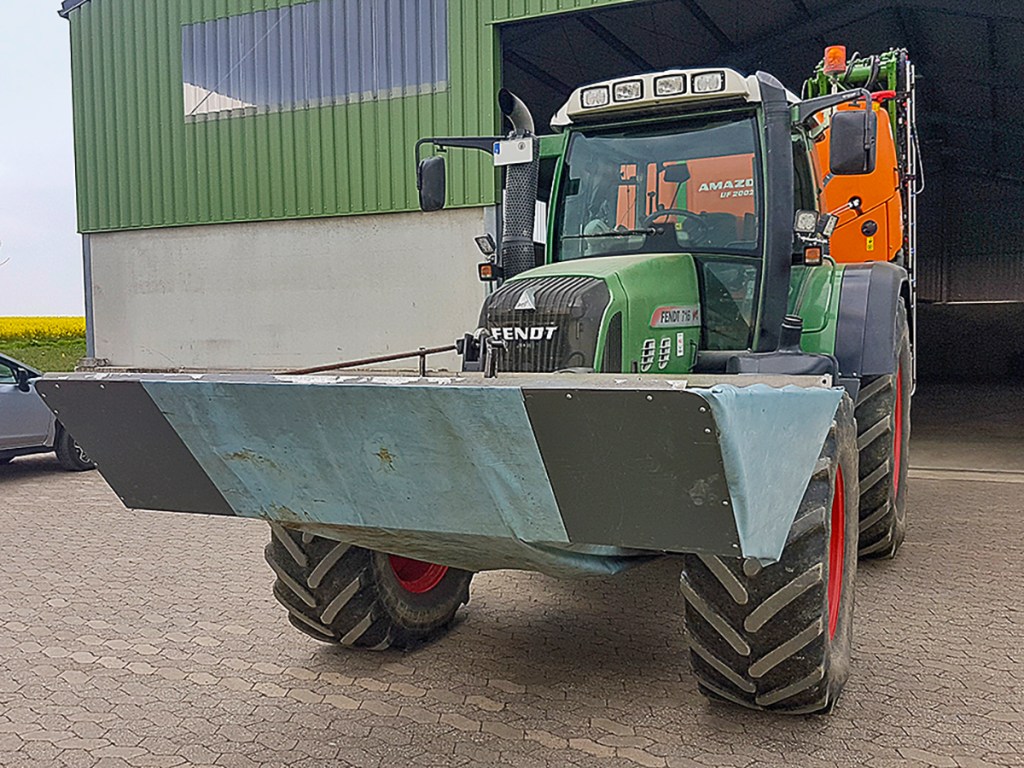
For treating oilseed rape at flowering, this reader built a front weight, with the lift arm couplings positioned low down. This allows the slanted weight to be lifted nice and high, so the plants are gently pushed down. A tarp sheet running from the weight, under the tractor offers further protection to the crop.
AUTO CAMERA WASH
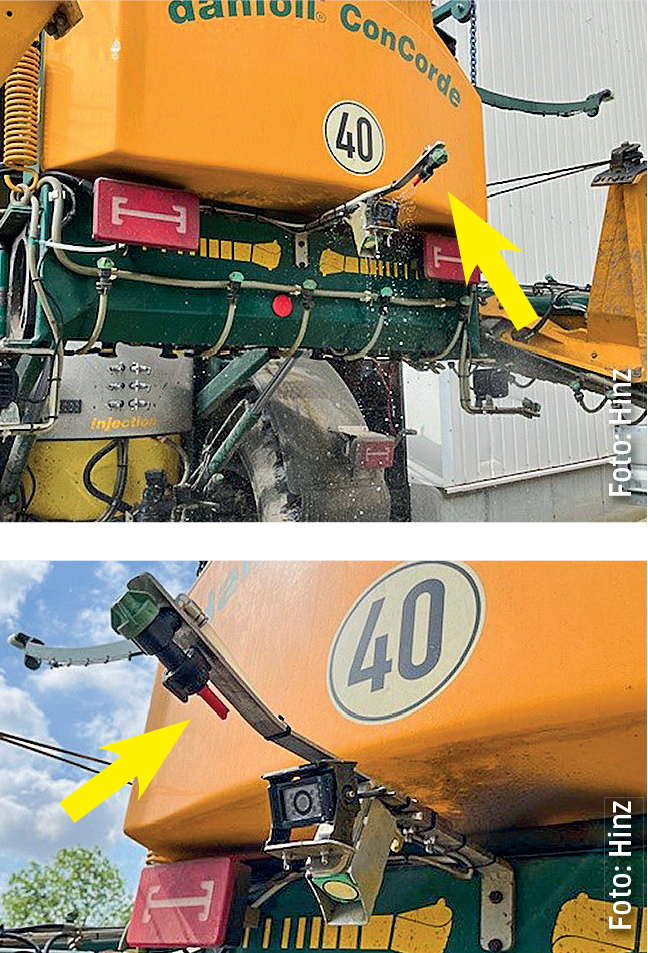
This reversing camera was given a cleaning nozzle, which is part of the water circuit. It washes off the lights.
CLEAR VIEW TO THE REAR
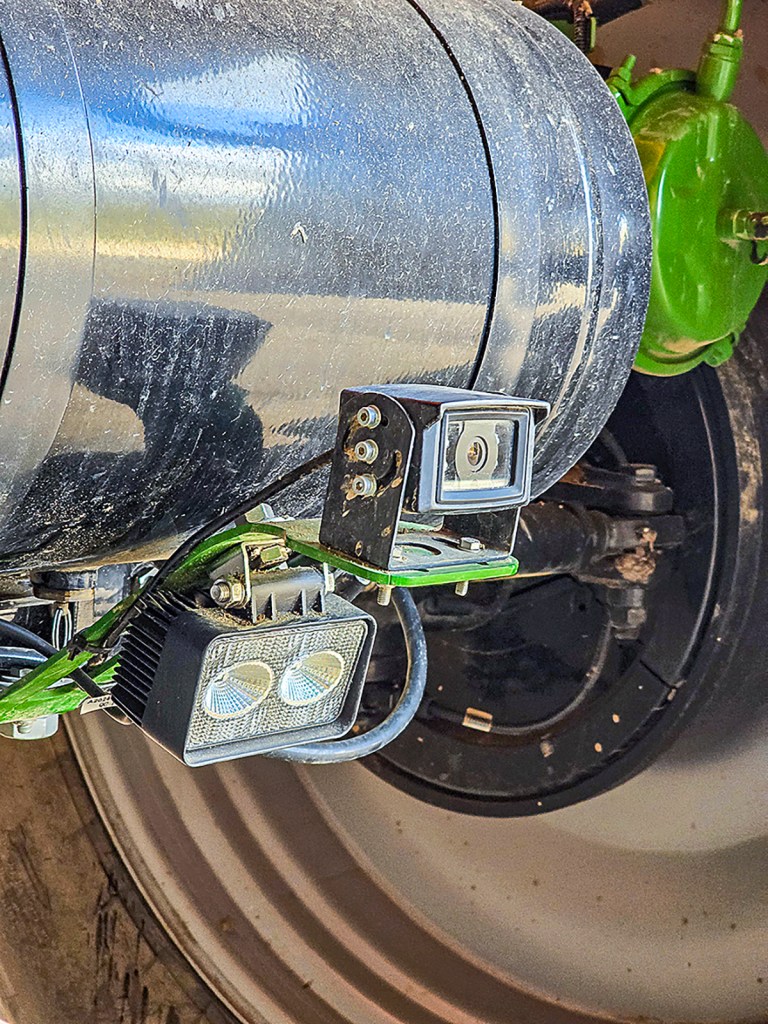

To ensure a clear view to the rear, even at night, this owner fitted a work light beneath the reversing camera. It illuminates the camera’s field of view, which is particularly useful when reversing in the dark.
ENOUGH STORAGE FOR A FULL DAY
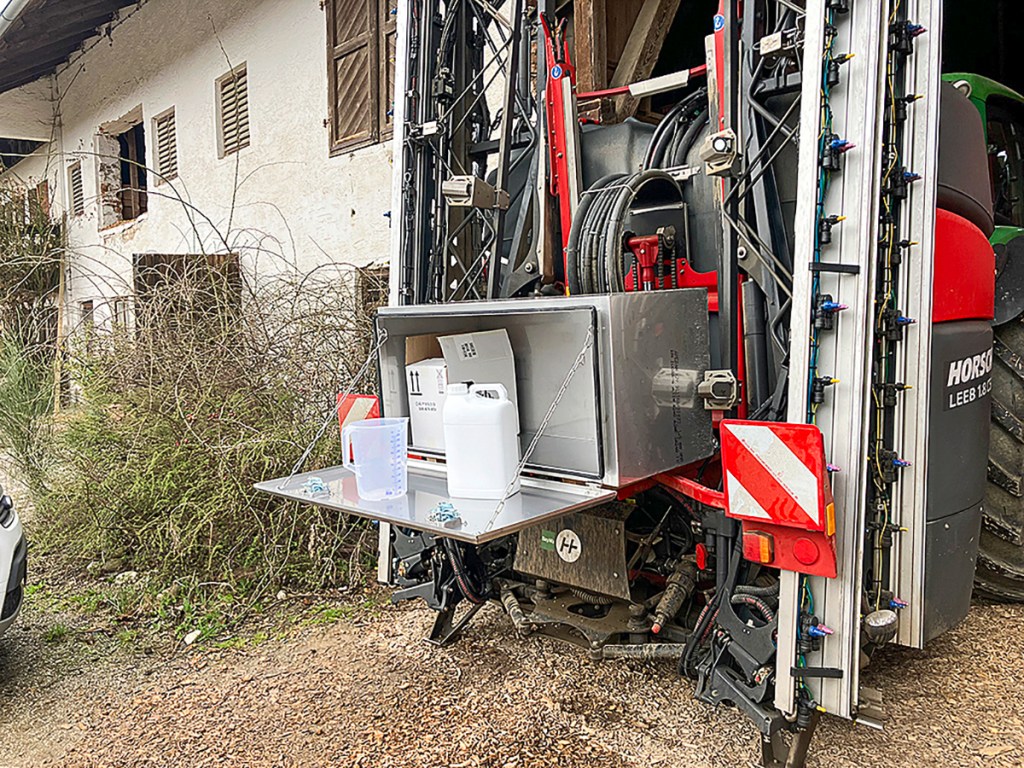
Dominic Lechner was fed up with the limited storage space on his mounted sprayer. As he often fills the sprayer at the edge of the field, he needs to carry enough chemicals to make it through a full day, so he fitted a stainless steel storage box at the rear of the sprayer. A raised lip acts as a bund, preventing the chemicals from leaking should a can get damaged. The lid of the box also doubles up as a table.
SCREEN FOR SPRAYING EDGES
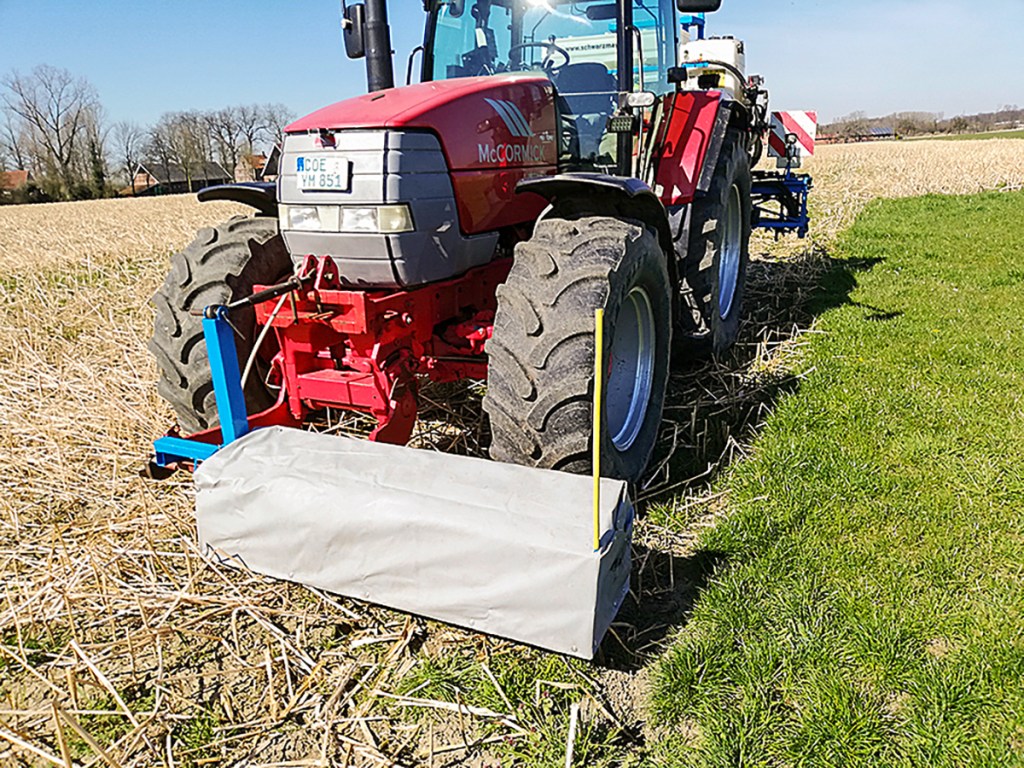
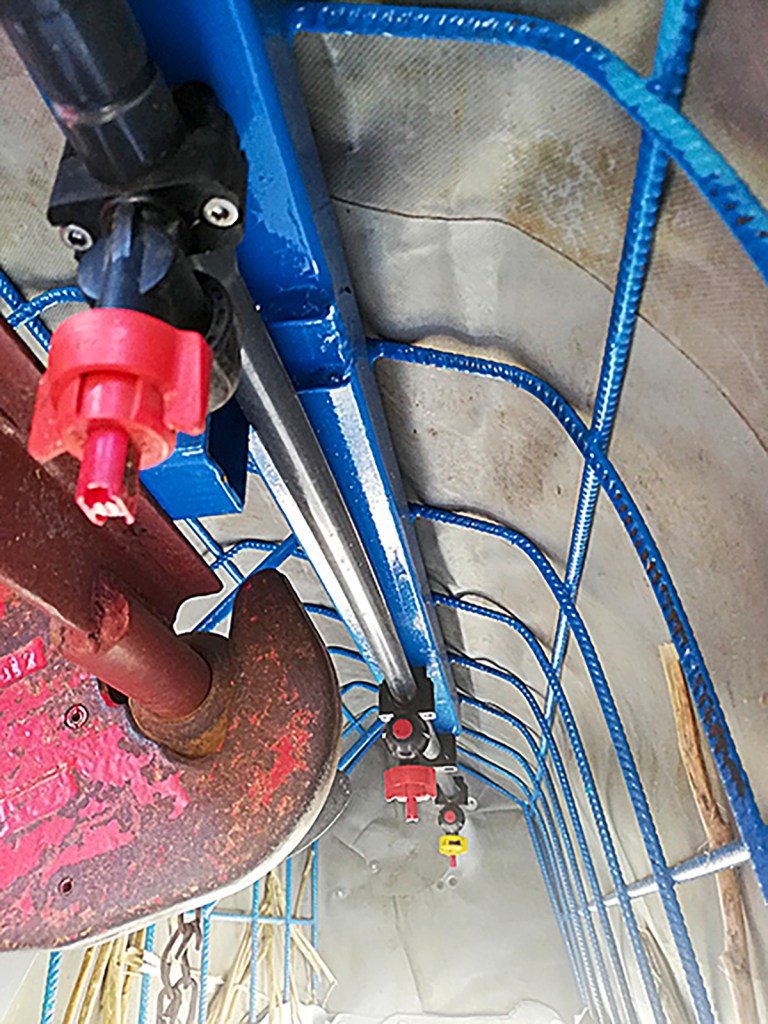
This front-mounted screen enables operators to spray right up to the field edge, and is particularly useful when spraying glyphosate. Installed to the middle section of the boom using a quick connector and a ball valve, the three nozzles have a working width of 1.50m. The screen protects the surrounding area from drift.
QUICK NOZZLE WASH
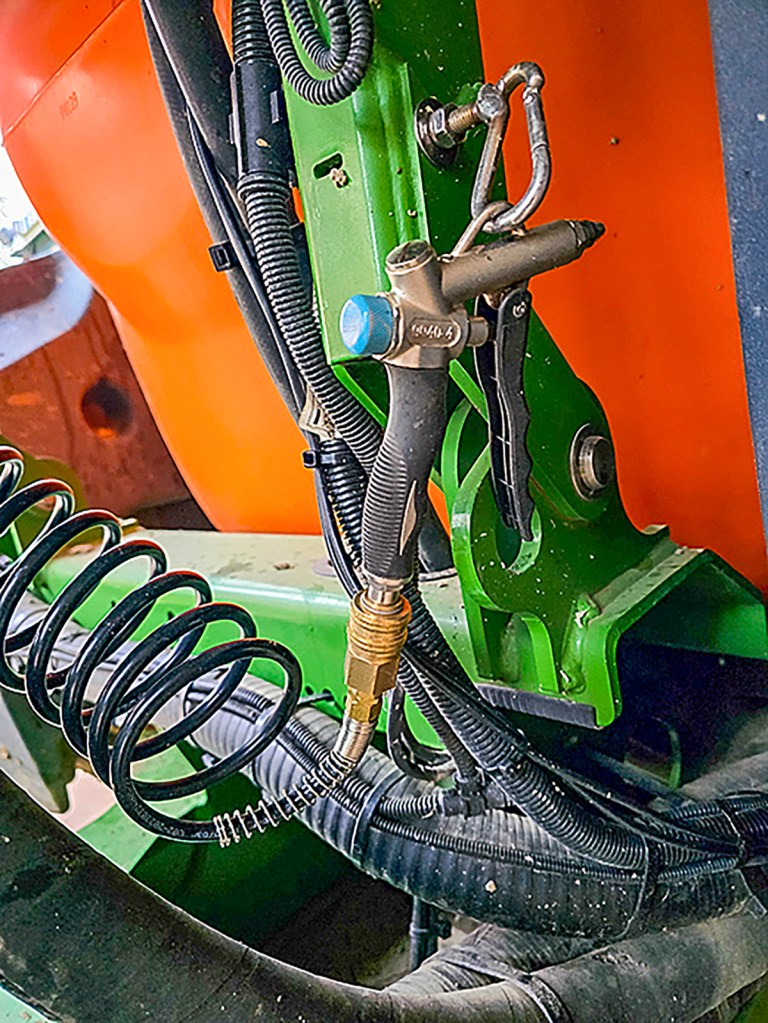
To clear blocked nozzles as quickly as possible, this reader fitted an air hose at the rear of his sprayer. The air gun is secured to the machine with a spring clip, so it’s always close at hand.