

Whether working in silage, hay or straw, producing a well-shaped solid bale is key to getting the most value out of its contents and increasing efficiency when handling or transporting it.
Challenges for designers of baler technology include demand for greater capacities and density in straw for cost-effective haulage and the range of crop and field conditions that balers are required to operate in. Taking the crop from its loose strands in the swath to become a stable, tied package involves presenting the material to the bale chamber in ‘wads’ or slices, carried out in a pre-compression chamber before the wad is pushed into the chamber by the plunger.
Manufacturers use a number of ways to achieve this, and technology is becoming increasingly significant.
From the front
Kuhn’s Power Feed roller actively follows the height of the swath to result in an even compressed feed when entering the intake rotor. This avoids peak loads on the baler caused by gaps or lumps in the swath and results in less strain on the intake system and reduced power requirements.
The Power Density system then uses a single feeder fork designed to keep the pre-chamber consistently full, providing reliably filled flakes for square-edged bales regardless of swath conditions.
The feeder fork distributes the material evenly into the pre-chamber and moves the flake into the bale chamber when complete. The triangle design of this section is key, with the fork making small strokes into the pre-chamber until the density plates meet the required precompression. This activates the mechanism, allowing the fork to extend fully, moving the flake into the bale chamber. Density measurement plates are on top of the pre-chamber, so activation is only when full compression has been reached.
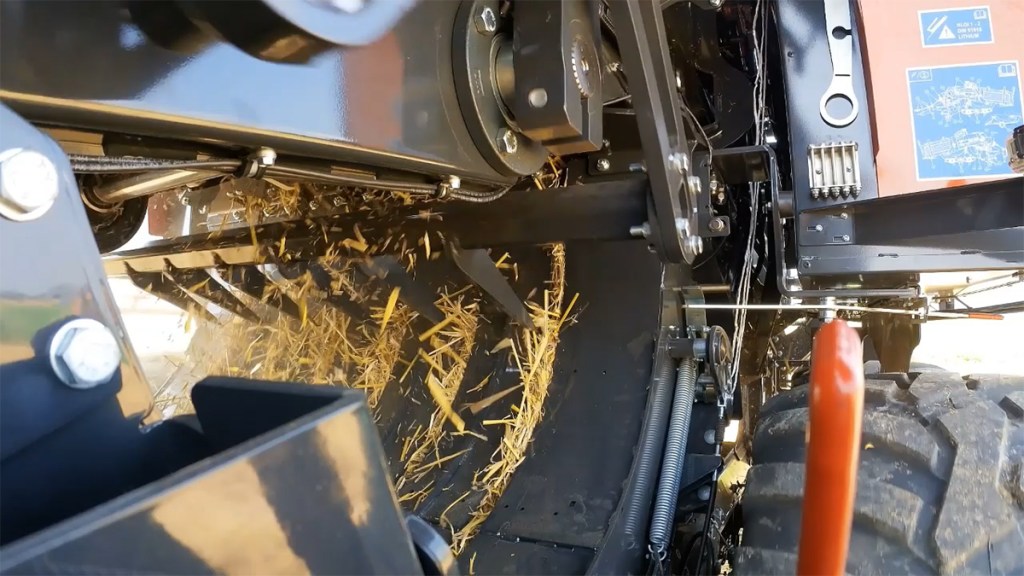
The system is available on Kuhn’s largest square baler – the SB 1290 ID – producing 120×90 bales.
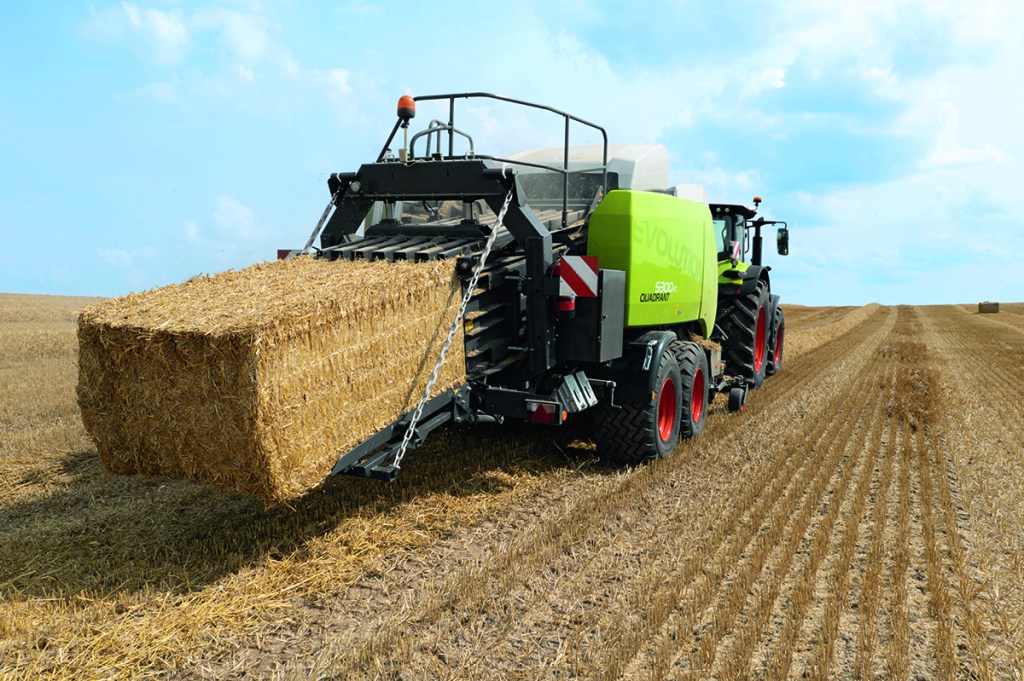
Pre-chamber control
Bale shape is determined by control of the pre-chamber on the Claas Quadrant baler, explains product specialist Conor Trimble.
“On the Quadrant 5200 and 5300 there is the option of hydraulic control from the cab, so the operator does not need to increase or decrease speed to achieve the optimum wedge size and thus can travel at a more consistent speed, improving efficiency.”
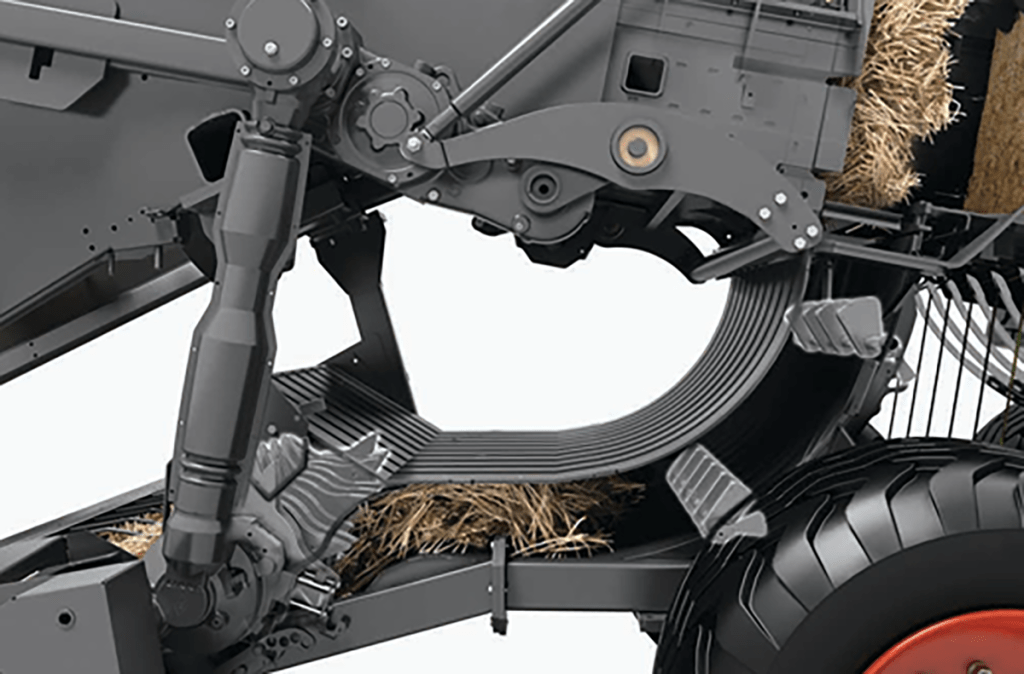
There are two sets of paddles in the pre-chamber, the top set being spring loaded which open when the filling cycle is completed, releasing the wedge to the main chamber.
The middle paddle is hydraulically controlled: as material builds from the stuffer the first half of the wedge is created and then as the pre-chamber continues to fill the paddles are pushed down.
“Depending on the type of swath, the pressure setting can be selected from three options to build up and fill the bale chamber completely. For example, behind a combine with a 45ft header there will be a lot of straw in the swath, so the hydraulic pre-chamber can be set to half fill the wedge and then completely fill it, increasing efficiency,” explains Conor. “The ability to adjust pre-compression improves bale shape as the bale chamber is filled from edge to edge and top to bottom, giving a uniform amount of material in the chamber. In addition, because this system uses hydraulic components, wear and tear is reduced.”
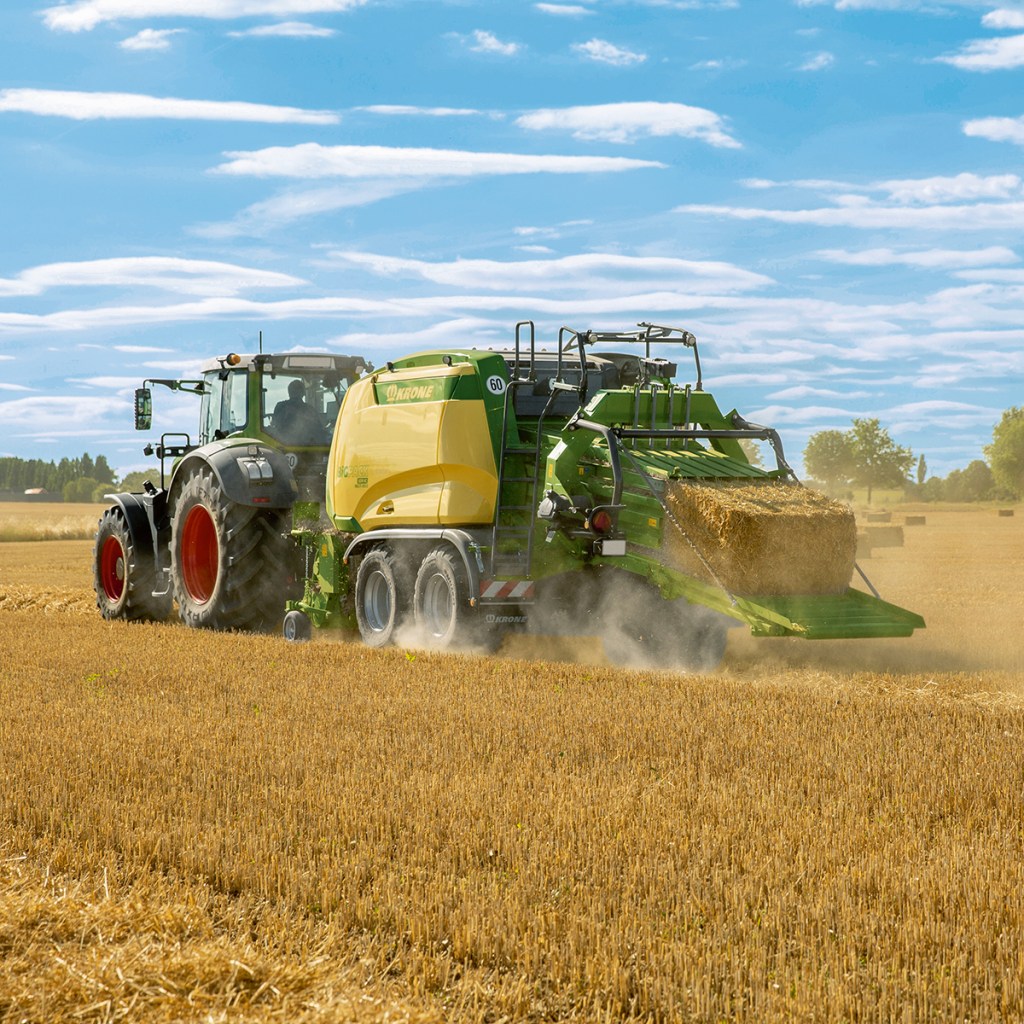
Variable filling
Krone’s VFS (Variable Filling System) consists of a set of four packer rakes and one feeder rake that collect the material into the pre-chamber.
Product specialist, Ben Davies explains: “The concept of our packer system helps to mix up the material and equalise it out over the entire chamber width. This is especially important on short cut material.”
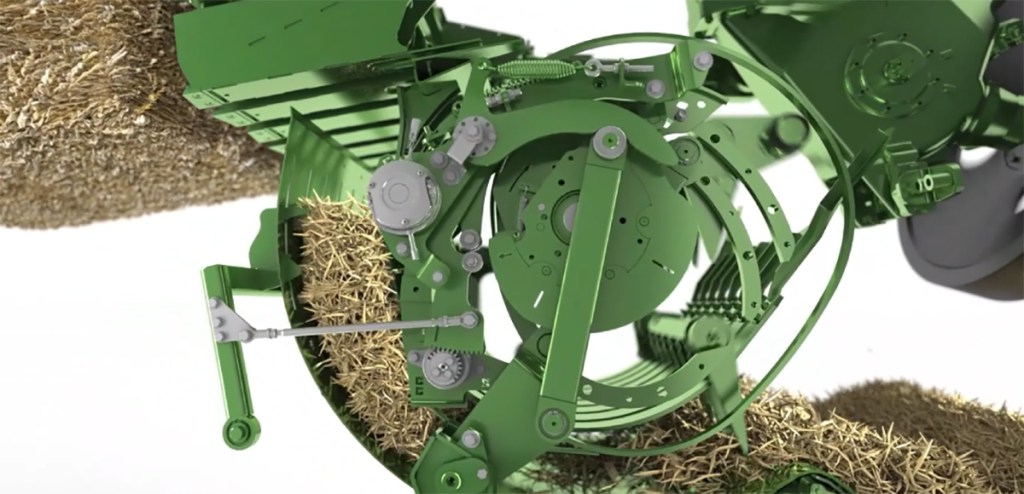
When the prechamber is filled up evenly the feeder rake lifts the material up into the bale chamber in front of the plunger in a uniform homogenous package for the plunger to compress.
Even flakes
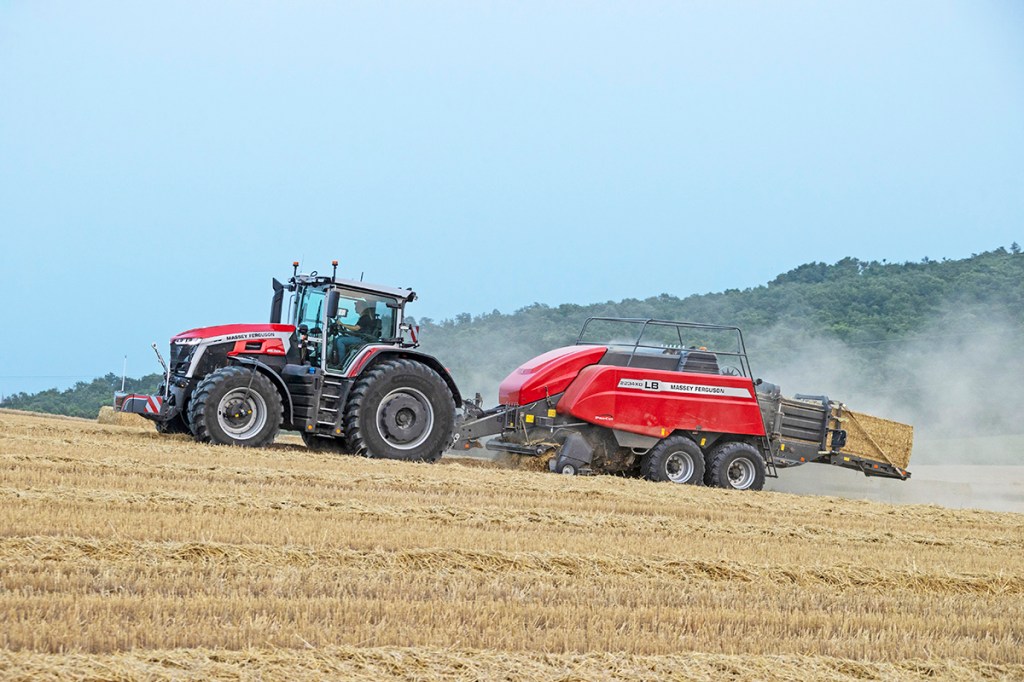
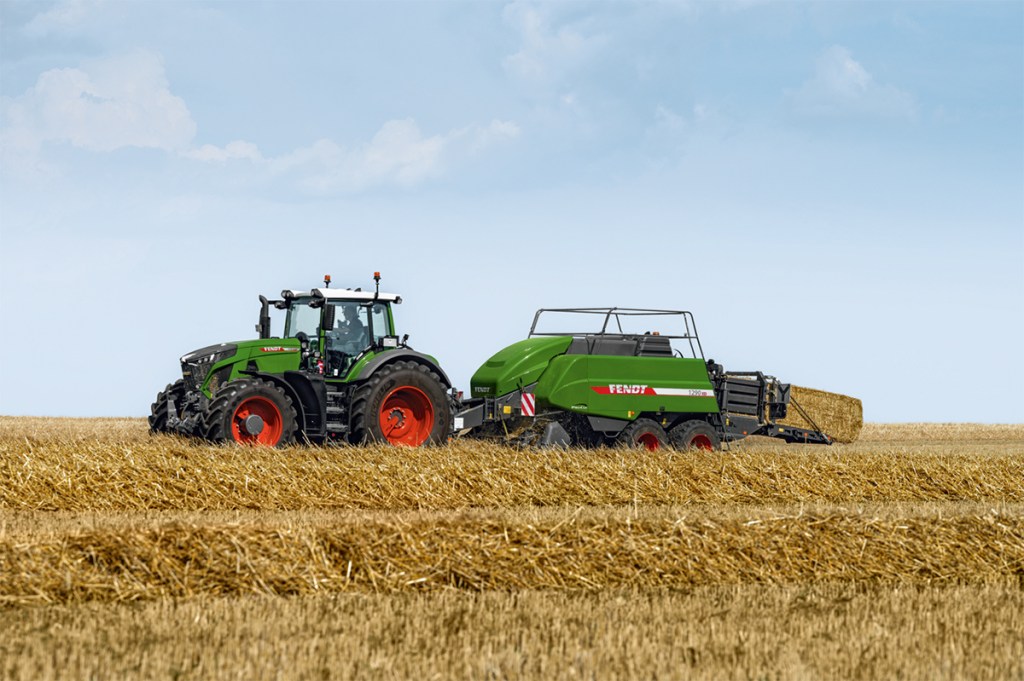
Fendt square balers are derived from the Hesston design in the same way as the Massey Ferguson LB range.
Fendt marketing manager, Ed Dennett explains: “The Fendt baler is renowned for its bale shape, mainly due to control of the pre-compression chamber, where the flake is formed. When there is enough crop in the pre-compression area, the trip door goes and the stuffer fork sends the flake into the chamber for the plunger to pack the bale.”
Massey Ferguson’s product marketing manager, Mark Grigson adds: “In heavy, continuous windrows this gives a 1:1 stuffertoplunger ratio, but in lighter or inconsistent crop the system simply waits until the flake is correct before initiating the stroke. This ensures each flake has the right amount of crop at the top, middle and bottom.
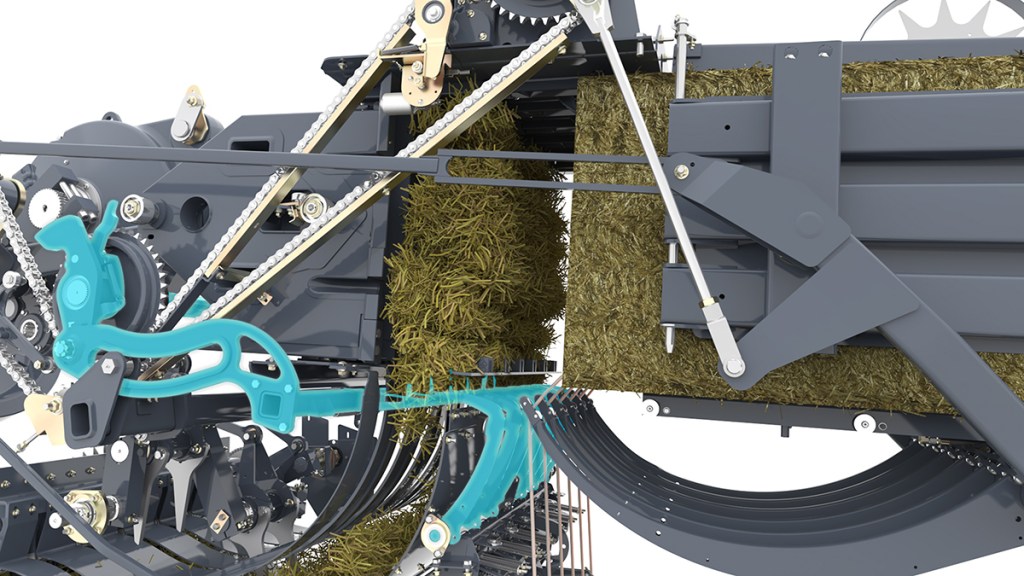
“The benefit is that the plunger always compresses a uniform charge, which is what produces the squareshouldered, squareended, dense and reliable bale shape Massey Ferguson balers are known for. It also reduces the risk of air pockets in crops such as silage and haylage, improving fermentation and reducing spoilage.
“For operators working in unusual crop conditions, the precompression chamber profile is fully adjustable, allowing finetuning of bale shape. The trip door release is also adjustable for additional refinement where required.”
Increasing automation
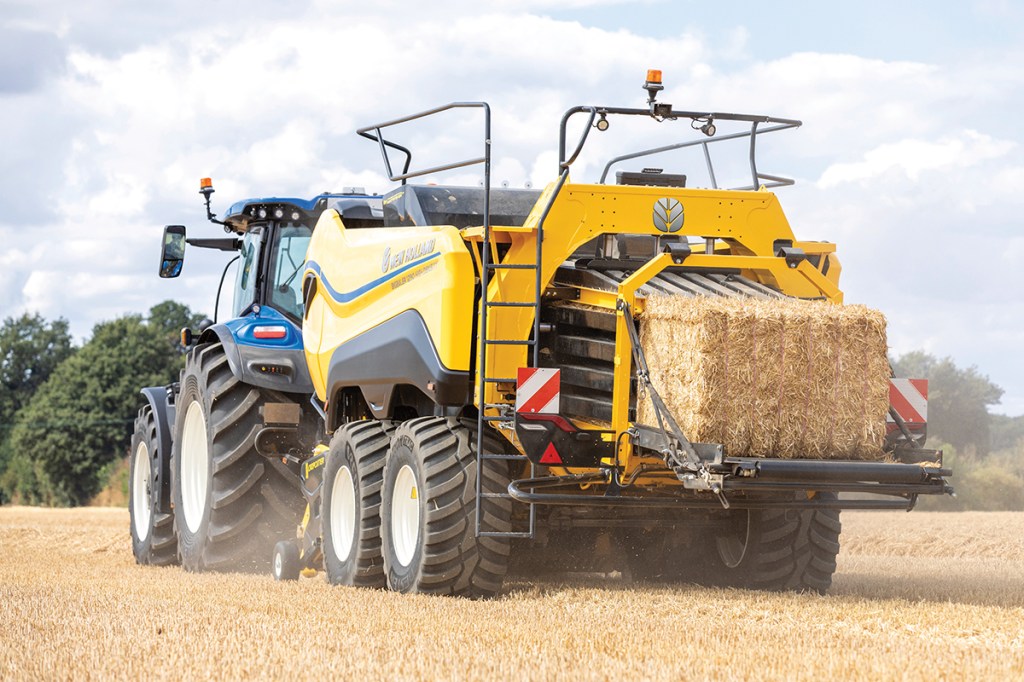
Square balers are offered by CNH under the Case IH and New Holland brands, and share common features, referred to by different names. New Holland models are the BigBaler 1290 High Density and Big Baler Plus and Case IH, the LB4 XL/XLD and LB436 HD baler.
Product specialist, Nigel Honeyman explains that while bale shape is mainly influenced by the pre-compression chamber, the latest technology is also taking some of the workload from the operator.
“If the feed in the pre-compression chamber is not managed, there’s a tendency to ‘top fill’ the bale which leads to loss of density and poor bale shape. Bales can be hard to rehandle and can fall apart.”
The action of the stuffer fork is key to producing an even wad, starting slowly and gradually increasing in speed to gently accelerate the crop towards the bale chamber, where the plunger packs it into the slice, he points out.
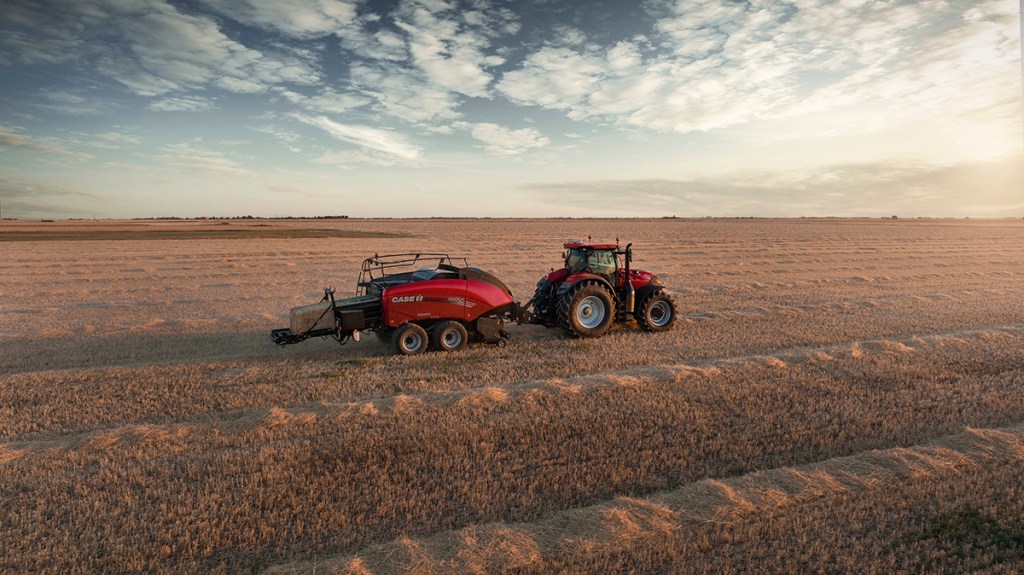
“This gives maximum density and an improved shape,” comments Nigel.
To maximise output, both brands offer increased automation of steering and forward speed, he explains.
“Intellisense (New Holland) and Baler Automation (Case IH) systems use a LIDAR sensor on the tractor and ISObus Class III control to monitor swath consistency (heights and density) and control the steering and speed of the baler. The distance from the sensor gives it time to react, preventing plugging and following the swath precisely which allows the baler to produce more bales per hour.”
While following the swath from a GPS-steered combine in a large field should not be too onerous, it is on headlands and irregular field shapes that the system comes into its own, he notes.
“It also reduces the effort required from the operator,” Nigel adds.
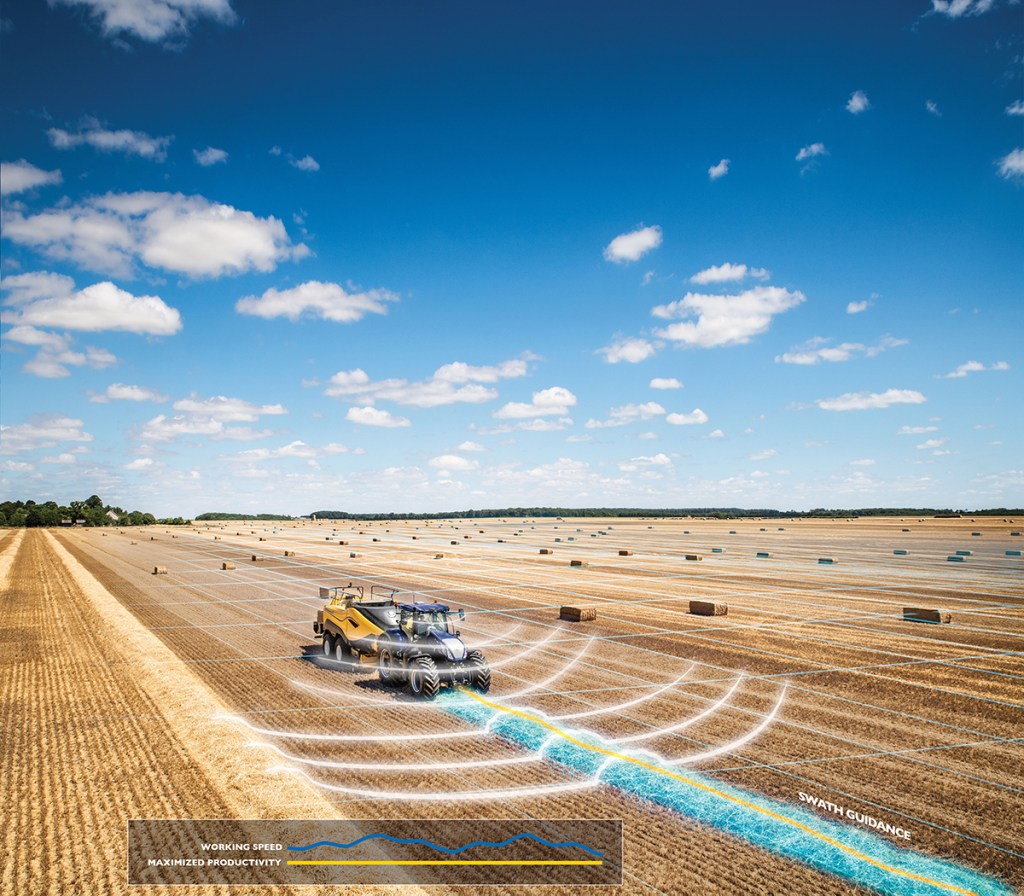
Currently Intellisense/Bale Automation is only compatible with Class III ISObus tractors, which along with Case IH and New Holland machines includes some Fendt models.
Secrets of the chamber
Kuhn’s flagship SB 1290 ID (Intelligent-Density) large square baler uses the company’s Twinpact twin plunger design, said to allow operators to produce high density, uniform bales without increasing the load or strain on the machine and operator.
The Twinpact design splits the plunger into upper and lower sections connected via a triangle rod. The two sections compact the bale in series during a complete plunger stroke, with greater force applied per surface area, while avoiding peak loads on the machine.
The torque regulation system of plunger rod load pins that measure the plunger force and an angle sensor measuring the crank angle calculate the exact torque throughout the plunger cycle. The result is 25% higher bale densities in dry straw crops compared with conventional plunger designs, says Kuhn.
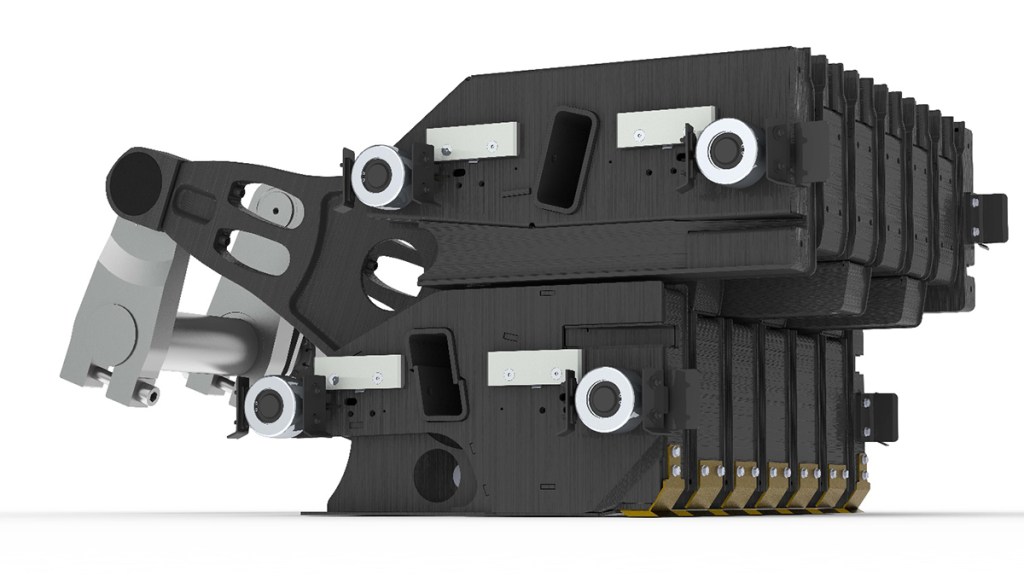
Users of large square balers will be familiar with the constant ‘nodding’ effect from heavy plungers compacting bales. However, due to the two halves on the plunger running in series, the Twinpact system not only reduces this motion but also the stress on machine and user, suggests Kuhn.
The SB 1290 ID can be operated by lower-powered tractors compared to conventional 120×90 balers, with a 200hp tractor capable of producing 500kg bales.
Shaped by design
On Claas’s Quadrant baler flat faced pistons with needle gaps and side knives are used in the chamber, with counter knives to ensure a square edge to the bottom of the bale. Pistons are mounted on flat faced rollers. A u-channel along the bottom of the baler also cuts off material to give an extra square shape.
Models making 120×70 bales (traditional Quadrants) have four hydraulic rams on the main chamber, while those for 120×90 bales have six, maintaining pressure on the chamber. Piston speeds of 56 revs/min (46rpm on 120×90 balers) offer maximum compaction when putting a lot of material through the baler, Conor Trimble points out.
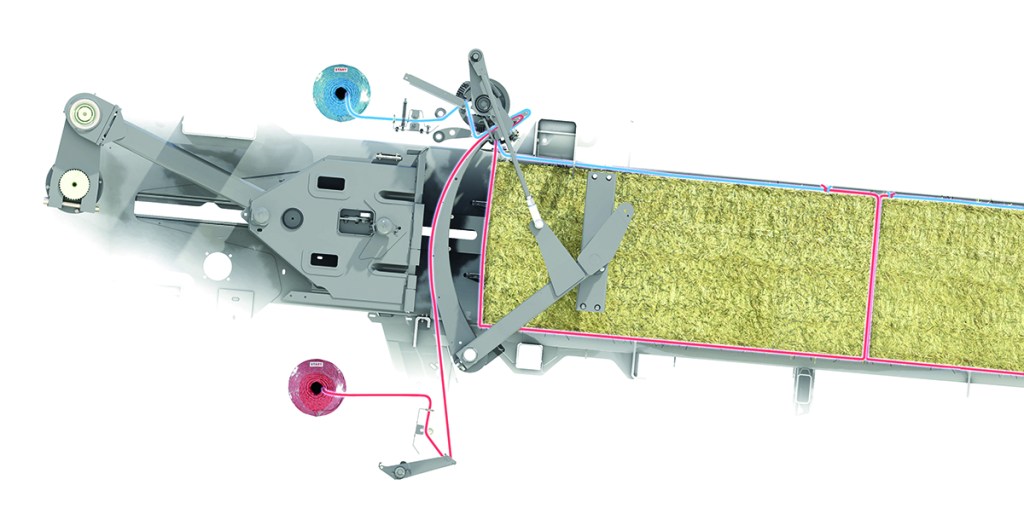
“Auto pressure control also involves the knotter system: as a single knot baler, the back string is held in a retainer plate, where pressure is monitored on the piston to allow density to be adjusted.”
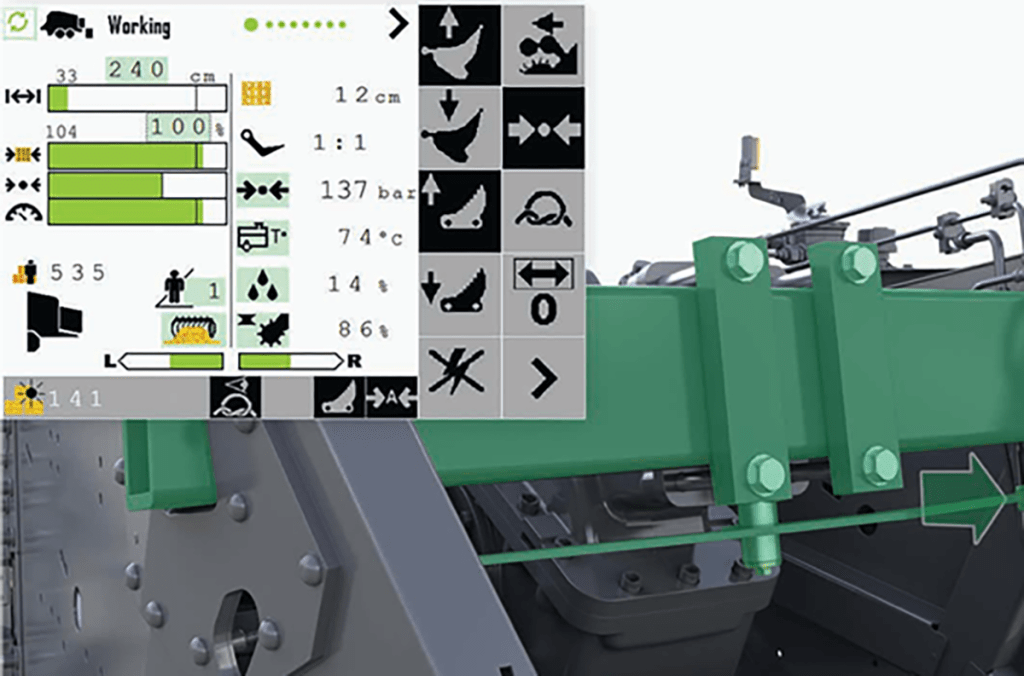
“The operator sets the pressure on the bale gate rams to achieve the required density and the pressure is then adjusted automatically to maintain this depending on the crop – for example 5.0% moisture straw will require more pressure than silage.”
Auto pressure control is displayed on the in-cab screen, where the operator can also bring up a ‘progress bar’ which shows how the settings and forward speed are affecting baler capacity.
“So if driving at 7-8km/hr in a medium swath gives 75% capacity by pushing on a little more the operator could push on and increase baler output to get ahead of rain etc.”
Chamber monitoring
While not mechanically impacting bale shape, the load sensors which are fitted to the connecting rods between the main gearbox to the rear of the plunger on Krone balers are closely linked to the plunger and capable of having an influence on bale shape, explains Ben Davies.
“These tell the operator how to correctly fill the chamber, by displaying directional arrows on the user interface to indicate more crop is needed on the left or the right of the bale. This becomes more apparent in smaller swaths where driving too much with material on one side or the other of the pick-up and can lead to uneven bale shape/density.”
Once the plunger has pressed the fresh slice of material onto the rear of the bale the hay dogs at the top and sides of the chamber prevent the material from falling back and maintain bale shape.
Plunger drive
Massey Ferguson balers use a long, heavyduty plunger stroke designed for smooth, highimpact compression,” comments Mark Grigson. “Combined with the consistent feed system, this contributes to density and uniformity throughout the bale.”
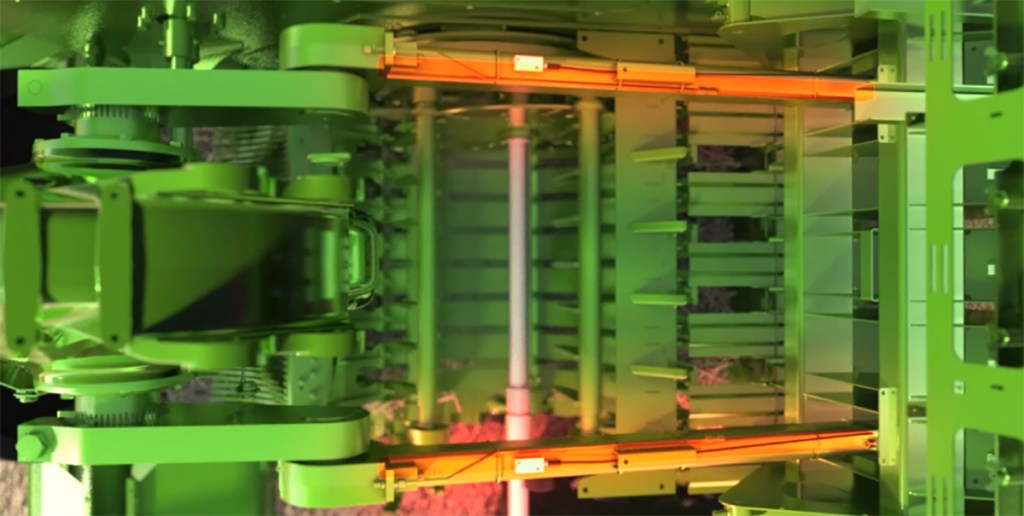
The stuffer and knotter drive on Hesston design balers (MF and Fendt) comes from the power take-off on the left side of the gear unit and the stuffer and knotters are matched with the plunger stroke. Heavy duty crank arms for the plunger increase torque and force on pressed material during the baling, designed to increase compression and bale density and reduce required power.
Integrated load sensors measure the current load of the piston, control bale density and give information for left- or right-heavy load for improved bale shape.
Baler monitoring offers recording and display of plunger strokes per stuffer cycle and machine utilisation (material feed slippage).
The Fendt 1290 XD/ MF LB 2334 XD feature ‘XD’ heavy duty plunger load arms, crank arms and plunger for high density bales; these are also used on the 12130 and LB 2244 models which add a heavier XD piston.
Jane Carley
For more up-to-date farming news click here and subscribe now to profi and save.