

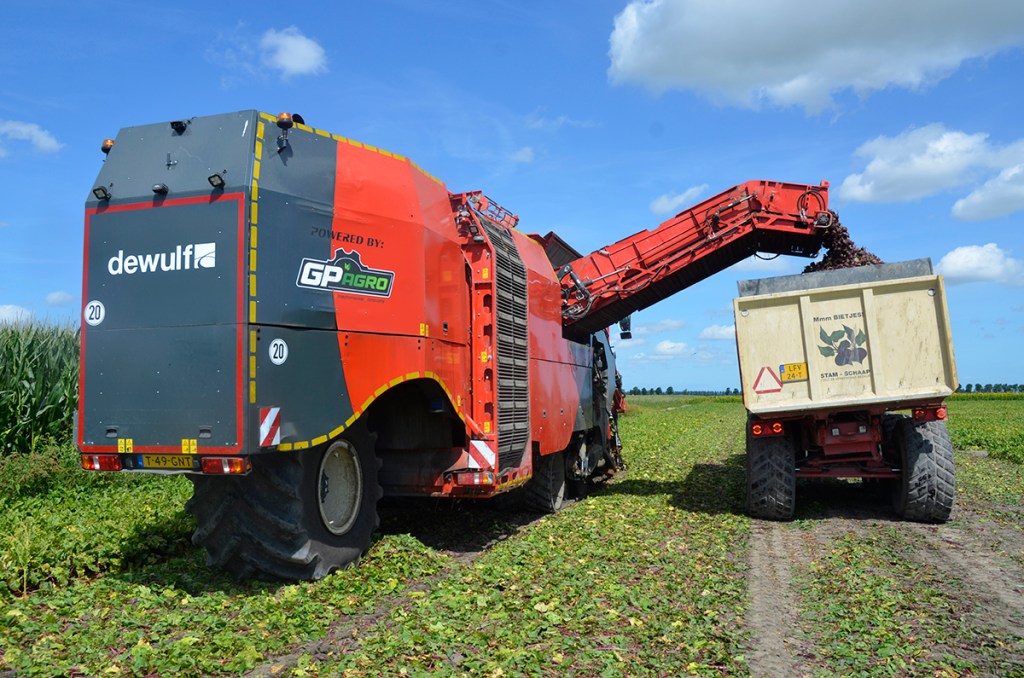
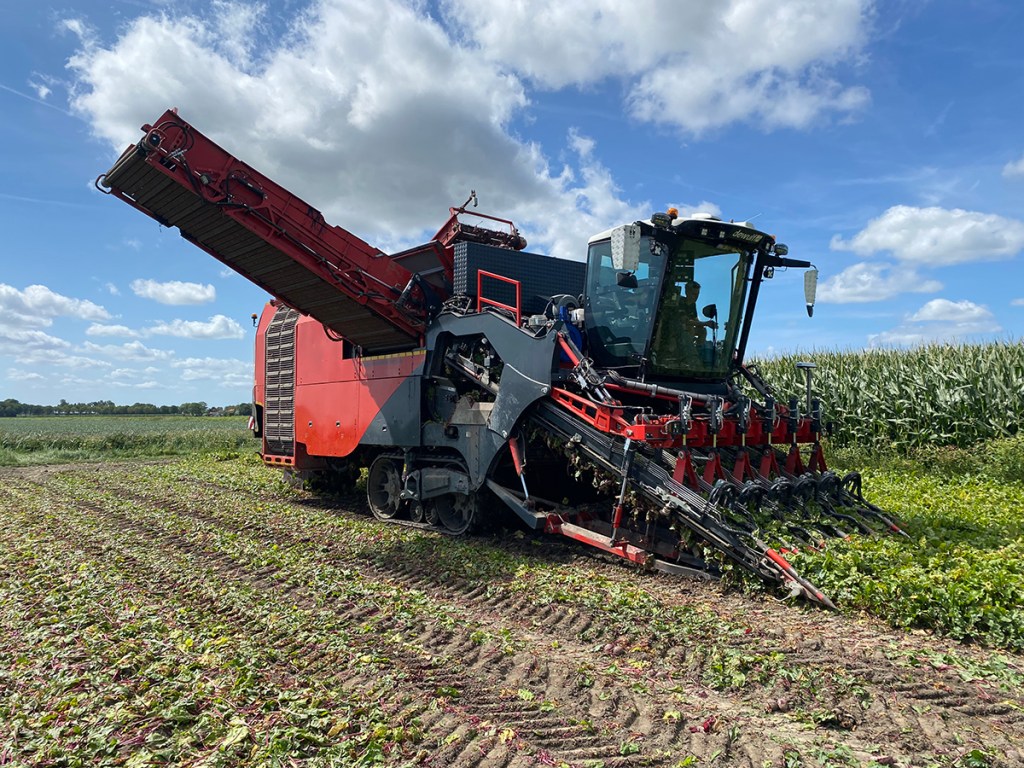
Dutch grower Stam-Schaap Agro has transformed a self-propelled four-row Dewulf Kwatro potato harvester into a machine to lift six rows of beetroot. We find out how the project works.
Stam-Schaap Agro grows around 185ha of the approximately 1,000ha of beetroot in the Netherlands. Lifting in the region of 15,000 tonnes a year, up until this season, all of the farm’s beetroot was harvested with a pair of Asa-Lift SP220B bunker type self-propelled machines.
The first of these 275hp Sisu-powered, two-row machines arrived in 2004 and it didn’t take long for the three wheels to be swapped for rubber tracks. Believed to have been the first machine of its type on tracks in the Netherlands, it was joined by a second Danish-made harvester in 2016. Given the current age and hours of the two harvesters, the oldest now has 16,000 hours while the newer is already on 8,000 hours, the brainstorming for the successor started several years ago.
The wish list
Top on the list was a higher capacity machine that would allow them to replace two harvesters with just one. A wider intake unit was also needed, capable of handling more rows; requiring more power and a larger bunker than on the Asa-Lifts they were using.
Based at Ursem, roughly an hour’s drive north of Amsterdam, land in the area produces nice dark-coloured beetroot, but its heavy ground is not good at supporting heavy vehicles, so the new, heavier harvester, would have to run on tracks.

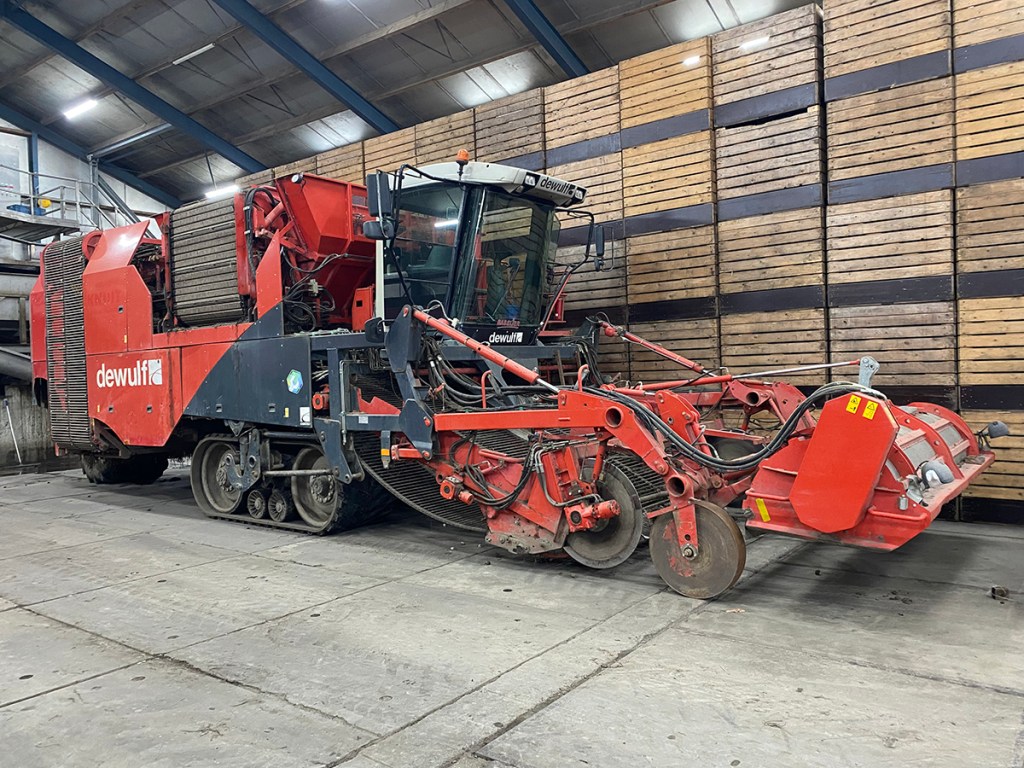
Working closely with Dutch engineering company GP Agro, it was eventually decided that the Dewulf Kwatro provided the best starting point. The search for a used machine ended with a 2020-built Gen2 specimen with 1,800 hours on its clock. When it arrived, GP Agro owner Guus Peerdeman, who also happens to be one of the mechanics at Stam-Schaap, and is no stranger to being behind the controls of the Asa-Lifts. He initially lifted potatoes with the Kwatro to learn how to operate it.
The modification work, which started in earnest in early 2025, used all 20+ years of knowledge and experience gained with the Asa-Lifts, to develop the current dream machine. The ring elevator and 17.5m3 bunker were retained, but all of the other components used to process potatoes were removed and the interior of the machine was gutted.
Changing the hydraulic system was one of the biggest jobs. “We had to alter the original system and relocate some of the pumps,” recalls Guus. “Another big job was to dovetail all the new components into an existing machine.”
Into the field
Ready for testing mid-October 2025, during the last few weeks of the season it clocked up 120 hours lifting beetroot for the first time. A number of changes were made ahead of this year’s harvest, and we caught up with the Kwatro a few weeks into the season.
The most notable visible difference to the machine we saw late in 2025 is where the beetroot leaves exit the harvester. Last season, six rows of leafy material were ejected to one side, resulting in a thick row of greens on the ground, not good for following cultivation kit. The updated concept sees the leaves travel along two 3.0m-wide belts to the rear of the harvester where they fall evenly onto the ground in front of the rear wheel.
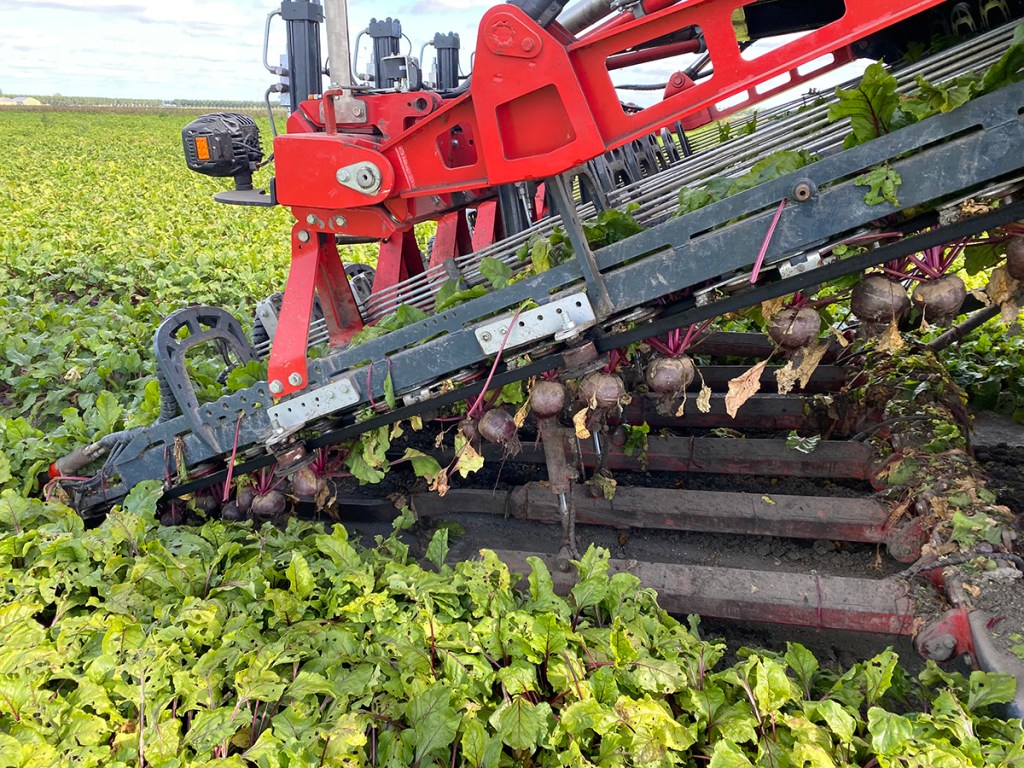
The six-row top lifting unit is loosely based on that of a carrot harvester. GP Agro built it from scratch and informs us that there is nothing like it on the market. In operation, digger shares tease the beetroot out of the ground where the leaf stems are secured by two rubber belts. Six rows are hoisted to the rotating topping blades where the leaves are severed from the roots.
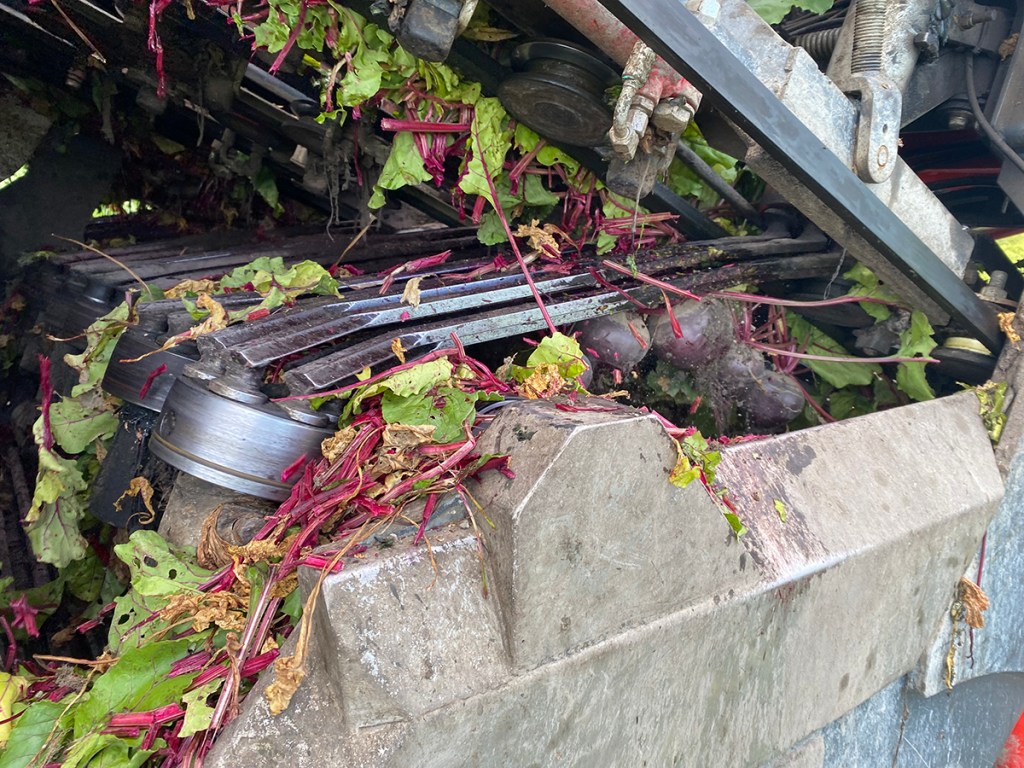
The roots travel along a belt to the first of two 3.0m-wide axial rollers; both have 32 rollers. The first has a length of 80cm and the second, which replaces the former pintle belt, 95cm. The combination of the two axial roller sets ensures that soil falls to the ground, and the early signs are that tare levels at the processing plant are dramatically lower than the previous harvesters. From the second set of axial rollers the crop travels onto the ring elevator and up into the bunker.
Getting through work
There is still a bit of fine tuning to do, but the beetroot growers are delighted with their new harvester, which lifts 60-80t/hr. Operating at speeds of around 2km/hr, it covers 6-8ha/day during a typical working day.
“Maximum capacity of the combined efforts of the Asa-Lifts is 4.5-5.0ha/day and to achieve this they need to run flat out at faster speeds of 4.5-5.0km/hr,” comments joint company boss, Maikel Stam, who runs the business with Kees Schaap and Bart Vet alongside the motivated team.
The higher capacity is not the only benefit. Swapping two machines for one not only eliminates an operator but has also resulted in substantial fuel savings. The 500hp Scania DC13 (Stage IV) motor in the Kwatro typically revs at an average speed of 1,400rpm in the field and is limited to 1,550rpm on the road. This is reflected in the average diesel consumption of 30-35l/hr, while each Asa-Lift harvester guzzles 30l/hr.
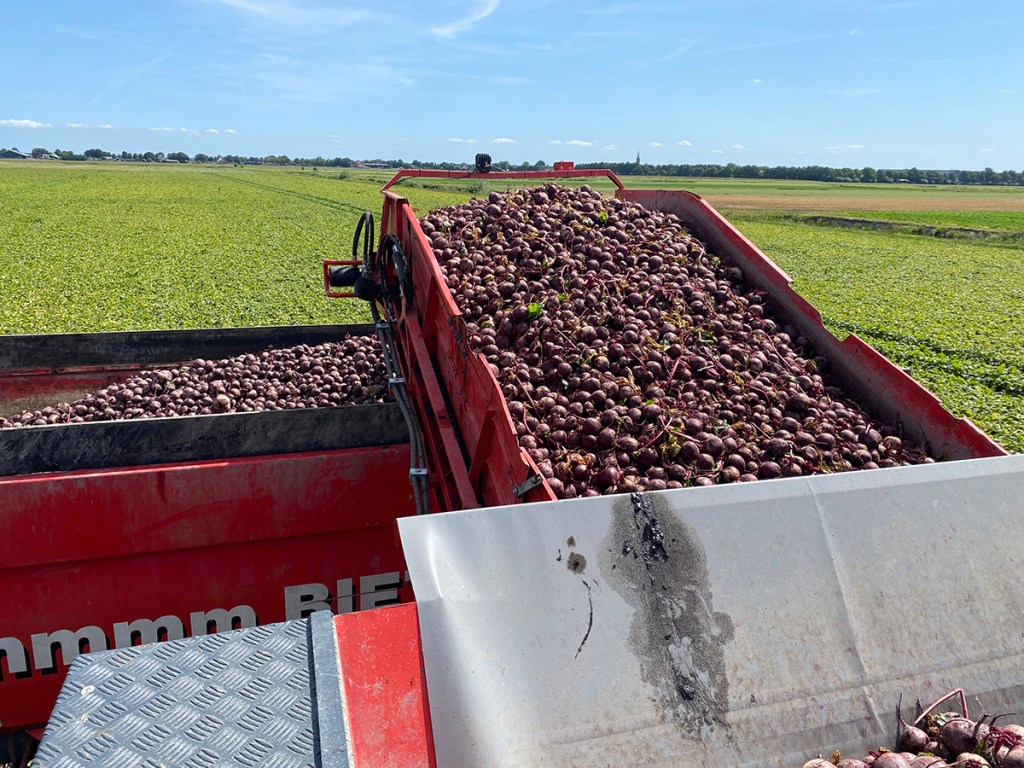
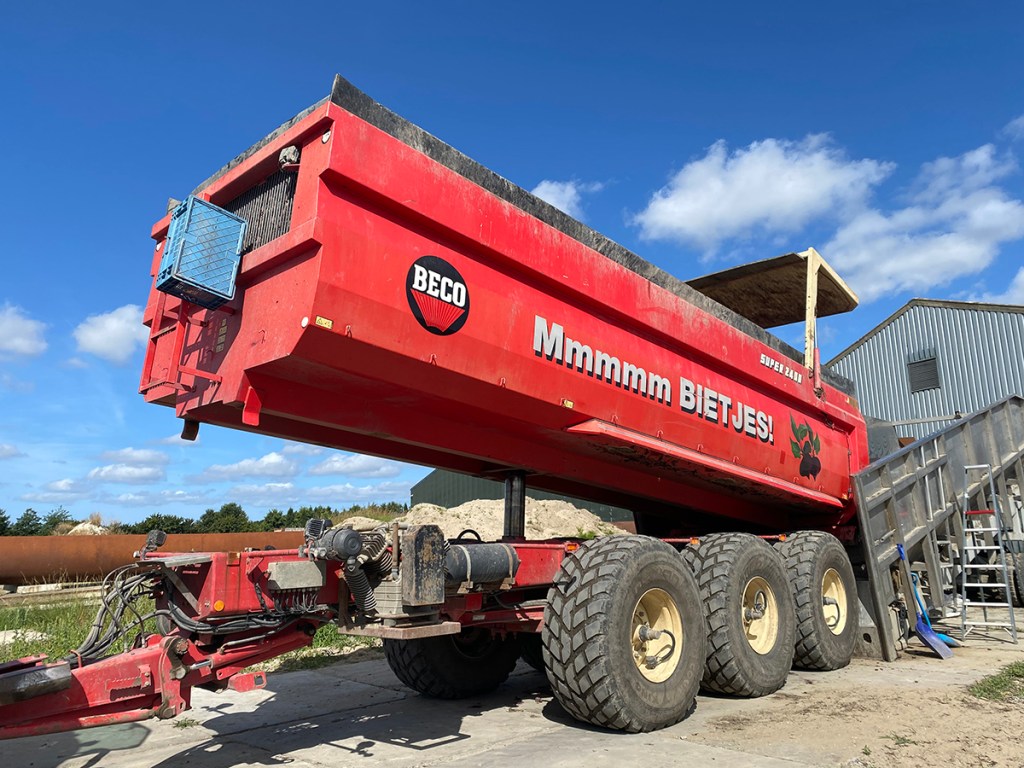
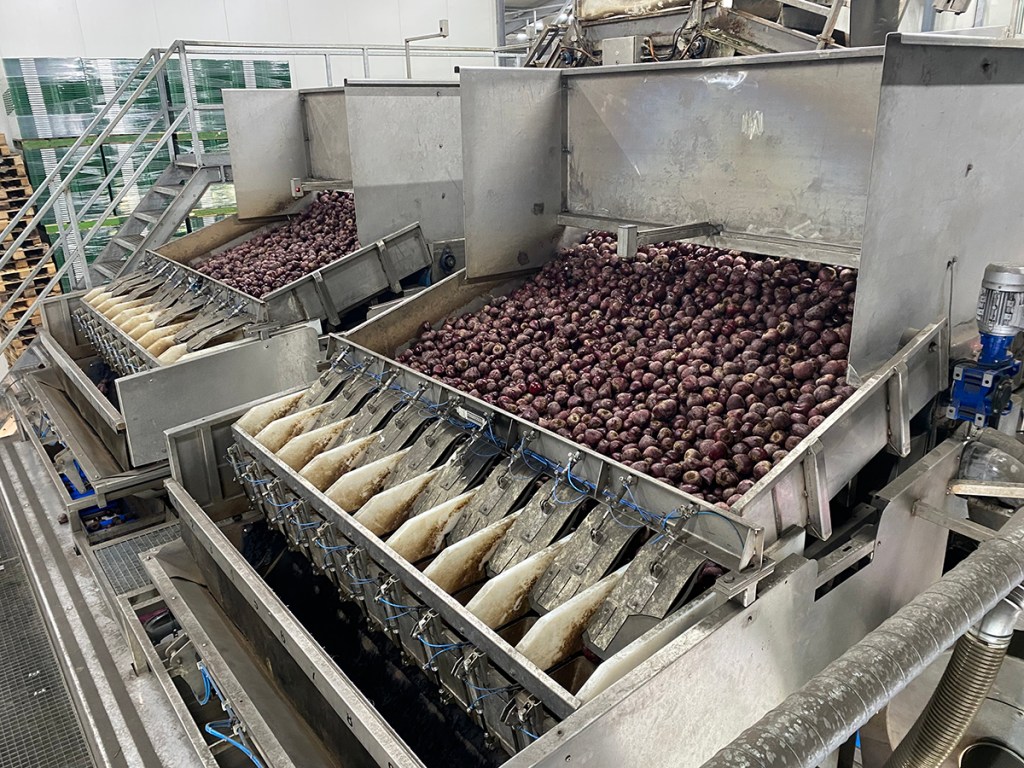
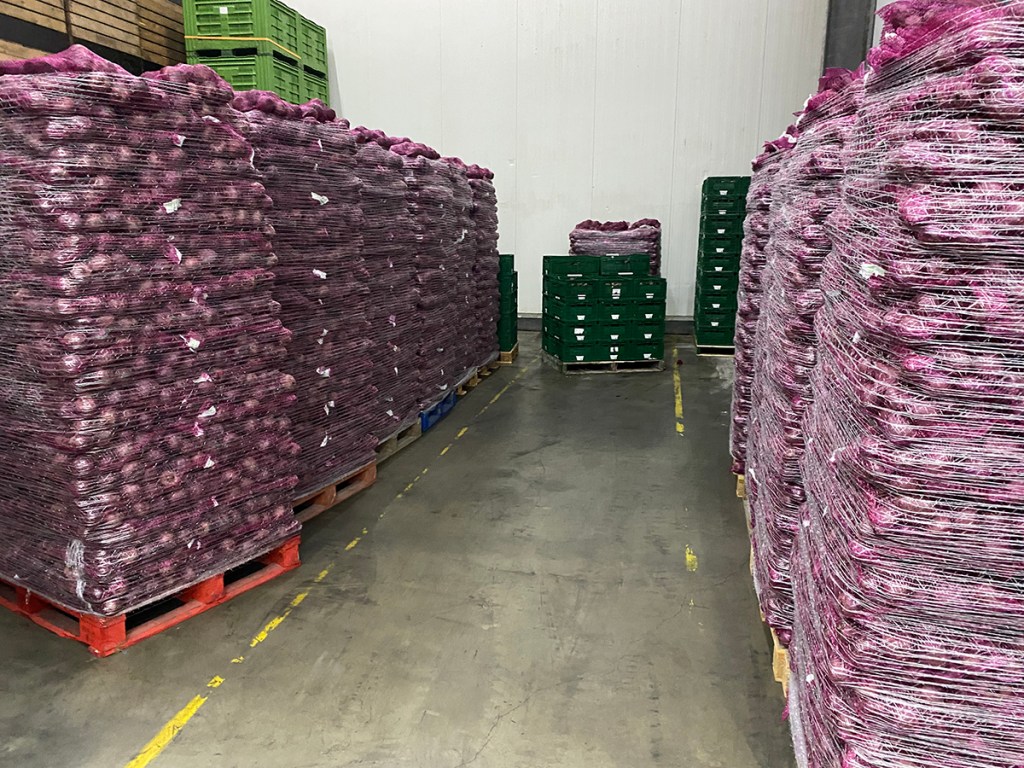
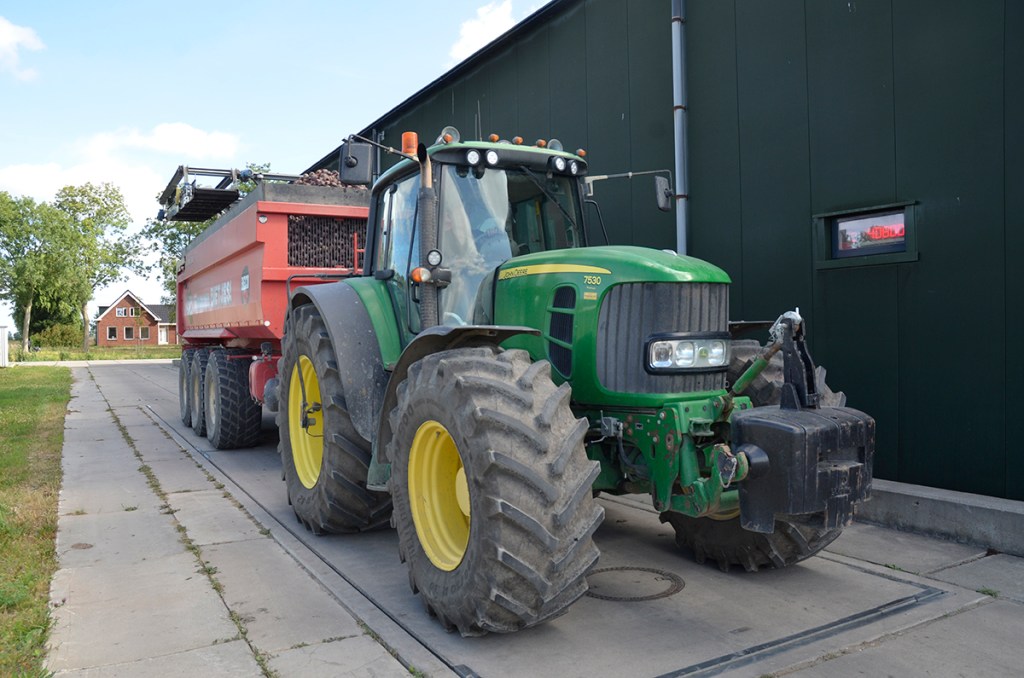
Another important benefit is that the Kwatro can unload its bunker on the move, while the two Asa-Lifts have to stop. It takes four to five minutes to empty the 5-tonne contents. When you consider that 120 bunkers are needed to fill the required 30 trailers a day then this is another area where the Kwatro wins hands down.
Light footed
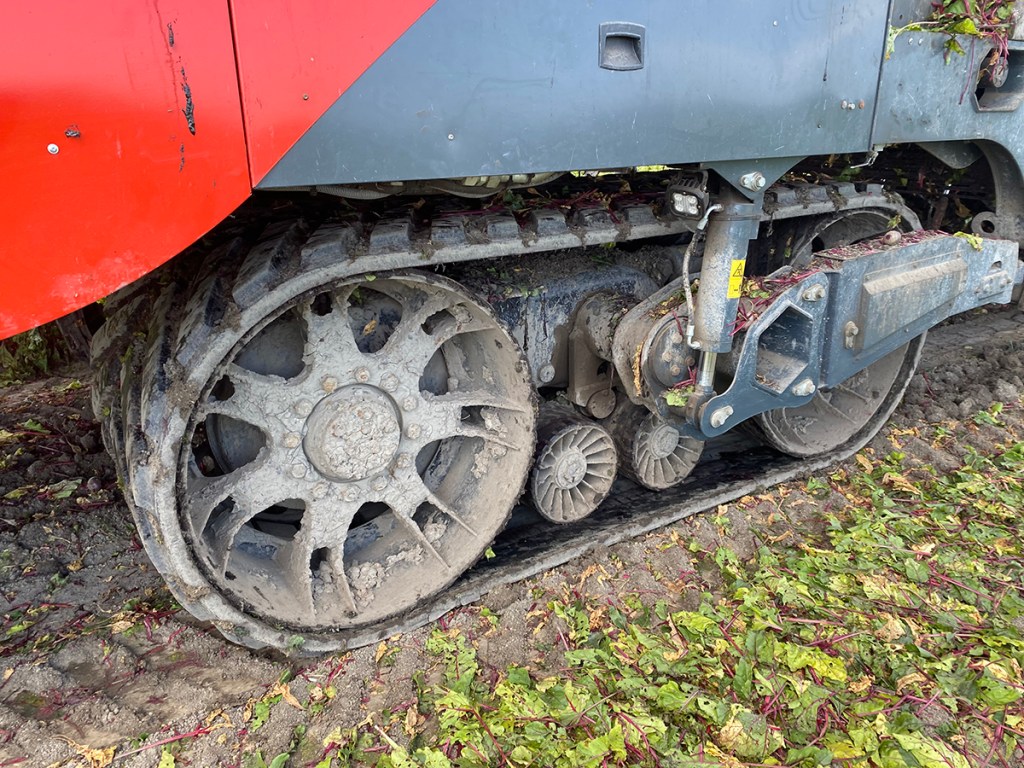
Even though it has an empty weight of around 32t, the Belgian-made harvester puts down a 50% lower footprint. This is partly due to the longer rubber tracks in combination with the extra-wide 1250/50 R32 rear tyre. Also, it only needs to run over the ground once, while the Danish harvesters need three passes to lift the same six rows.
“The modified Kwatro not only allows us to reduce compaction, increase output, and reduce labour and fuel costs, but also results in a better-quality product with less skin damage,” confirms Maikel, which he reckons is also partly due to the optimised product flow through the machine and the gentle nature of the bunker and very important, the slower feeding into the topping blades that separate the leaf from the beet.
The Dutch beetroot grower is not planning to part with either of the two Asa-Lifts, which can be put back to work if there is a serious issue with the Kwatro.
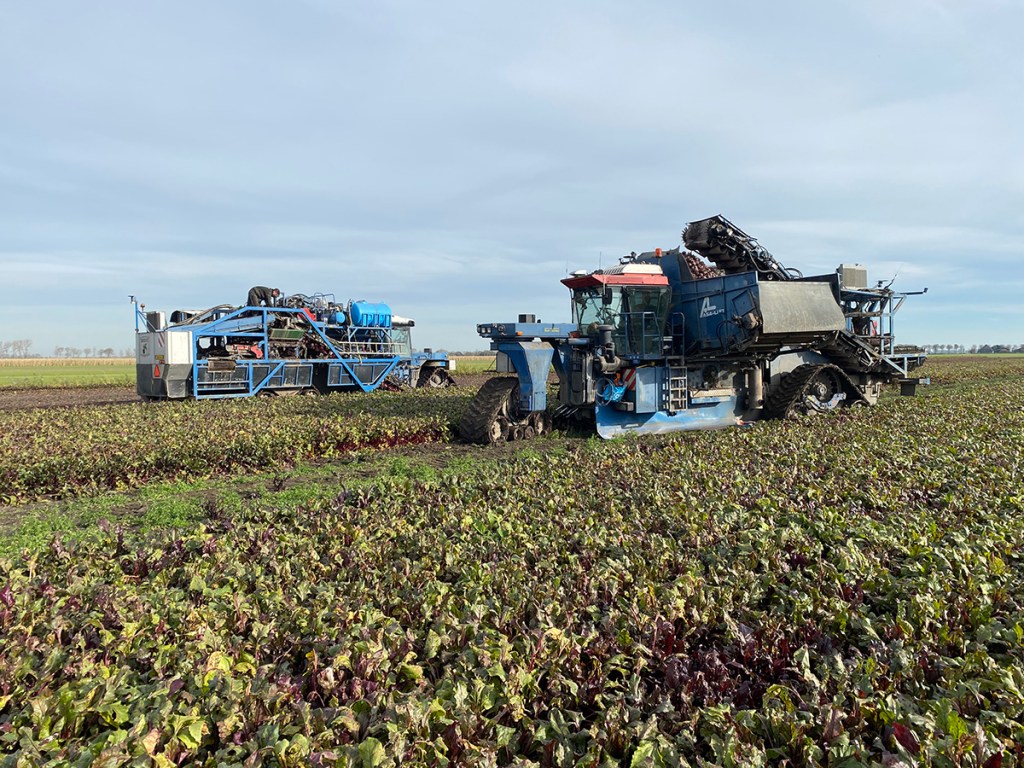
The plan, though, is to retain the older machine as a back-up while the newer machine could be useful for lifting the main crop when they need to be in two fields at the same time.
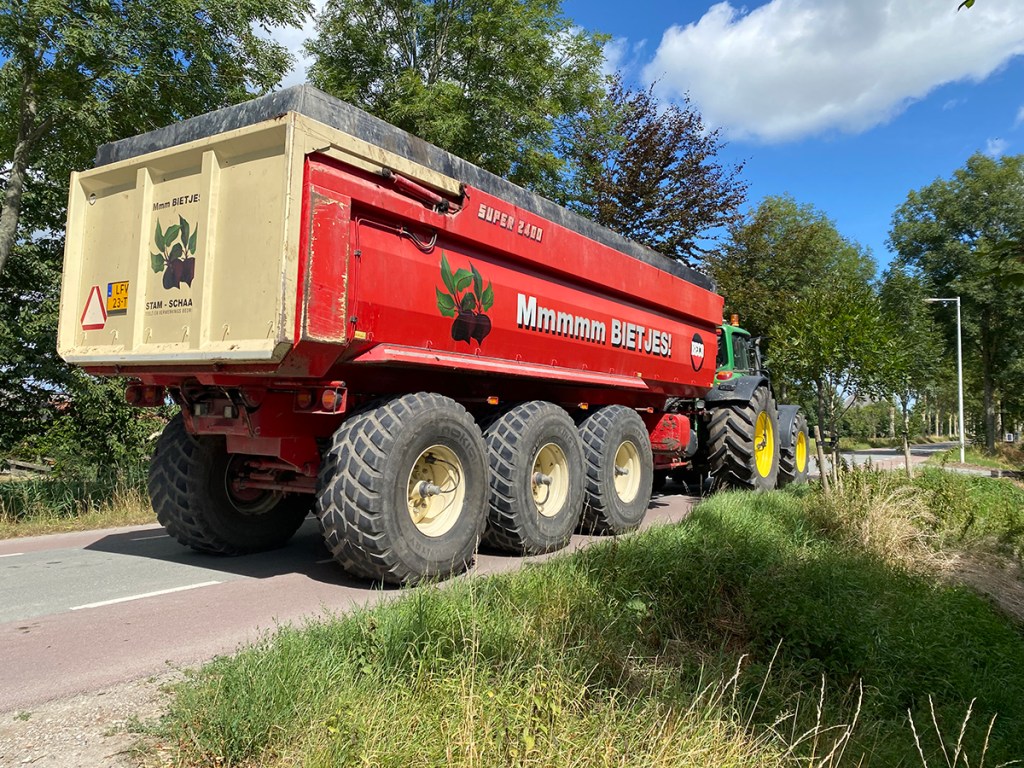
The issue with this, though, is that the Kwatro´s capacity is so high that it needs all three trailers to keep pace with it, certainly on land that is several miles from the processing plant. The Dutch grower is not keen on adding more trailers to the mix. “It is more practical to lift everything with the Kwatro.”

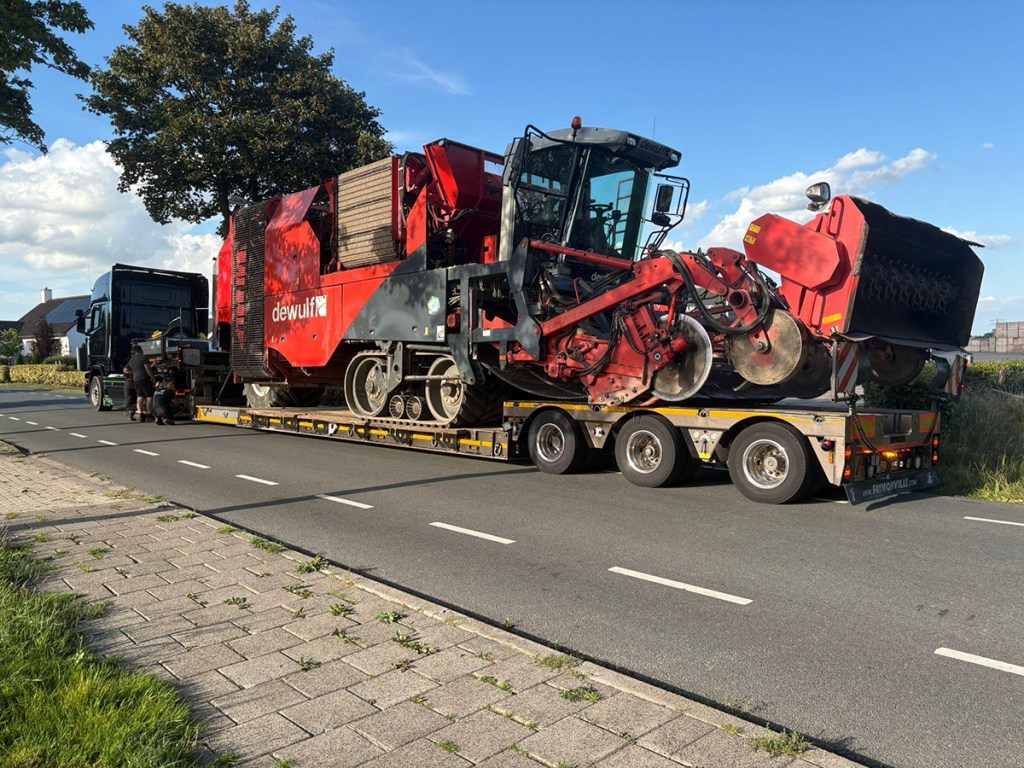
The days of the Danish machines are numbered, though, certainly following the recent arrival of a second Dewulf Kwatro, a Gen1 machine from 2012. It retains its haulm chopper, but modifications to the four-row potato intake unit allow it to lift six rows of beetroot in crops at the end of the season where there are not many leaves. Otherwise, nothing else has yet been altered on the former potato harvester, although we are told this could change ahead of the 2027 season.
Steven Vale
For more up-to-date farming news click here and subscribe now to profi and save.