

Wasserbauer now offers a silage clamp covering system that opens and close almost entirely on its own. We went to see the first Cabrio system to be installed in Germany to find out more.
KEEPING IT BRIEF
- The Cabrio clamp cover originates in Switzerland and has been further developed by Wasserbauer to make it commercially available.
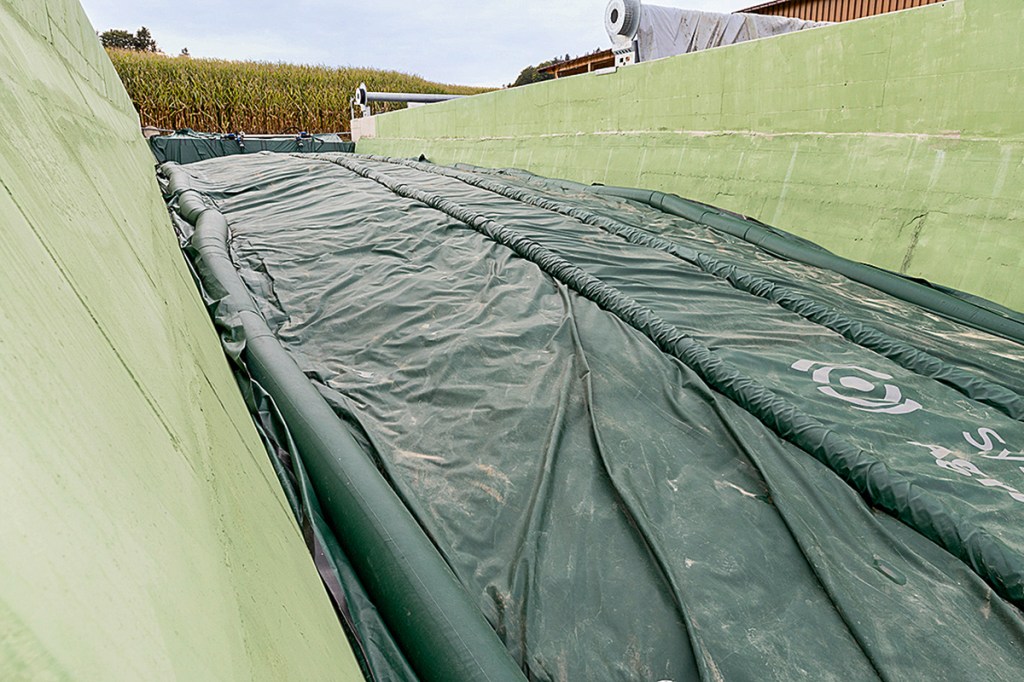
- At the heart of the system is a heavy-duty tarp with integrated hoses that are filled with water.
- The powered gantry can be moved to different clamps with a suitably sized loader/telehandler.
Once the rolling tractor finally creeps off the clamp, the unpopular task of the day begins — covering the clamp. Pulling the sheet into place not only requires muscle power, but also patience and a thick skin. Weighing the cover down with sand and gravel bags is tough enough, but, for the real masochists, tyres, which will undoubtedly contain some form of stagnant liquid, are the ballast of choice. On a 35 x 9.0m clamp, you will typically end up moving around 150 gravel bags, which will weigh in the region of 5.0t in total.
For those unable to find the required labour force for such a task, they may be interested in an automated clamp covering system, particularly if they prefer to layer different cuts and forage in the same clamp — the extra challenge of stripping and then re-sheeting once the forage is in the pit.
Swiss invention
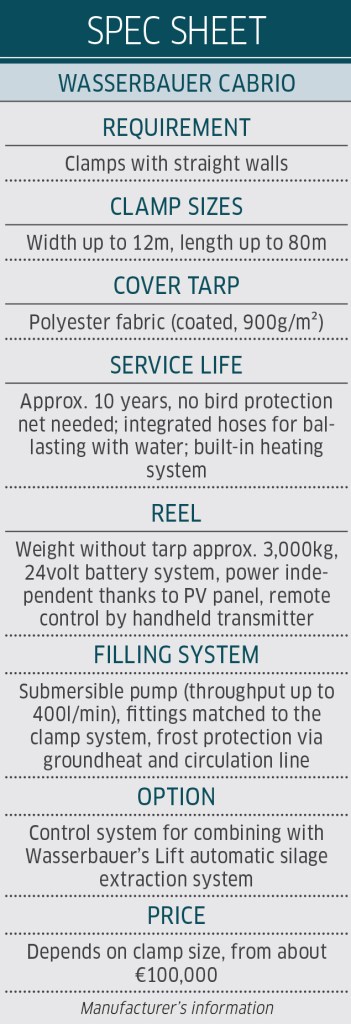
Wasserbauer is now marketing what it calls its Cabrio sheeting system for clamps up to 12m wide. At the touch of a button, the system can roll up and unroll a silage cover up to 80m long. The tarp is then weighted down with hoses filled with rainwater.
This particular system was invented by a Swiss farmer, who then worked on it with Wasserbauer to bring it to market.
Birdproof tarp
At the heart of the cover system is an acid-resistant tarp weighing 900g/m². It is made from the same polyester fabric that is used for the curtains on lorry bodies, is considered to be robust and, according to Wasserbauer, should last for up to ten years. One thing helping it achieve this service life is that tears can often be repaired.
Another plus is that the cover offers good protection from bird damage: the tarpaulin is opaque, so birds cannot see through it, making it less tempting to peck through in search of insects. As a result, Wasserbauer doesn’t see the need for extra netting.
The water hoses, used to hold the sheet in place, are attached lengthwise to the tarp every 2.50m. On the farm we visited, the sheet had four of these hoses for the 8.20m wide and 35m long clamp.
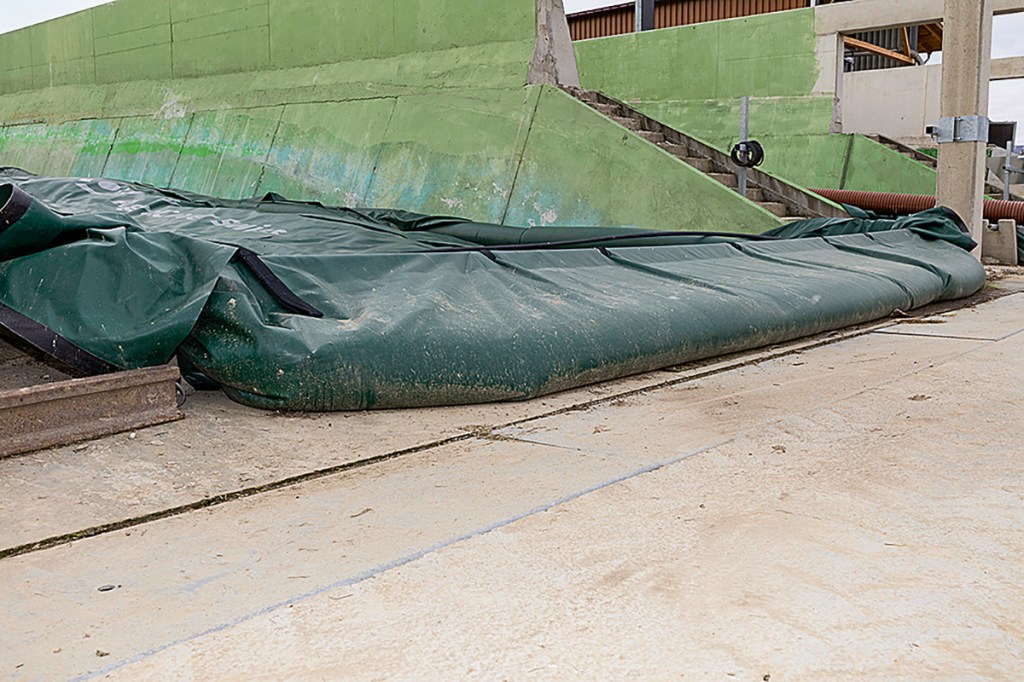
The water hoses running along the walls are 350mm in diameter, equating to 80kg/m, so is a lot more than you get with sandbags. Ideally, the outer hoses press the tarp firmly against the walls to create an airtight seal. The two middle hoses help add extra weight to aid ensiling.
Rainwater from an underground tank
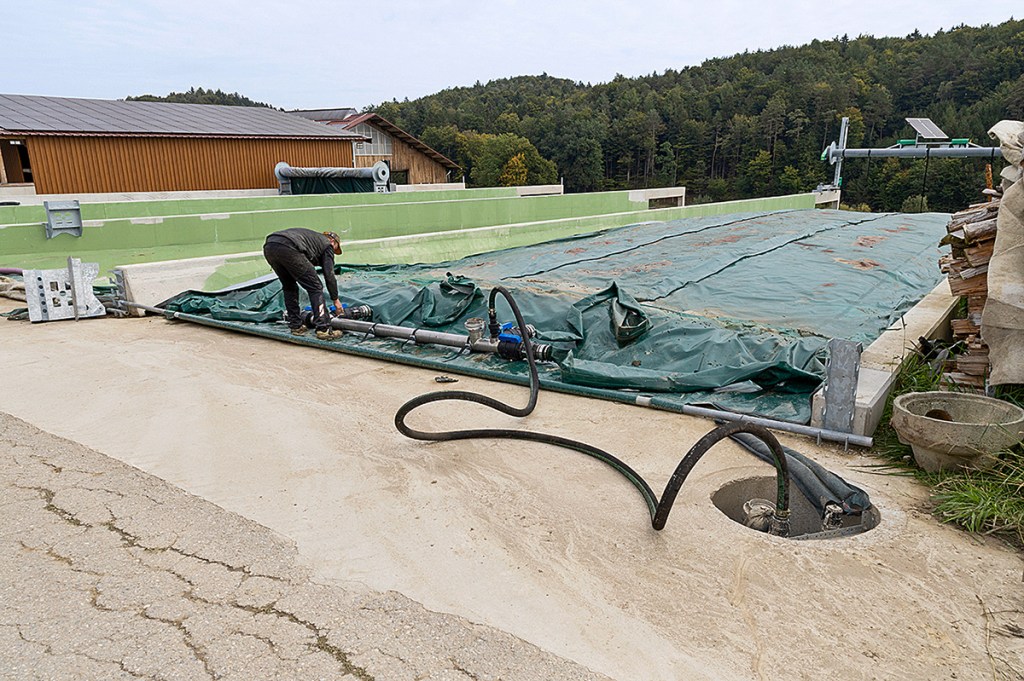
Hoses are filled using a special tap fitting; water is pumped from the underground storage tank using a submersible pump. The collected rainwater in the tank is usually warm enough to prevent the clamp sheet hoses from freezing, and there is a small pipe running inside the green sheet hose that provides a degree of frost protection. A sensor monitors the temperature, and, when it’s needed, automatically engages a circulation pump connected to the inner pipe.
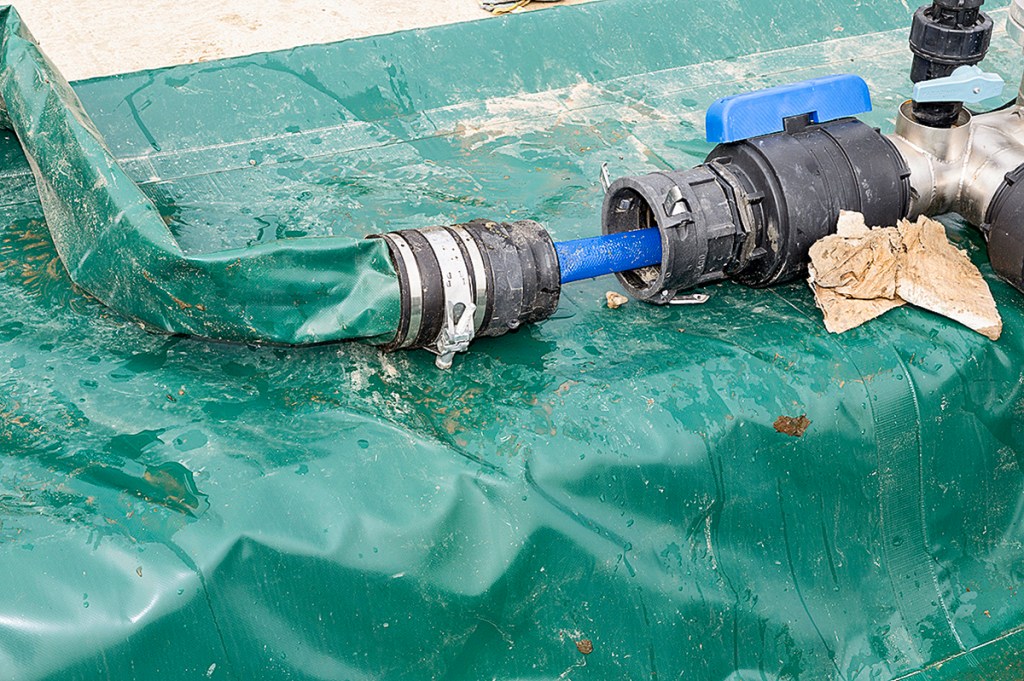
Water is also used to weigh down the ends of the clamp sheet. A metal pole is threaded through hoops in the sheet and then folded back to create a pocket. This is then filled with water, creating an airtight seal on the ends of the clamp — a simple but effective solution.
7.0m³ of water is required to fill the four hoses for the farm’s 35m x 8.20m clamps. This comes from a 30m³ underground tank that collects rainwater from the surrounding roofs. When a clamp is uncovered, the water is diverted back into the underground tank so that it can be reused to cover the clamp again during the drier summer months and ensure there is always enough to get a good airtight seal.
The reel
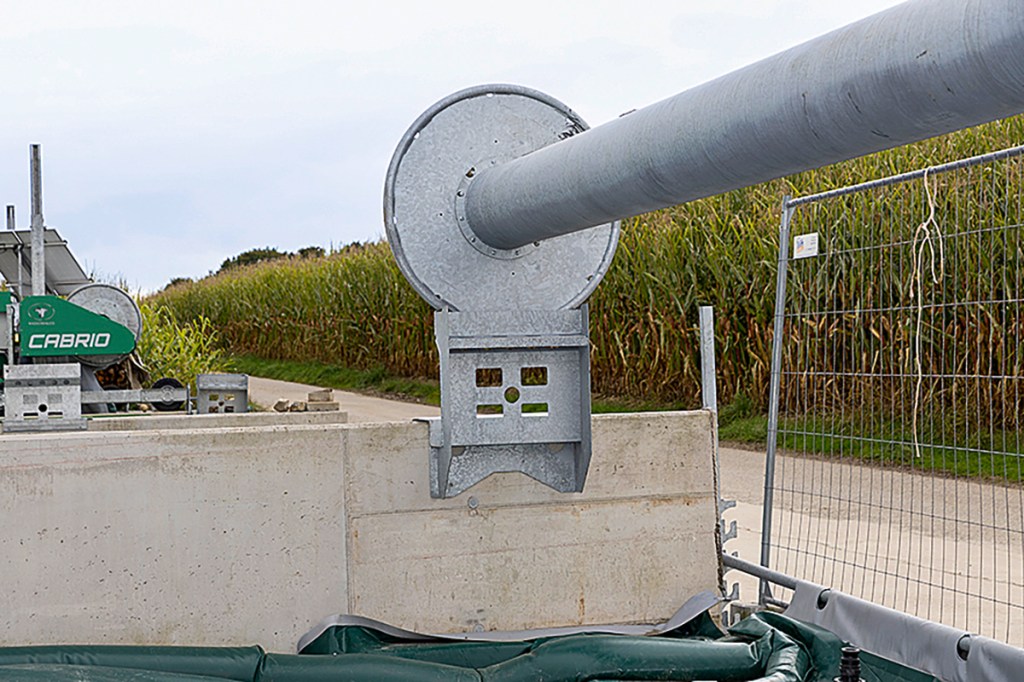
There are two parts to the system that moves along the silage clamp: the spool for holding the tarp; and the powered gantry that moves along the top of the walls and connects to the spool so it can wind up and unroll the sheet.
The gantry has guides that prevent it from toppling off the wall as it moves back and forth. The width of the crossbeam can also be adjusted to suit different width silage clamps. However, this is a time-taking, nut- and-bolt adjustment, and in our opinion it would be better if it was hydraulic. Optional loader brackets allow you to pick up the gantry and move it to the next clamp.
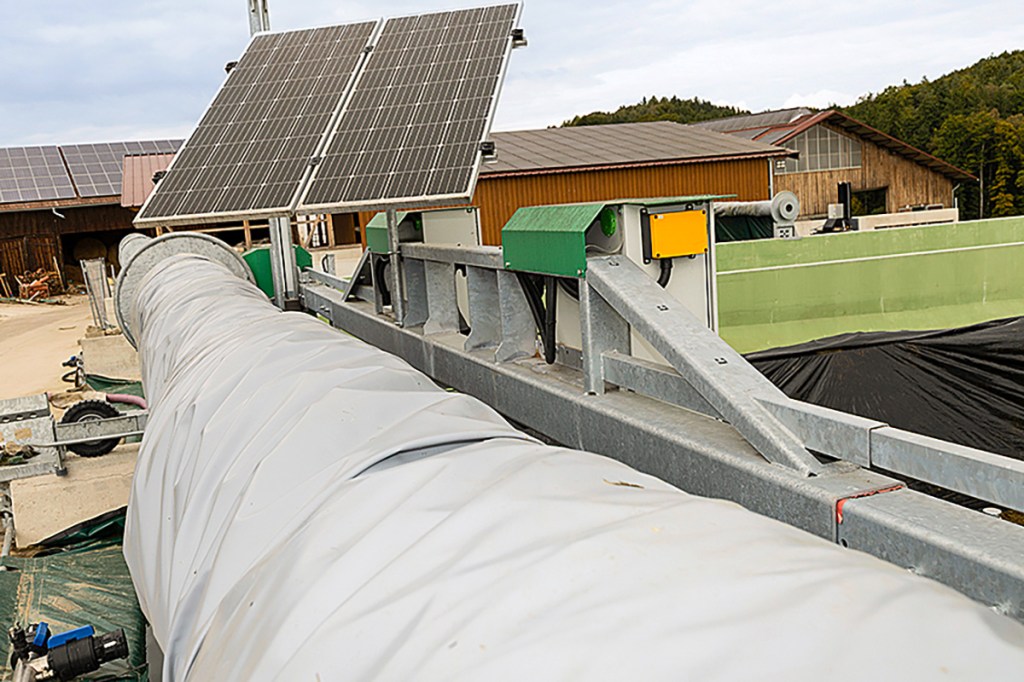
A battery pack provides the necessary power to propel the unit and roll the tarp. This is recharged using a solar panel, but, if there is a problem, it can be connected to mains power. The battery and control panel are located on the gantry’s crossbeam.
The gantry crossbeam has hydraulic height adjustment, which is used for picking up or dropping off the spool from its park stands on the clamp. Once the spool is detached, you can then move the Cabrio gantry to the next clamp with the telehandler/loader, and the process can be repeated.
Daily removals
When silage is being fed and the sheet is being rolled up bit by bit, the system is able to release a defined amount of water back to the underground tank. In this way the part of the hose still on the covered area remains full.
You do need one Cabrio power unit for each open clamp. The other option is to roll back the tarp for a few days’ feeding, drop off the partly filled spool and move the Cabrio to the next clamp. Then repeat this process every few days. A compromise would be to ensile grass and maize in a sandwich system, so just the one gantry is needed for year-round use.
Our field visit
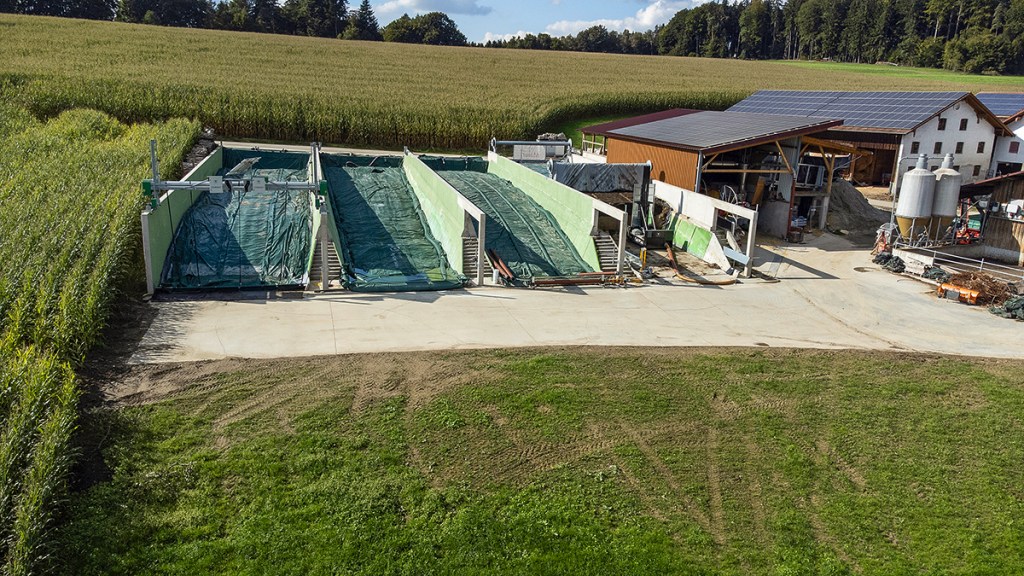
Last autumn, we visited Margit and Gerhard Peterbauer’s farm in Bavaria to take a close look at the first Cabrio system to be installed in Germany. The couple have 75 dairy cows plus followers. Since May 2025, the cows have been catered for fully automatically with a Wasserbauer Shuttle Eco feeding robot and the company’s ‘Lift’ system, which automatically removes the silage from the clamp to the robot’s kitchen.
The Cabrio clamp cover was eventually commissioned in the summer. The first hurdle was modifying the silage clamps by increasing the wall height to 4.30m. By straightening the top of the wall, (maximum gradient is 2.5%) they didn’t need an extra guide rail.
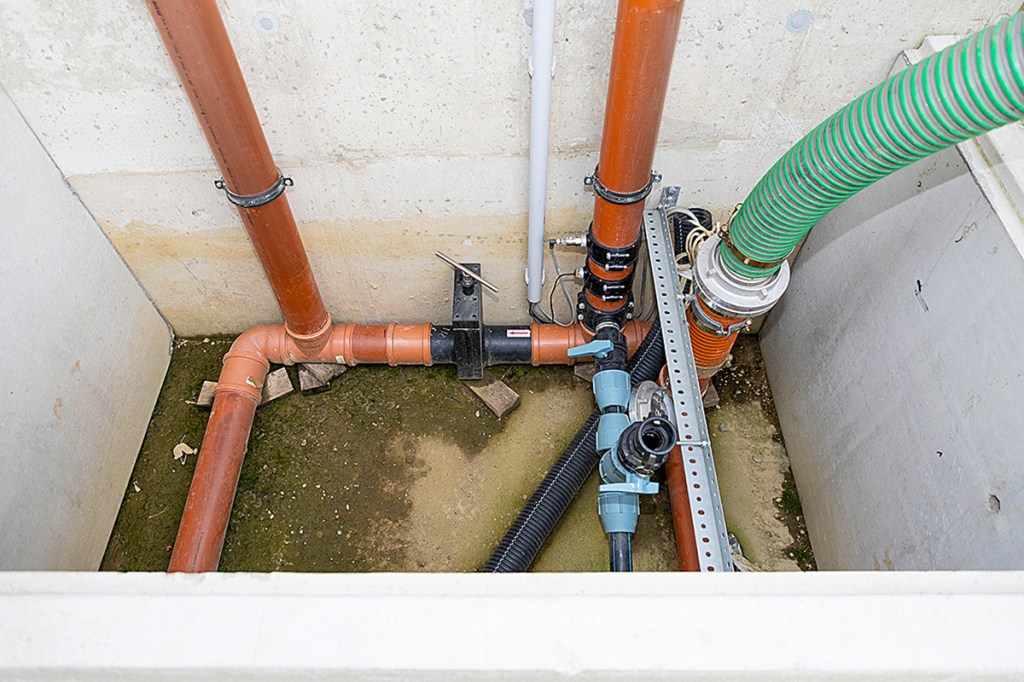
Another part of the project was installing the 30m³ underground tank near the barn to store the water. They also had to install various pipes from the tank to the four clamps.
One person uncovers the clamp
When we visited the farm, the Peterbauers were getting ready for maize. Their daughter had started uncovering the pit, which was already half-filled with grass silage.
After draining the water from the hoses into the tank and releasing the water held in the pocket at the front of the pit, she hooked the tarp to the straps on the reel. Then, at the push of a button, the silage clamp was uncovered. In less than half an hour the 35m tarp was rolled up and the clamp was ready for the maize — all done by just one person without breaking a sweat.
Because the dairy farm pushes up the silage, rather than driving onto the clamp with the trailers, the Cabrio could be left parked at the end of the clamp while the maize was put in. Alternatively, the whole 3.2t Cabrio unit including the spool could have been lifted off and parked on another clamp.
When the grass silage was uncovered, we were surprised by how good the forage looked. There were no signs of mould on the face or at the edges.
Gerhard Peterbauer is also very pleased with silage quality, so much so, that he plans to stop using a thin undercover in future. A lab analysis will show how good the silage quality really is or whether it has actually improved.
Two people cover it
The farmer does the rolling himself and makes a point of compacting particularly well along the walls and that the forage is at 90° to the wall. This helps to ensure that the tarp and the hoses fit snugly against the wall; they also finish things off manually with a shovel. This takes about 30 minutes. Then it’s time to apply the cover with the Cabrio.
First, they pull the end of the cover so it overhangs slightly; then they fold it back to create the pocket and place the metal pole in the hooks on the clamp walls. Gerhard then opens the pressurised pipe from the underground tank so the folded tarp fills with water. Less than ten minutes later the tarp is safely weighed down for the next few months.
The next step is the part we were especially keen to see: covering up the clamp. Using the remote control, the Peterbauers slowly shuffle the Cabrio forward, continuously releasing tarp at the push of a button.
This doesn’t always fall perfectly in place, so they pull it into position by hand on both sides. In less than 45 minutes the clamp is entirely covered with everything in its place just right.
Once the front section of the clamp is sealed with the pocket of water, the green hoses are filled. With the submersible pump in the underground tank running at a rated 24m³/hr, the hoses are filled.
As the pump has to push the water up the silage clamp, the flow rate is reduced and the operation takes a bit longer. But no one has to stand and watch, so everyone can simply get on with their usual jobs around the yard.
About costs
We asked Wasserbauer for a quote for a Cabrio clamp cover system for three clamps, each 35m long and 8.0m wide, and were given a total of around €120,000 excluding installation and groundworks.
Breaking this down, the basic Cabrio unit including PV panel, two Eurobrackets for moving them with the loader and hydraulic lift gear for using it on several clamps comes in at around €62,000. The three tarp rolls are priced at €7,800 each, and the six park stands for storing the rolls on the clamp wall cost €1,800.
The second largest item on the quote is the tarp. At €30/m² the 840m² clamp area adds €25,200 to the bill. Spread over ten years and three clamps, the tarp costs amount to €850/year/clamp.
Summary
Uncover and cover a silage clamp at the press of a button — this dream has come true. Wasserbauer’s Cabrio cover system is available for silage clamps up to 12m by 80m in size.
We were impressed by how well the system works in practice. Its big selling point is the massive reduction in workload — both for clamping and daily uncovering. On top of that, the system offers the chance of better silage quality, not least as it reduces the risk of bird damage to the sheet.
Martin Zäh
For more up-to-date farming news click here and subscribe now to profi and save.