

The arrival of a Vervaet Hydro Trike XL for Derbyshire-based Wrights Agricultural Contractors complete with 6.0m Evers cultivator and 18m dribble bar, has opened up new opportunities for precision slurry and digestate applications. And with a narrow wheel option, the firm can also apply into standing maize crops.
KEEPING IT BRIEF
- 4.57m footprint
- NIR sensing improves management
- Sub-contractors boost the fleet
With the introduction of NIR (Near Infra-Red) sensing on slurry application kit, the true value of liquid manures can now be fully utilised as a replacement for bagged fertilisers. That’s what Matlock, Derbyshire-based Wrights Agricultural Contractors has found, having employed such a mechanism on its last two self-propelled slurry application systems.
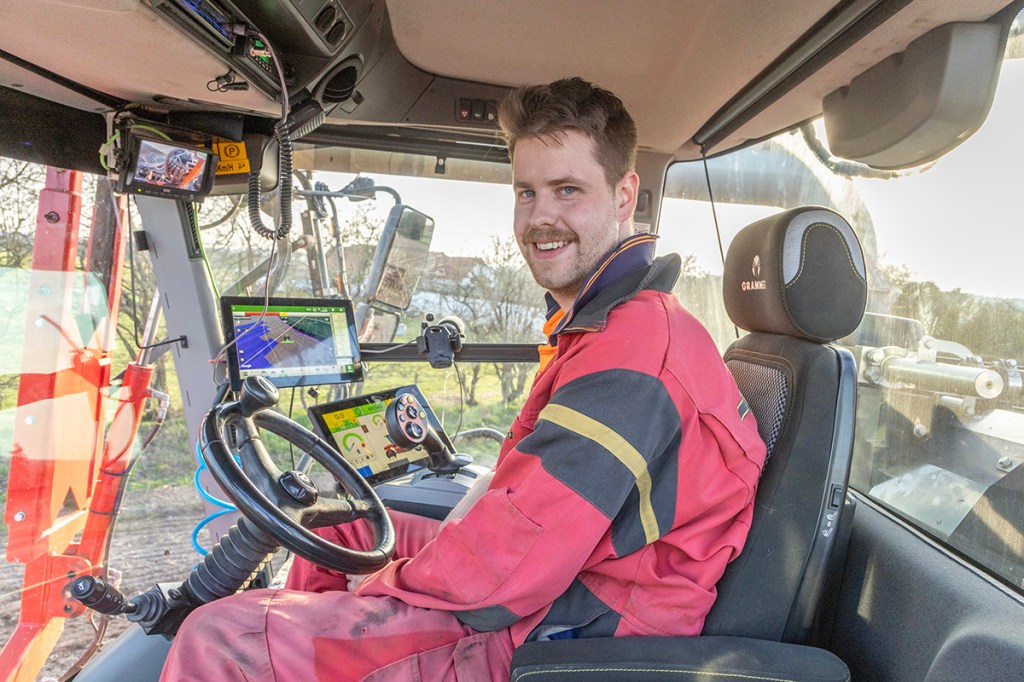
“We had our first experience with NIR on our previous self-propelled Claas Xerion-based slurry kit,” explains Dan Marsden who is one of three full-time operators and runs the slurry applications in the general contracting business alongside owner Tim Wright. The third full-time team member is Dan’s father, Kevin, who has spent the last 40 years working with the firm, and takes care of a 3,200-hectare silage workload from the cab of a John Deere 9900i self-propelled forager.
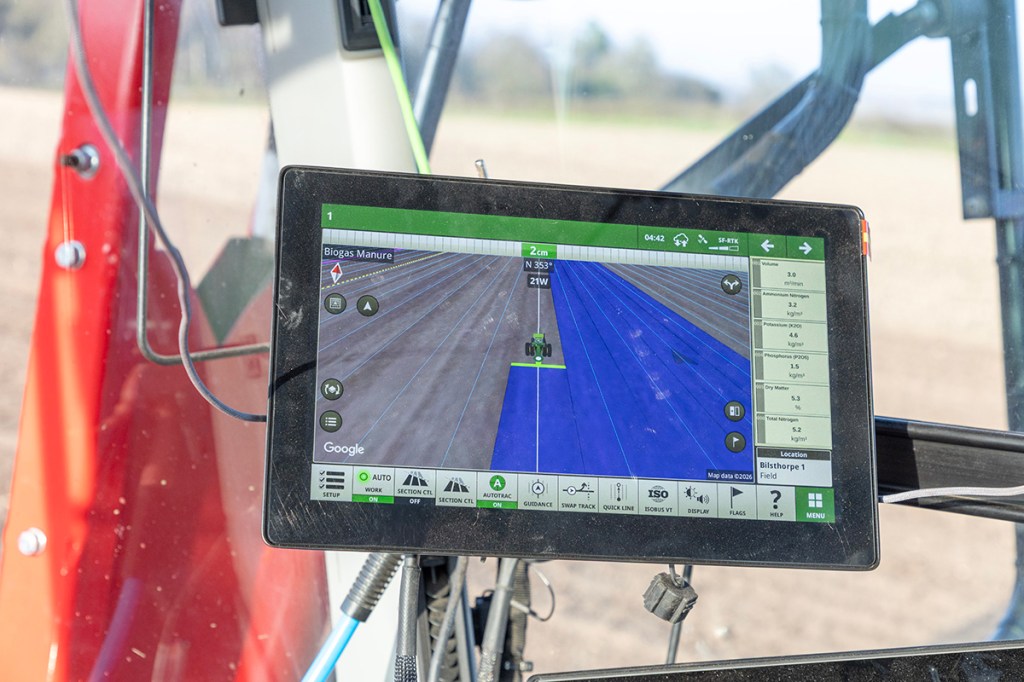
Dan says that first foray into NIR was a retro-fit, and enabled the firm to gain experience with improving the precision and traceability of slurry applications. He also adds that the Xerion was applying by the cubic metre, where the later system installed on the Vervaet will let him select a target rate of nitrogen in kilograms per hectare, and the NIR sensing will analyse the slurry and apply a volume of liquid to achieve the desired dose of N.
Proven system
“The Claas kit worked well, but as an outfit, had its limitations in terms of where and when we could apply, so we looked into finding a more productive and versatile system, to improve what we could do for our customers.”
That search led Wrights Agricultural Contractors to J Riley Agri, the UK importer for Vervaet.
“The Vervaet Hydro Trike XL offered much more flexibility for our slurry operation,” he says. “And with NIR built-in and the ability to link into our JD fleet management, this looked to be a game-changer for us. Plus having five wheels has really raised our game across a wide range of working conditions.”
The XL version of the Hydro Trike provides a larger tank capacity and two more wheels than the standard model. And looking to take the application process a step further, Wrights Agricultural Contractors invested in an 18m dribble bar and a 6.0m hydraulic folding Evers disc cultivator.
“We’re applying around 50,000 cubes each year, which is a mix of liquids including biogas digestate and farm slurries,” he says. “And our working season has been extended by us now offering a precision application service that can either incorporate liquid straight into a seedbed, or apply onto growing crops such as grass, cereals and oilseed rape, using the dribble bar.
“We make full use of My John Deere fleet management and telemetry, with applied maps provided to customers for nutrient traceability. It’s a very accurate and very informative system.”
Tools for the job
A Vogelsang Compact dribble bar allows the team to work at 18m, 15m, 12m or 9m working widths – the latter a half-width shut off. And a set of ‘narrow’ wheels to replace the Hydro Trike’s three 1050-wide Michelin Mega-Bib’s will see the rig operating on 320/90 R42 dual wheels up front, followed by 440/80 R28’s in the middle and 520/85 R42’s at the rear. It’s a format that Dan says are narrow enough to slot into a 75cm row spacing, for application work in maize.
“The narrow tyre option does create much more operational flexibility, and having these options lets us provide useful solutions for customers,” he says. “The rear linkage is Cat IV, so it’s not too difficult a process to swap between dribble bar and cultivator. Typically, it’s a 30-minute change-over.”
Switching to the Vervaet also brought an increase in capacity over the Xerion, which in turn required a change of tanker to improve logistics and efficiency.
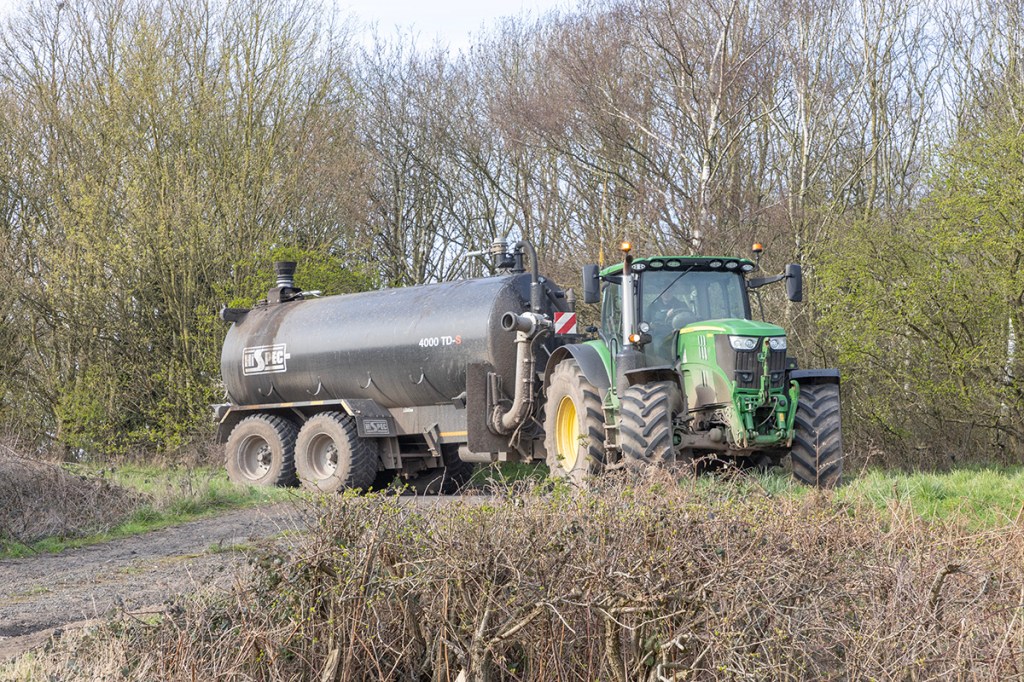
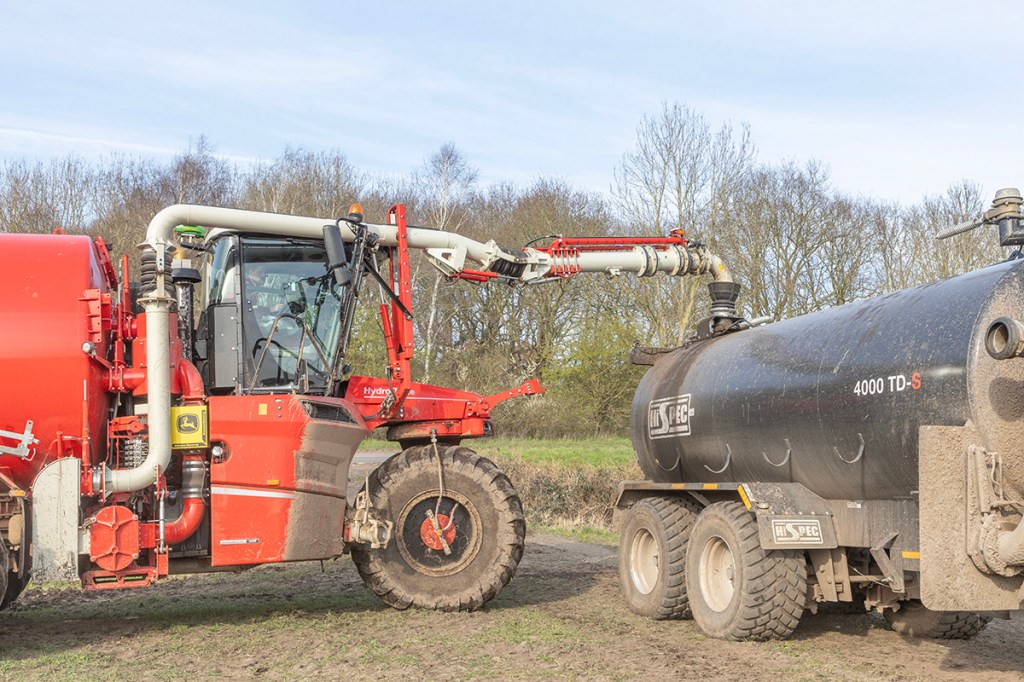
That led to a fleet of three Hi-Spec 4000 TD-S arriving at Tax Farm, complete with rear steering axle, 600/55 R26.5 tyres, 11,000-litre pump and front-mounted, hydraulic loading arm, for fast-fill capability.
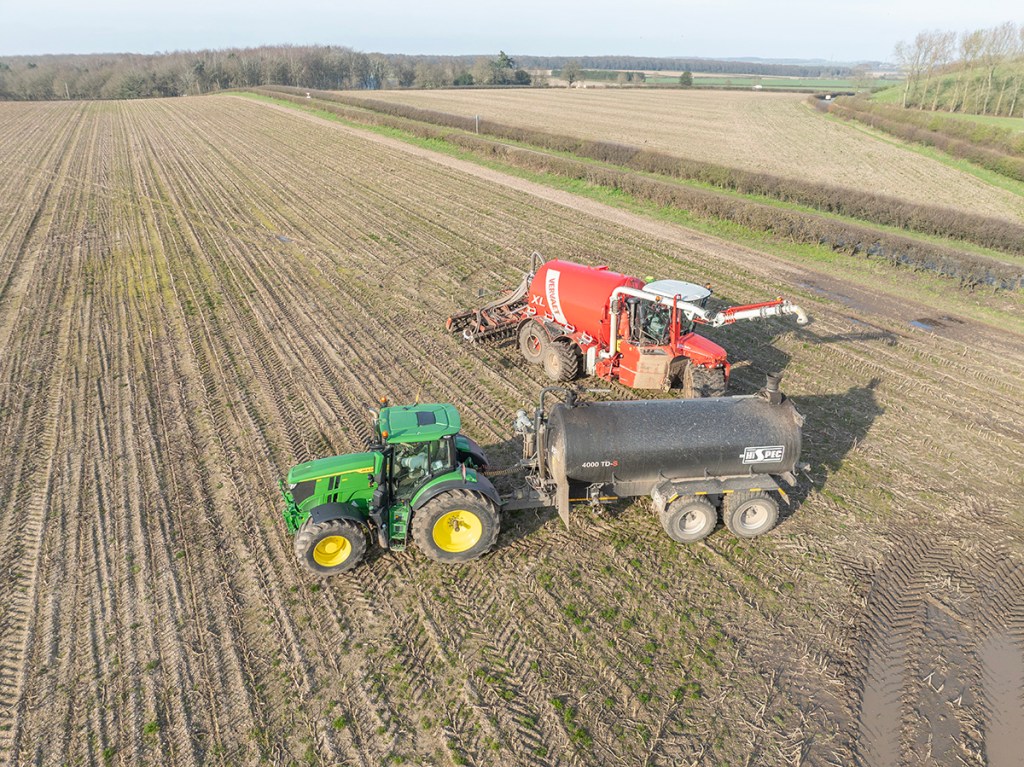
“The Xerion had a 16-cube capacity operating with 3,500-gallon tankers, and now the Vervaet carries 20 cubes, so the tankers have been increased to 4,000 gallons,” explains Dan. “Each load matches the Trike’s tank capacity, and it takes just a few minutes for me to suck the contents from the tankers. It’s a good match and means we can be efficient with farm-to-field logistics, and keep the Trike’s productivity where it needs to be.”
Dan says output of the unit has been as high as 140 cubic metres/hour.
“It has some impressive performance, though the application rate depends on the nutrient analysis and customer requirements,” he adds.
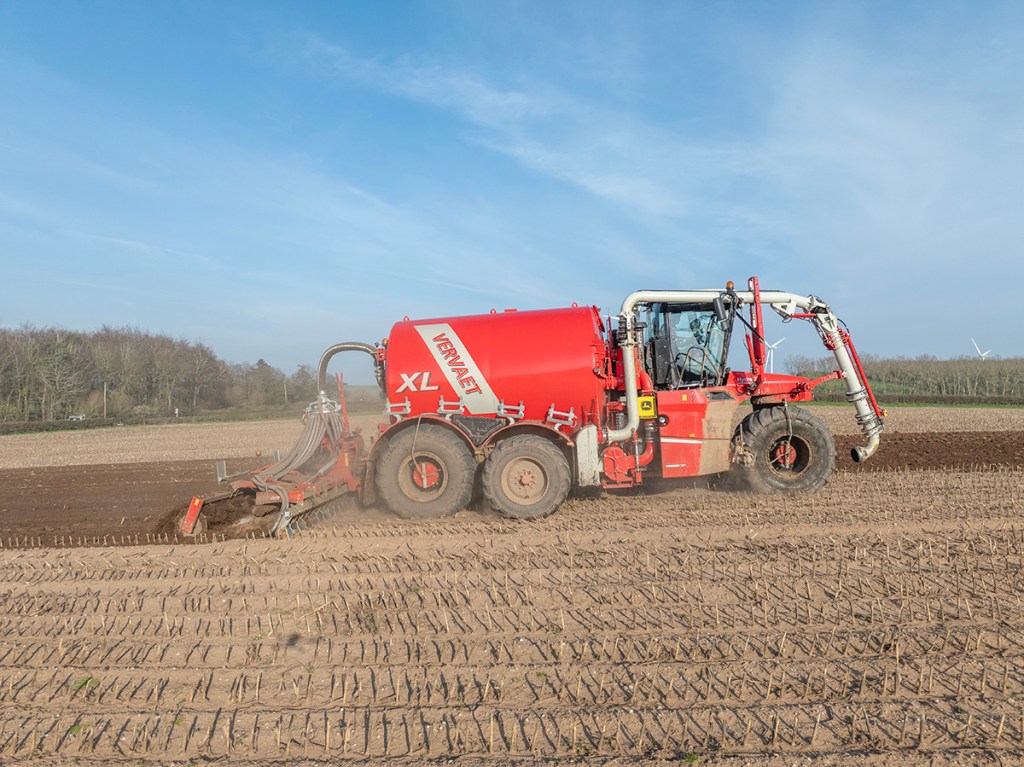
When profi visited, the outfit was applying waste from a biogas plant at a rate of 30m3/ha. This was incorporated direct into stubbles using the Evers cultivator, preparing land ahead of drilling. Operating at a forward speed of 13km/hr, the cultivator was working at a depth of around 10cm.
“There’s a liquid outlet with each of the discs on the front row of the cultivator,” he says. “Liquid is effortlessly incorporated into the soil, and this technique now accounts for around 80% of our spring slurry application work. In most instances, we’re leaving ground ready to be drilled.”
Matching muscle
The five-wheel Hydro Trike XL is not short of grunt. A Paccar 530hp engine, usually the preserve of DAF trucks, sits under the left-hand side of the cab and is easily accessed from ground level. On the opposite side is the cooling pack, with a high-level hydraulic oil cooler nestled on the platform behind the cab.
Maximum power is delivered at 1,400rpm, with Dan saying the outfit operates at around 1,200rpm when using the dribble bar.
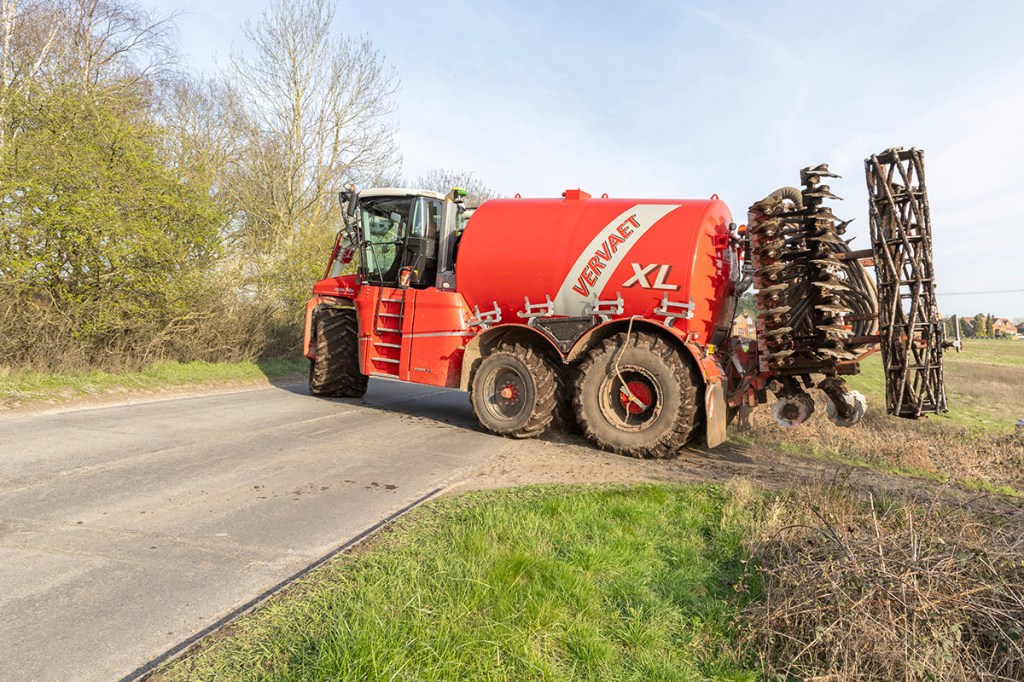
Road speed is 40km/hr, and power is transmitted to three 1050/50 R32 flotation tyres through a twin-range hydrostatic transmission. Two large capacity pumps deliver oil to the front and rear wheels, where hydrostatic motors drive planetary hub reduction gearboxes, creating maximum torque with minimum losses. As an option, the mid-wheels can also be driven.
For Wrights, the additional pair of mid-wheels running on 710 tyres offers an extended footprint thanks to hydraulic track width adjustment. This enables the Hydro Trike XL to lay down five individual wheelings, covering an impressive 4.57m width and helping to keep ground pressure to a minimum. Another plus is that given the hilly terrain that the firm often finds itself working in, the mid-wheels add a useful amount of stability to the slurry rig, as if fitted with stabilisers.
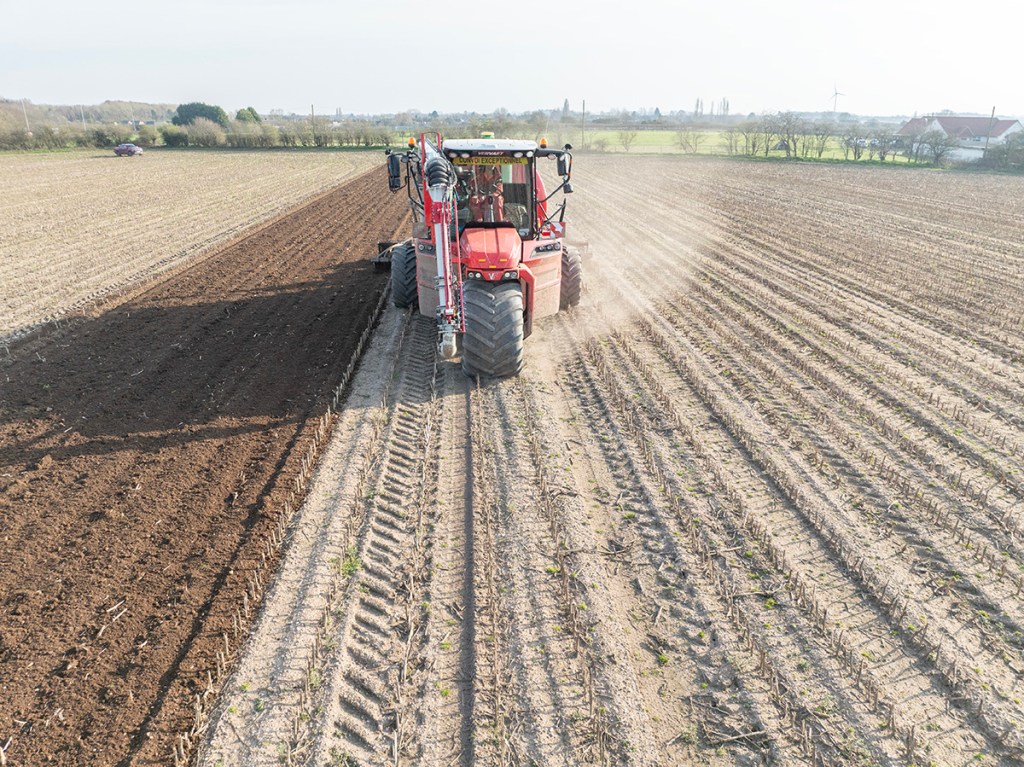
Cleverly, on-board weighing adjusts the pressure in the hydraulic system that is applied to this axle, to compensate for payload – when fully laden, system pressure can increase to around 80 bars to help the mid-axle share the weight. As the tank empties, this pressure automatically drops to around 20 bars, reducing ground pressure from the mid-axle as the load lightens.
“It operates as a form of traction control too, adjusting load on the middle axle as required,” points out the Vervaet’s pilot.
Quick turns
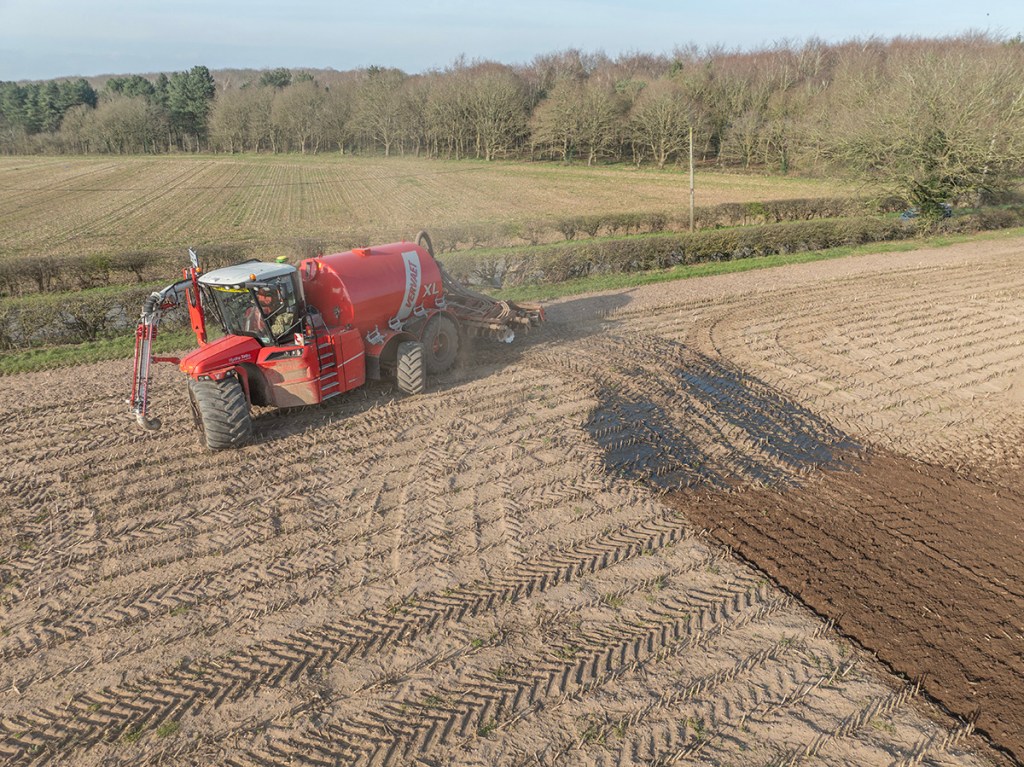
The middle axle also steers, and with the front wheel capable of working through a 180-degree steering angle, headland manoeuvrability is impressive. And with central tyre inflation on the three driven wheels, ground pressure is minimal.
“I don’t need to shunt, as the trike can swing round on itself barely making a mark, so each 6m pass is easy to achieve without skipping bouts,” says Dan. “Tyre pressures are three bars for road transport, and two bars for field work. And it all happens rapidly and automatically when changing between road and field modes, thanks to the truck engine technology with a high-capacity compressor suited to HGV air brake systems. It’s brilliant.”
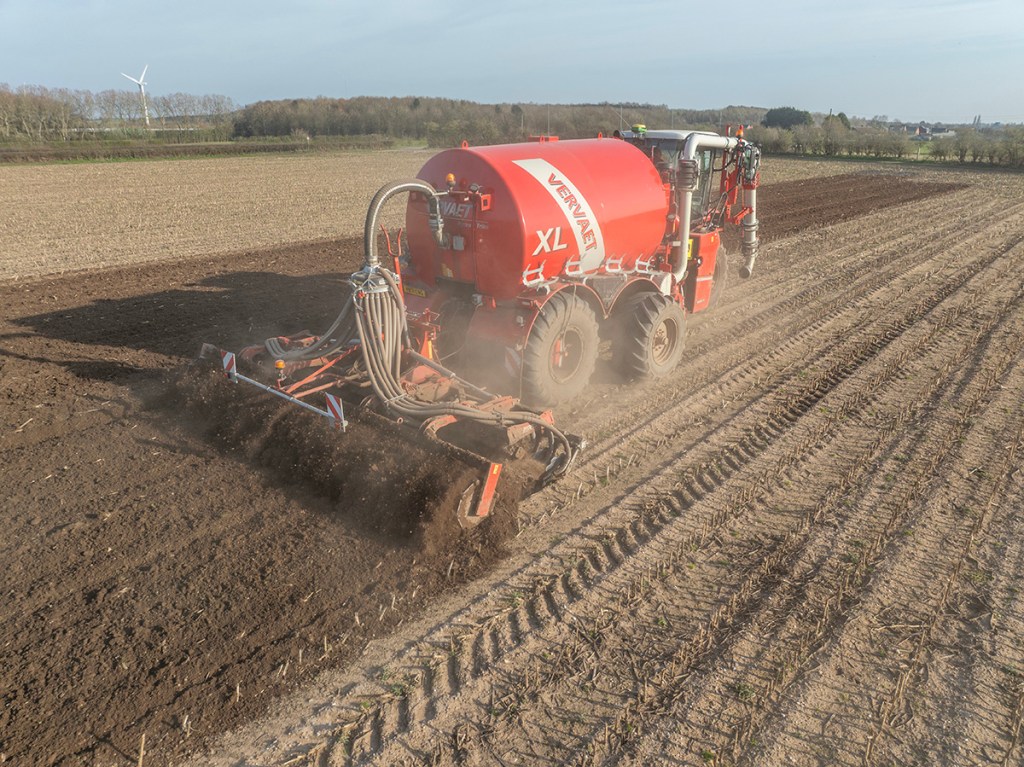
When it comes to liquid management, the Hydro Trike XL uses 8in piping throughout. Its loading arm boasts a telescopic section, handy for reaching tankers on the other side of a hedge, for example. A Borger 9,000 litre pump extracts the contents of the firm’s tankers in little over two minutes, feeding liquid into the tank via a macerator, while a generous stone trap – accessed from ground level – takes care of foreign bodies before there’s a chance to reach the pump.
Now in its third season with Wright’s the self-propelled has covered around 4,000 hours, and has so far proved to be the best solution for its slurry application work.
“Reliability has been good, as has the backup from Riley’s,” he says. “The machine is very easy to look after, as components are easily reached for maintenance. You don’t have to climb among the innards of the machine, and with a full auto-lube system throughout, everything gets a regular shot of grease, as required.”
With full RTK, Dan says accuracy is impressive and a Solsteer system enables integration of Deere’s Starfire 7500 receiver on the Vervaet tanker, maintaining compatibility with MyJD telematics and fleet management. Cab comfort is afforded by a Claas Vista cab, and Dan reckons there’s worse places to spend a long day.
“It’ a very comfortable place to be,” he adds. “In fact, it’s probably more comfortable than our R-series John Deere cabs.
Running green
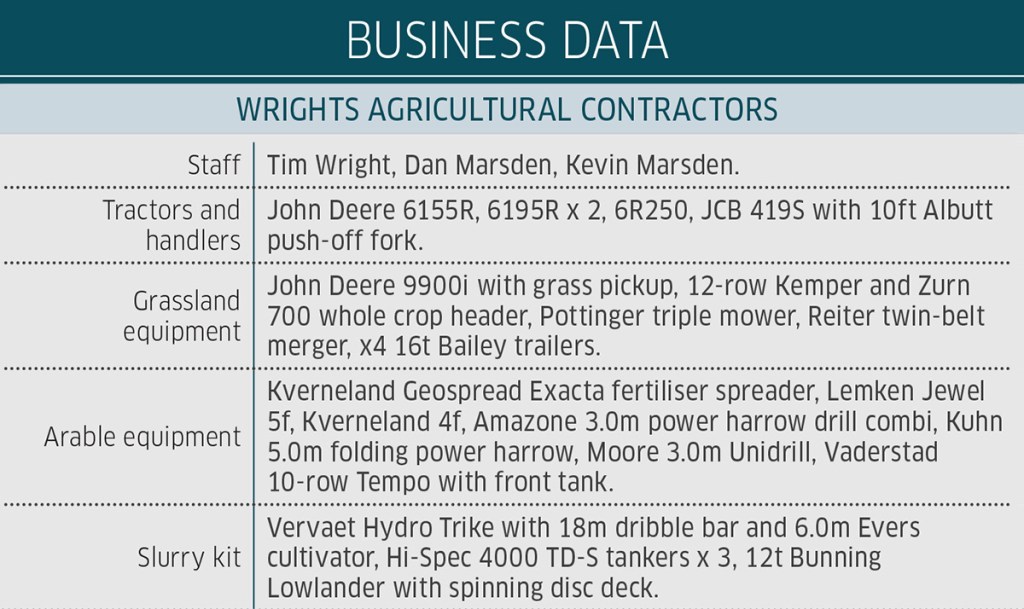
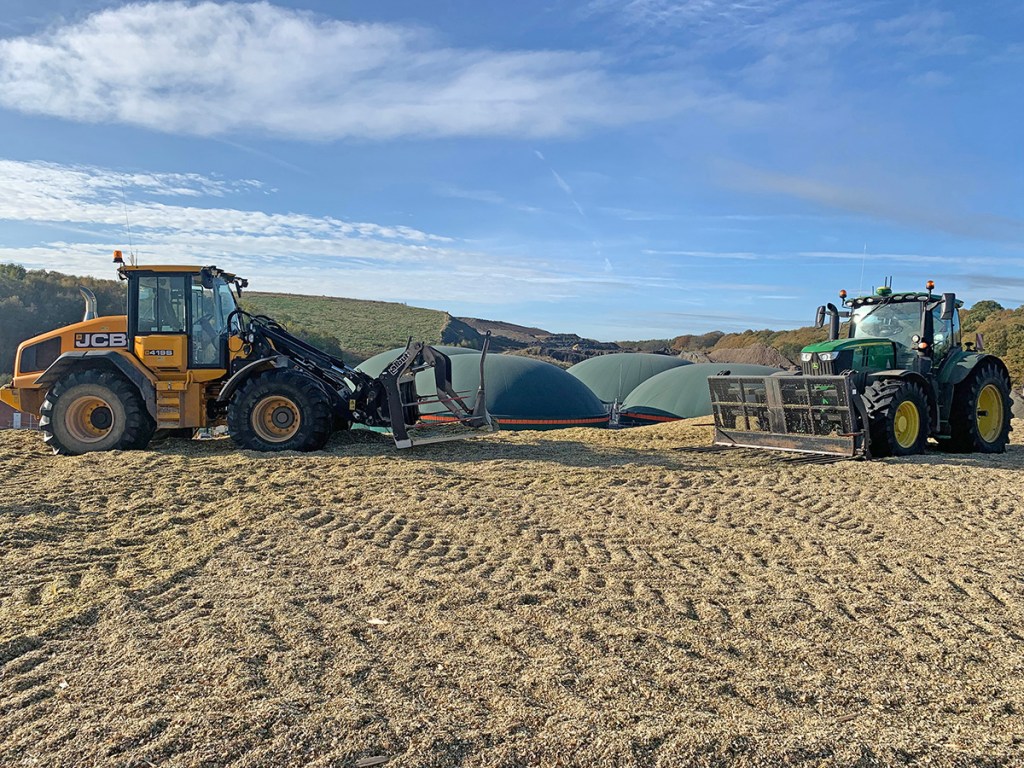
The Wright tractor fleet is sensibly powered, and modestly numbered, with only four horses called upon. This all-Deere collection includes a 6155R, two 6195R’s and a 6R250. Operating such a modest tractor-line-up is possible thanks to a local network of sub-contractors.
Regular owner-operators step in at peak times with their tractors, to help out. They even use Wright’s equipment as required.
“It’s a great way of managing finances when it comes to investing in new kit,” says Dan. “And it also provides regular work to trusted operators, who can then invest in their own tractors and trailers for example, knowing they’ll get plenty of work from us at peak times.”
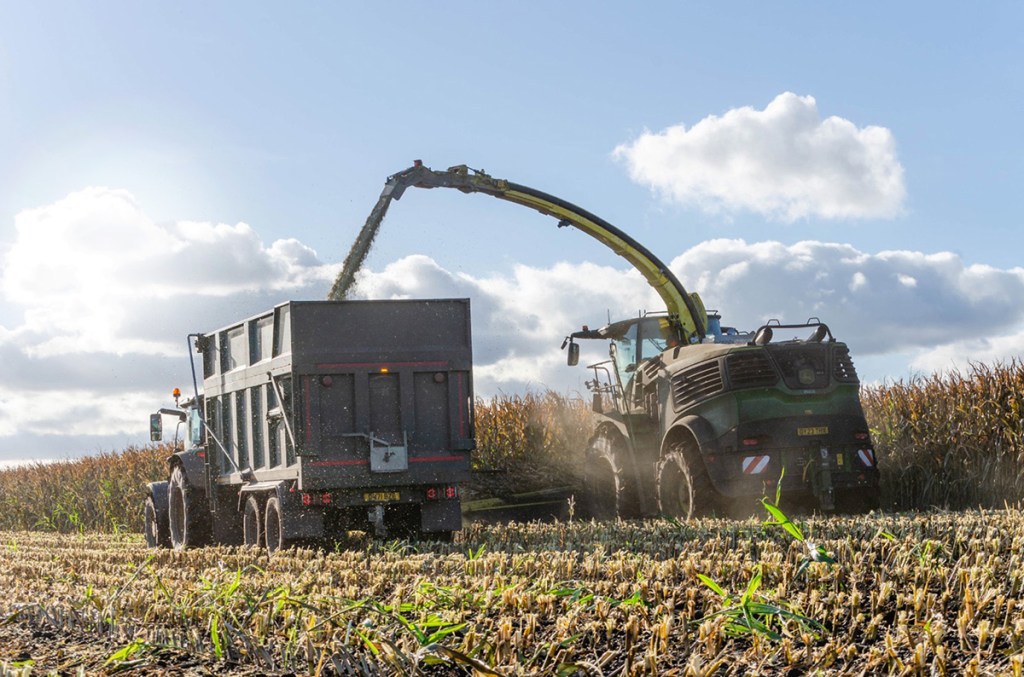
Slurry is only part of the workload handled by Wrights Agricultural Contractors, as silage represents another equally significant part of the business. This is handled by a John Deere 9900i self-propelled forager, and it too is equipped with NIR sensing, providing analysis of grass, whole crop and maize.
“As part of our service, we also supply maps to customers showing analysis of silage too, from the point of harvest,” he says.
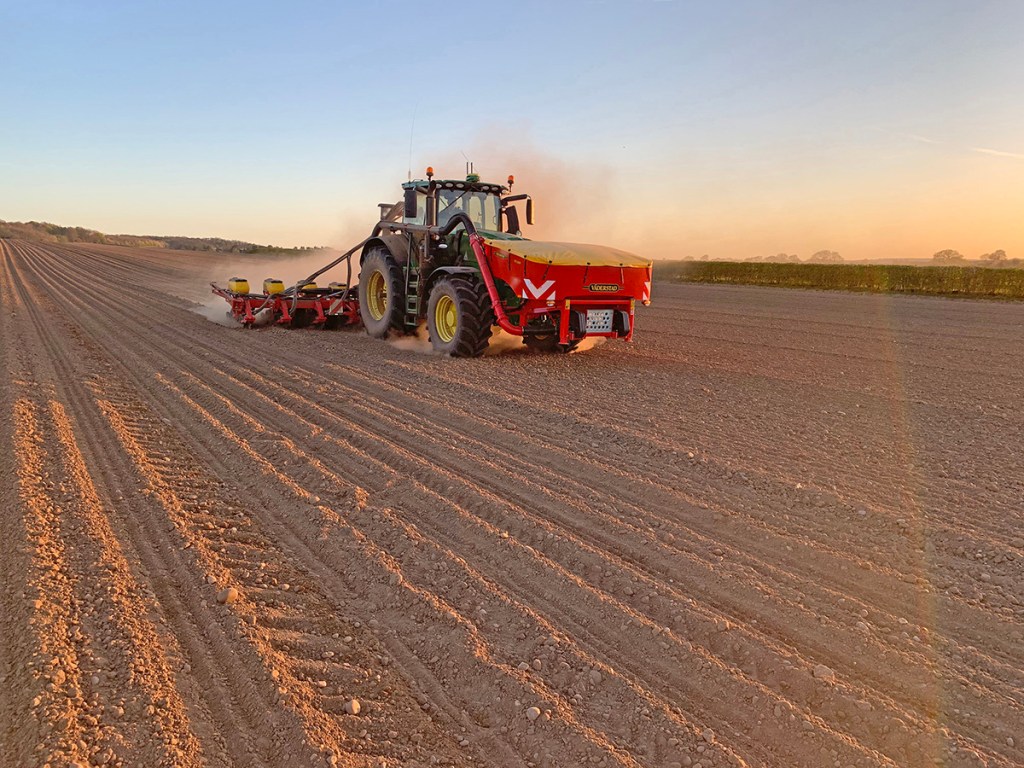
The team gets stuck into around 1,600ha of grass and 1,400ha of maize, with an area of whole crop too, that fluctuates yearly. All of its harvested maize is drilled by Kevin Marsden using a 10-row mounted Väderstad Tempo with front tank.
“We plant maize in 75cm rows, and this too can receive a dose of slurry if we swap the Vervaet’s 1050 tyres for the narrow wheels,” he says.
Dan adds that the region’s high stone content has pushed the firm away from raking, and onto merging, with the resulting forage quality gains bringing the firm additional work.
“We went from a twin-rotor rake to a Kuhn Merge Maxx, but that soon got replaced by a Reiter twin-belt machine,” he says. “Depending on grass volumes, we’ll either merge 9.0m of grass or double-up to 18m, into one swath. And we don’t need to run the forager as hard in grass, as we do in maize, so the adjustable power settings also bring efficiency to the process.”
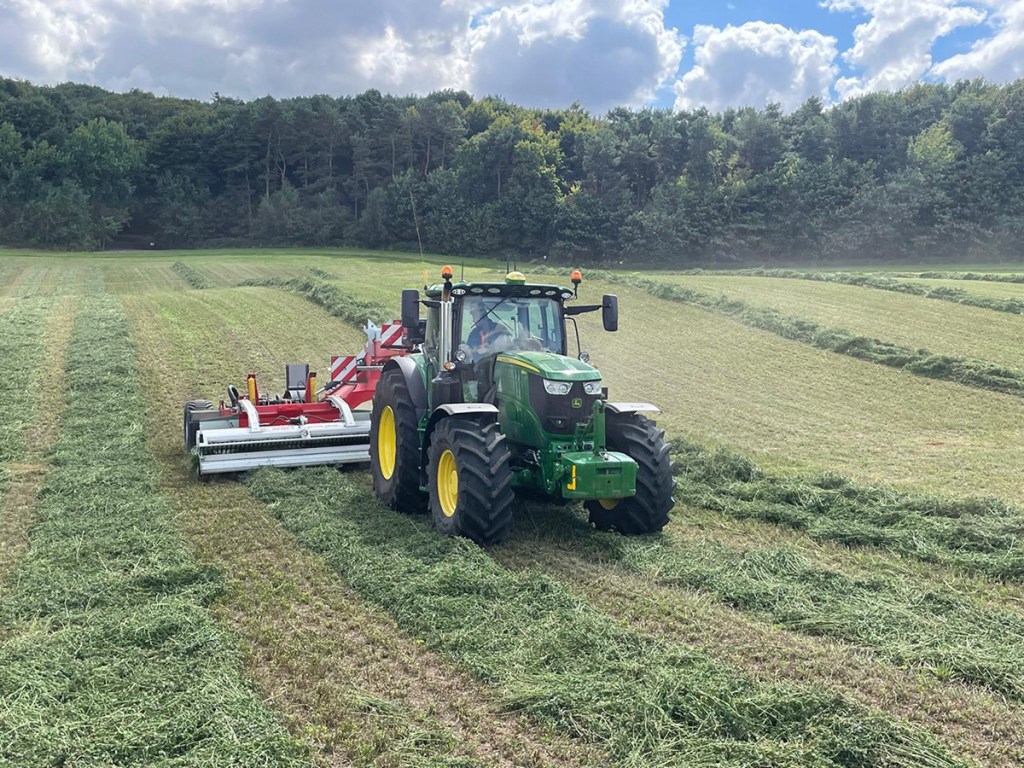
He says that the switch to a merger has been worth it in many ways.
“The extended blade sharpness and chute life we now get, as a result of merging, has been worth it,” he adds. “Silage quality is also improved too, and we can back this up with NIR analysis taken from the forager, highlighting dry matter and ash content in grass. With the ability to supply this information with maps, it’s a win for all involved.”
Summary
Through the adoption of practical technology, this Derbyshire contractor has been able to build stronger relationships with its customers by providing valuable data and analysis through NIR (Near Infra-Red) sensing to improve crop and nutrient management. In this instance, NIR goes a long way towards proving that guesswork in no longer acceptable.
Geoff Ashcroft
For more up-to-date farming news click here and subscribe now to profi and save.