

One of the smaller countries in Europe, Slovenia’s farmers are also equally small-scale.
We visited three of the larger full-time farms that follow a min-till approach.
KEEPING IT BRIEF
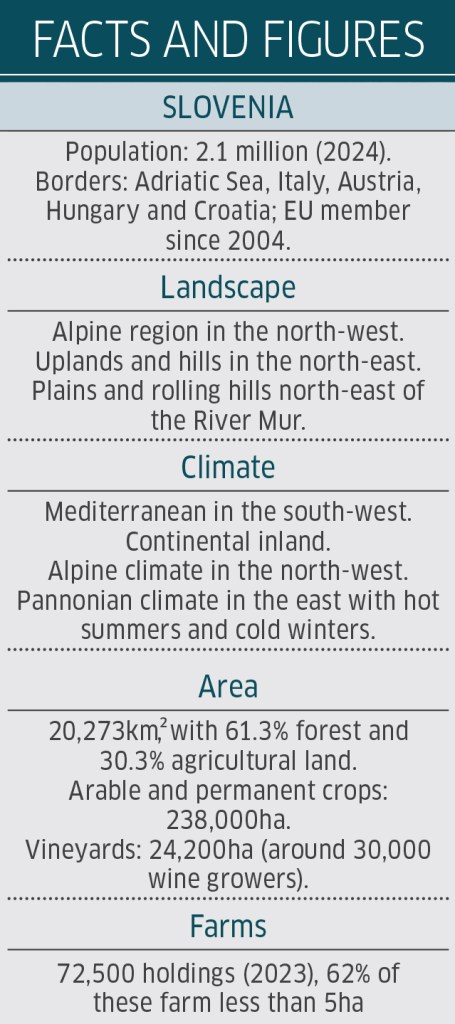
- Slovenia covers an area of around 20,000km², with farmland accounting for about 30%.
- Only 3% of the country’s near 72,500 farms are more than 30ha.
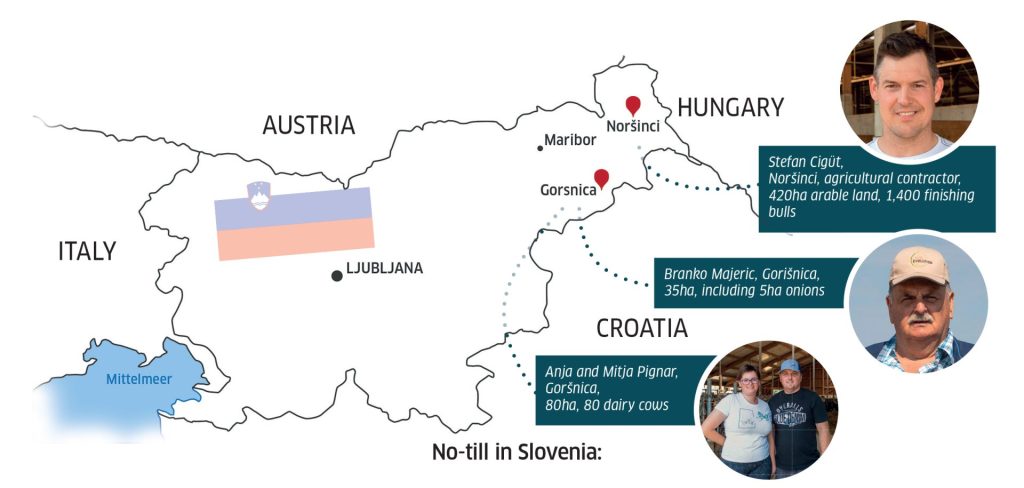
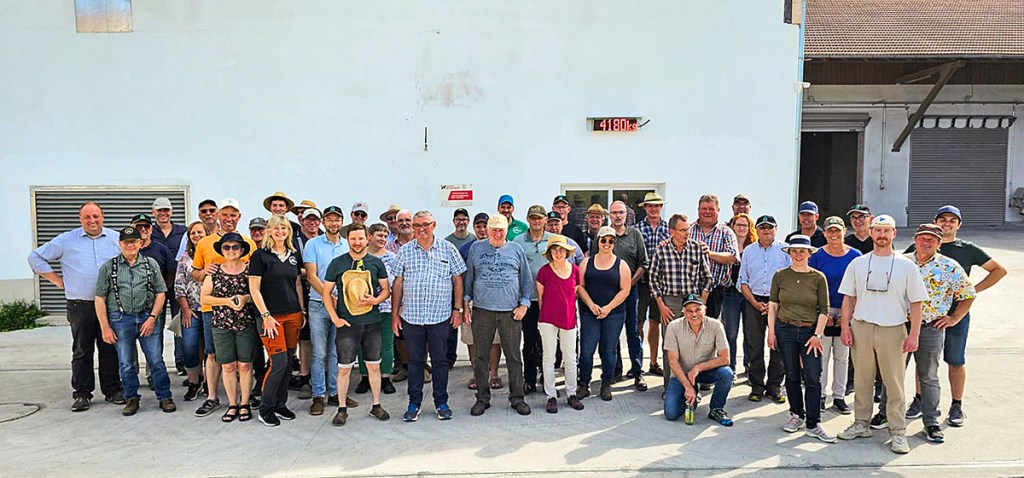
Back last year, the German Society for Conservation Tillage (GKB) headed off to Slovenia. We joined the no-till group, for whom the focus of the trip was firmly on GKB’s core topic: ploughless farming — where farmers are using either min-till or direct-drill systems.
All three farms we visited had several years of min-till and no-till experience. But equally interesting is how they have built up their businesses to generate a full-time income to support the whole family.
Slovenian agriculture is highly fragmented. Of the roughly 72,000 farms, 62% operate on less than 5ha. Only 100 businesses farm more than 100ha of land (Eurostat 2023). The vast majority of these smaller farms are run as a secondary income. Many of the ‘fields’ are small, narrow strips, barely wide enough to accommodate a pass or two of a 3.0m wide drill. Sunflowers, cereals, maize, soya and pumpkins alternate in neighbouring fields. This makes other work like fertilising, crop protection and harvesting less than straightforward.
Contractor Cigüt
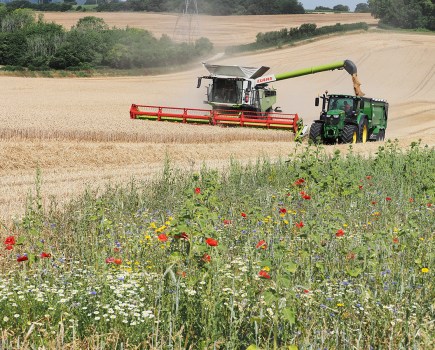
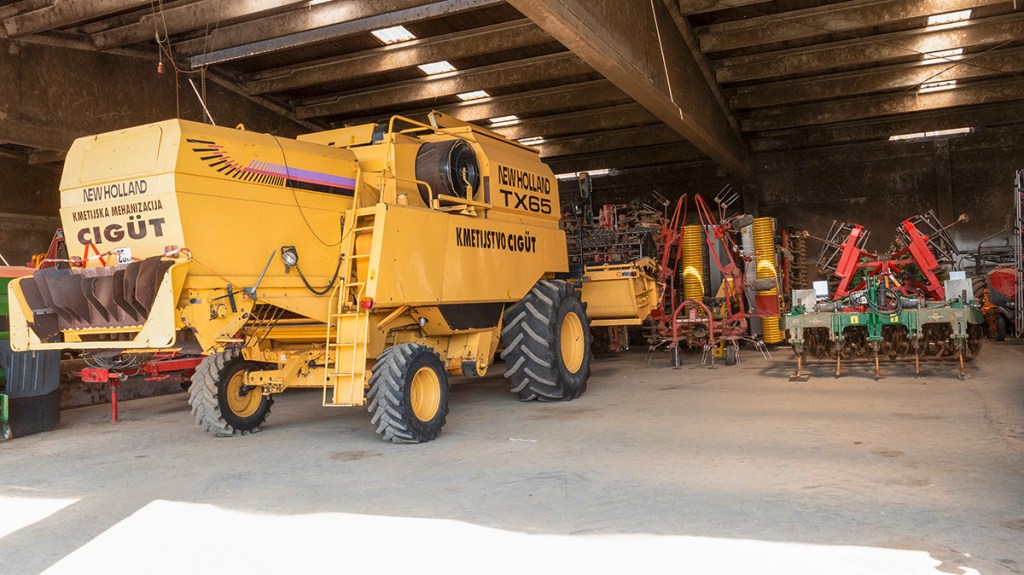
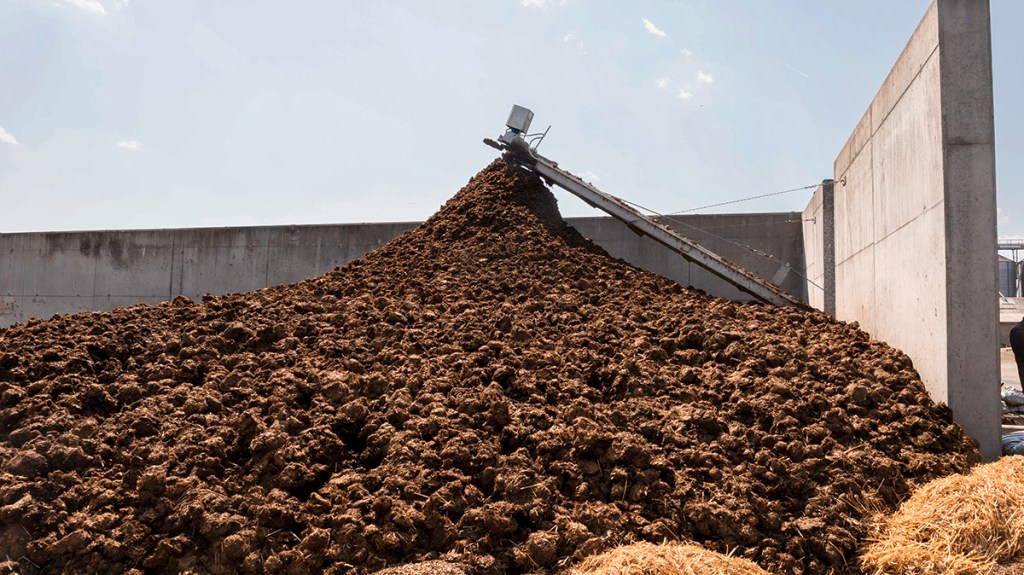
Despite these sizeable challenges, Stefan Cigüt’s business in Noršinci, in the Prekmurje lowlands of north-east Slovenia, offers a full range of agricultural contracting services: cultivation, drilling, muck spreading, baling, maize chopping and combining.
His parents are still involved in the business. They started farming in 1976 after inheriting 2ha of land and soon invested in machinery, including a combine. Since 1992, the Cigüt business has been offering ag services to neighbouring farms.
Over time, many of these farms leased or sold their land to the family, allowing the business to expand to its current 420ha of arable cropping. Even so, the farm remains highly fragmented, to the point that Stefan manages nearly 330 individual fields.
He may be a two-time national ploughing champion, but Stefan hasn’t ploughed his own ground for 20 years now. But he’s not yet ready to entirely give up on cultivation. “My goal is to have half the land under direct drilling within five years. At the moment, I am incorporating residue with a shallow pass of a disc harrow or power harrow.”
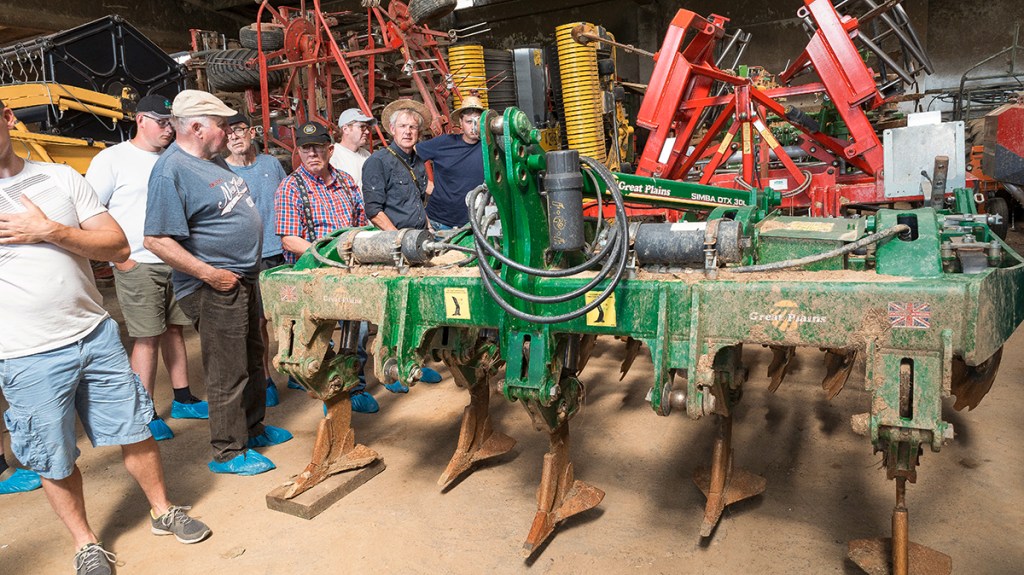
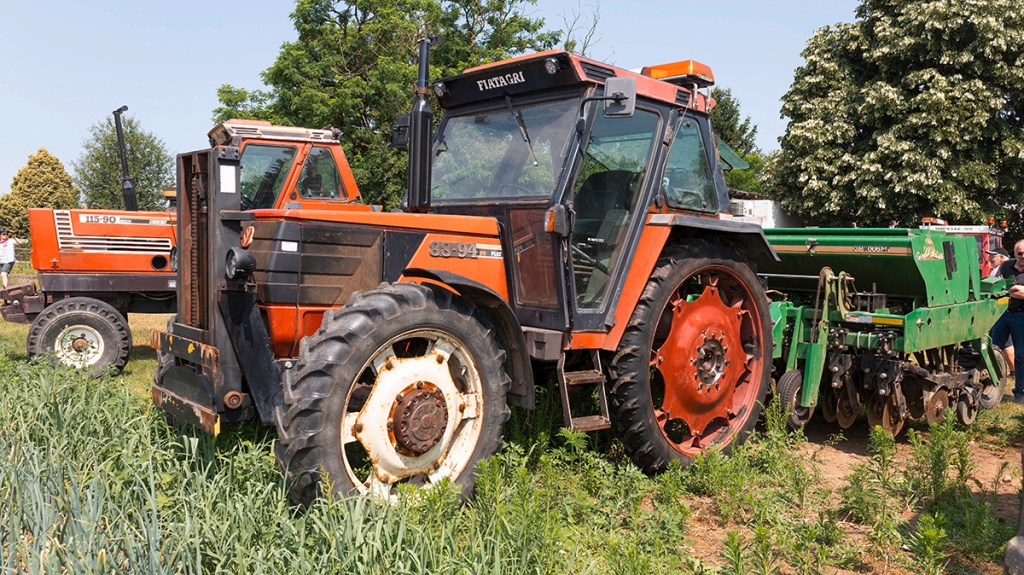
Also in the tillage tool armoury is a Great Plains Simba DTX 300 with its five pan-busting tines for deep soiling.
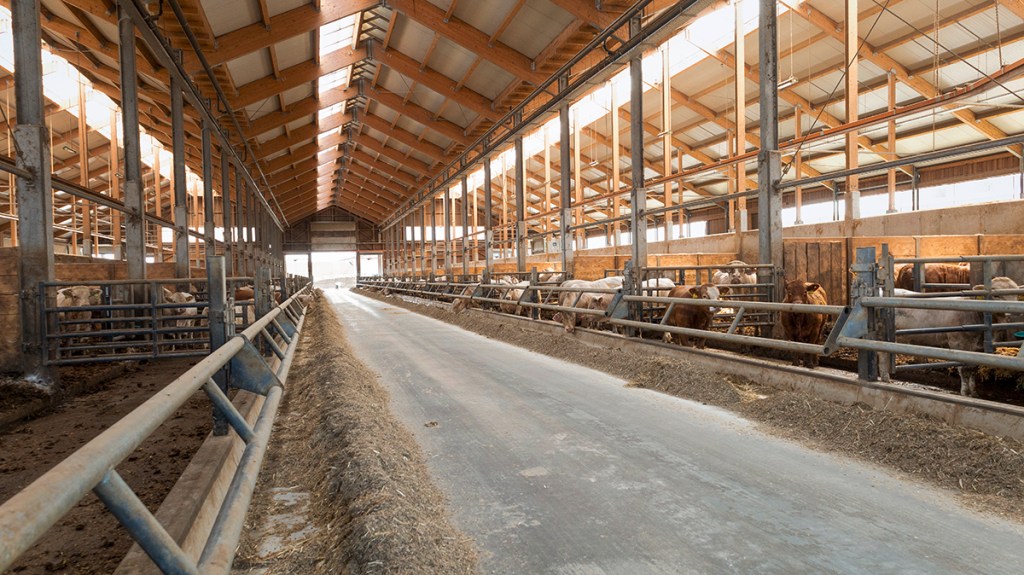
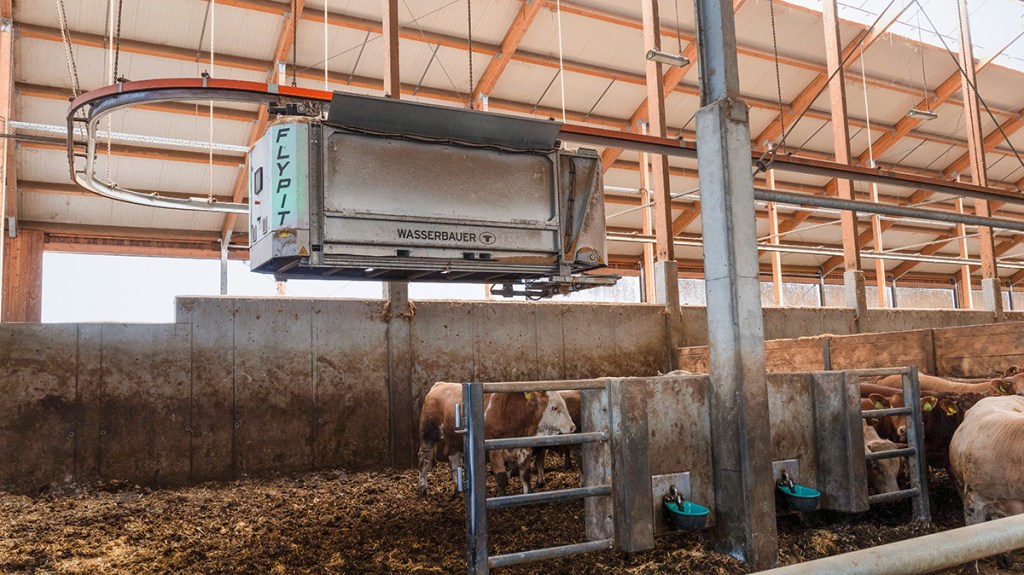
A second mainstay of the Cigüt business is beef finishing. Stefan invested around €3 million in new buildings, tripling his capacity. The farm now finishes 1,400 Limousin and Charolais bulls. Feed is mostly home-grown, with only protein concentrates bought in.
Vegetable grower Majeric
Farming 35ha of arable land, Branko Majeric and his son Vasja operate a much smaller business — although this is still considered fairly large by Slovenian standards where only about 3% of farms exceed 30ha.
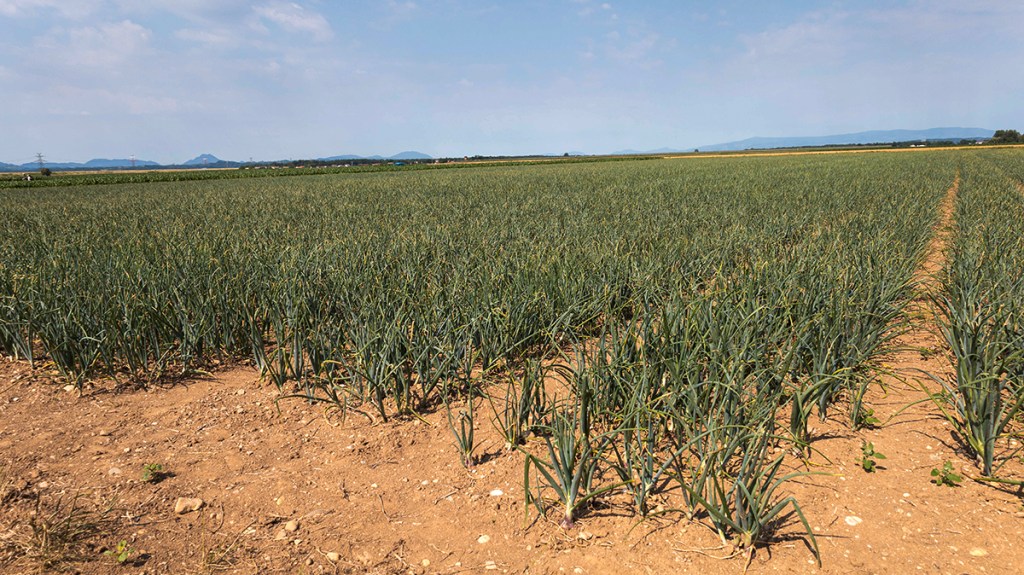
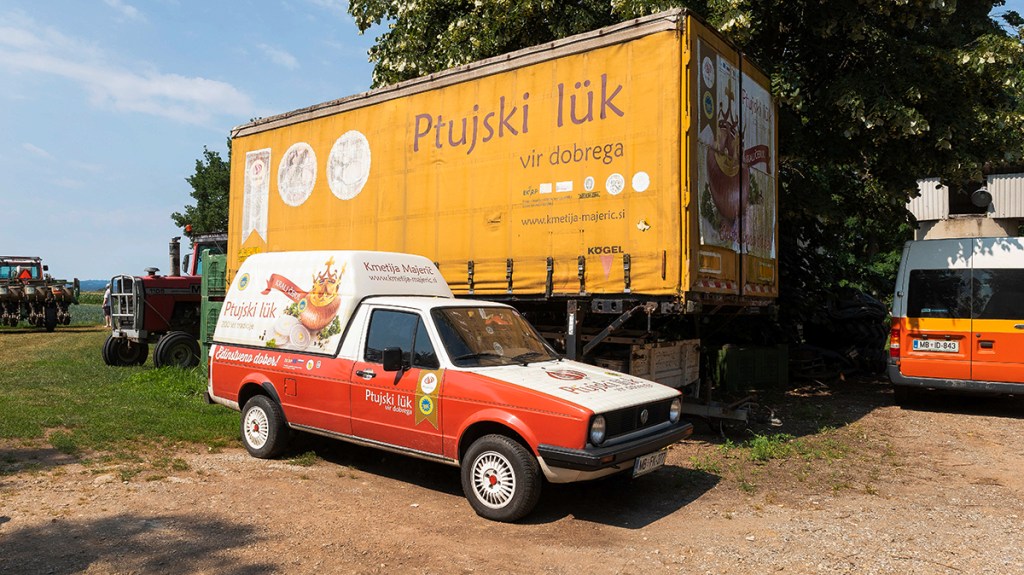
Their main produce is the ‘Ptujski lük’ red onion, an onion variety grown exclusively in Slovenia and protected under the EU’s geographical indication rules. Only six farms produce them.
The farm sits in the heart of the Ptujsko polje growing area on the left bank of the Drava river. Thanks to a state-funded irrigation system, about two-thirds of the land can be irrigated up to four times per season, making it possible to do two harvests.
Growing Ptujski lük still involves a lot of manual work. The bulbs are planted as sets and must be cleaned and then packaged by hand.
“I enjoy working,” says Branko Majeric. He grows 5ha of vegetables, including onions, garlic and some beans as part of a rotation that includes wheat, barley, maize, oilseed rape, sunflowers and soya.
Alongside his passion for onions, Majeric is a strong advocate of what he calls ‘compost tillage’. This is his approach to ploughless and shallow cultivation. The practice involves cultivating no deeper than 10cm, mixing in residues — or the so-called Planting Green approach, where cover crops are shallowly incorporated before drilling, for example ahead of maize.
Ploughless for 25 years
Branko Majeric hasn’t used a plough since 2000. Over the years, he has trialled various systems, eventually settling on the Evers Vario Disc, on which the disc angles can be infinitely adjusted. Drilling was the next challenge. A power harrow drill was quickly ruled out: “it’s a disaster for the soil because it destroys the soil structure,” he says.
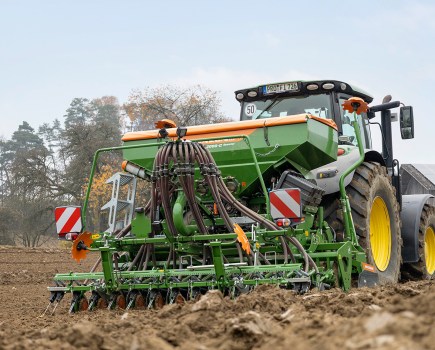
After linking up with Great Plains importer, Milan Rebernik, he invested in two 3.0m Great Plains direct drills with disc coulters — a 3P1006NT for cereals and a Twin Row for maize and sunflowers.
Milan Rebernik also advises on conservation tillage. Together, they launched a long-term cultivation trial on Branko’s land, supported by the Slovenian Conservation Agriculture Association and the University of Ljubljana. Since 2011, they’ve compared plough-based systems with ploughless systems. In 2017, two more variants were added to the trial: direct drilling on previously ploughed land and direct drilling on shallow-tilled land.
A key finding: reducing cultivation intensity is crucial for degrading organic carbon in the soil and maintaining the soil structure. Non-inversion systems will significantly improve aggregate stability.
Dairy farmers Pignar
Inspired by their parents, Anja and Mitja Pignar have also been direct drilling maize, barley, wheat, soya and lucerne since 2012. Anja, Branko Majeric’s daughter, continues the family’s onion-growing tradition.
Their pride and joy, however, is a modern dairy unit built in 2020 with 50% EU funding support.
“Without that EU support, we couldn’t have done it,” says Anja. “One of us would have needed an off-farm job.”
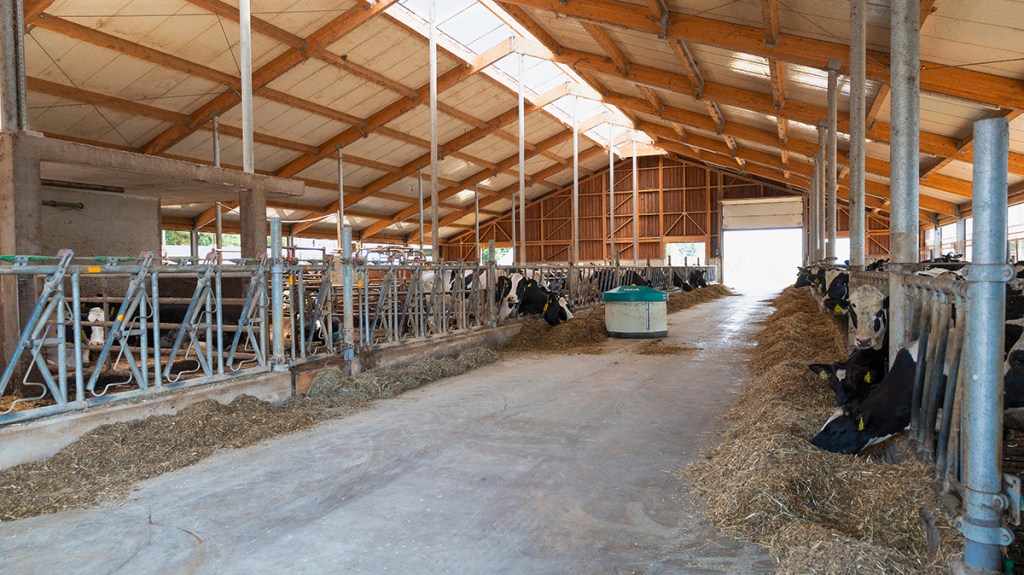
The unit houses 80 milking cows, with space for 160 head in total. Female replacements are kept, while bull calves are sold. Milking and feeding are fully automated.
“It’s less physically demanding and much more family-friendly.”
Like the other farms here, the Pignars have grown from a non-viable smallholding into a full-time business. When Mitja’s parents inherited the farm in 1986, it was just 4ha and 12 cows. Mitja took over in 2015.
Today, the farm keeps 80 cows owns 50ha of land and manages 70ha of arable/ orchards plus 10ha of grassland — a sizeable farming operation in Slovenia.
Summary
Although farming in Slovenia is changing, many small, non-viable holdings remain. These three businesses show how farms can succeed via a mix of growth, diversification and innovation: contractor and beef finisher Stefan Cigüt, vegetable grower Majeric with his specialist onion crop and dairy farmers Anja and Mitja Pignar.
Anja Böhrnsen
For more up-to-date farming news click here and subscribe now to profi and save.